/pic3729070.jpg)

















Nusfjord Deep Dive
What the Community Thinks About Nusfjord
Nusfjord has carved out a special place in the hearts of euro game enthusiasts as one of Uwe Rosenberg's most elegant designs. Players consistently praise it as a tight, efficient economic simulation that delivers surprising strategic depth despite its brevity. The game manages to feel significant and rewarding while also being quick enough to hit the table on a weeknight, a balance that few games achieve. Reviewers describe it as a modern classic that improves with the recent big box release and new expansions, which have elevated what many already considered an excellent game into something truly special.
Core Mechanics That Define Nusfjord
Worker Placement with Restrictive Spaces
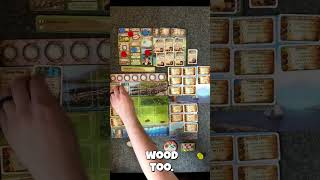
The worker placement system in Nusfjord operates on a principle of brutal efficiency. Players have exactly three workers per round across seven rounds, yielding precisely 21 total actions. This creates an intensely pressurized experience where every action matters. Once a space is taken, it blocks opponents from using it that round, forcing careful sequencing and reads of opponent intentions. The beauty lies in how this restriction forces meaningful tradeoffs rather than allowing players to execute an ideal turn order.
Fishing Phase and Economic Drama
Each round begins with a fishing phase that fundamentally shapes the game's economic narrative. Players gain fish based on their boat count, but fish distribution follows a specific order: first to elders (personalized cards), then to shares in foreign possession, then to the player's own shares, with overflow going to a reserve. This creates fascinating tension around share management. Shares are liabilities that demand feeding every round but can generate additional fish income. The decision of when to issue shares and when to buy them back creates subtle player interaction and strategic complexity that belies the game's simple core rules.
The Nusfjord Experience
Cozy and Relaxing Atmosphere
Despite its economic depth, Nusfjord manages to feel warm and inviting rather than punishing. The Norwegian fishing village theme, the colorful components, and the moderate playtime (roughly 45 minutes to an hour and a half) create what reviewers consistently describe as a cozy experience. Players find themselves in a calm mental space while solving intricate puzzles, more zen than stressful. The game invites you into its world rather than forcing you to extract maximum optimization. This makes it simultaneously engaging for experienced players and accessible to those discovering euro games.
Brain-Burning Decision Space
The cozy exterior hides substantial strategic weight. With only 21 actions available, every decision branches across multiple considerations: Should you build another ship or acquire an elder? Is now the right moment to issue a share, or should you wait? Which buildings synergize best with your current setup? The limited action economy forces prioritization and tough tradeoffs. Players describe constantly wrestling with what they cannot do rather than celebrating what they accomplish, making the experience feel rewarding when a clever combo or plan comes together.
What Makes Nusfjord Stand Out
Variability Through Card Decks
The game ships with multiple distinct decks of buildings, each creating different strategic focuses and paths to victory. The herring, mackerel, and codfish decks in the base game emphasize different resource management priorities. The big box edition adds more decks including the salmon deck and the new biscan deck with its guest mechanism. Reviewers note that the apparent similarities between decks mask genuine differences in how they reward different playstyles. Mixing decks or exploring campaign variants keeps the experience fresh across numerous plays, with no two games feeling quite the same.
The Elder System and Personalized Actions
Elders represent a second tier of strategic depth. These special cards provide unique abilities accessible only to the player who controls them, but they require feeding fish each round. Taking an elder is not a one-time advantage; it opens ongoing strategic options on future turns while creating an ongoing cost. Players describe the decision to pursue certain elders as shaping their entire game plan, similar to how expansion cards function in Agricola. The race to acquire key elders before opponents creates natural player interaction without feeling combative, and the asymmetric powers they grant feel thematic to the fishing setting.
Potential Drawbacks
Text-Heavy Card Design
The newer expansions, particularly the biscan deck with its guest mechanism, introduce more complex card abilities that rely on reading text rather than icons. Players find themselves consulting the rulebook or appendix to understand what cards do, especially when sitting across the table from upside-down cards. This language dependence slightly reduces accessibility and requires more table communication than games relying on consistent iconography. The added complexity enriches gameplay for enthusiasts but does create a small friction point that prevents a perfect experience.
Share Management as Punishment
While share dynamics create interesting decisions, some players find the punishment of unissued shares punishing. Holding shares you cannot afford to keep generates negative victory points, forcing careful calculations around share buyback timing. For some, this creates interesting tension; for others, it feels like managing an annoyance rather than enjoying a core mechanism. Plays can vary significantly based on luck of which building cards appear, which can either fully unlock a clever engine or leave promising strategies blocked.
If You Enjoy Nusfjord
Fans of Nusfjord gravitate toward other Uwe Rosenberg designs that share its blend of elegance and depth, particularly Agricola and A Feast for Odin for more substantial endeavors, or Glass Road for a faster experience with similar economic puzzle-solving. The game also appeals to players who love Fjords and other two-phase tile-laying games, or those seeking medium-weight euros that play in under two hours. For solo players, Nusfjord stands among the finest solo experiences available, with multiple difficulty variants that make it rewarding whether you seek a relaxing meditation or a challenging puzzle.
What Reviewers Are Saying
"It's a wonderful game. This is so relaxing and you're just vibing. I really want to play more of it."
— Crimsonboardgames
"Every single play of Nusfjord that I've had has been really positive and has left a more lasting positive impression. It makes me wonder why I sold it."
— All You Can Board
"The way that you're kind of playing cards in front of you, you have three options in your turn, you either play a card from your hand, you buy a card from the market if you can afford it, or you rest. It's very interactive and a lot of fun with all these diverse decisions."
— All You Can Board