



















Obscurio Deep Dive
What the Community Thinks About Obscurio
Obscurio has become a quiet favorite among board game reviewers, capturing player hearts with its elegant combination of cooperative gameplay and hidden-role tension. While it may exist in the shadow of better-known titles in its category, those who have encountered it consistently praise it for delivering something special: a game that feels fresh even as it builds on familiar mechanics. It represents a deliberate evolution of designs that came before, standing on its own merits as a compelling party game experience that works equally well for dedicated hobbyists and casual players seeking engaging entertainment.
Core Mechanics That Define Obscurio
Image Deciphering Through Abstract Art
At its heart, Obscurio revolves around one player serving as the Grimoire (a sentient magical book) who communicates to the rest of the group through abstract, beautifully rendered cards. The Grimoire cannot speak but instead selects two cards from a lineup of six gorgeous round images, using these visual clues to guide their teammates toward the correct door or path forward. The gameplay hinges entirely on interpretation. Players must look at the cards the Grimoire chose and extract meaning from abstract illustrations, debating which image represents the clue they need to progress. This mechanic creates natural moments of discovery and discussion, as players collectively theorize what the Grimoire intended and why these particular cards were selected.
Hidden Traitor Sabotage
What transforms Obscurio from a straightforward cooperative experience is the hidden traitor mechanic. One player at the table knows from the start that they are a Bookworm, secretly working against the group. Before the team opens their eyes to examine the clue cards, the traitor has the opportunity to add misleading cards to the pool, crafting red herrings to confuse the group about which image actually points toward escape. This traitor does not need to lie extensively or maintain an elaborate cover story; the game's design allows them to sabotage simply by mixing in a carefully chosen false card. As the game progresses and the group encounters more confusion, suspicion naturally builds. The tension intensifies as players grow increasingly aware that someone among them might not be trustworthy, creating a climactic moment where the team must eventually vote on who the traitor is.
The Obscurio Experience
Clever Communication in a Magical Setting
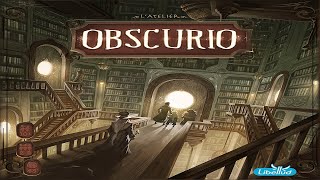
Obscurio is set in a Hogwarts-like magical library where the team must navigate through rooms to escape, making the thematic wrapper feel natural and immersive. The book serves as a guide trying to lead the group to safety, while the traitor attempts to keep everyone trapped inside, unwilling to leave the literary sanctuary they cherish. This creates a genuinely whimsical premise where each round of clue-giving and guessing feels like navigating another chamber of a mystery. The tone walks a careful line between playful and tense, allowing players to enjoy the creative interpretation of abstract art while maintaining genuine stakes around whether they trust their fellow players.
Mounting Tension and Climactic Accusations
The real magic of Obscurio lies in how it builds pressure throughout the game. As tokens get used up and wrong answers accumulate, players grow increasingly aware that escape is slipping away. The Grimoire sits silently, watching the group struggle and wondering if they are genuinely failing to understand the clues or if someone is actively undermining them. Meanwhile, the traitor experiences their own tension, needing to appear helpful while subtly steering people astray. This pressure all culminates in a heated accusation phase where the group must make their case for who among them has been sabotaging. Moments of pointed fingers, passionate defenses, and shocked reveals create the kind of memorable gaming moments that stick with players long after the game ends.
What Makes Obscurio Stand Out
Superior Execution Over Its Predecessor
While Obscurio shares its DNA with Mysterium, reviewers consistently argue that Obscurio surpasses its older sibling in meaningful ways. Mysterium presents one ghost trying to communicate with investigators, but the dynamic lacks the edge that makes hidden-role games compelling. Obscurio takes that foundation and adds the traitor element, transforming the experience from a pleasant cooperative puzzle into something with genuine strategic depth. The hidden traitor mechanic provides the exact kind of uncertainty and social tension that Mysterium cannot match. Additionally, Obscurio streamlines the ruleset and accelerates the pacing compared to Mysterium, meaning games move at a snappier tempo while maintaining the beautiful abstract art that draws players in.
Gorgeous Production and Component Design
The production quality of Obscurio deserves special mention. The weighty plastic tokens, stunning artwork, magnetic arrows that point to specific parts of clue cards, and the beautiful book component all combine to create a game that feels premium in hand. These are not merely functional components; they elevate the entire experience. The magnetic arrows are particularly clever, allowing precise indication without players having to resort to pointing or verbal hints. The round cards themselves showcase the same surreal artistic style that makes Dixit cards beautiful, but Obscurio applies this aesthetic to a tighter, more focused game. Everything about the presentation signals quality and care in design.
Potential Drawbacks
Difficulty and Learning Curve
Obscurio is not a trivial game to master. The difficulty scales significantly depending on which difficulty level is selected, and reviewers recommend starting on easier settings before attempting standard or advanced play. Even on easier difficulties, the game can prove challenging, requiring players to think carefully about what clues actually indicate. New players unfamiliar with abstract art interpretation may struggle to extract meaning from the Grimoire's selections, leading to frustration during early plays. The game demands engagement and mental effort rather than offering a casual, low-stakes experience.
Market Perception and Overshadowing
Obscurio faces an uphill battle against the market dominance of Mysterium. Because Mysterium arrived first and established itself as the category standard, newer players consistently reach for the familiar title instead of taking a chance on Obscurio. This creates a self-reinforcing cycle where the better game struggles to find players simply due to visibility and brand recognition. Many reviewers lament that Obscurio never receives the table time it deserves, remaining a hidden gem that dedicated enthusiasts must actively champion to introduce into new gaming groups.
If You Enjoy Obscurio
If Obscurio resonates with you, seek out Mysterium for a related but distinct experience, keeping in mind that Mysterium lacks the traitor tension Obscurio provides. Dixit and its many expansions offer more abstract art interpretation if you love the card aesthetic. For hidden-role games with social deduction elements, Shadows of Camelot shares similar DNA, though it uses different mechanics to achieve comparable tension. Games like The Resistance and One Night Werewolf explore the traitor dynamic from different angles. For cooperative games with communication restrictions, Codenames and its variants offer a different flavor of the same collaborative puzzle-solving appeal.
What Reviewers Are Saying
"Obscurio is basically Shadows of Camelot with art cards, and frankly I think it's done better and smoother. It has this great climactic tension where throughout the game you're trying to figure out who is not on our side, and then you get to that moment and it's like, right, pause the timer, who are you, whose side are you on? Such great banter."
— The Broken Meeple
"I think Obscurio is similar to Mysterium, but I think I like it better. I think this is just a better game. The hidden traitor aspect adds this whole level of intrigue that is really fun. You don't actually have to lie very much as the hidden trader; essentially the traitor gets to choose a card or two to shuffle into the deck to sabotage the group."
— Game Night Picks
"It's this kind of silly, spooky cooperative game but with that hidden trader element that makes it really fun and just adds a level of strategy that Mysterium doesn't have. You're trying to get out of this haunted library, but there's tension because you know somebody might be leading you astray while you're trying to escape."
— Ryan and Bethany Board Game Reviews