/pic2635740.jpg)
The theme of OctoDice is based on Aquasphere, and the game mechanisms recall that board game. On your turn, you roll six dice (three white and three black); two dice (one white and one black) form an action. Every roll you must pick exactly two dice to take out (any colour). In the end you combine the six dice any way you want, no matter in which order you chose to take them out of your rolls beforehand. You can use only two actions on your turn. On your development sheet you enter the actions chosen for this turn and note your points. You can also decide to "expand your lab" which will give you bonus actions or points. Other players may pick any action combination from your dice roll to add to their sheet. Do not forget to fight Octopodes. The game ends when each player has 6 turns. The player with the most points wins.

OctoDice Review
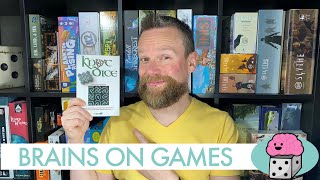
- Beautiful dice with marble finish and silver Celtic knot patterns
- Wide variety of play modes in the base set
- Short playtime suitable for family game nights
- Encourages visual-spatial skills and collaboration
- Some variants may be complex for casual players
- Depth limited for non-family audiences
- Rules for all variations can be a bit much for first-time players
- Celtic knotwork and knot-building
- Tabletop puzzle-building with Celtic knot motifs
- abstract/puzzle-driven
- Not Dice
- Not Dice Squared
Mechanics (from transcript analysis)
- Cooperative Game — In base mode, players work together to maximize knot size.
- cooperative play — In base mode, players work together to maximize knot size.
- Dice Placement — Location of dice affects available spaces and blocking paths.
- dice-driven spatial reasoning — Location of dice affects available spaces and blocking paths.
- Pattern Building — Players place rolling dice to form Celtic knot patterns on connected paths or boards.
- pattern building with dice — Players place rolling dice to form Celtic knot patterns on connected paths or boards.
- timed/variant play — Some variants are timed, racing to complete patterns.
Video topics + discussion points
Quotes (from this video)
- This is a game that's all about your visual spatial skills.
- The dice are beautiful, they’re marble_finish with silver patterns that create Celtic knots.
- There are a dozen different games in the basic set.
- Not Dice Squared is the expansion mentioned.
- this episode we're going to talk about a puzzle building game that involves dice
References (from this video)
- highly thematic with a well-known song
- engaging deduction mechanics for a party setting
- mechanics somewhat opaque in the chat discussion
- counting and number deduction
- numbers-based deduction game
- party/deduction flavor
- Liar's Dice
Mechanics (from transcript analysis)
- clue-based deduction — opponents give clues to help guess values while contributors try to conceal theirs
- Deduction — opponents give clues to help guess values while contributors try to conceal theirs
- number deduction — players guess and deduce five numbers hidden from view
Video topics + discussion points
Quotes (from this video)
- Lunch is served with a side of panic.
- Time Bomb is a quick and fun bluffing and deduction game
- Fantasy Flight losing their mind again.
- Descent: Legends of the Dark. They're discontinuing it.
- We are live y'all.
References (from this video)
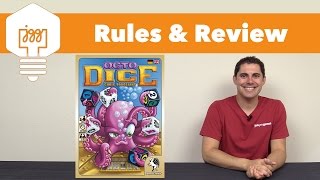
- Tight, decision-driven take on the dice-rolling mechanic
- Interactivity from copying dice and reacting to opponents
- Replayability due to lab tech variability across games
- Engine-building potential with submarines and labs
- Game length too short, limiting the value of lab technologies
- Laboratory technologies often underutilized due to short game duration
- Two-player copy-dice variant felt clunky
- underwater research and octopod management to score victory points
- bottom of the ocean lab
- instructional demonstration with inline playthrough
Mechanics (from transcript analysis)
- action-pairing — To take an action you must pair two dice and activate a matching symbol on your player board.
- borrowing dice — Between rounds players may borrow a set of two dice from a shared pool and record them.
- Compound Scoring — Activating crystals scores victory points based on the value of the die used, requiring a black non-octopod die.
- copying opponent's dice — Not-your-turn copies of up to two dice can be used between scoring rounds, adding interaction and planning.
- crystal scoring action — Activating crystals scores victory points based on the value of the die used, requiring a black non-octopod die.
- dice rolling and locking cadence — Roll six dice (three white, three black); must lock two, then roll four; lock two more; roll final two.
- laboratory actions — Lab tiles determine possible actions; top row uses zeros initially; advancing gives ongoing bonuses.
- laboratory technologies — Randomly shuffled tech tiles create a custom tech tree each game, offering variability and endgame bonuses.
- octopod scoring and blocking — Having octopods on dice can grant points; absence of required octopods can incur penalties.
- robot and submarine actions — Robot actions increase points by color; submarine scoring depends on programmed robots relative to scoring rounds.
- Token Pairing — To take an action you must pair two dice and activate a matching symbol on your player board.
Video topics + discussion points
Quotes (from this video)
- it's a neat tweak on an old system
- I enjoy the ability to copy the dice that your opponent has picked out for themselves
- it's just it's good it keeps you invested in what all your opponents are doing and it makes the game Flow really well
- I recommend the game with a couple caveats
- there's such a great engine here
- I end up just liking this game as opposed to loving it
- the laboratory is the coolest part of this game
References (from this video)
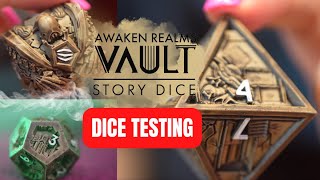
- classic K-series feel
- good baseline balance
- no card attached in video; potential future tweaks
- classic dice design with interesting style
- standard dice within K-series line
- K8 dice
Mechanics (from transcript analysis)
- standard distribution — normal balance like typical dice
Video topics + discussion points
Quotes (from this video)
- Big Dice look really cool and atmospheric
- awesome dice pass the test
- I will make such final tests
References (from this video)

Mechanics (from transcript analysis)
Video topics + discussion points
Quotes (from this video)
- it's a convention that is solely based on gaming
- level up gaming retreat ends up being just a little bit more of a relaxing convention
- you are somebody's reason to smile
- play games for three days straight it is amazing
References (from this video)
Mechanics (from transcript analysis)
Video topics + discussion points
Quotes (from this video)
- it's a lifestyle it's a lifestyle we've just committed
- we're all human
- stay positive don't let the travels of this country get you down
- we want everybody to be at the table contributing at that table
- this is a tall order
- we're counting down this is 20 and 21