/pic5507191.jpg)







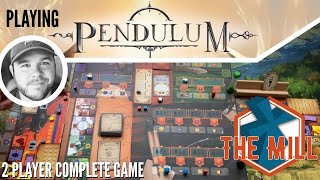


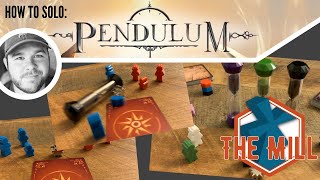

























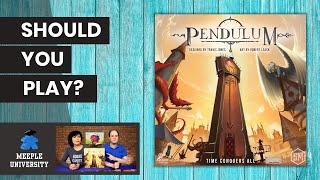




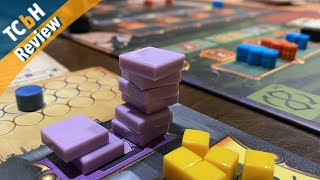


Pendulum Deep Dive
What the Community Thinks About Pendulum
Pendulum stands as a bold experiment in the board game hobby, generating mixed enthusiasm among reviewers who appreciate its innovative mechanics but acknowledge significant entry barriers. Multiple reviewers commend Stonemaier Games for attempting something genuinely unique, with some describing the real-time worker placement system as "one of the coolest gimmicks" they have encountered. However, the game appeals to a specific subset of gamers rather than serving as a universal crowd-pleaser, with families and traditional euro enthusiasts offering notably reserved assessments.
Core Mechanics That Define Pendulum
Real-Time Worker Placement
At its core, Pendulum reimagines worker placement by removing turn structure entirely and replacing it with time itself as the governing constraint. Players place workers on action rows without timers active, but once sand timers flip to those rows, workers become locked in place until the timer moves elsewhere. This creates a continuous cycling where player agency becomes about predicting timer movements and positioning workers preemptively. Reviewers note this creates "time optimization" rather than frantic rushing, as players must decide whether to place workers on quick 45-second actions or longer three-minute actions based on their strategy, not panic.
Resource Conversion and Engine Building
The supporting system involves managing three resource types (military, culture, and gold) and converting them through province cards to build persistent income engines. Players slide province cards under color-coded slots on their player mats, with each card generating additional resources based on its placement. Reviewers consistently highlight how satisfying this engine-building feels once activated, describing a "very satisfying" experience watching personal engines compound through the rounds as they invest early investments pay dividends.
The Pendulum Experience
Strategic Pacing Under Pressure
The game delivers sustained pressure without resorting to frenetic chaos, a distinction reviewers emphasize repeatedly. Unlike cooperative real-time games like Kitchen Rush, Pendulum places players in simultaneous but separate decision spaces, meaning slower thinking from one player only hurts that player, not the group. Reviewers appreciate that the "timers aren't making you race around and do things," but rather "determining how long those workers are locked in," fundamentally shifting pressure from speed to optimization. This allows reflective players to "give themselves a breather" by deliberately placing workers on longer actions when they need thinking time.
Learning Curve and Progression
Multiple reviewers describe a remarkable learning progression where players demonstrably improve game to game. One pair notes they played through basic characters, experienced initial struggle, then moved to advanced characters and watched themselves excel, creating tangible evidence of mastery. This progression keeps the game feeling fresh across multiple plays rather than becoming stale. Solo play amplifies this pacing benefit, giving players more breathing room to explore different strategies without opponent pressure, making solo arguably the superior way to experience Pendulum's design initially.
What Makes Pendulum Stand Out
Sand Timers as Mechanical Innovation
The sand timers themselves represent pure mechanical novelty, functioning not as narrative flavor but as systemic necessity. Different timers expire at different frequencies, with black timers flipping every 45 seconds, green every two minutes, and purple every three minutes. This asymmetry creates natural rhythm and prevents monotony. Reviewers note the physical presence of sand running down creates undeniable tension, though importantly not the "stressed" feeling of other real-time games. The elegance lies in how the mechanic "eases you into" time pressure rather than overwhelming new players.
Sophisticated Simultaneous Action Resolution
The system handles simultaneous actions through the "grande worker" concept, allowing players to place larger workers anywhere on the board, even where smaller workers already sit. This prevents the blocking frustrations common in simultaneous worker placement. When conflicts arise, the privilege order (determined by vote totals from the previous round) breaks ties. Reviewers appreciate this creates "never really impeding other players" during action placement, despite the simultaneous nature of decisions.
Potential Drawbacks
Real-Time Mechanics Remain Inherently Challenging
Even with measured pacing, real-time play introduces mechanical friction that no design can fully eliminate. Reviewers note inevitable consequences of simultaneous action and physical components, including pieces potentially knocked over, workers placed in rows with timers (a rules violation easy to commit under pressure), and the simple challenge of tracking multiple simultaneous board states. One family reviewer noted moments of genuine chaos where rules questions arose but "time doesn't wait for questions." For cerebral players requiring analysis space, these moments create genuine friction regardless of how well the timer design manages pacing.
Abstract Theme Without Thematic Resonance
Multiple reviewers acknowledge that Pendulum operates as an abstract game wearing fantasy window dressing rather than a thematic experience. The nobility competing to rule Dünya and the "pendulum" metaphor connecting to time feel disconnected from actual gameplay. Reviewers explicitly note the theme "doesn't really speak" to the experience, with one remarking "i didn't understand it" despite completing a full game. For players seeking narrative integration or thematic coherence, Pendulum delivers colored cubes, abstract actions, and mechanical optimization rather than meaningful storytelling.
If You Enjoy Pendulum
Pendulum fans should explore Kitchen Rush for cooperative real-time stress management, Seven Wonders for simultaneous action selection with less physical pressure, Magic Maze for collaborative real-time puzzle solving, Kanban for time-sensitive worker optimization, and Scythe and Wingspan for thoughtful Stonemaier Games experiences with stronger thematic foundations. For abstract economy games with engine building, Viticulture and Terraforming Mars offer comparable depth without real-time pressure.
What Reviewers Are Saying
It was very interesting to see how we grew. We started playing the game with the basic characters and that was a struggle but once we figured out how it worked it was nice to see our gradual progression to the advanced characters and then once we got to the advanced characters it was cool to see our progression exceeding those.
— Kovray
This is a game where thinking fast means you will do better. You will feel the pressure of time on every action and as a result of trying to slip a meeple in before sand runs out you will inevitably rock a player board knock down a timer or forget some aspect to play.
— The Cardboard Herald
The timers aren't making you race around and do things, rather they are just determining how long those workers are locked in, so it is really more time optimization. It is strategic and has decent engine building and a unique tempo unlike anything else on the market.
— Watch It Played