



























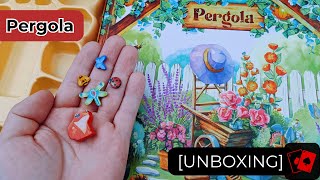


Pergola Deep Dive
What the Community Thinks About Pergola
Pergola is a cozy, brain-burning garden building game that reviewers consistently praise for its beautiful production and engaging puzzle design. The game has emerged as a standout from the board gaming community in 2025, with players appreciating its elegant balance between straightforward gameplay and surprisingly deep strategic options. What makes Pergola special is that it allows complete creative freedom in garden arrangement while weaving together multiple, independent scoring systems that reward careful planning and thoughtful execution.
Core Mechanics That Define Pergola
Tool Selection and Action Drafting
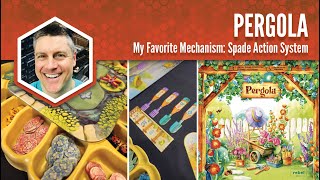
At the heart of Pergola lies a dual-benefit action system. On your turn, you select one of the available tools displayed on the central action board. Each tool shows resources you'll collect from the supply, then you take the action printed on the space below that tool. This creates a constant tension between wanting specific resources and wanting specific actions. You might see a tool offering resources you need, but the action below it is not immediately useful. Do you take it now, hoping the action beneath improves, or wait and risk another player taking it? The tool then moves down, exposing a new one at the top. This mechanic keeps the game flowing smoothly while introducing genuine decision-making on every turn.
Free-Form Garden Placement with Compound Scoring
The garden board is where Pergola truly shines. Unlike grid-based tile placement games, you have remarkable freedom in where components go. Holly Hawks can be placed anywhere and stack by color. Magnolias grow as a single tree with branching options. Buttercups hang from your pergola. This freedom extends even to insects and flowers that lack valid placement spaces, which simply fly around your garden until you make room for them through strategic actions. The scoring is complex but intentionally built this way. Players score through six different mechanisms simultaneously: Holly Hawk sets by color composition, Magnolia height progression, Ladybug groupings by level, Buttercup pairs, Lavender leaves with potential bee-filled blossoms, and Dragonflies from a shared pond. Additionally, leaf collection, lantern bonuses, and water drop decisions create further scoring pathways. This compound scoring system means every game rewards different strategic focuses.
The Pergola Experience
Relaxing Yet Thoughtful
Players consistently describe Pergola as a zen-like experience, a cozy game perfect for weeknight play. The theme of building a personal garden naturally creates a meditative atmosphere. There is no player conflict beyond tool selection. You are simply constructing something beautiful while solving an ongoing optimization puzzle. Despite the relaxed feel, the game demands genuine engagement. Each turn presents meaningful choices about resource priorities and action timing. The challenge lies in sequencing your selections correctly to gather the right tokens and take the right actions at the right moments. New players may feel overwhelmed by the scoring complexity early on, but the scoreboard provides clear visual guidance, and most find their rhythm quickly.
Visual Beauty and Thematic Coherence
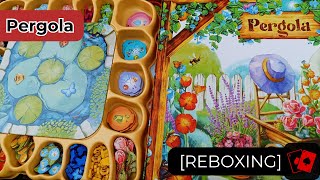
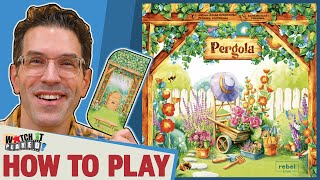
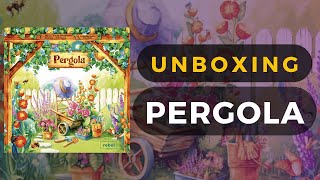
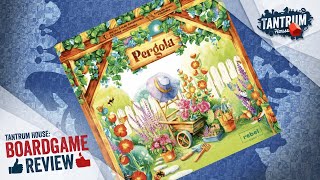
The production design elevates Pergola from a solid puzzle game to something special on the table. The artwork featuring detailed botanical illustrations and wooden components creates genuine table presence. Each player's garden backdrop is slightly different, making your personal workspace feel unique despite using identical game boards. The way flowers, insects, and decorative elements arrange into an organic whole gives each garden its own character. Players express genuine satisfaction simply looking at their completed gardens, even beyond the point scoring. The component organization system, where player pieces store neatly in dedicated pots, demonstrates thoughtful design. Everything about the physical presentation reinforces the garden theme without feeling forced.
What Makes Pergola Stand Out
Strategic Flexibility Within a 15-Turn Frame
The game's 15-turn structure creates a built-in deadline that forces difficult choices. You cannot optimize everything. Most players find themselves focusing on two or three scoring paths while dabbling in others, and the available tools determine which paths feel viable each game. One playthrough you might specialize in building towering Magnolias with plentiful Ladybugs. Another game might emphasize collecting Lavender leaves to fill with Bees and activate multiple Honey jars. A third might focus on Holly Hawk sets paired with high-flying Butterflies and clever Dragonfly pond access. This variability keeps the puzzle fresh, and the constraints make every decision matter.
Low Interaction That Never Feels Lonely
While Pergola is fundamentally a puzzle game where you build your own garden, the shared tool pool creates subtle player interaction. Watching what your opponents are collecting subtly influences your choices. If someone is aggressively pursuing Magnolias, Ladybugs become scarcer. If another player activates Honey jars early, you might prioritize different scoring paths. This passive interaction keeps the game feeling multiplayer despite each player working independently. The game avoids the common pitfall of multiplayer solitaire by making tool selection timing consequential. You sometimes need to take a tool not because it perfectly advances your strategy, but because you would rather have it gone than see an opponent benefit from it later.
Potential Drawbacks
Overwhelming Scoring Complexity in Early Plays
The game's greatest strength can also be its weakest element for certain players. Six different scoring paths with distinct mechanics create genuine mental overhead. While the scoring board provides visual reminders, some icons are not immediately intuitive on first encounter. New players benefit from experienced teachers who can walk through scoring expectations upfront. The choice paralysis concern is real, particularly for players prone to analysis. On any given turn, you are weighing tool availability against action value against resource priority against future scoring possibilities. Some find this delightful puzzle crafting. Others experience turn length creeping uncomfortably long as players work through decision trees.
Limited Replayability for Strategic Novelty
Once players internalize the scoring paths and understand which strategies feel viable, Pergola's appeal can narrow. The tool randomization generates different opportunities each game, but the fundamental goals remain constant. After exploring the Holly Hawk strategy, the Magnolia focus, the Lavender specialization, and a few hybrid approaches, some players find they have thoroughly experimented with the game's strategic space. This is not a game that reveals new hidden depths with repeated plays or opens entirely new strategic dimensions. It is a satisfying puzzle that maintains its quality throughout multiple plays, but players should enter with realistic expectations about how long the exploration phase will last.
If You Enjoy Pergola
Players drawn to Pergola typically gravitate toward games emphasizing beautiful production and accessible strategy over heavy simulation. Meadow shares similar visual appeal and relaxed philosophy but uses entirely different mechanics. Cascadia and Parks offer similar outdoor nature themes with peaceful gameplay rhythms. Bonsai matches the meditative art of careful arrangement. Applejack provides similar strategic planning with known scoring goals but random element availability. If you love any of these, Pergola merits strong consideration. The game also appeals to players seeking genuine decision space without aggressive player interaction.
What Reviewers Are Saying
"This is just one of those things where you're just creating your own garden. One of the great things in this game is your freedom to be able to build your garden pieces pretty much mostly anywhere. So even if you're building the same things every game, your garden is going to look kind of different."
— TheGameBoyGeek
"Pergola is one of those games that quietly gets under your skin in the best way. It's relaxing, puzzly, and endlessly pretty. While it may be a bit much for brand new players, if you like games that are easy to play but give your brain something to chew on, this might just bloom into a favorite."
— Let's Table It
"I think this game is fun. It's a game that does play relatively quickly, 20 to 45 minutes. It does offer an interesting puzzle to solve. Visually I think this game plays a lot like Bonsai. If I were to play Pergola in person, I would appreciate it a lot more. It's more visually appealing to me rather than strategically."
— The Board Gaming Doctor