Rapid reviews of Finspan, Hot Streak, Pergola, Cafe, Hey, That's My Fish! and Fancy Feathers
Games in This Video
6 games are featured in this video — they unlock as you watch.


Transcript
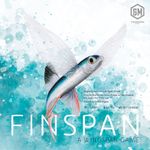
Hello everyone and welcome back to the board gaming doctor. My name is Phil and I'll be your board game doctor today. In this video I'm going to talk about a couple of games. I've got five games that I want to discuss briefly and do a quick review. I what I tend to try to do is focus on the unique mechanisms that appeal to me in the game. Talk about some of the some game comparisons, what other people might be saying about the game. And then finally giving you a rating based off of criteria that I look for in games. And I will add whether I would seek this out, you know, physically to to buy and purchase for my collection to play it digitally if it is available or if it would be available theoretically in the future or if I would just skip it in general. So let's start with Finsspan. I recently talked about this game in the Gen Con video that I put out about a week ago. And this game, you know, is everywhere in in game stores that I'm, you know, looking at. It's it's being played. And I did get the opportunity to play this game.
Uh I actually I played it twice. I I demoed it with uh you know on my own on Tabletopia as well as in person with my daughter. Of course, my daughter is not old enough to comprehend all of the rules, but we were able to at least at least I was able to play and kind of help her along as well. And so this game is a derivative of Wingspan as we all know. And you know, there are plenty of videos and media covering this game, but in this game, you're taking your fish cards, arranging them in a vertical mat or tableau, and activating their powers as you place divers, you know, in their respective columns and trying to create a an engine that allows you to, you know, lay eggs, hatch them into young, you know, breed them or collect them into schools.
And um from there just uh you know gather points that way essentially. Um so how it differs from Wingspan to me uh this is the major game comparison of course is that this game is a lot more straightforward to teach and to strategically understand. The cards themselves don't have as many uh nooks and crannies as it were, you know, different types of unique powers as you would see in games like Wingspan or Worms Span. Each card has a very uh basic somewhat basic ability. Most most cards can be demonstrated or explained via iconography and they're not textbased. And so, uh, it's it's a lot more straightforward to understand and therefore teach to younger or more casual audiences, which I found, you know, a pro or a con depending on the situation that you want to be in.
What I thought was pretty unique about this system was some of the minor mechanisms in how some of these cards worked. uh where you can place for for example you can place different fish cards on top of other fish cards if their fin span is larger. Uh simulating somewhat the the nature of you know bigger fish eating smaller fish etc. The the way that you are arranging these is pretty flexible. But I do like the arrangements of the different bonuses that you get for each column. Here for example on the left you draw cards. Here you hatch or lay eggs and then you hatch them on the far right column.
The other mechanism that I thought was pretty interesting in this game, it deals with the hand of cards that you have. So you have a hand of cards that is not private to you, but is publicly seen on the side of your board. And you can use some of these cards as a cost uh is essentially discarding other cards from your hand to a discard pile. And a lot of these cards allow you to retrieve discarded cards back to your hand. And so this was something that I had not experienced in Wingspan or Worms Span where one, your cards were publicly seen and available, but two, you could also uh do a little have some decisions to be made regarding which cards you want to discard and potentially bring back and, you know, which cards to use for fodder essentially to bring out other cards onto your tableau.
So, I enjoyed that. I think the biggest downside for me for Finsspan was the ratio between the complexity of this game versus the time length. And I'll pull up my rating here. I think what what dinged it for me was you do get actually two things. One is, and they're kind of related, you have six divers that you have, you know, working for you each round. You have four rounds. You have 24 actions. And so, it doesn't decrease like it does in wingspan. And it's not as flexible as it is in worms span, right, with the money and and so forth. And so, the game felt longer than what I would have hoped it would play as. like I was I think this would be an excellent game if it was like 30 to 45 minutes rather than 45 to 60. Uh and and that's relative to who you're playing with. You know, obviously if you're playing with younger people or more casual gamers as well, it might take even longer. very similar to the situation that you find yourself in Wingspan, which I think even though it is a higher complexity game. It does, it's not terribly complex as to reflect the time that it takes to play the game.
And so I was hoping that Finsspan would not like outstay its welcome, but I feel like it it did. And I think the complexity of the cards didn't necessarily uh help either. Uh I felt like it was uh it's it's definitely not as complex and uh you don't have as many decisions to be made uh as you do in Wingspan and Worms Span. So, uh, so I guess what I'm trying to say is that the game didn't feel as complex enough and didn't feel short enough for me to really enjoy this experience as much as I have with the other two games along this line. I would play it again, you know, if there was a digital version of this game. I probably would get it u I probably would get this game, too, for the aesthetic, for the the art on the cards and to play with my kids, honestly. like if they wanted to play this game, I would happily do so uh once they get a little bit older. But if I were in a situation where I wanted to play a board game in and of this ilk with other board gamers and I had, you know, an hour to play, I would what I would rather play Wingspan in a relatively quickly pace uh with gamers who knew Wingspan as well rather than play this game for 45 to 60 minutes. So, uh, so those are my first impressions, I guess, of of Finsspan. I think that, uh, it's a good enough game,
and I like how different it is mechanically compared to Wingspan, but it was not as complex and too too long of a game for me to fully enjoy. So, the next game I wanted to talk about is Cafe, which is a 2020 game by Costa Eh. This these are Portuguese designers who have designed games uh such as I'll pull this up uh Cafe Stevens Dumpier Moto these games that are Portuguese you know historically Portuguese in nature and so their works have been interesting to me. Uh, Stevens in particular is a game that recently came out in the United States under Capstone Games and kind of has a theme similar to Lizboa by uh, Vitala.
And so that has me interested. Maybe I'll play that at some point. But Cafe recently, which means coffee in Portuguese, uh, probably in Spanish, too, I think. uh Cafe recently uh released on board game Arena to play and so I decided to demo it and see what it was like. And this game how it plays is you draft these cards in the solo game here. It's one out of three. You can play up to more players and have more cards to draft from. You essentially are uh placing down these abstracted cards and rearranging them to allow for, you know, certain icons to be visible. Uh such as these coffee cups which give you turns, these beans that give you different colored uh coffee beans. You can roast them and process them and then ship them to your warehouse or to these cafe houses which will allow you to get points as well.
This game is somewhat simple to teach uh but it does offer a little bit of complexity and it kind of reminded me of uh Trailblazers uh the game that came out a couple of years ago. I reviewed it on the podcast and uh you know it's very much an abstracted card lane game where you can stack them one on top of another and uh you know based on the way that they are arranged determine how you can take actions and get points in the game. I give it a 6.9 out of 10. I think this game is fun. I I would play it on Board Gamer Arena again. it, you know, doesn't boast the the complexity and depth that I'm looking for in games, but I I think for a game that does play relatively quickly, 20 to 45 minutes, uh it does offer a an interesting puzzle to solve and would be interesting as well to play this game with other people. maybe offering more cards to choose from and uh and more options to uh you know try make it a little bit tighter to race to get those points. But um yeah, I I don't foresee this game being terribly complex to play and uh and so I think if you do like games like Trailblazers and like some of those other Oh, um I forgot the designer's name, but he did Trailblazers and Pipeline. If you do like this sort
of game but want more complexity, I would suggest pipelines and or if you like this style of mechanisms of card placement one on top of another as a puzzle, then cafe would be great for you. Next on the list is Hot Streak. This is a 2025 game published by CMYK, designed by John Perry, art by uh Cecil uh Gary. I apologize if that's not correct, but this game is a kind of a gambling racing game or like betting racing game where these mascots are racing down this track. There is someone who has a race deck that determines if these figurines will move forward, backward, fall on their face, etc. or swerve into into each other and fall down. And before this happens, you are placing bets on who will win. I'm trying to find a good picture that shows, you know, these bets and side bets that you can draft. Um, the reason that I'm showing you these pictures is that I was able to play this and demo this um once uh at a board gaming uh event in person.
So, I, you know, don't have anything digital to show you. Play this with my family and we had a a great time. And this game is whimsical and fun. Um, lots of opportunity to shout and hope for the best. But what I do appreciate about this game is that these cards that you're playing to determine where these mascots are moving, if they're going forward or backward, you have a certain deck of these cards. Some are left out, but they uh are predetermined before you start racing. And so everyone does know what kind of cards are in the deck. And so if one favors one mascot heavily, you may want to place your bets on that one. But everyone gets some cards in secret that they know could either benefit a, you know, a certain mascot or hinder that one that seems to be heavily, you know, favored. And so you can with that secret knowledge place bets and hopefully, you know, rig the deck in a in a sense because you choose one of those cards to put in to hopefully rig it in your favor to win money and, you know, have the most money after three races. So this is game, this game, you know, on paper sounds a lot like ready, set, bat and other horse racing games, right? where you are placing bets and watching them run except and I haven't played that game, but from what I've heard, I think this differs because you do have a this
deck of racing cards or movement cards that you get to see before you start racing rather than the real-time dice throws that you get in ready set bet. And so there's a little bit more of an opportunity to bluff, I think, and have somewhat of, you know, tactical strategery kind of things going before you start racing, which is more interesting to me, I think. Uh, but I still have to play ready, set, bet before I make that decision myself. But in any case, uh, I think if you have the right sort of crowd, I think, you know, this game could serve really well in a party setting. Um, there was another game that I remind that I was reminded of, uh, but I it it escapes me. But anyway, I I really enjoyed this game. I think this game would be fun to try out again. Uh, I you know, if my family wanted to play it again, I would for sure. I I would pull it out to, you know, have a good time. Oh, and and another thing that I like about this game is that they have rules for like down to two players and upwards of nine plus players. And so, this would be an excellent opportunity to bring to like a convention or a party to play with. And I think it's pretty straightforward uh to introduce to, you know, folks who don't play board games as well. So, it's a very universal type of game that could have success. It's been having a lot of success recently and so I I you know it
it's not necessarily what I'm looking for in a board game night per se, but if I'm feeling like playing a party game, I think Hot Streak might be an excellent choice for me uh and for for you perhaps if you do like this style of game. Next on my list is Pergola. This is a 2025 game that recently uh released on board game arena. Uh I was playing this game in alpha and finally finished it before it moved to beta. But in this game you are drafting these action trows to trows to uh place different types of plants and bugs onto your tableau in more of a free form type of style. You have other abilities such as progressing down this um choosable water track, right? Um where it kind of branches out to choose different insects. Uh you have a pond here as well that you can I think oh sorry a pile of leaves that you can go to to draft certain um you know flowers and bugs as well. all trying to uh arrange them in a way that fits with these uh predetermined criteria for for play. So, Pergola kind of reminded me of a um kind of like an Applejack kind of game. It's not very Oh, the two games that I thought of. Applejack in the sense of the strategy of this game, right? Like the the goals are pretty much the same
every time you play. It's just the choices that come out randomly for you to choose from is what makes this game different every time. And so I can see this game after a couple of plays being like, "Okay, I I know what my goals are. Uh I know what the travels are going to be, the actions that I can draft now and potentially later." If you start to understand and and know what is potentially going to come out, you can plan ahead and hopefully draft the ones that will make the biggest difference for you and be the most efficient for points, which is kind of similar to Applejack where you kind of have free realm of where you can place tiles and potentially plan ahead to make sure you are achieving those goals that are pretty much the same every time.
Visually, I think this game plays a lot like uh Bonsai, which is a game that I played in person. I think if I were to play Pergola in person, I would appreciate it a lot more. You know, I gave it a six because it I Yeah, I think this game would really hit more for me if I were to play it in person, but uh you know, it doesn't quite have the the right depth for me to want to replay it over and over again. I think it's more visually appealing to me rather than strategically. But a lot of people do enjoy this game. I think having it on board game arena is a great place to try it. It's really implemented well where you can really place your plants anywhere you click or you know touch on. And so I think that's pretty innovative and and neat. But uh when you cut back through the the visual appeal, I think the game itself is pretty straightforward and and fun, but not enough for me to want to replay it over and over again. But yeah, so that's pergola. Next is Fancy Feathers. This is a Freedom and Freeze game out in uh from 2022.
This is around the time that I started to podcast slashmake videos. I think I was mostly in the podcast phase during this time. And I remember this game coming out during either Gen Con or Essen, and it was one of the first games that I was interested in and included on a list. And this game is a two-player game uh by Freedom and Freeze, who's known for a lot of good games where uh and actually this is also a PSA about Yucata, which is where I could play it. Uh they've revamped the site and so it looks a lot cleaner. And so this is pretty neat. So, if you didn't know that this happened, um, now it has. And so, you can look at, you know, a lot of their games, some of these which are not offered on sites like Board Game Arena, some of them are exclusive to Yukata, including this game. And so, you know, this is another great opportunity for you to look at um, what could be available for you to try out. Anyway, back to Fancy Feathers. in this game.
It's a card drafting game where you start the game with a predetermined set of certain uh feeasants or birds um out of a certain stack of them. Right? So you you have a a randomized combination of these cards and they are laid out in front of you uh in a sort of row and what you're doing is placing your marker on a a bird and drafting all the cards behind it. Each card and group of cards has a uh uh requirement for how it scores at the end of the game based on your collection. And so, for example, the blood feeasant scores three points. Uh if you have, you know, one of them, if you only have two of them at the end of the game, you have six. But then if you collect too many, you go you gain less points or even lose points at the end of the game. So, it's a back and forth about, you know, drafting the right amount of birds and not trying to draft too many of them as well. And so, I found that pretty interesting. You know, you can play this up to four people online, but in person you would have to buy two decks to uh support that. So, Fancy Feathers was an interesting enough game. It's it's an abstracted game of course and you know I am in line with pretty much everyone else. You know it's easy to teach. Uh it kind of reminds me
of I guess other simple and straightforward not simple but straightforward card drafting games. Um there are you know a good number of them. So, nothing really specific comes to mind, but um but yeah, you know, I think it was pretty interesting and and I was glad to have the opportunity to finally play this, but um I would probably tried this a few more times to see if there's much depth. You know, one game that does kind of is reminiscent to this is Forest Shuffle. I think Forest Shuffle has more mechanisms in place to make it a more strategic type of game. Fancy Feathers is less complex than that. uh it's more complex than a game like uh Colorado for example, but it kind of falls mechanically in that same a similar vein and I would play I think I would play uh it's about equal for me between Colorado and Fancy Feathers but games like Arburidum and uh For Shuffle those are games that I would rather play over Fancy Feathers I think. But I would be happy to try this out again. Uh, it's, yeah, once again, not a very heavy game, but finally got to check this off my box as a game that I remember wanting to try out a couple of years ago and finally having the chance to do so. And finally, to round off this video, I have a bonus game. I finished playing this game before uh I had the chance to finish editing. So, here we go. So, this is Hey, that's My Fish. This really uh this
recently released on Board Game Arena a couple of weeks ago. It's in beta right now. It's an older game, too, from 2003. I've heard things about it, you know, and and I hadn't really thought much of it until one of my children saw this at the game store and wanted to see it. I think the fact that it has penguins and fish on it really did help out. But I learned it and played an onboard game arena and found out it was a pretty interesting abstract game where you place these uh you randomly place these fish on the you know this ice flow. You're trying to pick up as many fish as possible, whoever has the most wins. And you also place your little penguin meeples or penguin figurines onto the board and slide them across the the pond picking up the fish wherever they had left off of.
You can choose the one thing about the the base variant of the game is that you can choose in any any one of these in a single line where you want to stop your penguin. So, it's, you know, pretty easy to try to get these three fish tiles first and then kind of strategically place these these penguins in areas uh that are, you know, you might want to block off your opponent from, you know, coming over to a whole island and so you can have all of this these fish by yourself because every time you move a penguin, you remove that tile that it was on already. So, you're the the goal of the game is trying to move these and um either have islands to yourself to, you know, really collect a lot of fish from or block your opponent from getting to a a big source of fish, for example, etc., right? And there are variants of this game where you can push penguins as well as um I think you slide them and so they have to go until they can't go anymore whether they bump into a penguin or onto the edge of the board itself, you know, uh or an empty space. I think that increases the the depth a little bit and makes it more interesting for me. And actually, I thought that's how this game played anyway. And so uh but you know having it be you know I think approachable for younger audiences who want to play this game right um I I mean my my child is
you know younger than this age but I think she could my oldest you know could play this game and not maybe play it well but understand what is going on and and do pretty well. And so I really like the look of this game. I think I would really want to try this game in person. And I, you know, kind of compare this to Santorini, which, you know, Santorini does offer more of a challenge when you throw in the different gods and powers that they have. This game is more straightforward than that, but still offers some flexibility and replay-ability in the abstract uh kind of game. So, I I rate it pretty high. I I thought it was I thought it was really fun and replayable, especially if you you know randomize all of those fish and play with the different variants. Um in in that regard, it kind of reminded me of Six N, which is a game that I've played over a hundred times with my family. We play it a single way, but there are different ways that you can arrange the cards and draft them to make it different as well. And so I appreciate that opportunity even though you may not um exploit that opportunity yourself. I I like that that option is there in case you do want to switch things up a little bit. And so I do I do really really enjoy this one. I think I would play it again. I know I would play it with my my kids, you know, and I think that's a big selling point for me.
Uh I think visually this game I I think it has been um you know reproduced and and reskinned I suppose uh the later it's been you know since 2003. So I do appreciate the the visual aspect which I think this picture represents. This is what it looks like now. And so yeah I think this was a this was a a fun abstract for me to play and I I quite enjoyed it. So that's Hey, that's my fish. And that was a catchy title for my daughter as well. Um, easy for her to remember. Anyway, those were six games that I've played recently that I wanted to talk about. And uh, so thank you for listening to some ramblings of mine on uh, non Rosenberg games that I have been playing recently. As always, thank you for sticking around and uh hope you schedule an appointment with me real soon and hopefully I'll catch you on the next video.