/pic7298696.jpg)

/pic7298696.jpg)















































Potion Explosion Deep Dive
What the Community Thinks About Potion Explosion
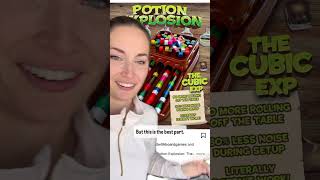
Potion Explosion occupies a distinctive space in the board game landscape: a marble-dispensing puzzle game that earns its place on tables through sheer tactile delight. Reviewers consistently highlight the thrill of triggering chain reactions and the satisfaction of a well-orchestrated turn, while acknowledging the game sits closer to Candy Crush than chess in terms of strategic depth. The physical dispenser generates excitement just by sitting on the table, and completing potions unlocks cascading ability combos that can transform a modest turn into a spectacular one. Critics point to setup hassles and a relatively thin strategic ceiling, but for a family-weight puzzle game, the community verdict leans positive.
Core Mechanics That Define Potion Explosion
Marble Explosions and Chain Reactions
On every turn a player takes a single marble from the dispenser's visible rows, causing the marbles above to slide down. If two marbles of the same color then collide, they explode: the player claims both, along with any further same-color collisions that follow in a chain. As 3 Minute Board Games explains, the game's single best moment is spotting a complex chain reaction and watching a pile of marbles accumulate in your hand. The dispenser is not just a component; it is the game's engine, constantly reshuffling opportunities with each marble removed. Pattern recognition becomes the core skill: reading the marble columns, anticipating which removal opens a cascade, and predicting how an opponent's pick might reset the board in your favor or theirs. Even when it is not your turn, the dispenser demands attention, because what an opponent takes changes what you will find when your turn arrives.
Potion Abilities as an Engine-Building Layer
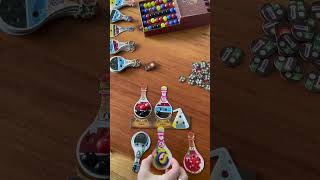
Once a player fills all ingredient slots on a potion tile, that potion flips to its completed side and can be "drunk" on any future turn for a one-time special ability. These abilities range from the Potion of Wisdom (take any single marble from the dispenser) to the Prismatic Joy (use flask marbles as any color) to the Elixir of Blind Love (steal all marbles from an opponent's flask). BoardGameBollocks identifies chaining these abilities together as what elevates Potion Explosion beyond a novelty. A player might use one potion to manipulate marble positions, then a second to harvest the exposed marbles, then a third to redirect leftover ingredients into otherwise unreachable potion slots, all before taking the mandatory marble pick. The ability to stack multiple effects in a single turn creates dramatic swings and turns a turn that appeared routine into an outsized scoring opportunity.
The Potion Explosion Experience
Tactile Presence Unlike Almost Anything Else
No transcript description captures the physical reality of the dispenser better than the Dice Tower's Wendy Ye, who noted that playing digitally on Board Game Arena countless times did not prepare her for the pleasure of physically pulling marbles and watching them roll. The dispenser is a built structure of angled channels that feeds marbles down through gravity. Loading it produces a satisfying clatter, pulling a marble triggers real movement, and chain explosions create a sensory payoff that a screen cannot replicate. Adam in Wales compared the core interaction directly to Candy Crush-style mobile games, and the comparison is apt: the same satisfaction of clearing connected colors drives both experiences, but the physical version gives it weight and texture. This table presence is Potion Explosion's most reliable selling point and the reason it continues to attract curious onlookers at game nights even after years on the market.
A Family Game with a Competitive Edge
Watch It Played's Rodney Smith and Pep McDonald demonstrated during their playthrough how the game shifts tone depending on how aggressively players choose to disrupt one another. The "Little Help" token system, which costs two points but lets a player take any marble without triggering an explosion, doubles as a tactical tool: grab the marble an opponent clearly needs, paying the point penalty as the price of denial. BoardGameBollocks raises this choice explicitly: maximizing your own point yield versus preventing your opponent from maximizing theirs is an active calculation throughout every round. Six of the game's eight potion types appear per game, so no two sessions share the exact same ability combinations, and the love potion's flask-stealing ability can shift the board state dramatically when used at the right moment. These elements give Potion Explosion enough competitive texture to hold the attention of experienced gamers even as its rules remain teachable in minutes.
What Makes Potion Explosion Stand Out
A Puzzle That Plays Differently Every Turn
The marble dispenser randomizes itself continuously. Every marble removed changes the landscape for every player, and the game never presents the same puzzle twice. 3 Minute Board Games notes that although the core gameplay is simple, pattern recognition and strategic planning remain present throughout. A player who spots a delayed chain reaction and sets it up over two turns earns a disproportionate marble haul. The flask system, which stores up to three marbles between turns, rewards players who collect with an eye toward future potion completions rather than immediate placement. Merit badges, awarded for completing a third potion of one type or five different potion types, create a secondary scoring layer that pushes players to diversify rather than grind a single strategy. Together these systems give the dispenser's randomness a framework to work within, creating the feeling of a puzzle rather than pure luck.
Low Barrier, Meaningful Decisions
Potion Explosion teaches in minutes. The turn structure is rigid enough to guide new players: take a marble, resolve explosions, place ingredients, drink potions optionally, refill empty burners. Watch It Played's full rules explanation covers every edge case without overwhelming complication. Yet within that simple framework, meaningful decisions accumulate. Which marble opens the best chain? Which potion should be drunk now versus held for a more valuable moment? Should the Little Help token spend be taken proactively before the pick or reactively after seeing what the board offers? The game's casual appearance invites players who would never approach a heavy euro, and the decisions are real enough to keep those players genuinely engaged rather than passively rolling along.
Potential Drawbacks
Setup and Component Durability Complaints
BoardGameBollocks identifies setup as Potion Explosion's most consistent friction point. Potion tiles must be sorted by type, two types removed, the remainder shuffled and divided into stacks, and starting tiles distributed in draft order before the dispenser can even be loaded. After a game, tiles mix together and the sort must happen again at the start of the next play. The dispenser itself, praised for its table presence, has a documented tendency to separate at its joints during setup and breakdown, with some owners resorting to glue to stabilize it. The rulebook was also noted to contain a contradiction regarding how marbles should be returned to the dispenser, creating confusion during play. None of these issues ruin the experience, but they add friction before and after the game itself.
A Modest Strategic Ceiling
3 Minute Board Games directly acknowledges the Candy Crush comparison, noting some players may find Potion Explosion feels like a multiplayer analog version of a phone app. BoardGameBollocks ultimately gave the base game three out of five and described it as a basic, average experience propped up by a novel gimmick. The strategic ceiling is not particularly high: with only one mandatory action per turn and the board largely shaped by marble randomness, skilled play mostly means reading chains and timing potion abilities efficiently. Players looking for long-term strategic depth may find the game exhausts its complexity faster than its player count suggests. The expansion addresses this directly, adding a fifth ingredient color, new potion types, and professor rule modifiers that reshape overall game conditions, and reviewers who found the base game repetitive generally found the expansion addressed their concerns.
If You Enjoy Potion Explosion
Players attracted to Potion Explosion's marble-matching puzzle and set collection should explore Azul for a similarly tactile tile-drafting experience with a sharper strategic edge. Those who enjoy the engine-building satisfaction of chaining potion abilities might find Gizmos scratches a similar itch with its marble-triggered card chains. Splendor offers a comparable set collection arc with less physical spectacle but tighter resource management. For players who loved the dispenser's physicality above all else, Crokinole delivers a different kind of dexterity payoff with serious competitive depth. And for those wanting to graduate to a heavier alchemy theme, Alchemists takes the magic-school premise into deduction territory that rewards systematic thinking over pattern recognition.
What Reviewers Are Saying
"The single best thing about this game is when you spot a complex and rewarding chain reaction and end up with a pile of marbles. Who cares if you can't use them all?"
— 3 Minute Board Games
"You can not only chain combos together on the dispenser but you can also chain combos together when you're looking at the special abilities. The fact that you can use one potion to manipulate the order of the marbles that will allow you to maximize the point yield from another potion special ability -- how good is that?"
— BoardGameBollocks
"I've played the digital implementations like Board Game Arena and the app for Potion Explosion so many times, like countless. And I had the opportunity, someone had it set up physically, and I thought it was going to be more complicated. But it wasn't. You just roll the marbles in and you're good to go. I got to do all the physical pulling out of the marbles and I thought, this is good."
— The Dice Tower