











Quoridor Deep Dive
What the Community Thinks About Quoridor
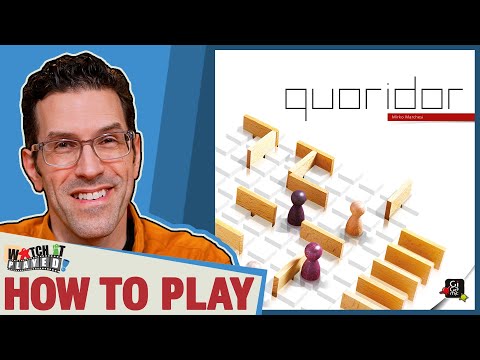
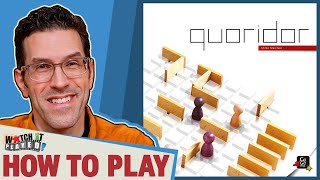
Reviewers tend to describe Quoridor as a compact two-player abstract with a sharper edge than its size suggests. Watch It Played opens with a setup and rules walkthrough, presenting Quoridor as a short ruleset in which the walls a player places become obstacles for the other side. BoardGameBollocks is the most critical voice in the group. Its reviewers say the theme drew them in first, describing "something really weird and compelling about moving some geezer around a maze," but they conclude that the game offers too little strategic depth for their taste and call it "more of an oddity than a must-play." Rolling Dice & Taking Names is more enthusiastic about the product, singling out the wooden production of the Gigamic line, and Our Family Plays Games treats the game as a familiar reference point when introducing the Corridor Pac-Man edition. The overall picture is one of respect for the design, with disagreement over whether its ten-wall limit and early endings leave enough room for long-term play.
Core Mechanics That Define Quoridor
Pawn Racing Across the Board
Each player starts with a pawn on the center space of their own baseline and tries to be the first to reach any of the nine squares along the opposing baseline. On a turn, a pawn moves one square horizontally or vertically, and Watch It Played notes that backward movement is legal even though it is rarely useful. The pawn race creates the central tension of the game because a player can always be forced into a detour. When two pawns face each other with no fence between them, the player to move may jump over the opponent, and if a fence sits directly behind the opponent, the jumper may step diagonally to either side instead. This special case is what makes the pawns feel like they are weaving through one another rather than simply sliding along lanes.
Fence Placement as Obstruction and Redirection
The alternative to moving a pawn is placing one of the ten fences each player owns. Fences are set into the grooves between squares, can be placed adjacent to one another, and must line up cleanly with the board. Adam in Wales describes the core trade-off clearly: a player may either move the pawn or skip the move and place a wall that hinders the opponent's progress. Fences cannot be placed in a way that completely cuts off an opponent from their goal, which means every wall must leave a path open. That rule keeps the game from locking up, but it also forces players to think about where a wall will redirect an opponent rather than where it will stop them outright. Once a player has used all of their fences, the only remaining option is to move the pawn, which is why late turns can feel like a straight race.
The Quoridor Experience
Abstract
Quoridor has no setting or narrative, and it lives entirely in the spatial logic of pawns and walls. BoardGameBollocks reflects on this openly, admitting that the theme is the most appealing part of the game because the maze is built by the players as they go. The reviewers who enjoy the game tend to enjoy the puzzle-like quality of finding a route, blocking a rival, and then finding a new route around the new obstacle. Those who do not enjoy abstracts, however, note that Quoridor offers little in the way of atmosphere to carry them through a losing position.
Interactive and Dynamic
Quoridor is a board that changes as you play, and that is where most of its interaction comes from. Every fence placed by one player alters the routes available to the other, so the board state is a shared construction rather than a fixed field. Watch It Played's walkthrough shows how a single wall can force an opponent to travel around a line of fences, and how that detour can be exploited on the next turn. Reviewers describe the experience as a continuous exchange of counter-moves, with each player's choices directly shaping the other's options. The dynamic nature of the board also means a game rarely looks the same twice, because the same opening can branch into very different mazes depending on where the walls land.
What Makes Quoridor Stand Out
A Maze That Builds Itself
The feature reviewers praise most is the way the board becomes a maze over the course of the game. BoardGameBollocks describes the attraction of "building the maze as you go," which gives players a sense of creating a shared labyrinth rather than navigating a preset one. In Quoridor, that complexity arrives naturally, because each fence is a permanent part of the board until the game ends, and the layout by the endgame reflects the choices of both players.
Wooden Production and the Gigamic Reputation
Reviewers consistently highlight the quality of the components. Rolling Dice & Taking Names praises the production of Gigamic's wooden line, and BoardGameBollocks says the decision to use wood gives the game "a sort of quality feel" and makes it more durable than plastic alternatives. Quoridor also has a four-player variant that reviewers mention as a worthwhile addition, since it extends the same fence logic to a larger table without changing the core rules.
Potential Drawbacks
Ten Fences May Not Be Enough
The most consistent criticism comes from BoardGameBollocks, which argues that ten fences feel too few for a board of this size. The reviewers point out that large portions of the board may never be touched, which leaves the game feeling "a little bit empty and a little bit hollow." They also observe that a game can be effectively decided before its formal end, since a player who runs out of fences early can see the outcome forming and simply race the pawn home, which shortens the strategic phase of the game for a player already well behind.
Handling and Component Fit
BoardGameBollocks raises a practical concern that the otherwise well-regarded wood components do not always help. The fences can tip over when a player reaches into the board to grab a pawn, because the gaps between grid blocks are slightly too generous and the pawn's rounded head makes it hard to lift cleanly. The reviewers suggest magnets in the pawn base and the grid as a fix, and they note that a knocked-over fence can be frustrating in the middle of a close game. This is a minor complaint compared with the strategic critiques, but it is one that recurs in discussions of the physical product.
If You Enjoy Quoridor
Players who enjoy the pawn-and-wall tension will find a natural next step in Camelot, a classic race to get two pieces into the opponent's castle, frequently through jumps over opposing pieces. Both games reward forward planning and punish a careless step into an opponent's line. Santorini is the title BoardGameBollocks reaches for when describing movement games that are always fun to play, and its combination of movement and structure echoes the way Quoridor's walls reshape the route. Hive is another natural fit, since each insect moves differently to surround an opponent's queen bee, creating a sense of movement-driven positioning that many Quoridor players enjoy. For readers who like the Gigamic approach to clean rules, Quarto offers a different kind of abstract tension in the same wooden family.
What Reviewers Are Saying
"I know it's an abstract strategy game, but something really weird and compelling about moving some geezer around a maze you're gonna be making up on the fly."
— BoardGameBollocks
"In Corridor you only have one playing piece, and once again you want to reach the opponent's edge of the board, but in this game you've got the additional option of skipping your move instead placing a wall to hinder your opponent's progress."
— Adam in Wales - Board Game Design
"The production is absolutely topnotch... all the products they have in this line is just top-notch production and this is no different."
— Rolling Dice & Taking Names