How to design an Abstract Strategy Board Game *Top 10 Mechanisms*
Games in This Video
15 games are featured in this video — they unlock as you watch.




Transcript
i recently received a selection of review copies from gigamix modern classics line this line of games has been developed over 30 years with many games joining the line and later retired leaving six games holding the fort in 2022 quarto is the one which started it all the debut game from gigamik and still one of their most popular and published in 2019 quantic is the most recent addition to the line the first thing you'll notice about these games is that they're made from attractive wooden shapes they have no theme or setting they might remind you of traditional classics like chess or go or checkers games which date back thousands of years yet similar games continue to be released each year from a host of publishers around the world among tabletop gamers these games are called abstract strategy games and in this video we're going to delve deep to explore the most common features shared by these titles i'm adam porter i design games and i review games on this channel i like to dip into certain genres polyominose roll and writes trick taking tableau building and try to pinpoint the specific mechanisms frequently used in these games it's a toolbox for you as a game designer which of these mechanisms do you want to employ in your own abstract strategy game which of these mechanisms could you subvert and crucially which mechanisms spring to mind which haven't yet been utilized after thousands of years is there still space for innovation before we begin i'd better define abstract strategy and that's a bit of a
hornet's nest the correct term for these games is combinatorial but that's not a word in common usage so it doesn't help us much here definitions vary the world of tabletop games continues to evolve and cross-pollinate and the category has become broad to keep this video focused i'm going to set some pretty rigid boundaries these criteria are probably too strict so feel free to stretch them in your own designs an abstract strategy game has no theme vague settings are acceptable such as the royal titles for the playing pieces in chess but the theme doesn't attempt to simulate any scenario or narrative the naming of the pieces is there to help players remember their various abilities or perhaps a colorful setting is used as a marketing device an abstract strategy game has no luck players don't roll dice or draw cards from a deck the most skillful player will win and this excludes games like azul or mandala hugely popular themeless strategy games and well worth your time but they're outside the scope of this video all information is open players don't hide information or components everything is visible on the table so players can calculate what they want to do on their next turn or even several turns ahead the rules of these games can generally be explained within a minute yet they reward skillful play we all recognize that horribly cliched phrase a minute to learn a lifetime to
master trademarked by othello in the 1970s complexity in these games should come from the interactions between the players not from overlapping multiple different game mechanisms abstract strategy games are some of the most interactive games in existence every move i make directly impacts on my opponent so this excludes games which feature a simple race to solve a solitaire puzzle such as katamino from gigamic or genius gems from the happy puzzle company before we dive into 10 mechanisms commonly seen in these games there's one feature which probably warrants a mention and that's the board the chessboard is one of the most recognizable icons in tabletop gaming and most abstract strategy games are played on a grid of some sort in onitama as in chess the playing pieces occupy the squares of the grid but in squadron as in go the playing pieces occupy the intersections between the squares these games all use a square grid but of course many games do deviate from that the playing pieces in yinch traverse the intersections of a large triangular grid in tortuga your turtles maneuver a tight hexagonal grid in an attempt to reach the opponent's end zone in battlesheep a hexagonal grid is constructed before each game by combining modular tiles creating a different playing surface every time you play and a similar system is used in kulami with a square grid made up of small tiles oriented in different
configurations in hive there is no board the hexagonal pieces create the playing space as the game progresses so i'm going to kick off my top 10 mechanisms by talking about end game objectives and this makes up the first six entries in the list what are we trying to achieve in an abstract strategy game the simplest connect x game is tic-tac-toe players are attempting to create a horizontal vertical or diagonal row of three icons noughts or crosses the same principle applies though the players aim for a line of four pieces instead of three in goblet from blue orange games in ok play players attempt to connect five squares in an open playing space similar to that discussed earlier in the game hive quick so is likewise a connect 5 game but this time within a confined board inevitably some games mess with this formula in quantic players attempt to create a row a column or a square of four different shapes regardless of which player owns them and in quarto players attempt to create a line of four pieces which all match in one characteristic so four short pieces four tall pieces for light for dark for hollow for solid four square or four round pieces so we've seen games with the goal of connecting three four or five similar pieces in a row column diagonal or square and we've seen games which require players to connect dissimilar pieces and in quarto we've
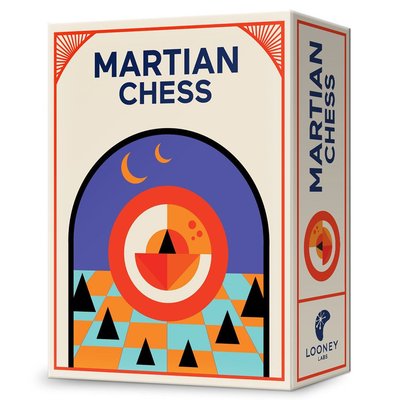
seen a game which explores different attributes which could make playing pieces similar to one another height color shape and density can you think of any other ways to make a connect x game the most famous capture x game is chess where the goal of the game is to take the opponent's king but capturing pieces is a feature in a wide variety of abstract strategy games and is one of the most common end game goals onotama features a similar endgame goal to chess capture the master pawn on a much reduced board in hive you're attempting to capture your opponent's queen bee but in this instance you do so by surrounding it and preventing it from making any more movements in martian chess each piece that you capture scores you one two or three victory points depending on its size and the highest score at the game end wins gif features a unique combination of capture x and connect x mechanisms whenever either player creates a row of four or more matching discs those discs are returned to their owner for another use later in the game but any pieces of the opposite color which are connected to that matching line within the same row on the grid they're also captured and hence removed from the game closely related to capture x games we have the sumo-like games abalone and shobu in both of these games players attempt to eliminate their opponent's pieces by pushing them off the board in abalone you can either move a single marble or a column of two or three marbles one space on a grid when your own column of
marbles is bigger than the column you're pushing you can advance one space pushing the smaller column of marbles into unoccupied spaces the objective of the game is to eliminate six of your opponents pieces by pushing them off the board in shobu your playing pieces are positioned on four separate grid boards when you move your playing piece into an unoccupied space on one board you can then select a playing piece on a separate board and move it in exactly the same manner but this playing piece can push your opponent's pieces the goal of the game is to eliminate all of your opponent's pieces from any one of the four boards baby boom also allows players to push their owners pieces and ultimately to eliminate them in this unassuming little game the playing pieces are dice but they're never rolled when you move you count down your dice turning it to the next value and if your dice is higher in value than an adjacent opponent you can push them one space when a dice hits zero it explodes eliminating all other dice in the same row and column but remaining on the board itself and when only one player remains with unexploded dice players count up the numbers on the uppermost face of their dice that are still on the grid exploded dice score one point and the highest scorer wins in destination games players attempt to move their pieces across the board in order to reach a final game-winning position i previously referred to onitama's endgame goal of capturing the opposing master but there's an alternative
victory condition which involves moving your own master pawn into your opponent's temple likewise in the classic game camelot you can win by capturing all of your opponent's pieces but the primary goal is moving two of your playing pieces into your opponent's castle in camasado the game is won by reaching your opponent's baseline with a single playing piece same deal for tortuga in corridor you only have one playing piece and once again you want to reach the opponent's edge of the board but in this game you've got the additional option of skipping your move instead placing a wall to hinder your opponent's progress in squadron the goal is to send four of your five playing pieces to the opposite edge of the board and then bring them back again and the twist here is that the distance the pieces can move is dictated by the number on their starting position and this changes when they commence their return journey from the opposite side of the board your opponent is going to be playing perpendicular to you and crossing the path of an opponent's playing piece will send it back to its own board edge pylos adds a third dimension to the destination format on your turn you place your own coloured sphere onto the central grid and if there's a square of four spheres you can place on top of it or even move one of your spheres from a lower level raising it up the player who places the final sphere atop the pyramid wins the game the ancient game of go is the most famous territory game
territory games involve blocking off sections of the board such that your opponent can't play in those regions and generally players score points for the areas that they control and then the highest scorer wins a simple example would be blockus from mattel this game players take turns placing polyaminos onto a shared grid with the limitation that they can only place them such that they contact their previously placed tiles on a diagonal they can never be placed directly adjacent to your own pieces the goal is to block off your opponents so that they can't play hence they lose the game in cathedral when you connect board edges with your polyamino pieces this claims that territory as your own if your opponent has a single playing piece within that territory it's immediately returned to them the game's over when players can't place any more pieces and then every piece unplaced at game end scores negative points for its owner root building is our final end game objective so this is where players are tasked with creating a path from one area of the board to another by a continuous chain of playing pieces in punk'd players take turns placing pieces onto the board or moving existing pieces along straight lines and then rotating around their central dot to find an optimum position and the goal is to connect any two opposite board edges with pieces of your own colour players can even stack their pieces on top of other pieces so long as the central dot is located over a matching coloured tile
and the tile must be fully supported by other tiles beneath it in tach players attempt to create a path of their own stones from one edge of the board to another and stones can be placed flat on empty spaces or stacked on top of one another the uppermost flat stone on a space counts towards a connected path but alternatively stones can be placed so that they stand on their edge these pieces don't count towards a path and they cannot have flat or standing stones stacked on top of them so they're primarily used for blocking your opponent finally players can place capstones which can be positioned on top of standing stones flattening them but cannot themselves be stacked upon instead of placing a new playing piece a player can alternatively move a stack which is under their control dropping off pieces along the way it's clear from the games that we've mentioned that there are two broad categories of abstract strategy games those where pieces can be moved on the board and those were once placed playing pieces remain in the same position for the duration in connect four the progression of the game is linear once a piece is placed it remains in its position for the rest of the game that's also true in quarto in quantic and in blockus and this makes for simple graspable gameplay and a consistent duration but of course even linear games can require extraordinarily complex strategies in order to play well the ancient game of go is essentially linear pieces can be
eliminated but never moved while on the board introducing movement into an abstract strategy game opens up a massive design space pentago is a striking example it's essentially a simple game of connect 5 on the 6x6 grid but the literal twist here is that players must rotate one corner of that board by 90 degrees after each of their turns altering the positions of all the pieces in that section quick sew is a game of sliding blocks players are attempting to create a row of five noughts or five crosses and on your turn you select a blank block or one showing your icon from the outer edge of the grid and you turn it to show your symbol then push it back into the grid from one of the edges such that the new vacant space is closed players alternate doing this until one player wins the game gift utilizes a similar mechanism whereby playing pieces are pushed onto the triangular grid from the edges moving any other pieces in their path as with quick sew this can create chains of matching coloured pieces but in gif these pieces are returned to their owner eliminating any connected pieces of their opponents along the way in tac players frequently stack their playing pieces on top of each other stacking pieces has a variety of functions in different games for example in checkers stacking a second piece on top of one of your own discs simply serves as a reminder that this piece is able to move backwards as well as forwards but in many other abstract strategy games the
stacking of pieces has a pivotal gameplay function whether that's building up stacks or breaking them down in battle sheep each player starts with a stack of 16 discs in their own color and on your turn you split your stack into two smaller stacks and then move one of those stacks as far as it can go in a straight line without passing over any other sheep or moving outside of the grid when all players can no longer move any of their stacks the game ends and the player occupy in the most grid spaces wins in link the goal of the game is to build stacks featuring all five of the available colors the model discs count as any color and at the end of the game the player with the most five color stacks wins all disks start on the board in a random pattern and on your turn you move a piece or a stack of pieces and your move must end on top of a piece or another stack a stack can never contain two or more disks of the same color at the start of the game all pieces are considered neutral which limits what you can do with them you can only move a single neutral disc on top of a single other disc and a stack with a neutral piece on top of it can only move on top of a single piece or a stack of equal or smaller size before making your move however you are allowed to claim a color as your own this frees you up to move pieces or stacks showing this color onto a stack of any size so long as the rule about no duplicated colours is respected the challenge is that you can only claim a
colour twice during the game so timing is important and when you construct a stack of five different colours with one of your controlled colours on the top you remove that stack from the board for scoring the game ends when no more turns are possible and there's one additional movement mechanism which keeps this game interesting when you move a piece or a stack that you control you may slide it towards a matching colored stack and then use each connected matching stack or playing piece as a link allowing you to essentially turn them into a path maneuvering around that playing space gobbler is a really unusual stacking game superficially it resembles a simple game of connect 4 played on a compact 4x4 grid and on your turn you may place a new playing piece onto the board or you can move an existing piece from the board into a new position but the twist here is that moving a piece might allow you to cover a smaller piece belonging to your opponent and of course that means that on a later turn you might lift a piece from the board accidentally revealing a smaller piece hiding beneath and that might be just the piece that your opponent needs to create a line of four so unusually in an abstract strategy game goblet players need not just a strategic mind but also a good memory reminiscent of checkers or drafts camelot is a classic game whereby players attempt to get two of their pieces into their opponent's castle frequently by jumping their opponent's pieces there are two types of playing piece knights and men and both are able
to make a plane move so a simple move one space in any direction but they're also able to jump over a series of friendly pieces in a single turn alternatively they may choose to jump over a series of opposing pieces capturing those pieces as they go the knight's unique power is that it can combine jumps over friendly pieces with jumps over opposing pieces in what's known as a knight's charge in ginch on your turn you place a marker of your colour inside one of your rings you then move the ring in a straight line as far as you like you can make a single jump over as many markers as you want as long as they are in an uninterrupted line but your move must end when you land on the first unoccupied space all markers which you've jumped over are reversed to their opposite side the goal is to create a row of five markers of your own color yinch is an example of a game where most of the playing pieces have no owner they're flipped frequently throughout the game changing allegiance each time in tortuga you're trying to get one of your turtles to the opposite end of the beach and all the turtles are identical we only know which turtles are mine and which are yours because of the direction that they're facing in and when a player jumps over an opposing turtle in a manner similar to checkers or camelot that turtle is flipped onto its back neutralizing it the next time that turtle's jumped over it gets back onto its feet and it's turned to face the same direction as the turtle who made the jump so in this way
those duplicitous little turtles change allegiance frequently throughout the game quarto is a game where players don't own a specific set of pieces they just work from a shared pool on your turn your opponent selects any piece and gives it to you for you to place onto the grid so you have no choice over which piece you play but you can choose where you place it the goal you'll remember is to form a line of four pieces which share a common characteristic in order to win the game in martian chess you only have control over playing pieces in your own half of the board and when the play and pieces cross into the opponent's half your opponent takes control of them the smallest pyramids can only move one space horizontally or vertically the middle-sized pyramids can move one or two spaces again horizontally or vertically but the largest pyramids are queens and they can move as far as they like horizontally vertically or diagonally and when you move onto an opponent's piece you capture it removing it from the board as in regular chess one unique feature of this game is the ability to upgrade your pieces if you move one of your own small pyramids into the same space as another of your small pyramids they can merge to become a medium pyramid and likewise you can merge a small pyramid with a medium one in order to make a queen the game ends when one half of the board is completely empty and players score one two or three points for any small medium or large pyramids that they've captured and the highest scorer wins in chess each player has six distinct
playing pieces the king the queen the bishop the knight the rook and the pawn and each of them moves differently there are a few abstract strategy games which have this wide range of special abilities for their pieces tak features three distinct pieces flat stones standing stones and capstones camelot has two men and knights hive is a game which feels close to chess but it has five distinct playing pieces the game's played without a board with players attempting to surround the opposing queen bee and with the exception of your first piece your pieces cannot be placed such that they touch the opponent's pieces however they may move into these positions and each insect does that in a different way the queen bee can move one space per turn likewise with the beetle though the beetle can also move over the top of other pieces preventing any piece beneath it from moving on their own turn the grasshopper can jump over any number of pieces in a straight line and the spider moves exactly three spaces the ant can move as far as it likes around the hive so long as it respects the usual restrictions about squeezing through gaps etc katarenga superficially resembles chess it's played on a grid board with chess pawns of two colours but the goal of the game is different in katarenga is a destination game with players attempting to guide two of their pawns off the opposing side of the playing board the special abilities in katarenga are not related to the playing pieces themselves that's why they're
pawns but the grid spaces they occupy dictate how you can move so if you're sitting on a red square you move in a straight line like a rook if you occupy a yellow square you can only move on diagonals like a bishop starting on a green square allows you to jump over pieces in an l shape like a knight and if you're on a blue square you can only move one space in any direction like a king landing on an opposing pawn allows you to capture it just as you would in chess modern abstract strategy games excel when the players are working under considerable constraints returning to the simplest abstract strategy game in existence tic-tac-toe the game is solved if both players play optimally which is relatively simple to achieve then tic-tac-toe will always end in a tie the issue arises because players have total freedom over where to place their icon and the decision space starts small and then gets smaller as you play this makes the game trivial you might recall from my previous video on polyamino games that in 1984 a russian software designer alexei pagetnov found himself similarly uninspired with the traditional pentomino puzzle he wanted to create a digital version but he found the solvable nature of it too limiting his solution was to program the shapes to drop vertically from the top of the screen and that created tetris one of the most successful video games ever invented now it doesn't seem too far-fetched to imagine that he might have been inspired by howard wexler's connect 4 the 1974 game which added a
vertical dimension to tic-tac-toe enlivening the game in a similar manner to how tetris enlivened pentominos it's an example of how abstract strategy games become richer when there are constraints on when and how pieces can be placed in ok play players attempt to connect five of their own coloured tiles but they're only allowed to place directly adjacent to existing tiles in kulami your token must be placed in the same row or column as the last token played by your opponent but never on the same tile camasado is a particularly intriguing system you're attempting to move your playing pieces to the opponent's board edge but the coloured space you land on dictates the playing piece which your opponent can move on their next turn so it has a similar feel to quarto in that your opponent dictates the playing piece that you must use but you can choose what you want to do with it in onitama you always have two types of move available indicated by the cards in front of you but when you use one of these moves the card is swapped with one neutral card that sat between the players thus using a certain move makes that same move available for your opponent on a future turn in each game of onotama the available moves are drawn randomly from a deck so that every game requires a different strategy onotama is what i would call a hybrid abstract strategy game that's to say it takes some of the classic gameplay from chess and checkers but introduces an elegant drafting system which might feel more at home in a modern euro game
but the two worlds merge effortlessly to create a really satisfying unique product over recent years many such hybrid games have hit the market and had enormous success patchwork mandala azul and war chest they all feel to me like they have a foot in both camps and therefore they fall outside the scope of this video but they're well worth a look if you're less interested in the traditional feel and open to something a little bit more modern but if you fancy a simple classic but you're intimidated by the strategic complexities of go or chess i would highly recommend any of the gigamic wooden classics line my personal favorite is quarto it's immediately recognizable as a connectx game and hence it's totally intuitive but the central mechanism where players select the piece their opponent has to play is one of the best hooks i've seen in modern tabletop games it's extremely clever but most importantly it's really fun since i've built this video as a guide to designing abstract strategy games i feel like there's one further point that i need to stress these games more than most tend to have no graspable thematic or narrative hook to set them apart they also have minimal components which makes it even more difficult to stand out from the crowd i recently watched an interview with howard wexler in which he described his experience of designing connect four wechsler explained that the most important factor in generating millions of sales of his game was not the innovation of dropping pieces into the frame from above and it wasn't the colourful components or even the distinctive table presence afforded by
the vertical board wexler was quite certain that the single most impactful feature of connect 4 was that little hatch beneath the frame the plastic door which opens to release all of the disks in a loud clatter onto the table it was the exciting moment of release which signaled the end of a game and pushed players to play a second round immediately no setup and great toy factor with these games product design is everything this afternoon i exchanged a few messages online with jamie sajdak one of the designers of shobu he mentioned that the visual and physical design of shobu was pivotal in attracting a publisher i pressed him to elaborate on that what was it about shobu that caught their attention and jamie explained that people immediately recognized shobu as an abstract game like checkers or go but they then spot that the playing space is split into four separate boards and they want to know why is it like that why is it like that what a great question if players are drawn to ask that question about your game you're probably on to something they've noticed you you're on their radar now you can let the gameplay do the rest of the work so please let me know in the comments which are your favorite abstract strategy games and if you enjoyed this video please go back and watch some of my others hit like and subscribe if you haven't already done so until next time all the best