Collection Status
Your Rating
Description
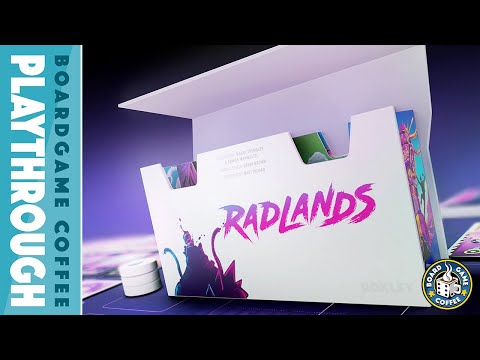
Radlands is a competitive, dueling card game about identifying fiercely powerful card synergies.
Act as the leader of your post apocalyptic group of survivors in a tooth-and-nail fight to protect your three camps from a vicious rival tribe. If all of them are destroyed, you lose the game.
The main resource in the game is water. You will spend it to play people and events, and to use the abilities of cards you already have on the table. People protect your camps and provide useful abilities, while events are powerful effects that take time to pay off.
Both players draw cards from the same deck. All cards can either be played to the table or discarded for quick “junk” effects. To win, you will need to manage your cards and water wisely.
Year Published
2021
Featured Videos
Playthrough
Radlands Playthrough
Transcript Analysis
Browse transcript mentions, sentiments, pros/cons, mechanics, topics, quotes, and references.
Total mentions: 41
This page: 41
Sentiment:
pos 31 ·
mix 6 ·
neu 0 ·
neg 1
Showing 1–41 of 41
Video vjxxEuoCKkI
top_10_list sentiment: positive
video_pk 62910 · mention_pk 155834
Overall sentiment (raw)
positive
Pros
none
Cons
none
Thematic elements
- lane-based strategy and deck interaction
- two-player fighting game with lanes and camps
Comparison games
none
Mechanics (from transcript analysis)
Mechanics unknown.
Video topics + discussion points
No key topics recorded for this video.
Quotes (from this video)
- Stellar is not a super well-known, well-talked-about game. I found it randomly in a local board game store.
- it's basically a two-player only game, asymmetric
- Lost Cities is a hand management game
- Patchwork is a tight, solid Uwe Rosenberg design
- Santorini is my favorite abstract game
- Castles of Burgundy... there's nothing like it for me in two-player
- Race for the Galaxy is my number two two-player game of all time
References (from this video)
No references stored for this video.
Video OlITCII8WII
top_10_list at 0:13
video_pk 62897 · mention_pk 155764
Click to watch at 0:13 · YouTube ↗
Pros
none
Cons
none
Thematic elements
Comparison games
none
Mechanics (from transcript analysis)
Mechanics unknown.
Video topics + discussion points
No key topics recorded for this video.
Quotes (from this video)
No quotes stored for this video.
References (from this video)
No references stored for this video.
Video 7AkoOLrbS_0
game_review at 0:15 sentiment: mixed
video_pk 62549 · mention_pk 155271
Click to watch at 0:15 · YouTube ↗
Overall sentiment (raw)
mixed
Pros
- Very thorough and transparent documentation for a crowdfunding campaign (rulebook and example turn guide).
- Strong modular design with multiple luminaries, professions, and shade opponents enabling varied playstyles.
- Well-designed growth systems and element-based activations that reward thoughtful deck-building decisions.
- Deluxe tier components improve usability (dual-layer mats, better card stock) and real quality-of-life benefits.
- Campaign performance and transparency signals community confidence in the project.
Cons
- No verified gameplay footage or independent reviews yet; risk remains until play is observed.
- Two-player mode appears potentially underdeveloped or secondary to solo design.
- Eight-phase round structure and heavy state management may be a cognitive load, risking analysis paralysis.
- Five-month manufacturing timeline with limited contingency information raises delivery risk.
- Deluxe expansions and modules are intriguing but undemonstrated; user experience depends on unseen play.
- Limited edition nature creates pressure to decide early without observed gameplay.
Thematic elements
- Light-based resource management, personal growth, and corruption as you strive to save a radiant metropolis.
- A luminous last city under threat from four shadowy shades, explored through location travel and boss encounters.
- Procedural, boss-driven exploration with modular characters and branching paths.
Comparison games
- Mage Knight
- Ark Nova
- Too Many Bones
Mechanics (from transcript analysis)
- Card roles — You select three cards from your hand to fill specific roles each turn: an action, an attack, and a booster. A fourth card is locked in from the previous round's attack, driving momentum across turns.
- Combat: Damage Based — You explore locations and travel to defeat a chosen shade while managing corruption, treachery, and light.
- dual-use cards — Every card can serve multiple purposes (attack, action, booster) with trade-offs (defense, elemental skills) depending on how you play it.
- Eight-phase rounds — Each round consists of eight distinct phases, shaping a dense and potentially complex flow of play.
- Element-based skill activation — Activating a booster can trigger elemental skills across your unlocked tree, rewarding synergy with deck-building choices.
- Exploration vs. combat balance — You explore locations and travel to defeat a chosen shade while managing corruption, treachery, and light.
- Growth tracks — Two progression tracks—ability growth (XP on a grid) and character growth (stats like light production, hand size, healing power).
- Light economy — All actions cost light; if you can't afford the three cheapest cards at the start of a turn, you immediately lose, creating constant tension and no recovery phase.
- Modular board — Four luminaries, four professions, and four shade opponents yield many base combinations (64) before considering growth and expansions.
- modularity — Four luminaries, four professions, and four shade opponents yield many base combinations (64) before considering growth and expansions.
- Multi-use cards — Every card can serve multiple purposes (attack, action, booster) with trade-offs (defense, elemental skills) depending on how you play it.
- Track advancement — Two progression tracks—ability growth (XP on a grid) and character growth (stats like light production, hand size, healing power).
- Variable Phase Order — Each round consists of eight distinct phases, shaping a dense and potentially complex flow of play.
Video topics + discussion points
No key topics recorded for this video.
Quotes (from this video)
- Everything runs on light. You spend it to play cards, and if you can't afford your three cheapest cards at the start of a turn, you immediately lose.
- The modularity is probably the strongest feature.
- I'm sitting at a 7 out of 10, and that rating reflects significant reservations despite recognizing the campaign's strengths.
- The complete absence of verified gameplay footage is a critical gap that prevents any higher rating.
- Conditional buy at the deluxe tier.
References (from this video)
No references stored for this video.
Video 4M6ictVvrvA
Unknown Channel analysis at 0:40 sentiment: positive
video_pk 62531 · mention_pk 155236
Click to watch at 0:40 · YouTube ↗
Overall sentiment (raw)
positive
Pros
- Direct, visceral combat and fast play sessions
- Great value and production
Cons
- Can be swingy and punishing if defenses are spread
Thematic elements
- Array
- Array
- Direct camp destruction and defense in a small, brutal skirmish setting.
- Array
- Post-apocalyptic world with camps, raiders, mutants and punks in a card-driven duel.
- Array
- Array
- Array
- positive
Comparison games
- Zenith
- Compile
Mechanics (from transcript analysis)
- Camp drafting — Draft camps from a shared deck to shape your strategy.
- play cards to damage camps — Play cards to damage camps and activate camp abilities.
- Resource management — Use water to pay for cards and activate effects.
Video topics + discussion points
No key topics recorded for this video.
Quotes (from this video)
- Radlands is pure aggression.
- The camp drafting alone creates massive variability.
- You're destroying each other's stuff, racing to finish, adapting on the fly.
- Zenith is indirect, pulling planets and building efficiency.
- The technology cascade is clever and satisfying.
- A surprisingly non-confrontational for a tug-of-war game.
- The cards lack character and the theme is basically non-existent.
- Compile is for the deep strategy niche who want lane battling variety and don't mind abstract themes.
References (from this video)
No references stored for this video.
Video rtPaehv60hs
game_review at 1:09 sentiment: mixed
video_pk 62490 · mention_pk 155105
Click to watch at 1:09 · YouTube ↗
Overall sentiment (raw)
mixed
Pros
- Innovative shared-deck card battler with evolving camps
- High variety due to camps and expansions
- Strong two-player appeal and replayability
Cons
- High-cost cards can be neutralized quickly
- Theme may not resonate with all players
- Learning curve can be steep for new players
Thematic elements
- card battle duels where camps are defended and attacked via limited resources
- Neon post-apocalyptic world with three lanes and base camps as objectives
- analytical, card-driven duel with modular camps and evolving strategies
Comparison games
- Battle Line
Mechanics (from transcript analysis)
- Deck building — Both players draw from the same deck rather than individual decks
- event cards — Raiders/effects that resolve over turns and can be delayed or accelerated
- Events — Raiders/effects that resolve over turns and can be delayed or accelerated
- high-cost multi-use cards — Some cards cost multiple water discs and can have multi-use effects
- lanes and base camps — Three lanes lead to base camps; destroying camps is the objective
- Multi-use cards — Some cards cost multiple water discs and can have multi-use effects
- punk cards — Low-cost fodder cards used to block or interact with camps
- Resource management — Limited water discs act as mana; some effects create or consume discs
- shared deck drawing — Both players draw from the same deck rather than individual decks
- water discs / resource management — Limited water discs act as mana; some effects create or consume discs
Video topics + discussion points
No key topics recorded for this video.
Quotes (from this video)
- This is an own it for me.
- The quality of the cards is incredible.
- Nine turns is a big hook for White Castle.
- I would call Lacuna an own it as well.
- Spot is a play it for me, not quite owning it.
References (from this video)
No references stored for this video.
Video N4W2xLh-I1k
top_10_list at 4:50 sentiment: positive
video_pk 62526 · mention_pk 155226
Click to watch at 4:50 · YouTube ↗
Overall sentiment (raw)
positive
Pros
- tight, strategic decisions
- complete game in a single box
- scales well with play intensity
Cons
- may be too lean for players seeking heavy complexity
- dueling focus may limit broader audience
Thematic elements
- dueling card combat with resource management
- Post-apocalyptic duel in lanes
- tactical, fast-paced
Comparison games
- Magic: The Gathering
- Netrunner
Mechanics (from transcript analysis)
- event countdowns — Event cards resolve over turns, creating timing decisions.
- Lane-based combat — Cards deployed in lanes interact with neighboring zones and affect the opponent.
- shared deck, resource management — Draw from a common pool and spend water to play characters and events.
Video topics + discussion points
No key topics recorded for this video.
Quotes (from this video)
- No patchwork, no Seven Wonders Duel, just genuinely underrated games that deserve a spot on your shelf.
- Buy this if you want something quick, portable, and full of meaningful decisions.
- That swing was massive.
- You can plan ahead because you know what your opponent might take and how it affects the board.
- The app is brilliant. It actually enhances the experience rather than feeling tacked on.
- The brilliance is in the timing and indirect interaction.
- Buy Tether if you want something that teaches in 2 minutes, but reveals depth of a repeated place.
- Buy Lacuna if you want something beautiful and tactile.
References (from this video)
No references stored for this video.
Video jXE2Bw7SsyA
top_10_list at 5:23 sentiment: positive
video_pk 62538 · mention_pk 155248
Click to watch at 5:23 · YouTube ↗
Overall sentiment (raw)
positive
Pros
- Tension from scarcity and combo destruction
- Powerful moments when raids and snipers collide
Cons
- Destruction can feel brutal and potentially demoralizing
- Requires careful alignment of events; can favor immediate payoff
Thematic elements
- Scarcity, defense of camps, and ruthless event-driven damage.
- Post-apocalyptic world with three camps per side.
- Tense, dramatic, emotionally violent in a non-physical way.
Comparison games
none
Mechanics (from transcript analysis)
- Camp defense and events — Play characters to defend camps or trigger events that cause big effects.
- Destruction and tearing down — Strategic dismantling of opponent's board leads to momentum shifts.
- Discard for effect — Discard cards to gain immediate effects, sometimes sacrificing future options.
- Events — Play characters to defend camps or trigger events that cause big effects.
- Physical Removal — Strategic dismantling of opponent's board leads to momentum shifts.
- Resource (water) economy — Water acts as primary resource; limits and drives action.
Video topics + discussion points
No key topics recorded for this video.
Quotes (from this video)
- It's passive aggressive warfare disguised as a bakery.
- We call that mindbug paralysis.
- Oh god, the counting.
- The finale was the worst. We reached the end and we had to choose our final destiny. I realized to win I had to break up with you.
- Fog of Love forces you to operationalize selfishness.
References (from this video)
No references stored for this video.
Video ZHHvJamXnZw
All You Can Board top_15_list at 23:34
video_pk 62476 · mention_pk 155068
Click to watch at 23:34 · YouTube ↗
Pros
none
Cons
none
Thematic elements
none
Comparison games
none
Mechanics (from transcript analysis)
Mechanics unknown.
Video topics + discussion points
No key topics recorded for this video.
Quotes (from this video)
- Small box games can sometimes get a bad rap because there's so many board games that release every year.
- Flip Tunes is a really small box clearly.
- it's such an easy game to teach
- Scout is one of the best card games I've played in the last little bit.
- Cascadia Rolling Rivers is a really satisfying game to manage the habitat cards.
- Take Time is a cooperative game that boils down to two sets of cards, 1 to 12.
- The Crew Mission Deep Sea is a cooperative trick-taking game for three to five players.
- Stellar is a really great smallbox game that left my collection.
References (from this video)
No references stored for this video.
Video kV3DCPdSzf0
Allies or Enemies game_review at 0:00 sentiment: positive
video_pk 61175 · mention_pk 153801
Click to watch at 0:00 · YouTube ↗
Overall sentiment (raw)
positive
Pros
- Vibrant, punchy art that reinforces the post-apocalyptic vibe
- Fast, tight sessions around 20 minutes
- Deep strategic choices within a small card pool
- Rulebook is concise and rules are visually straightforward
Cons
- Limited to two players, reducing group playability
- Thematic scope may not appeal to all audiences
- Some players may crave more card variety or asymmetry
Thematic elements
- Mutant tribes, punk factions fighting over precious water
- Post-apocalyptic desert oasis with water scarcity and rival camps
- Graphic-novel style with bold electric blue and pink artwork
Comparison games
none
Mechanics (from transcript analysis)
- Action Timer — Event cards have round-based triggers that shift tempo and pressure
- Area Control — Each player starts with camps; destroying all enemy camps wins the game
- Area control / camp destruction — Each player starts with camps; destroying all enemy camps wins the game
- deck manipulation — Scrapping cards discards from play to gain immediate advantages
- Deck manipulation / discard for effect — Scrapping cards discards from play to gain immediate advantages
- Event timing with round timer — Event cards have round-based triggers that shift tempo and pressure
- hand management — Players curate a small hand of cards each turn to decide plays and activations
- Resource management — Water tokens are the primary resource used to deploy and activate cards
- two-player only design — Engineered specifically for two players, no higher-player-mode rules
Video topics + discussion points
No key topics recorded for this video.
Quotes (from this video)
- Radlands is a fast-paced 20-minute card game and with that comes a certain amount of built-in replayability.
- The artwork is What attracted us to the game and it drips with theme at every turn.
- There is a solid amount of depth in this system and that art style is pretty great.
References (from this video)
No references stored for this video.
Video VVKFP7gTc9E
Allies or Enemies general_discussion at 9:40
video_pk 61055 · mention_pk 153473
Click to watch at 9:40 · YouTube ↗
Pros
none
Cons
none
Thematic elements
- Array
- Array
- Street gang conflict with camps and punks
- Array
- Post-apocalyptic desert world
- Array
- Array
- Array
- positive
Comparison games
none
Mechanics (from transcript analysis)
Mechanics unknown.
Video topics + discussion points
No key topics recorded for this video.
Quotes (from this video)
- the artwork is amazing and even though this isn't officially Mad Max it does a really good job of capturing a Mad Max postapocalyptic type world
- this is one that we're going to mix in and we're probably going to find the other expansion too
- it's definitely worth it for me
References (from this video)
No references stored for this video.
Video lKYxCA--A_M
Allies or Enemies general_discussion at 11:43 sentiment: positive
video_pk 61165 · mention_pk 153772
Click to watch at 11:43 · YouTube ↗
Overall sentiment (raw)
positive
Pros
- Amazing art and thematic polish
- Highly replayable with varied card combos
Cons
- Can end up quickly or drag depending on table dynamics
Thematic elements
- Head-to-head camp destruction and protection
- Post-apocalyptic tableau battle; camps to defend
- Dynamic, visceral
Comparison games
none
Mechanics (from transcript analysis)
- Head-to-head conflict — First to destroy opponent's camps wins; can be fast or stalemates
- tableau building — Each player builds a tableau of camps with special powers
- Tableau-building duel — Each player builds a tableau of camps with special powers
Video topics + discussion points
No key topics recorded for this video.
Quotes (from this video)
- parade would be my number one because i love this game
- this is like the best bang for your buck you're gonna find
- it's an absolute blast
- it's so worth it
- this has been the game of the summer for us
- we've played this like most nights this summer
References (from this video)
No references stored for this video.
Video oFQRH3vj6x4
Shelfs Side game_review at 0:00 sentiment: mixed
video_pk 60699 · mention_pk 153115
Click to watch at 0:00 · YouTube ↗
Overall sentiment (raw)
mixed
Pros
- Fast setup and easy to teach
- Vivid, bright card art and sturdy components
- Three-column protection mechanic creates clear defensive choices
- Raiders introduce delayed threats and strategic planning
- Short playtime makes it accessible to casual players
Cons
- Certain camp combinations are unbalanced or overpowered
- Events provide limited lasting advantage and can create RNG-heavy outcomes
- Doomsayer and other tech cards can disrupt balance
- Junking can amplify randomness and tempo swings, reducing strategic depth
- Limited drawing options and no mulligan reduce comeback potential
- UI readability issues due to long text and side-by-side names
Thematic elements
- Array
- Post-apocalyptic desert world
- Asymmetric, event-driven dueling card game
Comparison games
- Magic: The Gathering
- Yu-Gi-Oh
Mechanics (from transcript analysis)
- asymmetric player powers — Each Camp card provides a unique active ability to the owning player, creating asymmetry in how you approach each camp.
- Asymmetric powers — Each Camp card provides a unique active ability to the owning player, creating asymmetry in how you approach each camp.
- Combat: Damage Based — Damage can affect any unprotected element including camps; injure affects only enemy units.
- Damage vs injure distinction — Damage can affect any unprotected element including camps; injure affects only enemy units.
- Events with timers — Event cards sit to the side and resolve on a timer, progressing at the start of turns.
- Junking — Cards can be discarded from hand to activate their junk ability, enabling multi-use effects.
- Limited mulligan and fixed deck draw — No mulligan and a fixed deck with limited card draw leads to decisive openings and tempo swings.
- Raiders as delayed threats — Raiders are events that progress towards opponent camps and deal damage when resolved, creating delayed pressure.
- Resource management — Water acts as the primary currency to perform actions, draw, or activate abilities.
- Three-column camp format with protection — Camps line up in three columns; a card in front protects the one behind and can shield it from damage.
Video topics + discussion points
No key topics recorded for this video.
Quotes (from this video)
- Radlands is just a streamlined self-contained approach to a 1 V1 dueling card game
- water is currency here
- the water Silo mechanic smoothens out water management
- Raiders are an event that you can always activate
- Doomsayer is a weird Tech card or a counter card you would see in a deck building card game
- Radlands is super easy to get into is entirely self-contained and has strategy with picking camps meeting tactics with random card draw
- there's no Mulligan in this game
- junking ends up hurting how this game handles Randomness
References (from this video)
No references stored for this video.
Video f9ytY874CRc
Meeple Madness general_discussion at 7:11 sentiment: mixed
video_pk 60466 · mention_pk 152871
Click to watch at 7:11 · YouTube ↗
Overall sentiment (raw)
mixed
Pros
- Sweaty, depth-driven play noted by commentators
Cons
none
Thematic elements
Comparison games
none
Mechanics (from transcript analysis)
Mechanics unknown.
Video topics + discussion points
No key topics recorded for this video.
Quotes (from this video)
- It's literally a popularity contest.
- Code Names Duet is also just a lot of fun.
- Santorini has the legs to make it to the final four.
- Zenith narrowly edged it out 51% to 49% of the vote on this one.
- Watergate is my favorite two-player game.
- I'm 6 and 0 on Cena so far.
References (from this video)
No references stored for this video.
Video FikH2PuRiCI
Box Delights general_discussion at 0:16 sentiment: positive
video_pk 60223 · mention_pk 152660
Click to watch at 0:16 · YouTube ↗
Overall sentiment (raw)
positive
Pros
- Deep thematic atmosphere
- Semi-cooperative play with flexible win conditions
- Unique wind-driven movement
- High replayability due to rumor cards and randomized tiles
- Engaging combat with Raiders and loot
Cons
- Potentially complex setup and rules
- Learning curve for new players
- Risk of chaotic player interaction and elimination
Thematic elements
- survival, salvage, raiders as antagonists in a harsh desert-like environment
- A post-apocalyptic Earth where the world has dried out and wind-driven travel is essential
- semi-cooperative with shifting alliances and hidden agendas
Comparison games
none
Mechanics (from transcript analysis)
- action system — Players perform actions in sequence with later Raider activation and round progression
- Combat with Raiders — Engagements involve armor and damage; defeating raiders yields loot and improved equipment
- Crew recruitment — Characters can recruit crew members to gain additional actions and slots
- End-of-round spawn and wind rotation — After each round, Raiders spawn and the wind direction rotates affecting movement
- Resource and hand management — Hands have a size limit; characters, crew, and cargo tokens manage resources and actions
- Rumor cards and exploration — Rumor tokens on tiles guide exploration and determine escape opportunities; tiles flip when tokens reach them
- Semi-cooperative — Players can ally or backstab; there is a shared enemy (Raiders) and multiple possible escape paths
- semi-cooperative play — Players can ally or backstab; there is a shared enemy (Raiders) and multiple possible escape paths
- Terrain and vehicle restrictions — Different terrain types affect which vehicles can traverse them
- Wind-based vehicle movement — Movement distance and direction are constrained by wind strength and direction on land cells
Video topics + discussion points
No key topics recorded for this video.
Quotes (from this video)
- This is a post-apocalyptic world where the Earth has dried out; we are a group of survivors.
- the game is interesting and semi-cooperative, a kind of semi-cooperative vibe
- it's deeply thematic and it's got a lot of strategy
- you can play solitaire or up to six players
References (from this video)
No references stored for this video.
Video BJdNFOERbmA
Unknown Channel general_discussion at 0:06 sentiment: positive
video_pk 59819 · mention_pk 152328
Click to watch at 0:06 · YouTube ↗
Overall sentiment (raw)
positive
Pros
- Recognized as a competitive two-player duel, implying tight pacing and direct confrontation.
- Compact two-player experience suitable for quick sessions.
Cons
none
Thematic elements
- Resource denial, survival, and direct head-to-head conflict between two players.
- Post-apocalyptic wasteland where rival factions duel for resources and shelter.
Comparison games
none
Mechanics (from transcript analysis)
Mechanics unknown.
Video topics + discussion points
No key topics recorded for this video.
Quotes (from this video)
- what games have you been playing lately
- radlands a competitive dueling game
- a very meaty deck builder
- one of our favorite board games of 2024
References (from this video)
No references stored for this video.
Video 2vy5S7Rvhn4
Board Game Garden top_10_list at 4:59 sentiment: positive
video_pk 41196 · mention_pk 124994
Click to watch at 4:59 · YouTube ↗
Overall sentiment (raw)
positive
Pros
- stunning art
- tight two-player head-to-head play
- compact setup with appealing components
Cons
- might benefit from deluxe mats for clarity
Thematic elements
- Resource denial and direct confrontation
- Post-apocalyptic card duel arena
- Competitive confrontation
Comparison games
- Calico
Mechanics (from transcript analysis)
- Area/battle interaction — Two camps on a board and actions resolve through card effects.
- Card play / hand management — Each turn you play cards to protect camps and attack the opponent.
- hand management — Each turn you play cards to protect camps and attack the opponent.
- Resource (water) limited economy — Water is the scarce resource used to pay for cards and abilities.
Video topics + discussion points
No key topics recorded for this video.
Quotes (from this video)
- it's a cute little puzzle it's very therapeutic
- the art in this is just oh it's insane
- the drafting pool is bigger than usual
- it's a challenge and it's a challenge that I want to keep on trying to go back to and beat it
- Cascadia has quickly become one of my comfort games
- Final Girl is a solo only game
- Hadrian's Wall was released in 2021
- Arc Nova is a fantastic Zoo management game
References (from this video)
No references stored for this video.
Video i9YqY6IIyvU
Unknown Channel general_discussion at 3:16 sentiment: positive
video_pk 38361 · mention_pk 115507
Click to watch at 3:16 · YouTube ↗
Overall sentiment (raw)
positive
Pros
- Expansion enthusiasm adds energy to the game world
- Maintains core feel while promising new options
Cons
none
Thematic elements
- Survival and head-to-head skirmish duels in a harsh landscape
- Desert wasteland, post-apocalyptic conflict between rival water caravans
- Abstract, thematic with evocative imagery, complemented by a poetic intro in the transcript
Comparison games
none
Mechanics (from transcript analysis)
- Combat: Deck/Hand — Two players face off in direct conflict using a shared card system, balancing offense and defense.
- duel-based card combat — Two players face off in direct conflict using a shared card system, balancing offense and defense.
- Resource management — Players manage limited resources to deploy units and perform actions.
Video topics + discussion points
No key topics recorded for this video.
Quotes (from this video)
- I can't really explain just how excited I was to hear about an expansion for Radlands
- it's already one of my top 10 favorite games of all time
- and is already perfect
- a little cherry on top
- coming our way was it a loss for words
References (from this video)
No references stored for this video.
Video Q9GXkEO-fmA
Board Game Garden general_discussion at 28:02 sentiment: positive
video_pk 36720 · mention_pk 110239
Click to watch at 28:02 · YouTube ↗
Overall sentiment (raw)
positive
Pros
- tight, competitive back-and-forth
- art is standout
Cons
- steep learning curve for new players
Thematic elements
- base camps and siege
- post-apocalyptic head-to-head
- quick, competitive duels
Comparison games
none
Mechanics (from transcript analysis)
- card drafting — managing hands to outlast the opponent.
- card drafting and combat — managing hands to outlast the opponent.
- Combat: Deck/Hand — two players duel with camps and setups.
- head-to-head duel — two players duel with camps and setups.
Video topics + discussion points
No key topics recorded for this video.
Quotes (from this video)
- "Cascadia is a fantastic game"
- "Time's Up is such a fantastic game"
- "Lacrimosa is a great game Francis and I really enjoyed it"
- "Architects of the West Kingdom... I love this game"
- "Kid-friendly, cozy and cute, Creature Comforts is the cutest thing"
- "Thank you so much for including me in this Charity Auction"
References (from this video)
No references stored for this video.
Video N4PlKjio-po
Board Stupid top_10_list at 16:59 sentiment: positive
video_pk 36602 · mention_pk 109841
Click to watch at 16:59 · YouTube ↗
Overall sentiment (raw)
positive
Pros
- tight strategic decisions
- fast-paced for a head-to-head
Cons
- less-known title; risk of availability
Thematic elements
- rats in a strategic skirmish
- card-driven confrontation with bases to destroy
- compact, tactical
Comparison games
none
Mechanics (from transcript analysis)
- Deck building — build a deck to optimize offense/defense
- deck-building — build a deck to optimize offense/defense
Video topics + discussion points
No key topics recorded for this video.
Quotes (from this video)
- it's a nice little roll and write game where you're trying to build the best routes on your map
- it's the easiest one I could possibly teach to anybody
- it's not a game that you need again you don't need someone else that is really into board game you literally explain it in 30 seconds
- it's a classic deck builder very simple One Versus One
- it's the most asymmetric games that you can think about
- Scout is my favorite card game you can play in 15 minutes
References (from this video)
No references stored for this video.
Video _jX6LyyaKVM
Board Game Garden monthly_overview at 17:51 sentiment: positive
video_pk 33127 · mention_pk 98320
Click to watch at 17:51 · YouTube ↗
Overall sentiment (raw)
positive
Pros
- beautiful art
- tight two-player duel
- compact travel-friendly
Cons
- two-player only
Thematic elements
- head-to-head duel with base defense
- post-apocalyptic fortresses and raiders
- compact duel with strong visuals
Comparison games
- Clank in Space
Mechanics (from transcript analysis)
- base defense — protect three bases vs opponent's assaults
- hand management — play cards to defend bases and attack opponent
- take that — cards interact to damage bases or enhance defenses
- take-that / card interactions — cards interact to damage bases or enhance defenses
Video topics + discussion points
No key topics recorded for this video.
Quotes (from this video)
- the garden is growing
- spirit island is my number two
- near and far is my number one
- you are somebody's reason to smile
References (from this video)
No references stored for this video.
Video kMiyUrEz7fw
Foster the Meeple top_50_list at 17:25 sentiment: positive
video_pk 12658 · mention_pk 36968
Click to watch at 17:25 · YouTube ↗
Overall sentiment (raw)
positive
Pros
- visually striking
- tight, tense duels
- high replayability for a small box game
Cons
- two-player only may limit group play
- learning curve for card interactions
Thematic elements
- dueling lanes with resource management
- two-player post-apocalyptic showdown
- punchy, fast, high-tension
Comparison games
- Netrunner
- Android: Netrunner
Mechanics (from transcript analysis)
- two-player, head-to-head dueling — affinity to Netrunner-like lane combat with card-based actions
Video topics + discussion points
No key topics recorded for this video.
Quotes (from this video)
- it's board game adjacent let's just say it's kind of like an activity where you've got a big map on the table and you're trying to solve crimes
- i really really like tapestry
- it's simple but fun
- the fan track keeps you relevant when you're behind
- it's a bundle of fun
- i love calico
- radlands is a fantastic two-player card dueling lane fighter
References (from this video)
No references stored for this video.
Video Z4-mW6ZqTMU
OneStop Co-op Shop playthrough at 0:05 sentiment: positive
video_pk 12613 · mention_pk 91818
Click to watch at 0:05 · YouTube ↗
Overall sentiment (raw)
positive
Pros
- Deep strategic planning and highly variable setups through luminaries, professions, and beacons
- Strong analogs to Mage Knight and LOTR LCG; appealing to fans of heavy quest games
- Modular design with replayability and scalable difficulty
- Satisfying combat and location-travel loop with resource management
- Shows great potential in final art and components
Cons
- Very steep learning curve and dense rules
- Potential snowball dynamics if travel is delayed or corruption scales quickly
- Prototype components and incomplete rulebook can confuse first-time players
Thematic elements
- Exploration, tactical combat, and resource management in a quest to defeat a powerful villain.
- A modular fantasy dungeon-crawl world with beacons, luminaries, and quest lines; grid-like map and variable locations.
- Procedural, modular campaign-style with multiple luminaries and professions shaping play.
Comparison games
- Mage Knight
- Dragons of Etchin Stone
- Lord of the Rings LCG
Mechanics (from transcript analysis)
- Action Queue — The number of enemies that engage is tied to the current light level; defeated enemies yield experience and shift the queue for next turns.
- Action set construction — Each turn you select three cards: boost, ability, and attack; the chosen attack resolves this turn, while the boost adds elements and the ability card grants special effects.
- Beacons and unlocks — Starting cards are unlocked via luminary plus professions; beacons save location cards, enabling movement and special abilities; unlocking cards expands capabilities.
- Combat: Deck/Hand — Attacks use physical or photonic values; defending cards must match attack type with shield values; can discard and re-use cards as shields.
- Defend and attack — Attacks use physical or photonic values; defending cards must match attack type with shield values; can discard and re-use cards as shields.
- Element system — Three elemental keywords (earth, wind, fire) determine which abilities you can activate; only one element can be active at a time, and unlocking cards can enable those abilities.
- Enemies and threat management — Threat tokens spawn from two piles (Dusk and Doom) based on the current threat level; treachery cards and corruption affect exploration and travel.
- Engagement and queue — The number of enemies that engage is tied to the current light level; defeated enemies yield experience and shift the queue for next turns.
- Permanent boosts and deck building — Professions can be permanently boosted via upgrades; new cards can be recruited or upgraded, with risk of longer costs and more powerful effects.
- Travel and exploration — Explore actions advance progress; travel requires meeting distance thresholds; corruption and location tokens modify travel difficulty.
- Treacheries and corruption — Treachery cards accumulate and can complete for negative effects; corruption increases travel difficulty and can escalate over rounds.
Video topics + discussion points
No key topics recorded for this video.
Quotes (from this video)
- This is a prototype not 100% done yet
- If you're into Mage Knight, you'll love this
- The game is mathy and thinky; the interplay of abilities is rich
References (from this video)
No references stored for this video.
Video bGPqz90YhCY
Board Game Coffee game_review at 0:22 sentiment: positive
video_pk 12324 · mention_pk 35945
Click to watch at 0:22 · YouTube ↗
Overall sentiment (raw)
positive
Pros
- Excellent variety and large number of card combinations
- Unique camp and shared-deck mechanic promotes dynamic play
- Concise playtime with deep strategy; portable and replayable
- Strong thematic art and world-building
Cons
- Balance can vary due to random draw order and camp composition
- Not a traditional deck-builder, which may deter players expecting deck construction
Thematic elements
- Resource management and direct combat between rival factions
- Dystopian future with desert warfare and camps as focal points
- Compact, cinematic post-apocalyptic flavor emphasized by art
Comparison games
- KeyForge
- Star Realms
Mechanics (from transcript analysis)
- camp cards — Three camps per player; each has defenses and strategic implications; can be sacrificed to power other actions
- combat and timing — Direct combat to eliminate camps and protect your own; timing and sequencing matter
- Events — Events provide broad effects; characters offer powerful abilities (sniper, assassin)
- events and characters — Events provide broad effects; characters offer powerful abilities (sniper, assassin)
- junk effects — Discarded cards trigger effects such as draw, damage, or water gain
- Multi-use cards — Three camps per player; each has defenses and strategic implications; can be sacrificed to power other actions
- Resource management — Water is the resource used to play or buy cards; scarcity drives decisions
- Shared deck — Both players draw from a single deck; no deck-building; top-deck draws create tension
- water as currency — Water is the resource used to play or buy cards; scarcity drives decisions
Video topics + discussion points
No key topics recorded for this video.
Quotes (from this video)
- the sheer number of combination possibilities is awesome
- variety is everywhere in this game
- we liked radlands
- if you haven't yet check it out on Kickstarter you won't be disappointed
References (from this video)
No references stored for this video.
Video NXYxHmfxxJk
Adam Porter general_discussion at 7:30 sentiment: positive
video_pk 11993 · mention_pk 119964
Click to watch at 7:30 · YouTube ↗
Overall sentiment (raw)
positive
Pros
- Colorful design and strong visual identity
Cons
- Setting can be confusing and hard to relate to gameplay
Thematic elements
- floating municipalities
- Cities in the sky
- abstract/fantasy
Comparison games
- Everdell
- Wingspan
Mechanics (from transcript analysis)
- Resource management — Manage resources to unlock new structures
- tile laying — Players place tiles to construct skyward districts
- tile placement — Players place tiles to construct skyward districts
Video topics + discussion points
No key topics recorded for this video.
Quotes (from this video)
- the aesthetic appeal of a product plays a big part in its commercial success
- placeholder art is more than adequate to give publishers a feel for what the game could look like
- publishers are no longer afraid of looking childish
- as a game inventor the visuals are unlikely to be at the forefront of your mind when you're ideating prototyping and testing your game
- let me know in the comments which games have gone above and beyond with their aesthetics
- standout component is very desirable in a prototype
References (from this video)
No references stored for this video.
Video BI8vn675OAQ
The RNR Show top_list sentiment: positive
video_pk 11435 · mention_pk 33619
Overall sentiment (raw)
positive
Pros
- one of the best of its kind
- cult classic status
Cons
none
Thematic elements
- dueling
- card game
Comparison games
- Seven Wonders Duel
Mechanics (from transcript analysis)
Mechanics unknown.
Video topics + discussion points
No key topics recorded for this video.
Quotes (from this video)
- you can only hate this game if you hate fun
- it's basically poker meets the Mind folks and it is absolutely brilliant
- Cole has tricked me into playing and liking a war game
- I've probably played this game two dozen times since it came out I am obsessed with it
- if you like the vibe of Ivy Studios stuff then fractured sky will likely hit as well
- everything just flows wonderfully in this game
- this is hands down my favorite entry in that genre
References (from this video)
No references stored for this video.
Video aiX_wIYUN-Y
Board Game Shelfies general_discussion at 2:11 sentiment: positive
video_pk 11008 · mention_pk 32415
Click to watch at 2:11 · YouTube ↗
Overall sentiment (raw)
positive
Pros
- highlighted as an energetic, approachable title
- acknowledged for its brain-burner feel in a compact form
Cons
Thematic elements
Comparison games
none
Mechanics (from transcript analysis)
Mechanics unknown.
Video topics + discussion points
No key topics recorded for this video.
Quotes (from this video)
- I think this is a fantastic look.
- it's a fantastic collection almost I want it.
- I still don't have eclipse.
References (from this video)
No references stored for this video.
Video cJ1QR9K4rL0
The Cardboard Herald general_discussion at 0:51 sentiment: positive
video_pk 10760 · mention_pk 31743
Click to watch at 0:51 · YouTube ↗
Overall sentiment (raw)
positive
Pros
- extremely tight economy where every decision is a resource
- strong asymmetry from the three locations
- beautiful artwork and premium components
Cons
- potentially thin in depth for some players
- high dependency on optimal card interactions may push players toward similar lines
Thematic elements
- asymmetric combat using a common card pool
- Post-apocalyptic lanes with resource pools
- tight, resource-driven head-to-head bingo of decisions
Comparison games
- Revlance
Mechanics (from transcript analysis)
- Combat: Damage Based — three set lanes determine where opponents can interact and where battles occur
- Deck building — shared pool of cards; players draft cards to their hands and manage a tight economy
- deck-building / drafting — shared pool of cards; players draft cards to their hands and manage a tight economy
- Lane-based combat — three set lanes determine where opponents can interact and where battles occur
- Resource management — resources are used as currency and as actions; every choice consumes or yields resources
Video topics + discussion points
No key topics recorded for this video.
Quotes (from this video)
- the extremely tight economy in the game where every decision that you make is a resource in and of itself
- I'm a big Bruno Katala fan and this is exactly what I look for out of a Bruno Katala game
- it's adorable, it's cuteness incarnate
- this is now my favorite Dinosaur Island game
- it feels so much more substantial than a lot of rolling right games
References (from this video)
No references stored for this video.
Video 4xDR52f3ghs
Board Game Coffee general_discussion at 16:43 sentiment: positive
video_pk 9752 · mention_pk 28803
Click to watch at 16:43 · YouTube ↗
Overall sentiment (raw)
positive
Pros
- portable two-player experience
- variety and thematic punch
Cons
- asymmetric balance can vary by setup
Thematic elements
- combat and resilience
- post-apocalyptic caravan warfare
Comparison games
none
Mechanics (from transcript analysis)
- Deck-building / hand-management — Two-player dueling game with asymmetric decks each representing a faction.
- pusher luck / resource denial — Players deploy threats and defend locations while managing water as currency.
Video topics + discussion points
No key topics recorded for this video.
Quotes (from this video)
- we are giving away over 50 games across those 24 episodes
- the description is where we will post the winners, never in the comments
- Concordia is a must-have, it's easy to learn but has amazing depth
- this is a gorgeous prototype, they did a great job
- it's easy to get into and has depth—Deserved of our boarding coffee seal of approval
References (from this video)
No references stored for this video.
Video P1pCpG_-ZjE
Adam Porter top_100_list at 7:40 sentiment: positive
video_pk 8756 · mention_pk 93443
Click to watch at 7:40 · YouTube ↗
Overall sentiment (raw)
positive
Pros
- solid gateway-to-midweight euro
- production value
- variety via tile interactions
Cons
- mixed early reviews
- not as widely seen in stores
Thematic elements
- fantasy/land-building
- tile-laying with a follow mechanism
- strategic euro
Comparison games
none
Mechanics (from transcript analysis)
- meeple placement — place meeples on tiles to gain benefits and score points
- tile placement — take an action; others take the same action but you get a better version
- tile-laying with follow — take an action; others take the same action but you get a better version
Video topics + discussion points
No key topics recorded for this video.
Quotes (from this video)
- it's a really neat competitive game with a really fun theme
- another run would be nice
- the art style put me off but the game is good
- I raved about this game on my videos when this channel was new
- this is a co-op game similar to Pandemic
- it's a gambling game where no money changes hands
- feels like you're watching a horse race and you're betting on it
- it's the time pressure
References (from this video)
No references stored for this video.
Video hB_vl7rdpKk
Board Game Spotlight general_discussion at 20:55 sentiment: positive
video_pk 8807 · mention_pk 25957
Click to watch at 20:55 · YouTube ↗
Overall sentiment (raw)
positive
Pros
- clever water-token mechanic to activate cards
- fantastic artwork
- tightly balanced back-and-forth play
Cons
- can run longer than a quick game if not paced
Thematic elements
- survival and raiders
- post-apocalyptic world where two players defend cities
- card-driven, thematic exposure
Comparison games
none
Mechanics (from transcript analysis)
- city/terrain actions — each city card provides different actions, creating back-and-forth tension
- hand-management — players manage a hand of cards to defend and attack cities
Video topics + discussion points
No key topics recorded for this video.
Quotes (from this video)
- you never know what questions Derek is gonna pull out of the bag
- this is going to be an hour of gaming goodness
- what board game world or board game right so just board game would you like to see turned into a tv show or movie
- the move happens because like a lot of people know late last year kickstarter announced we are pivoting to the blockchain to blockchain technology
- i would watch a TV show of Fallout board game
- you never know what's going to come out of the grab bag
References (from this video)
No references stored for this video.
Video -PfV5hHf_Mo
Good Time Society kickstarter_review sentiment: positive
video_pk 7217 · mention_pk 21395
Overall sentiment (raw)
positive
Pros
- Gorgeous art style
- Accessible gameplay
- Magnetic box
- Neon apocalyptic theme
Cons
none
Thematic elements
- Apocalyptic duel
- Post-apocalyptic
- Card-based combat
Comparison games
none
Mechanics (from transcript analysis)
- card duel — Two-player game where players eliminate opponent's camp cards
Video topics + discussion points
No key topics recorded for this video.
Quotes (from this video)
- Kickstarter is a way we can have creators who really push the boundaries and just think outside the box
- Zines have this rich history of being a counter-culture way to spread information
References (from this video)
No references stored for this video.
Video gGzWdTMCpYU
3 Minute Board Games general_discussion at 11:09 sentiment: positive
video_pk 6151 · mention_pk 18225
Click to watch at 11:09 · YouTube ↗
Overall sentiment (raw)
positive
Pros
- fast playing surface with strong thematic visual cues
- terrain and bases feel purposeful
Cons
- not the main focus of the video; minor mention of design
Thematic elements
Comparison games
- Frostgrave
- Necromunda
Mechanics (from transcript analysis)
- deck_building — hand management and card-driven actions
- skirmish_strategy — small skirmish battles with asymmetrical abilities
Video topics + discussion points
No key topics recorded for this video.
Quotes (from this video)
- paint for functionality over style and paint for speed when you can
- three minute board games does not do paid content keep us Independent by supporting us on patreon
- I'm not an expert painter
- the best thing is to paint the models so they look good while you're playing
References (from this video)
No references stored for this video.
Video 4bBj2_Mm1p0
Rolling Dice and Taking Names general_discussion at 0:00 sentiment: positive
video_pk 5911 · mention_pk 17514
Click to watch at 0:00 · YouTube ↗
Overall sentiment (raw)
positive
Pros
- tense, fast-paced interaction
- clever attack/defense dynamic
Cons
- chaotic feel at times
- balance can swing on starting hands
Thematic elements
- two camps protected by units; attack/defense motif
- post-apocalyptic wasteland
- emergent combat driven by card play
Comparison games
- Wingspan
- Sakura Arms
Mechanics (from transcript analysis)
- area-control — protect camps by placing units and forcing trades with opponents
- deck-building / hand management — play cards to defend or attack; camps provide resilience in lieu of direct life damage
Video topics + discussion points
No key topics recorded for this video.
Quotes (from this video)
- The planning phase is the shining part of the entire game.
- This is one of the most unique trick taking games I've ever seen.
- It's a paradox.
- Fast playing two-player game.
- Wingspan is a great engine-building game.
References (from this video)
No references stored for this video.
Video RYaSsONCLf0
Board Game Coffee playthrough at 0:06 sentiment: positive
video_pk 5677 · mention_pk 16890
Click to watch at 0:06 · YouTube ↗
Overall sentiment (raw)
positive
Pros
- Easy entry point with a tiny rulebook and intuitive core loop
- High strategic depth due to a large variety of cards and interactions
- Portable and highly portable for travel play
- Two-player design that scales well with different camp combinations
- Clear visual language with symbols and card art that support quick learning
Cons
- Some card interactions can feel dense or confusing for absolute beginners
- Game length can extend in longer play sessions depending on card order and event timing
- Balance can be sensitive to starting camps and deck construction in practice
- Prototype era notes suggest potential tweaks; published versions may differ slightly in rules clarity
Thematic elements
- water scarcity, gang warfare, defense of a base
- Dystopian/post-apocalyptic future where water is the scarce, coveted resource; rival gangs vie for control of water wells and camps
- asymmetric, card-driven combat with vivid, punny punk-card artwork
Comparison games
- Ruble (prototype)
Mechanics (from transcript analysis)
- camp-based base and destruction objective — Each player has a base composed of three camp cards. The goal is to destroy all of the opponent's camps while protecting your own camps from damage.
- Events — Event cards sit on a timer track with numbered slots; each turn all events advance one slot, and when an event reaches the trigger slot it resolves and affects the board (e.g., Raiders event dealing damage).
- events with countdown timers — Event cards sit on a timer track with numbered slots; each turn all events advance one slot, and when an event reaches the trigger slot it resolves and affects the board (e.g., Raiders event dealing damage).
- front-row protection and column-damage model — Cards are arranged in columns; the front cards shield those behind. Damage is applied to a column and the card most exposed to front lines typically takes the hurt first.
- junk and discard interactions — Most cards have a 'junk' cost that allows you to discard them for its junk effect, which can produce raiders, damage, or other strategic benefits. This creates a dynamic where discarding can accelerate offensive pressure.
- punks vs. people and exhaustion/destroy rules — Some cards are 'people' with activated abilities; 'punks' are generally destroyed when damaged and go on top of the deck. People take damage but exhaust rather than leaving the board immediately. Abilities often require cards to be ready (not exhausted).
- two-player, turn-based planning with resource pacing — Turns consist of drawing a card, collecting water, then playing as many cards as you can with the water you have. Cards may be played as ready or paid to become ready; many require water to activate. The game continues back-and-forth until one side destroys the other’s camps.
- water as resource and global pool — Water is the primary currency; players generate water each turn and spend it to play cards or activate abilities. Water does not automatically carry over between turns unless stored in special sites like a water silo.
Video topics + discussion points
No key topics recorded for this video.
Quotes (from this video)
- Radlands is a 1v1 card combat game and we each have our own camps
- This game is not short
- Radlands is a super easy game to get into
- The rulebook is tiny
- It's portable
- There is a lot of variety in this game
- This is such a simple rule set
- Radlands is a great two-player game to bring on trips because it's compact
- The rulebook is tiny, and the graphics make symbol recognition straightforward
- There’s so much variety in the combinations of camps and cards
References (from this video)
No references stored for this video.
Video KsF94FwyjV0
Chairman of the Board game_review at 0:05 sentiment: negative
video_pk 5519 · mention_pk 121939
Click to watch at 0:05 · YouTube ↗
Overall sentiment (raw)
negative
Pros
- clever twist on worker placement
- tracks can interact in interesting ways
- thematic hospital/Disease concept is appealing
Cons
- feels very generic beyond the twist
- cards and events are fairly similar round-to-round
- components feel fiddly and the production is a little amateurish
- box is oversized relative to the components
Thematic elements
- medical care, patient management, hospital operations
- hospital-themed disease management where players admit patients and work to cure diseases
- procedural, semi-competitive with shared disease cards
Comparison games
none
Mechanics (from transcript analysis)
- action timing twist — players can switch between placing workers and resolving actions to outpace opponents
- Card-driven resource management — events and resources come from cards; some cards provide books/herbs or actions
- personal player boards — each player has a hospital board with unique powers and patient intake rules
- progress tracks with tokens — four disease-type tracks; advancing requires cashing tokens to advance and power up
- Resource management — events and resources come from cards; some cards provide books/herbs or actions
- Track advancement — four disease-type tracks; advancing requires cashing tokens to advance and power up
- worker placement — place workers to take actions; twist allows switching to resolving actions at communal spots
Video topics + discussion points
No key topics recorded for this video.
Quotes (from this video)
- I cannot recommend this one
- the box here is way too big
- the components are very small like all the different tokens and wooden bits are a mini skill and they're quite fiddly to handle
- this game shines for me is the deck building and the Hand management part
- the strongest example of a game that I've played that has been completely debilitated by the length
- this is one of the old school Euros dating back to the year 2000
- I would rate this like a six and a half out of ten
- I actually think I prefer Coliseum to the Princes of Florence
References (from this video)
No references stored for this video.
Video 7jz2uReN8i8
Chairman of the Board top_10_list at 0:33 sentiment: mixed
video_pk 2012 · mention_pk 5732
Click to watch at 0:33 · YouTube ↗
Overall sentiment (raw)
mixed
Pros
- tight resource management creates tough decisions
- forward momentum as events push the game along
Cons
- occasionally feels stagnant between big events
- may not appeal to players seeking heavy engine-building
Thematic elements
Comparison games
none
Mechanics (from transcript analysis)
- Card discard for instant effects — Discard cards to trigger immediate abilities.
- Resource management — Pay water and other costs to play cards and activate abilities.
Video topics + discussion points
No key topics recorded for this video.
Quotes (from this video)
- The artwork is absolutely stellar but not quite my style of game.
- it's four rounds so you can get this played in around 20 minutes.
- World Exchanges is a well-deserved number one.
- Camel Up you'll probably like this one.
- I think this game did a fantastic job of making it feel immersive.
- an amazing temperature, boom boom boom.
References (from this video)
No references stored for this video.
Video zG8KHqlJ9FU
Board Game Co top_100_list at 33:05 sentiment: positive
video_pk 1665 · mention_pk 4875
Click to watch at 33:05 · YouTube ↗
Overall sentiment (raw)
positive
Pros
- Accessible two-player card game with deep tactics
- Compact and highly replayable
Cons
- Two-player only design may limit group play
Thematic elements
- X-syle base-building and combat
- Post-apocalyptic card duel with thematic bases
- Two-player focus with tactical drafting
Comparison games
Mechanics (from transcript analysis)
- Tactical combat with limited cards — Each decision tightens the play area and impacts future turns.
- Two-player card drafting and deck-building — Draft bases and then draft from a shared deck to attack or defend.
Video topics + discussion points
No key topics recorded for this video.
Quotes (from this video)
- This is top 100 games of all time as of 2025. Every single year I say that it's as of how I'm feeling now.
- I unranked everything and then re-ranked it based on how I feel.
- Beast is absolutely fantastic. I think it's the second best hidden movement game I have in my collection.
- Numsters is my favorite Buttonshy game.
- Root is an asymmetric strategy game where basically the core game has four core factions.
- Powers and abilities galore. If you like just having a smorgasbord of menu options to pick from, this delivers.
References (from this video)
No references stored for this video.
Video dyx7vUUJVFw
Board Gamer game_review at 0:12 sentiment: mixed
video_pk 1476 · mention_pk 4276
Click to watch at 0:12 · YouTube ↗
Overall sentiment (raw)
mixed
Pros
- Rules are straightforward and easy to grasp, making it accessible to newcomers and casual players alike.
- Compact, two-player box with very portable setup—great for quick sessions or travel.
- Art direction and setting feel thematically cohesive, with Mad Max-inspired visuals that reinforce the post-apocalyptic vibe without being grim to look at.
- Fast-paced decision points: each turn forces a meaningful choice between immediate damage and longer-term positioning, encouraging strategic planning without getting bogged down in complexity.
- Thematic moments (future versus now) create interesting tradeoffs that can tilt the match in surprising ways.
Cons
- Replayability can feel limited after a handful of plays, as most matches revolve around a relatively fixed card pool and a familiar sequence of events.
- A number of cards act as meat shields, granting power only after a turn delay, which can dampen the impact of some otherwise exciting powers and feel like you’re waiting for the payoff.
- If you prefer highly plan-based Euro-style games with intricate, evolving strategies, Radlands may feel too binary or predictable after multiple sessions.
- The game’s short duration can be misinterpreted as lacking depth, especially for players who crave long-form strategic development.
Thematic elements
- Gritty, Mad Max-inspired milieu with a focus on resource scarcity (water) and heist-like skirmishes between compact factions.
- A harsh, post-apocalyptic wasteland where small rival gangs contend for territory by defending and attacking camps.
- Event-driven foreground actions with a tactical tug-of-war feel; the story emerges from each match through card interactions and the evolving board state.
Comparison games
- Watergate
- Hero Realms
- Key Forge
Mechanics (from transcript analysis)
- area control / troop positioning — Each player has camps that must be defended; defeating all three of the opponent’s camps is the win condition, creating constant tension about when and where to apply pressure.
- card-based actions with activation costs — Cards offer either an immediate effect or a lasting ability; activation often requires paying water or meeting a prerequisite on the card, adding a layer of strategic choice.
- event cards with delayed effects — Events occupy a slot and progress toward a climactic moment of impact; deciding when to deploy or delay an event adds a tempo element to each turn.
- hand management — Players curate a hand from two decks and must decide which cards to play, discard, or hold for future turns while managing a finite resource (water) that powers most actions.
- Resource management — Water acts as the currency. Any water not consumed in a turn evaporates, creating a pressure to balance immediate needs against longer-term threats.
Video topics + discussion points
No key topics recorded for this video.
Quotes (from this video)
- water droplets which is the currency of this game
- the rules are quite straightforward
- it's easy to get into
- the biggest decision in this game is future versus now
- Mad Max visuals
- meat shield
- not much there, what you see is what you get
- it's gonna be the samey
- the starting camps change, but the core experience stays consistent
- if you're a eurogamer who likes planning ahead and no surprises, you might love this
References (from this video)
No references stored for this video.
Video iFXwfTmOtVE
Foster the Meatball top_10_list at 0:42 sentiment: positive
video_pk 1068 · mention_pk 3071
Click to watch at 0:42 · YouTube ↗
Overall sentiment (raw)
Highly Positive
Pros
- Excellent visual design
- Fun gameplay
- Jamie loves dueling games
- Head-to-head card play
Cons
- Jamie has never won a game and hasn't been close
Thematic elements
none
Comparison games
none
Mechanics (from transcript analysis)
Mechanics unknown.
Video topics + discussion points
No key topics recorded for this video.
Quotes (from this video)
- These games are games that we enjoy playing at two
- Easy to learn hard to master
- Every game is different
- This game is awesome the artwork is incredible
- If you're a couple and you're looking to get a significant other into board games, that is one to check out
- It's a game that's either your thing or it's not
- The more and more I play unmatched more and more I appreciate how good that game is designed
- I love this game I do not like to play it at more than two players
- It might be a masterpiece of two-player game
- Very mean and I just think at two player it just becomes so much more tight
- This is one of the most chaotic games I've ever played
- I love dueling games like I love any game where you are just like Head to Head playing out cards
- Every time where I have the opportunity to play it I want to play it
- I think it's my favorite two-player game
References (from this video)
No references stored for this video.
Video 4rOXGmNbvOA
Adam Porter top_100_list at 1:57 sentiment: positive
video_pk 1029 · mention_pk 93030
Click to watch at 1:57 · YouTube ↗
Overall sentiment (raw)
positive
Pros
- integrates the following mechanism in a spatial/tile-laying context
- encourages multi-player engagement on every turn
Cons
- depends on players choosing complementary actions
Thematic elements
Comparison games
- Puerto Rico
- Skylands
Mechanics (from transcript analysis)
- following mechanism in tile-laying — the action you take benefits others and provides you with enhanced outcomes; themed around tile placement and shared progress
- tile placement — the action you take benefits others and provides you with enhanced outcomes; themed around tile placement and shared progress
Video topics + discussion points
No key topics recorded for this video.
Quotes (from this video)
- it's really satisfying because everybody's involved in every turn of the game
- i really like games where i get income throughout the game
- a puzzle is laid out by laying out a series of cards and then we race to fit those different dice into that different orientation shown on the puzzle
References (from this video)
No references stored for this video.
Video TAbAK1xrVBY
Adam's Board Game Wales top_10_list at 22:06 sentiment: positive
video_pk 414 · mention_pk 107352
Click to watch at 22:06 · YouTube ↗
Overall sentiment (raw)
positive
Pros
- Most played game of 2018 for the host
- Gateway-level game
- Simpler than Puerto Rico and San Juan
- Familiar Carcassonne-like tile placement
- Only four basic actions
- Easy to teach
- Interesting turn decisions
- Fast gameplay at 15 minutes for 2-player
- Queen Games expansions add depth
Cons
- Base version might feel tired after a few plays
- Artwork feels a bit obvious
- Gameplay not hugely innovative
Thematic elements
- Building islands in the sky
- Sky islands and floating cities
- Tile placement city building
Comparison games
- Puerto Rico
- San Juan
- Carcassonne
- Ticket to Ride
Mechanics (from transcript analysis)
- action selection — Four actions available, cannot take same action two turns in a row
- Resource Generation — Tiles generate resources for purchasing new tiles
- Resource management — Tiles generate resources for purchasing new tiles
- Simultaneous Actions — When action taken, all players benefit but active player gets advantage
- tile placement — Place tiles on individual player boards to build islands
Video topics + discussion points
No key topics recorded for this video.
Quotes (from this video)
- I haven't had that many games that have sort of left out to me and I'm sort of screamed for my attention
- It's hugely satisfying to see those magnets moving around the board as if by magic
- High society is a classic it's a modern classic
- I think Skylands is flying under the radar and I think it deserves more buzz
- After a couple of games once you get into that flow it's really satisfying
- This is a real gateway level game it's so much simpler than those other games
- Blitz Bowl fixes everything about Blood Bowl
- You're not gonna find deep strategy in this box this is simple simple stuff really
- I cannot beat my partner at Bunny Kingdom I constantly try and get close but it's difficult
References (from this video)
No references stored for this video.
Transcript Navigation
Showing 1–41 of 41