/pic5960554.jpg)











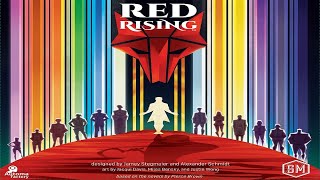
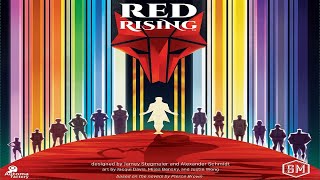
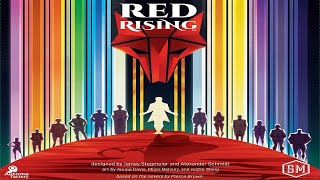
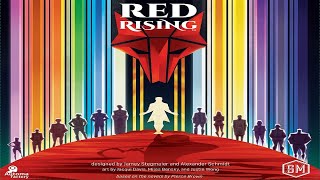




































Red Rising Deep Dive
What the Community Thinks About Red Rising
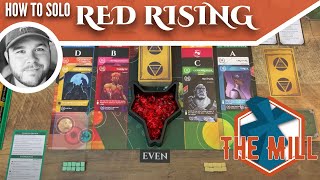
Red Rising from Stonemaier Games has captured the attention of board game enthusiasts across multiple channels, particularly among fans of both the Pierce Brown book series and elegant card game design. The game sits at an intriguing intersection: accessible enough for newcomers to learn in 15 minutes, yet deep enough to reward repeated plays and creative combo construction. Reviewers consistently praise the thematic integration of the dystopian universe into card mechanics, where each character faction plays a distinct role reflecting their place in the hierarchical society depicted in the novels.
Core Mechanics That Define Red Rising
Hand Management and Combo Building
At its heart, Red Rising is fundamentally about curating the perfect hand of cards through strategic play and judicious card selection. Players start with five cards and must continuously decide which cards to deploy to the board and which to collect. The central tension involves balancing immediate board actions against long-term hand composition. Each character card remains valuable in two ways: when deployed for its immediate special ability, or when held in hand at game end to score victory points based on color synergies and specific end-game conditions. This dual-purpose design creates meaningful decisions where sacrificing a card from hand for a powerful board effect requires careful evaluation of endgame implications.
Set Collection and Location Bonuses
The game features 14 distinct character colors (or suits) that players attempt to collect in harmonious combinations. On your turn, you deploy a card from your hand to one of four locations on the board, then collect a character from a different location. Each location offers a bonus: Jupiter advances your Fleet Track, Mars grants Helium tokens worth three points each, Luna grants the Sovereign token worth ten points, and the Institute lets you place influence cubes for majority scoring. This location-based economy creates a rich decision space where the bonus you gain fundamentally shapes your strategy. Some reviewers note the game's debt to Fantasy Realms, a simpler card-scoring game, but Red Rising expands this foundation with location mechanics and deployment abilities that add welcome depth.
The Red Rising Experience
Dystopian Cyberpunk Immersion
The thematic presentation is among the game's strongest elements. Every card features a character from Pierce Brown's universe, with artwork that communicates personality and role. The color factions directly mirror the caste system central to the books: Gold represents the elite rulers, while other colors represent various subordinate castes. Players who have read the series report recognizing beloved characters and appreciating how the card abilities thematically align with those characters' roles in the narrative. For example, cards encourage you to build toward specific end-game objectives that mirror power struggles within the story's factions. Even players unfamiliar with the source material feel the weighty, foreboding tone established through art direction and the game's pacing structure.
Satisfying Engine Building and Masterable Depth
Red Rising rewards mastery in subtle ways. Early plays feel like discovery as new players learn what each character card offers, but experienced players begin constructing powerful synergies between cards. The game flows quickly once players understand the core turn structure, but turn decisions remain genuinely weighty. Reviewers highlight the satisfaction of planning three to five turns ahead, recognizing that while your opponents might disrupt your plans by claiming cards you wanted, the game never feels punishing. The Sovereign token and influence cube economy create natural tension points where players compete for scarce resources, yet the game structure ensures no single mechanic dominates play. Veterans report that each faction plays differently and offers distinct strategic approaches, extending the game's replayability.
What Makes Red Rising Stand Out
Beautiful Production and Accessible Complexity
The Collector's Edition elevates the experience with metal tokens, custom card holders, and gold foil accents on certain cards. However, even the standard retail version delivers crisp iconography and readable card text. The rule set is remarkably streamlined for a game with this much going on: on your turn, you either Lead (deploy and draw) or Scout (draw without deploying). That simplicity masks sophisticated card interactions, allowing new players to be competitive from game one while leaving room for strategic depth. The quick teach time and moderate 45, 60 minute playtime make it an ideal game for mixed-experience groups seeking something more strategic than party games but less intimidating than heavy Euros.
Flexible Player Count and House Powers
Red Rising supports one to six players with asymmetrical House tiles that grant each faction a unique power tied to the Sovereign token bonus system. Jupiter advances on the Fleet Track, Mars gains Helium, Apollo receives first and last turn, and so forth. This asymmetry ensures each faction feels distinct without creating overwhelming balance issues. The inclusion of solo rules means players can engage with Red Rising at their own pace, and the game scales elegantly from two to six players. Two-player games include a clever setup rule placing three neutral influence cubes in the Institute to ensure that majority control remains meaningful and contested throughout play.
Potential Drawbacks
Card Reading and Rules Overhead on First Plays
While the core turn structure is simple, Red Rising's depth comes from 112 unique character cards, each with potentially complex deploy abilities and end-game synergy conditions. First-time players report that games slow considerably as people parse card text and calculate potential combinations. Some reviewers note that players who want to know every card's interaction before committing to a move can extend downtime. The game rewards careful play, but this can feel punishing to players accustomed to more forgiving systems. Teaching new players requires patience, as the interaction space between cards is vast and not immediately apparent from rules alone.
Limited Interaction Beyond Card Selection
The game's multiplayer experience centers primarily on drafting, deciding which cards to take from the board before opponents can claim them. Direct player interaction is limited to blocking effects and the occasional card ability that affects opponents. This means that while the game involves constant decision-making, it functions somewhat like multiplayer solitaire once the core turn structure clicks for everyone. Players seeking negotiation, direct conflict, or dynamic player elimination may find Red Rising feels cerebral and somewhat solitary, even in a group setting. The satisfaction comes from optimizing your own engine rather than disrupting opponents' plans.
If You Enjoy Red Rising
Fans of Red Rising often appreciate Fantasy Realms, the elegant card-scoring game that inspired it. Those who love the mechanics but seek faster play might enjoy Sushi Go or Golf, both simpler pick-and-pass games. For deeper strategic experiences with caste-based themes and area control, War of the Ring offers similar dystopian intrigue. Seven Wonders provides comparable card-drafting elegance with civilization-building scope. Players who enjoy the book-to-board adaptation angle should explore other licensed games like Game of Thrones: The Board Game and Dune: Imperium. For those who want the hand-management experience without the Red Rising theme, Rat Attack Cat and Omerta deliver similar mechanical satisfaction at lighter weight. The comparison games reveal Red Rising's position as a thoughtful middle ground between quick filler and heavy strategy.
What Reviewers Are Saying
"Red Rising is a card drafting hand management game for one to six players that plays in about 45 minutes to an hour and is based off the dystopian novel series by Pierce Brown. Players will be drafting and playing these multi-purpose cards in order to accrue the best hand of characters by the end of the game."
— Might I Suggest A Game
"The characters, the personalities are so beautifully conveyed by the artist and then once you get into the card abilities they really give you ideas about the personalities, the priorities, the goals of these individuals so it creates a world this game belongs to."
— Adam in Wales – Board Game Design
"Red Rising is a card-based game where you are trying to optimize the cards in your hand but this game adds a little bit more meat to it. All of the characters and cards are characters from the Red Rising series which has different factions so there's the pink faction, the gold faction, the brown faction, the white faction, all very thematic to how it is in the book."
— Foster the Meeple