/pic5153383.jpg)

/pic5153383.jpg)











































Return to Dark Tower Deep Dive
What the Community Thinks About Return to Dark Tower
Return to Dark Tower has captured the imagination of cooperative board game enthusiasts since its 2022 release from Restoration Games. Reviewers consistently praise it as one of the finest fantasy cooperative experiences available, with several naming it among their top cooperative games of all time. The consensus centers on how successfully the game marries physical components with digital integration, creating an experience that feels cohesive rather than compromised. While some players express concerns about hidden information and the balance between board game and app experience, the overwhelming response emphasizes the game's ability to exceed expectations through sheer quality of gameplay and production.
Core Mechanics That Define Return to Dark Tower
App-Assisted Tower Interaction
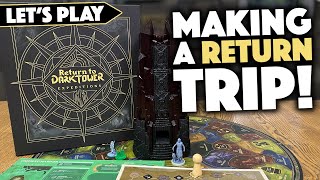
The physical Dark Tower sits at the board's center, connected via Bluetooth to a companion app that manages hidden information and randomization. When players drop skulls into the tower at the end of their turns, the device responds with lights, sounds, and mechanical actions that trigger app events. Reviewers note this integration feels instantaneous and responsive, creating genuine surprise and engagement. The tower isn't merely decorative; it serves as the game's nervous system, determining when skulls spill onto the board, when new foes appear, and when the very landscape shifts.
Cooperative Resource Management and Questing
Players manage limited warriors and spirit tokens to accomplish three core actions: cleanse corrupted buildings, battle foes, or complete quests. The game divides into six monthly phases, each providing different turn counts to prevent predictability. Heroes work together acquiring treasures, unlocking unique virtues, and pushing toward the main objective that will eventually force the adversary from the tower. Monthly side quests create meaningful decision points about resource allocation. Reviewers emphasize that cooperation feels genuine because each player genuinely needs the others' contributions, managing their home kingdoms while occasionally venturing into allies' territories when quests or crises demand it.
The Return to Dark Tower Experience
Intense and Tense Gameplay
The game creates genuine pressure through its skull economy. Too many skulls on the board triggers building destruction and potential defeat. When players can't afford battle costs or quest requirements, they accumulate corruption cards. Three corruptions means everyone loses. This leads to constant calculation and risk assessment. Reviewers describe moments of real tension, particularly when pursuing the main quest or facing the final boss encounter. The unpredictability of hidden dungeon rooms and battle card requirements means players must stay focused and adaptable throughout the two-hour experience.
Thematic Adventure and Discovery
The narrative arc from initial setup through main quest completion to final confrontation creates a satisfying fantasy journey. Reviewers appreciated how dungeon exploration offers genuine discovery, with partially-explored dungeons revealing new passages when revisited. The variety of scenarios, selectable adversaries, and foe combinations ensures each campaign feels distinct. The game communicates its fantasy atmosphere through component quality, art direction, and mechanical storytelling. Players don't just move pieces; they inhabit the roles of kingdom heroes confronting an ancient darkness.
What Makes Return to Dark Tower Stand Out
Exceptional Production and Table Presence
The physical game demands attention at the table. The tower's impressive centerpiece isn't an afterthought but serves mechanical purpose, making it impossible to overlook at conventions or game nights. Components feel premium throughout, with quality tokens, substantial boards, and excellent card design. Reviewers specifically noted that even the base game (without deluxe upgrades) demonstrates remarkable production value. The game's aesthetic balances dark, moody artwork with clear legibility, creating immersion without sacrificing functionality.
Seamless App Integration That Enhances Rather Than Replaces
Unlike many app-assisted games that feel tethered to screens, Return to Dark Tower uses digital tools for bookkeeping and hidden information management while keeping core actions at the table. The app reveals foe battle cards, manages dungeon exploration, and handles scenario rules, but players physically move, battle, and cleanse. The Bluetooth connectivity creates moments of visceral feedback where dropping a skull into the physical tower immediately triggers app reactions. Reviewers consistently praised this balance, noting that the app doesn't dominate the experience. Most table interaction happens tactilely, with the app serving as referee rather than spotlight.
Potential Drawbacks
Hidden Information and Perceived Unfairness
The game's reliance on hidden dungeon encounters and random battle cards can create situations where players feel they made optimal decisions yet still suffered defeat. One reviewer noted appreciating games where they understand exactly why they lost, but struggled with moments where preparedness didn't guarantee success. Dungeon exploration contains genuine push-your-luck elements where choosing unexplored passages might encounter devastating requirements or benign discoveries. Some players found this level of uncertainty frustrating, though others celebrated it as appropriate for adventure fantasy themes.
App Dependency and Balance Concerns
The game's complete reliance on the app means battery failures or technical issues could interrupt play. Some reviewers questioned whether this truly captures "board game" experience despite the excellent integration. Particularly in competitive mode, certain strategies and dice upgrades showed potential imbalance based on early campaign decisions. The skull economy, while central to tension, occasionally felt punishing in early games before players understood optimal resource management.
If You Enjoy Return to Dark Tower
Fans of Return to Dark Tower likely appreciate Descent: Journeys in the Dark for its dungeon-crawling intensity, though Return to Dark Tower offers superior app integration. Conquest of Nearath captures similar epic fantasy themes with strategic depth. For cooperative intensity without app assistance, Pandemic Legacy offers comparable narrative arcs. The original Dark Tower (1981) provides historical context, though reviewers found the modern restoration significantly more refined. Players drawn to the tower's spectacle may also enjoy Dungeons & Dragons board game adaptations for similar thematic resonance.
What Reviewers Are Saying
"The integration between the app and the tower itself is unbelievable. As soon as you drop a skull in, the app reacts to it. It's all so speedy and so interactive between the two devices. It was unbelievable, like any other game I've ever seen, frankly pairing two devices that seamlessly."
— Ryan and Bethany Board Game Reviews
"This is one of the greatest fantasy games I've ever played. It's one of the greatest app-driven games I've ever played. And it's one of the best cooperative games I've ever played. In fact, this may be my favorite cooperative game."
— The Discriminating Gamer
"When you see the way the app integrates with the game, this is really cool. This was an amazing game experience. It is so much fun, and if you like app integration in games and you like the idea of that manifestation of that app in the physical world, you'll get a kick out of this."
— Rolling Dice & Taking Names