
























Septima Deep Dive
What the Community Thinks About Septima
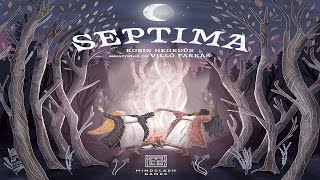
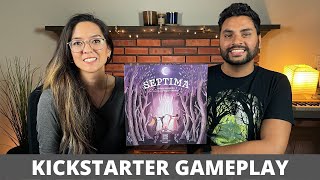
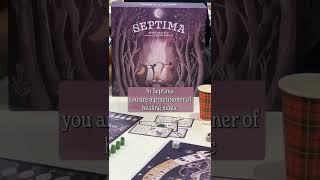
Septima has captured the imagination of the board game community as a stunning marriage of theme and mechanics. Players consistently praise the game for its gorgeous artwork, production value, and the way its mechanics reinforce its witchy theme. The deluxe edition components including metal coins and silk-screened tokens have impressed reviewers, while the autumn aesthetic and dark color palette create an atmosphere perfectly suited to harvest season play. Beyond appearance, reviewers emphasize that Septima delivers a genuinely tense experience where every decision matters, backed by mechanics that feel thematic rather than pasted-on.
Core Mechanics That Define Septima
Simultaneous Action Selection Under Pressure
The beating heart of Septima is its simultaneous action selection system. Each round, all players secretly choose one of nine identical action cards to play face-down. When cards are revealed, players who matched with another player or with the Septima (a randomly drawn token) execute the stronger version of their action but immediately raise suspicion. This creates a constant tension: do you match with others to get better actions, or avoid matching to keep your suspicion low? The mechanic brilliantly captures the game's theme of witches trying to help townsfolk while remaining undetected, as collaboration literally makes you more suspicious.
Resource Management and Suspicion Tracking
Players collect limited ingredients, brew potions, and heal patients to score points. Resources are genuinely scarce, forcing difficult choices about when to use rare materials. But looming over every decision is the suspicion track. As suspicion rises, witch hunters grow bolder. When suspicion reaches certain levels, a hunter die roll determines if the witch is caught. Getting captured costs a witch from your coven and potentially ten to twenty victory points, making die roll outcomes unusually significant for an otherwise strategic game. This push-your-luck element creates memorable moments of tension that linger after play ends.
The Septima Experience
Tense and Darkly Satisfying
Septima cultivates an atmosphere of constant pressure. Players are never relaxed, always calculating whether matching with opponents for action bonuses is worth the suspicion gamble. The game's pacing ensures nobody is left waiting between turns, and the action selection happens simultaneously, keeping all players engaged throughout. The dark aesthetic, combined with the thematic consequence of suspicion, creates a satisfying tension that few games achieve at the three to four-player sweet spot.
Complex Strategy Rewarding Careful Planning
Despite appearing mechanically straightforward, Septima plays deceptively heavy. The interconnected systems of action selection, suspicion management, coven building, and patient healing create surprising depth. Successful players plan several rounds ahead, anticipating which actions others might take and whether matching is worth the risk. The spell cards available in the full game add another layer, granting powerful abilities that can dramatically alter strategy and create asymmetric power that rewards table familiarity.
What Makes Septima Stand Out
Thematic Design That Serves the Game
Septima excels at making its mechanics feel inseparable from theme. You are not just playing cards and managing resources; you are a witch hiding your witchcraft while genuinely helping sick townspeople. Collecting ingredients, brewing potions, and moving your meeple around the board to heal patients creates tangible progress toward victory. The witch trial mechanism, where townspeople vote on innocence based on accumulated supporters, reinforces the theme that your visible good deeds can shield you from suspicion. The ritual track, particularly in the full game, adds yet another dimension where players advance through magical means while gathering power.
Beautiful Production That Enhances Play
The deluxe edition's metal coins, silk-screened tokens, and elaborate artwork transform Septima from a solid design into a premium experience. The individual player boards, colorful potions, and gorgeous witch cards make each turn visually satisfying. The attention to component quality suggests that publisher Mindclash Games understands that Septima is the kind of game players want to own and treasure, not just borrow once. The production elevates an already engaging game into something special enough that players regret not backing it on Kickstarter.
Potential Drawbacks
Deceptive Complexity and Lengthy Play Time
Septima misleads players with its apparent simplicity. Rules seem straightforward until players encounter interconnected systems that create genuine cognitive load. The full game with spell cards and ritual track adds layers that newer players may find overwhelming. Games can stretch to two or three hours depending on player count and experience, which may disappoint those seeking a snappier experience. For players accustomed to lighter gateway games, the actual depth and play time may feel like an unwelcome surprise.
Hunter Die Rolls Create Frustration
Septima stands apart from typical Eurogames by including a die roll that can cost a player ten to twenty percent of their final score. While this mechanic creates dramatic tension, it violates the expectations of players who expect strategic decisions to matter more than luck. Some players will view these die rolls as a welcome source of tension and comeback opportunities. Others will see them as unfair punishment for taking calculated risks. The significant penalty means that aggressive play is appropriately risky, but some risk-averse players may prefer completely deterministic games.
If You Enjoy Septima
Players who love Septima typically gravitate toward games with strong themes married to elegant mechanics, tension-filled simultaneous action selection, and satisfying resource management. Consider exploring Broom Service for a lighter witch-themed alternative with its own simultaneous selection system, or Spirit Island for a more challenging cooperative experience where hidden information and careful coordination create tension. Neuroshima Hex and Witchstone offer similar dark thematic elements. For players seeking the tense simultaneous action experience without witch themes, Cockroach Poker and Insider deliver the push-and-pull of hidden information and calculated moves. Treron and other heavy Mindclash releases reward similar careful planning and interconnected systems.
What Reviewers Are Saying
"The balance of the game is quite carefully balanced. You've described it as being semi-cooperative in some ways because if you just do the basic action for the whole game and you never match with anybody it's a low-risk option but you're likely to be a lot slower at getting things done. I think it's a very careful balance you've described it as being semi-cooperative."
— Meeple University
"I was just like I need to cover this game because it is literally me in a board game. I love witchy things so much. I love the theme. I love the look. It's just a great game that we need to make sure we're proactively getting back to the table."
— The Board Game Garden
"This is a game where you are a coven of witches but you are good witches. You are not bad witches. You are actively trying to help people but in a lot of these situations the people want your help but don't trust you. I really like Septima. Septima is a cool game that we haven't really played as much as we frankly should have."
— BoardGameGeek