/pic70547.jpg)


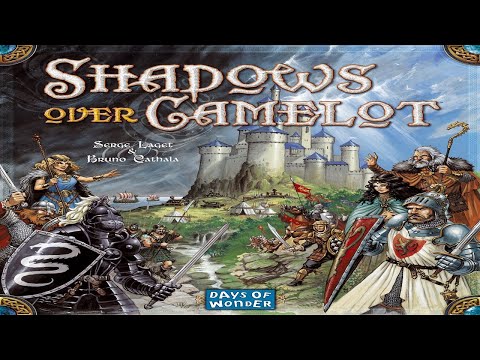


























Shadows over Camelot Deep Dive
What the Community Thinks About Shadows over Camelot
Shadows over Camelot occupies a unique place in the board gaming landscape as one of the foundational hidden traitor games. Reviewers consistently express nostalgia and respect for this 2005 release from Days of Wonder, designed by Bruno Cathala and Serge Laget. While newer games have emerged that build upon what Shadows over Camelot pioneered, the community maintains genuine affection for it. Reviewers acknowledge that fresher, more modern games may handle similar mechanics better, yet they return to Camelot for its thematic depth, elegant design, and lasting ability to generate memorable moments around the table. Its impact on the traitor game genre is unmistakable, and players who loved it then often still refuse to part with their copies.
Core Mechanics That Define Shadows over Camelot
Hand Management and Card Play
At its heart, Shadows over Camelot uses a deceptively simple hand management system that creates surprising depth. Players hold cards and must make meaningful decisions about where to spend them across different quests and challenges. Each turn, you do something good for the group, then something that could be bad, forcing careful resource allocation. The hand management creates a natural rhythm of cooperation and suspicion, as reviewers note that watching what cards other players deploy becomes a crucial way to identify potential traitors. This straightforward but elegant system has proven timeless because it forces constant, interesting choices without overwhelming the table with complexity.
Hidden Traitor Mechanics
The traitor mechanic operates on uncertainty and revelation. One player among the Knights of the Round Table secretly works against the group, though the traitor may not be revealed until late in the game. Players navigate this tension by cooperating to advance quests against dragons, darkness, and siege engines, while simultaneously wondering who among them cannot be trusted. Unlike pure deception games, the traitor mechanic works hand-in-hand with the game's structure; a player can choose to hide their role entirely or play to confirm their loyalty through their actions. This creates the moment reviewers describe as the magic of the game: when the traitor reveals themselves, either through their final power play or through evidence discovered too late.
The Shadows over Camelot Experience
Tension and Paranoia at the Table
Players consistently report that Shadows over Camelot generates a palpable sense of tension. The combination of a possible traitor and a creeping darkness creates genuine pressure. Even years after playing, people remember specific moments of suspicion, accusation, and betrayal. The game does not rely on being shouted down or fast-talking your way through; instead, the tension builds quietly as events unfold. Reviewers mention that the game works because it makes every action suspect. A good move might be genuine teamwork, or it might be a traitor subtly weakening the group's position. This uncertainty forces engagement from every player, maintaining focus throughout the game.
Narrative Satisfaction and Theme Integration
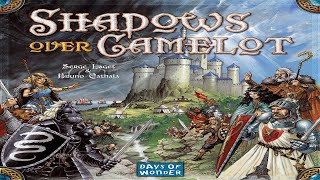
What stands out most across reviews is how well the Arthurian legend theme integrates into the mechanics. Seeking the Holy Grail, Excalibur, and Lancelot's Armor grounds players in a specific world where treachery makes thematic sense. The flavor of playing as Knights of the Round Table, defending against invaders and darkness, creates an atmosphere that newer semi-cooperative games have tried to replicate but rarely surpass. Even reviewers who acknowledge that mechanically superior games exist since 2005 cannot shake the thematic resonance of Shadows over Camelot. It feels like an actual story unfolding, not just mechanics serving a thin narrative wrapper.
What Makes Shadows over Camelot Stand Out
Pioneering Hidden Information Design
As one of the earliest major hidden traitor games, Shadows over Camelot essentially defined the genre for its era. Reviewers note that it successfully demonstrates how a cooperative game can pivot into semi-competitive territory through a single hidden role. The design shows restraint and elegance; the traitor mechanic is not gimmicky or overwhelming, but rather a foundational shift to how players must approach the entire experience. Bruno Cathala created a framework that countless designers have built upon, but few have equaled in terms of thematic coherence and mechanical elegance.
Scalability and Production Quality
The game plays up to seven players, an unusual feat for traitor games and one that reviewers consistently praise. This scalability made it accessible to larger groups, expanding the pool of potential players and adding variety to how the game felt at different player counts. Additionally, Days of Wonder's production quality for the year was exceptional. The round table, the minis, the card design, and the overall aesthetics created a game that felt special when you opened the box. Even two decades later, reviewers comment on how well it holds up visually, a testament to thoughtful design choices that transcend trends.
Potential Drawbacks
Bare Bones by Modern Standards
Reviewers acknowledge that Shadows over Camelot, as one of the first in its genre, lacks some of the mechanical bells and whistles that modern hidden traitor games include. While this minimalism is often presented as elegant, some players find it too bare-bones. The game mechanics are straightforward, and the rule set is lean, which means less immediate complexity but also fewer knobs to turn and fewer situations that create spontaneous excitement. Compared to games like Dead of Winter, which layer hidden agendas with resource scarcity and zombie tension, Shadows over Camelot can feel focused to the point of simplicity.
Group Dependency and Availability Challenges
Like many traitor games, Shadows over Camelot is heavily dependent on the group's willingness to lean into the social deduction and accusation elements. If players are not engaged in making wild accusations, discussing suspicions, and genuinely interrogating each other's loyalty, the game loses much of its impact. Additionally, the game has been out of print for some years, making it increasingly difficult to acquire. Reviewers lament that such a good game cannot simply be picked up by new players who want to experience what made it special. This scarcity ironically increases its mystique but locks many out of the experience.
If You Enjoy Shadows over Camelot
Players who love Shadows over Camelot's traitor mechanic combined with hand management will find satisfaction in Dead of Winter, which similarly weaves hidden agendas into a cooperative struggle. Whereas Shadows over Camelot focuses on knightly quests and Arthurian legend, Dead of Winter places you in a zombie apocalypse where resources are scarce and betrayal can come from anyone, including yourself. Both games force players to cooperate while harbouring doubt. For those drawn to the theme and the sense of defending a realm against encroaching darkness, Battlestar Galactica extends the tension and complexity to include secret role abilities and objectives, pushing the traitor mechanic to new extremes. Players seeking another highly thematic cooperative experience should explore Pandemic, which delivers cooperative hand management without the traitor element but with similar urgency and collaborative decision-making.
What Reviewers Are Saying
"You never really know who the traitor is until they pull their pants down and reveal themselves and show you the girth of their Excalibur. Even today, this game looks amazing. It was made when Days of Wonder were producing banger after banger. I still love this game. I played so many hidden traitor games, but we keep going back to this one."
— BoardGameBollocks
"There are newer and fresher games that kind of take what Shadows over Camelot does and do it better or just in a newer, fresher, more modern way. But I'm never getting rid of Shadows over Camelot. There's a huge nostalgia factor for me because it's one of the earliest games I played. It's a great game. I love King Arthur and Camelot. The theming is great. And if anyone ever suggested playing it, I would say yes immediately without even hesitating."
— Game Night Picks
"Shadows over Camelot is such a cool theme and it's such a cool game. It's a very simple game where you're basically just playing cards, but while you're playing cards it feels like you're doing way more than just simply playing a card. It hasn't been printed in its current form because there was a spat between Days of Wonder and Games Workshop, but it's absolutely a fantastic game that should be reprinted soon."
— Board Stupid