Scared of Copycats? How to Protect Your Board Game Idea *Board Game design*
Games in This Video
2 games are featured in this video — they unlock as you watch.

Transcript
hi I'm Adam Porter and this is my board gaming vlog and I haven't actually made a vlog like this for some time it's taken Co vid 19 and lock down in the UK to get me in front of this camera again just because I was so busy before the lockdown and since then just you know you've got so much on your mind anyway I'm here to make this video and that the impetus for it was because I had a few questions yesterday on my YouTube channel from a viewer called fan Rick and I thought well why not make a video to answer those questions so I'll try and make a series of videos to answer each of the questions over the next couple of days the first question that I wanted to address was a question that you hear quite a lot from designers and particularly new designers about how do you protect your game ideas so other people can't steal them from you and so I ought to start off by saying I'm not a lawyer I am a dentist and a game designer and I have a few games to my name so I've got five games on the market my first game was in 2017 big Bazaar and I've got another five games that are under contract currently and hopefully will be released at some point over the next year or two and then others that I'm pitching so I've got some experience in the area of contracts and getting games onto the market and also I've run a game design group along with a colleague of mine Rob Fisher for about what six years now I think something like that maybe more weekly so we've spend a lot of time
play testing people's prototypes and we've come across issues over the years and this question gets asked commonly so the first thing that I thought I'd talk about is the general consensus that you find on the internet if you ask this sort of question or if you look this this up and the consensus is don't worry about it basically you've got an awful lot to gain by showing your game to an awful lot of people people will have so much input you'll get loads of valuable input from play testers other designers will tell you how to make your game even better then you put it in front of publishers and they may not particularly want to take the game on for various reasons but they'll tell you why they'll tell you how to improve it or maybe they'll tell you what a publisher that might take it on even if they won't so it is definitely of great value to you getting your game in front of people and the risks of doing so are relatively small so why is that I mean shouldn't you be thinking about copywriting your game or patenting it or trademarking it or something like that protecting that intellectual property and I think the general consensus is no it's a bit of a waste of time even trying to do that stuff trademarks are there for name of game logo you know specific things like color schemes and stuff like that you can trademark these things so other people can't use them that's not going to help you as a designer that really is the the publishers remit if they want to do that at a later date patents I don't fully
understand patents but they tend to be about inventions useful items and specific ideas put together in a very specific way so it's very easy to get round a patent just by tweaking one tiny little thing you don't tend to see patents in board games with relatively few minor examples you know which which which break there break the rule copyrights then copyright is what we're really talking about and copyright is automatic as soon as you write some words or put some artwork together that is copyrighted you have to do anything with it to make it copyrighted it belongs to you but ideas do not you cannot copyright an idea or not easily you could copyright the artwork you can copyright the wording but you can't copyright the rules themselves which is why you end up seeing so many clones of popular games if you go to your supermarket you know you might see guess who the classic sort of Hasbro game or Milton Bradley game or whatever brand it's under now but you'll also see you know some other branded version which is called something like who is it and and it's just a cheap knockoff version but they can get away with that because the ideas are not copyrighted and they've changed the artwork and they change the name and they've changed the wording of the rules they've rewritten it and you can get away with that stuff so actually you're far more vulnerable to ripoffs of your game after your game is published then you are beforehand before your game is published chance of someone taking it and running with it and stealing your
ideas are very slim aside from anything else everyone's got their own ideas if somebody is motivated to make games they've probably got their own ideas and their own things that they're passionate about they want to pursue but really it's a numbers game before you've published your game your game is going to have been seen you know by i mean maybe you've got it in front of a hundred play testers maybe more you've got it in front of a handful of publishers again maybe more but these are self selecting groups these play testers are likely to be your friends and friends of friends and acquaintances people who know you and respect you and don't want to rip you off they might be play testers a regular play test groups which means they've got a feel for the industry they're engaged with the industry they want you to look at their game as well so so they're going to be respectful of yours you know these are not the people who are likely to steal your ideas the same with the publishers if you're going to show your game to a publisher it's likely to be at a convention or a trade fair the publishers that go to these places that engage with the hobby side the community side of the the Hobby these are not the people who are going to rip you off because their reputation means a lot to them and they're gamers too once your game is published however it's going to be seen by thousands and thousands and thousands of strangers spread all across the world and then who knows what people are going to do and you do see problems particularly over the last few years we've seen a massive rise in counterfeit copies of games people direct piracy where people have taken not just the ideas but the artwork the name they've
created a carbon copy of a popular game and stuck it up on Amazon or Ebay and it's very hard for that for you to deal with that stuff you can't protect your game against that stuff as a designer it's automatically protected by law anyway but the onus is on the publisher to to fight that and to push to get those counterfeits shut down the other stuff that you tend to see and it's rare but it does happen is that people will take a popular game they'll Rieti MIT they'll put new artwork on it a new name a new setting but they might not change many of the rules and then now put it up on Kickstarter or some other crowdfunding Avenue and they'll either declare it as a tribute to the original game or they won't declare it as having anything to do with the original game at all and then it takes this sort of I mean people aren't idiots people spot this stuff and say well hang on that's the game that I love and often the the justification for it is yeah but that original game is now out of print the publishers not making it anymore as if that makes it alright for you to take those original ideas so what does the law say well the law says it's fine as far as I understand it you know you can't copyright those ideas so as long as they've changed all of the artwork they've changed the name they've changed the wording of the rules even if the idea of the rules is the same they get away with it although they tend to get a big backlash online a lot of criticism and I don't know how sustainable that is as a business plan for the future the other thing that you
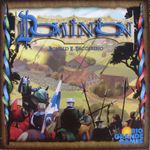
see is variants things which are a little further they're not a direct copy they've got a few rules changes and these will sometimes come out with fairly substantial publishers sometimes I see things which publishers do and I think a little bit close to the mark that game is very similar to this other game that I know and clearly inspired by it and yes you've added a few special abilities a few special powers to some of the players or you fleshed out that small concept into something a bit bigger but basically the core concept is the same and sometimes it feels like it's too close but I'm not the arbiter of what is too close I mean how is to say how close is too close and you can get into those arguments all day long I mean the classic example is Dominion and the hundreds and hundreds of deck builders that followed that all of which use Donald X Vaccari knows original idea of deck building but then you could say well didn't he use that idea of building decks of cards from Magic the Gathering albeit his deck building happens within the game whereas in games like Magic the Gathering and other collectible card games the deck building goes on before the game starts so how close is too close then another issue that I've seen come up and this has happened to me myself is where I've had an idea I've developed a prototype I play tested it a lot and I've started showing it to publishers I had a game that was called it's a trap that I was it's a party game of showing it to publishers and then the game came
out in America from a publisher I'd never met called banned words and that game had exactly the same basic concept as my game with a party game the basic concept is pretty much the whole game okay it's very very small design space there and they've done it now I am absolutely positive that they had no knowledge of my game whatsoever they couldn't they couldn't possibly so that is just coincidence they had the same idea at the same time and they got it to market first and then a year later cge the tech company they released trap words which is the same concept again albeit done in a slightly different fashion with a fantasy reteaming and this sort of thing again I suspect that had no relation whatsoever to banned words and it certainly had no relation to my game it just happens that these ideas all came about at the same time and then a little bit of internet research shows you know in 2012 there was a game called Shimon clyster a German game which had the same concept as well now I doubt banned words or trap words designers I certainly didn't know that that game and all of these games are derivative of taboo that old classic party game anyway so it's very hard to say any of them are truly original they just had this big twist on taboo and I was comfortable with that twist I didn't feel I was ripping taboo off I felt like I'd come up with a clever evolution and in some ways I feel vindicated because lots of other people obviously thought it was a clever innovation as well it did the same thing so again it's that question how close is too close one
thing I think designers should be aware of and they're generally not is that there is a risk of people making claims against you once your game is published now I'm not aware of anyone that this has happened to but I am aware that in practically every contract that I've signed there is a clause in there which says that I am responsible if anybody challenges the publisher and says that that idea has been stolen from them they tend to say that the the designer will indemnify the publisher against any claims or challenges against their intellectual property now that makes me feel very uncomfortable and in fact some contracts even have a clause in there which says you must have insurance as a designer to indemnify the publisher in an instance like that now I don't know how this could ever come about because as I say the AIA all I sell to the publishers is the idea they come up with the artwork they come up with a name they come up with the the rules written in the way that they they want to write them so really there's nothing that I give them that is copyrightable or that I you know that could possibly be challenged that said it doesn't stop somebody trying and we do know that some of the big players in the industry they're sort of Wizards of the coast the Games Workshop they will send out cease and desist letters they will pursue these claims and I don't want to be on the receiving end of one of these letters so I looked into the insurance I actually first contacted a bunch of designers on a big online forum of game designers and I asked them have you got insurance for this sort of instance and all of them said no everybody I don't
know a single designer who has insurance but I went to some insurance brokers in the UK to see about this insurance it's professional indemnity insurance but with lots of tweaking for this specific circumstance and the insurance brokers really didn't know what I was talking about and I was getting wild quotations from a thousand pounds a year down to two hundred pounds a year let it end up taking up some insurance just to cover myself I felt more comfortable that way but I really have no idea whether the insurance that I have is worth the paper that it's written on but it's something to think about what I did want to talk about is conflicts that can happen between playtesters because running a weekly group for many many years I think we've hit session number four hundred or something like that now you know if these weekly meet ups so we've been doing this a lot for many years and we have had from time to time slightly tricky issues about ownership of ideas so let me give you a hypothetical example I am playtesting your game and I the designer okay so III playtests it and I might tell you yes this was fun that was fun didn't enjoy this so much that's classic playtesting feedback but my mind works slightly differently because I'm a designer so I might say do you know one mechanism you could try as doing this and this and this if this player did this at this time that that would be the outcome and I think that would really work for your game then I go home and I start mulling it over and I think that was really good that mechanism I came up with there I'd like
to use that in the game but do I own that mechanism or does the player that I've freely offered it up to in that playtest Meetup do they own it now can I do anything with mine or does that tread on their toes or should I just you know write it off as well I've lost that opportunity now and start and then I'll be kicking myself and for doing so I've seen this sort of issue arise in the in the group from time to time and I don't think there's an easy answer about that apart from communication and and empathy and and and and courtesy towards your your playtesters and and and the people that you'll play your play testing for the other designers and really if you've got a brilliant idea then maybe keep it to yourself don't offer it up freely to somebody else if you're then going to want to use that idea for yourself later so there's my sort of starting point on the play test groups and we've seen issues around that sort of idea where people will present a game we've had a situation where somebody presented a game to us as their own but we knew full well the game was very clearly very closely based on another game and and that was not declared to us and that made us feel very very uncomfortable and and I have to have a chat with that person and say well you know is this why you passing this off as your own you know as opposed to as opposed to saying well it's inspired by this other game I mean it was we're talking very close here I've
also had the situation where somebody's presented a game to play and and it's been extremely close to one of my own designs and and that's a tough situation there were there were differences there were changes but clearly inspired by the central concepts in one of my games and so then that's an awkward conversation where I've had to say well you know this is a little bit close to my game and I'm not sure that there's really a place in the market for the two games together so by all means keep exploring your game but I think it might be wise to distance it somewhat from my game change these mechanisms which I think the unique selling point of my game I think those things you probably need to take out of your game and try something else and that's an awkward conversation because legally they're doing nothing wrong they're using my ideas and and those ideas do not belong to me they're not copyrighted the other thing that we see from time to time and this is perhaps more a more common sort of situation is that somebody will play test somebody else's game at the group and then now go away and their mother over and they're obviously inspired by that design and so they come back the following week with totally different game but it's inspired by it and so it might have a similar theme or some similar mechanisms you couldn't say it's the same game but it comes from that same design space and people's feelings are hurt because they feel you're treading on their toes they're feeling on that you're treading in their design space I mean as an example somebody
comes along and they've they've they've created this large space epic space off for a tight game and then the next week three other designers turn up and they've all got their space game - now there are thousands of games set in space and so you can't say well I'm the only one that's allowed to design a game set in space but among a small group of playtest is that can be quite uncomfortable when you know you're working on something and then everybody else comes up with the same sort of thing you know I make trick-taking games a lot and if I presented a trick-taking game to the group and then the next week there are three trick-taking games on the table even if they weren't that similar to mine I might feel a little bit aggrieved so we get issues like that coming up from time to time but not outright plagiarism so what do we do about all of this if you can't copyright it if you can't trade market you can't patent it what about non-disclosure agreements sometimes designers try and put these in front of their play testers if you sign this you can't work on a similar game or you can't talk about what you've seen in the game that I've presented to you play testers don't tend to like that much you might get some that will sign them but the implication is you might steal my game and certainly if you start trying to get publishers to sign these before you show them their game your game then I think you're gonna get short shrift from them most publishers don't want to sign non-disclosure agreements because it just suggests that you're gonna start challenging them on things so if they sign something and then they do end up
coincidentally creating something similar then you're going to come back with the challenge it's going to create issues for them so they just don't they see plenty of designs hundreds of designs a year they're not that interested in your design that they're willing to sign a document which could create problems for them later so non-disclosure agreements are pretty much a non-starter in the industry apart from with the mass-market companies you will find them there you know if you ever had a meeting with Hasbro or Ravensburger or Mattel or something like that these big toy companies then I think you would expect to sign a nondisclosure agreement before you're allowed to have a meeting with them largely to protect them because anything they tell you about the what sort of things they want to see from their designers they don't want you passing that information on to their competitors so it's not so much about protecting you although it does function in that way it's about protecting them and their ideas and their intellectual properties so no non-disclosure agreements if you're starting out no copyright apart from you know the artwork and this force it the actual written word no trademarks no patents most likely so what can you do to protect your game well actually talking about it online is quite useful because there you've got a time stamp time stamp saying that you were working on this project at this time which might in some way towards protecting you in the future act professionally recognize that this is a business so it's all about relationships building relationships
with people trusting people and and and you'll have good days and you'll have bad days work on multiple projects so if you have a bad day if one of your projects does become difficult and problematic because of you know bad feelings between you and another designer or bad feelings between you and a publisher you can put that project to one side and you've got other stuff to be working on maybe you can come back to it later I think that's always wise remember there's not that much money to be made for the majority of us in this industry there are the ticket to rides and and the codenames games out there the ones that sell hundreds of thousands or millions of copies yeah those guys have a lot of money to protect so there they might start looking into the legality of it but I mean for me I have two games that have done reasonably well amongst my five so doodle rush and pick Coco both mean I would say successful games but I haven't sold hundreds of thousands of copies and they haven't made me an awful lot of money there may be a bit you know it's been quite nice but they haven't made me a fortune I'm hoping quaza will will do well as well but you know when we're talking about losses here if somebody did rip off your game or you weren't able to produce a game for some reason then your losses are going to be relatively small so it's not worth losing us huge amount of sleep over it's disappointing yes it's upsetting when the game is your baby or pet project but if you have multiple of these games you don't tend to get quite so attached some
reputations and relationships is what it's all about and recognizing when to to put your ego aside and maybe put your game to one side and and work on the relationship instead of on the project and a good example came up in the BoardGameGeek news last week of bruno khattala who is one of the best designers in the industry by all accounts a professional decent guy who makes fantastic games and one of his fantastic games is shadows over Camelot which is produced by Days of Wonder and came out I think best part of 15-20 years ago and it's aged a bit over time and in fact days of wonder aren't currently printing it although they could come back and print more copies later now Bruno khatallah and his co designer I can't remember is co-designers name I believe it's Sergio something they've designed a new version of shadows of Camelot with new rules a new setting and more sort of modern day setting a bit more gritty a bit darker steampunk setting called shadows over Brooklyn they love this new version I think it's a big improvement over shadows over Camelot and yet days of wonder don't want to make it because it doesn't really fit with their aesthetic which is much more family-friendly and cartoony and light and shadows over Camelot is still a very popular game so what does Bruno katana and his co designer do in that instance and that's the crux of this sort of news article was they don't know what to do do they pursue that game with another publisher even though it's based on the original game which is licensed two days of wonder well
probably legally they're in the clear there if they use new artwork new new name and and a new setting but that could cause bad feeling with days of wonder that are a really valuable partner to them so maybe they're they ought to be prioritizing the relationship over the game but if that means that they don't get to release their new game which they love that's a major sacrifice that they're making and I think those sort of decisions are the really tricky ones those are the ones where you've really got to communicate effectively manage those conflicts empathize with the other party and and sometimes buy yourself a little bit of time and hang fire in order to maintain the relationship that you have in the interest of generating future future games and future opportunities but through that conversation they may be able to come to a happy middle ground where both games can exist together or or or some changes are made to the game which is is comfortable for both parties and get that game out there in in that sort of fashion so that's it really that's all I have to say about protecting your game I think my advice to fan Rick would be get your game out there show it to loads of people take the advice on board don't worry too much people are working on other things we have thousands of games come out each year from hundreds of publishers probably maybe even thousands of publishers and you the the number of
sort of issues are very few and far between you know in this industry I would say over the last ten years you can probably count on two hands examples which have been sort of publicized and most of those are controversial you know they're not a definite case of ripping off it's a case of one party feels they've been aggrieved the other party justifies it and you could fall into either camp so yet don't worry about it show it to lots of people learn the lessons and and I'd say getting working on some other games as well so you've got backup plans - anyway I hope you enjoyed this video if you did please watch some of my others on YouTube I'm Adams boardgame Wales on Twitter I'm at board game Wales on BoardGameGeek Adams 78 thank you very much for watching and all the best