/pic7013651.jpg)
/pic6972881.jpg)

/pic7013651.jpg)












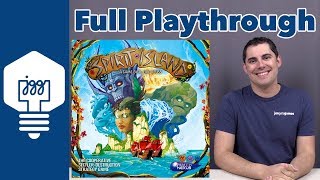















Spirit Island Deep Dive
What the Community Thinks About Spirit Island
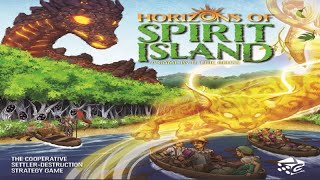
Spirit Island occupies a remarkable position in the board gaming landscape as a game that resonates deeply with certain players while remaining deliberately different from the dominant trends in modern board game design. Before You Play ranks Spirit Island among their top ten all-time favorite games, with both hosts offering it consistent praise. The game appears in conversation across multiple prominent review channels, with particular enthusiasm from players drawn to its cooperative gameplay and innovative mechanical systems. Yet it also provokes thoughtful pushback from experienced gamers who recognize its strengths while finding the experience misaligned with their preferences. This divergence speaks to Spirit Island's clear design philosophy and target audience rather than any fundamental flaw.
Core Mechanics That Define Spirit Island
Asymmetric Spirit Powers and Deck Building
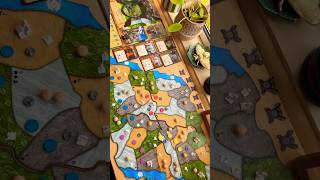
Every player in Spirit Island inhabits a completely unique spirit with its own deck of power cards, growth options, and special abilities. According to Meeple University's comprehensive rules explanation, players choose between different spirits at different complexity levels, each embodying distinct thematic elements like the vital strength of the earth or swift lightning strikes. Each spirit starts with a small hand of cards and can acquire new powers throughout the game by paying energy and forgetting existing ones. The asymmetry creates fundamentally different gameplay experiences at the same table. One player might become the ocean spirit focusing on disease and water-based effects, while another becomes a fire spirit with entirely different strategic tools. This design means that Spirit Island never feels like the same game twice, even with identical opponents and map configurations. The deck-building element, where players customize their spirit's capabilities over time, creates a sense of growth and mastery that rewards learning specific spirits.
Resource Management Through Energy and Growth Phases
Spirit Island chains together resource management in elegant ways. Each round, spirits generate energy based on their current energy track, which increases as they grow. This energy represents the currency for playing power cards. Simultaneously, spirits must choose a growth action each turn, selecting whether to reclaim cards from their discard pile, place new presence on the map, increase their energy income, or acquire new power cards. The tension emerges from scarcity. You can never do everything you want. Meeple University explains that players receive energy equal to their highest uncovered number on their energy track, then must immediately pay for the powers they choose to play. The growth phase presents a crucial bottleneck. Before You Play notes that the game is "extremely difficult" in its base configuration, partly because these resource constraints force constant tough decisions. Players must balance board presence, card acquisitions, and income growth while invaders methodically advance. This mechanical foundation creates what multiple reviewers describe as a brain-burning, cerebral experience where optimal play separates success from defeat.
The Spirit Island Experience
Cerebral, Puzzle-Like Cooperative Drama
Spirit Island strips away random dice rolls determining how invaders attack. Instead, the invader deck is shuffled once at the start, and players can predict almost exactly how invaders will explore, build, and ravage. Rolls in the Family explicitly praises this design, noting that it avoids the drama of unexpected opposition but transforms the game into a puzzle you must solve as a team. Meeple University emphasizes that the game is "very thematic" with "asymmetrical player powers creating a unique experience." The gameplay becomes about reading the invader board, calculating what regions will be attacked, and coordinating spirit powers to generate fear and remove threats before blight devastates your island. Before You Play calls it "my all-time favorite cooperative game," highlighting how the mechanical systems reinforce the theme of dormant spirits awakening to fight back against invaders. This cerebral approach attracts players who prefer optimization puzzles over narrative surprise, making Spirit Island a game about mastery and clever sequencing rather than dramatic reversals.
Rewarding Mastery and Escalating Difficulty Through Scenarios
Spirit Island's base game offers tunable difficulty through multiple mechanisms. Players select their starting spirits based on complexity level. The game includes blight cards that can be played with different modalities or left out entirely for a gentler experience. Most significantly, the rulebook includes scenarios and adversaries that scale the challenge dramatically. According to Meeple University's teaching segment, adversaries pit players against specific colonial powers with escalation conditions that increase their aggression as the game progresses. Some adversaries invade more quickly or aggressively than others. The thematic maps contain more terrain clusters and regions, creating more complex interconnections. Before You Play notes that these variants let players "add a scenario, an adversary, or the thematic maps" for increasing challenge. This modularity means Spirit Island can accommodate both newcomers learning a simplified base game and veteran players seeking punishing difficulty through adversary combinations. The game genuinely rewards learning its systems. After twenty plays, Rolls in the Family found themselves diagnosing specific game dynamics that shifted their appreciation for the design, demonstrating the depth available to committed players.
What Makes Spirit Island Stand Out
Innovative Fear and Terror Level System
Spirit Island's victory conditions evolve dynamically through a fear-based escalation system. At terror level one, players must remove all invaders from the board. At terror level two, they only need to remove towns and cities. At terror level three, only cities must go. When players generate fear through their powers and destroyed towns or cities, the fear deck advances. Once the fear deck reveals a new terror level marker, the victory condition immediately shifts. This elegant mechanic means the game's win condition can change mid-play. Meeple University explains that players "generate fear and the more fear that you generate, the more scared the invaders become." The deepest form of victory occurs when players generate the final fear card, which automatically triggers victory regardless of remaining invaders. This system creates hope for desperate situations. A table that feels overrun can push toward fear generation as a path to sudden victory. The terror system also means that the game's early turns feel ominous and threatening, but as spirits grow stronger and fear accumulates, the emotional tenor shifts toward triumph.
Thematic Integration of Spirit Abilities and Island Health
Spirit Island achieves remarkable thematic coherence. Before You Play's hosts note that "the spirits representing things like the vital strength of the earth or lightning swift strike are essentially dormant spirits," awakening only when the island's natural balance ruptures. The game mechanics reinforce this narrative. Players place presence tokens on the map to extend their influence. When land is blighted, any spirit presence in that region is removed and discarded, not returned to the board. This creates real consequence and investment in protecting specific areas. Player health is literally tied to the island's health. Meeple University emphasizes that "spirits' health is tied to the health of the island," meaning that if blight spreads too far, spirits themselves weaken, making it harder to generate fear and win. This systemic integration means that every mechanical choice carries thematic weight. When you place presence in a region to defend it, you are both strategically positioning yourself and narratively manifesting your spirit's protection of the island.
Potential Drawbacks
Predictable Invader Behavior and Low Variance in Threats
Spirit Island's deterministic invader deck creates a double-edged design choice. While this eliminates frustrating losses to random misfortune, it also removes a key source of dramatic tension. Rolls in the Family spent twenty plays diagnosing their core concern: "you know exactly which region they're going to ravage... the only unknown really is which one they're going to explore." The invaders follow predictable patterns. Explorers appear on the map turn one. Towns build on subsequent turns. Cities develop from towns. Ravaging follows strict patterns. While Rolls in the Family acknowledges that "this shifts it from being this randomness of the opponent and instead it's presenting this puzzle for you to figure out," they note this removes the "drama of unexpected opponent." For players accustomed to games like Mage Knight, which features randomized enemies with varied abilities, Spirit Island's consistent threat can feel like "going through the motions."
Coordination Overhead and Extended Planning Phases
Spirit Island's brilliance creates a paradoxical problem. Because every spirit has unique powers and the optimal move depends on everyone else's actions, players must constantly coordinate and recalculate. Rolls in the Family notes that "if anybody realizes something like oh I actually could do this... you've like reset everybody else's puzzle." When one player discovers a powerful combination or realizes they can't execute their planned sequence, the entire table must re-coordinate. This creates what multiple reviewers identify as extended planning periods, particularly with three or more players. The coordination burden grows exponentially. Adding a third or fourth spirit to the puzzle-solving process compounds both the strategic depth and the table time. Rolls in the Family expresses concern that "the only way it was going to get to the table was me being like hey you guys want to try something kind of weird," suggesting the game's accessibility barrier works against regular rotation in casual game nights. While dedicated groups who know their spirits can lock in efficiently, introducing new players or switching spirit selections dramatically extends play time.
If You Enjoy Spirit Island
Fans of Spirit Island gravitate toward games with similar strategic depth and thematic integration. Root provides asymmetric factions each playing by different rules, though in competitive rather than cooperative mode. Mage Knight offers a similarly brain-burning solo and cooperative experience with randomized enemies and terrain obstacles that create emergent drama. Pandemic wraps cooperative mechanics in a more accessible package for groups seeking lighter cooperative play. Blood on the Clocktower appeals to those who love the social deduction and group coordination aspects of Spirit Island's table talk. Players drawn to the engine-building satisfaction that comes from acquiring Spirit Island cards will find parallels in Terraforming Mars, where synergistic card acquisitions compound over time.
What Reviewers Are Saying
"Spirit Island is my all-time favorite cooperative game of all time. This is a fully cooperative game where you are playing as spirits and you're trying to help the natives of an island protect the island from invaders essentially. Because of that we kind of embody different elements or different parts of nature and that is the asymmetry to this game."
— Before You Play
"Spirit Island is the best board game ever created. I value modern design, innovation, thematic integration, and games that solve contemporary problems. I want complex systems that work together harmoniously, asymmetric powers that create unique experiences, and cooperative gameplay that builds relationships."
— BigPasti
"Over 20 games I was able to really diagnose what wasn't working for me. In a cooperative game I love the drama of an unexpected opponent. You know almost everything that is going to happen... the only unknown really is which one they're going to explore. And the variance in the types of things that can happen is not very much. That's one big thing for me is just lacking that drama excitement in a cooperative game."
— Rolls in the Family