Game Info
Year
2023
Players
1-4
Age
14+
Playtime
90 min
Complexity
2.7/5
Collection
Your Tier
Loading…
Mechanic profile
Not enough video data yet
Vibe profile
Not enough video data yet
Description
A double-asymmetric strategy game where players lead nations or gods featuring real scales as a core mechanic with story-based scenarios of territory control and believer management
Featured Videos

Ask a Rules Question
All mentions
Browse transcript mentions, sentiments, pros/cons, mechanics, topics, quotes, and references.
Total mentions: 2
This page: 2
Sentiment:
pos 2 ·
mix 0 ·
neu 0 ·
neg 0
Showing 1–2 of 2
Video _UYsXG_kK9A
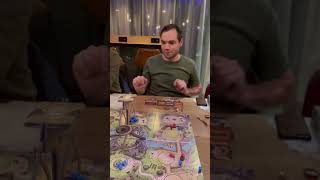
Board Game Dad Analysis at 0:00 sentiment: positive
video_pk 39461 · mention_pk 321057
Click to watch at 0:00 · YouTube ↗
Overall sentiment (raw)
positive
Pros
- Strong asymmetric design with clear faction identities
- Innovative religion-based power mechanic and scale visualization
- High replayability driven by multiple scenarios and evolving win conditions
- Intense interplay between area control and allegiance decisions
- Humorous and thematic moments that arise from shifting loyalties
Cons
- High complexity may present a steep learning curve for new players
- Balancing gods versus Saturns could present ongoing design challenges
- Thematic clarity might be opaque to players unfamiliar with mythic framing
Thematic elements
- Religion, belief, and power balance; conversion of Saturns to a deity's faith; souls placed on an eternal scale to determine dominance.
- An asymmetric, scenario-driven strategic milieu where two rival factions—gods and Saturns—contend for power across variable settings.
- Mythic allegory with a playful tone; scenarios yield diverse storylines, encouraging experimentation and storytelling within mechanics.
Comparison games
- Root
Mechanics (from transcript analysis)
- Area Control — Saturns vie for territorial control, creating tension and shaping scoring opportunities on the board.
- Asymmetric play — Two factions (gods vs Saturns) have distinct win conditions and mechanics, creating divergent strategic pathways.
- conversion and religion — Gods can convert Saturns to their religion, increasing power and altering the balance of influence.
- dynamic allegiance — Players can switch allegiance between religion and atheism, injecting volatility and strategic adaptation.
- scenario-driven win conditions — Each scenario imposes different end-game objectives, enhancing replayability and tactical variety.
- soul scale mechanic — Souls are placed on an eternal scale to illustrate balance of power; shifts in allegiance can tilt victory conditions.
Video topics + discussion points
No key topics recorded for this video.
Quotes (from this video)
- statera is an asymmetric scenario-driven strategy game
- the gods gain more power by converting Saturns to their religion and resting their souls on an eternal scale that literally illustrates the balance of power
- Saturns can rescind the power they lend the gods by leaving the religion
- then the stature is once again designated as an atheist
- this is a complex game that is very similar to root yet also completely unique with tons of replayability
- this is entirely amusing
- constantly switching Allegiance
- players arguing over whether it is best to align with a religion or become an atheist
References (from this video)
No references stored for this video.
Video H1wmB6_frtM
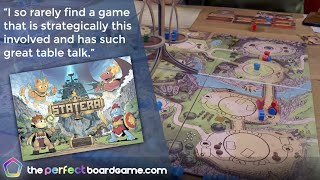
Board Game Dad Review at 0:00 sentiment: positive
video_pk 34043 · mention_pk 101392
Click to watch at 0:00 · YouTube ↗
Overall sentiment (raw)
positive
Pros
- Brings a fresh, story-driven take to area-control with deep theme integration
- Strong asymmetry and high thematic fidelity between factions
- Multiple replayable scenarios with different outcomes and strategies
- Rich table talk and engagement due to dynamic powers and theme
Cons
- Prototype components and evolving rulebook; final production quality unconfirmed
- Steep learning curve due to asymmetry and numerous powers
- Potential balance challenges across stories and player counts
Thematic elements
- Religious influence, faith conversion, and the tension between earthly ambitions and eternal rewards through souls and divine powers
- Area-control map featuring three domains (Dragon Gods, Faering Gods, and an atheist central area) with afterlife governance and a celestial hierarchy
- Story-driven, with multiple playable stories that change victory conditions and map objectives per number of players
Comparison games
- Root
- Scythe
Mechanics (from transcript analysis)
- Area Control — Players vie for control of zones on a map to claim resources and build or advance.
- asymmetric factions — Saturn players and God players have different objectives, powers, and win conditions.
- Currency: Staggerings — Meeples function as a shared resource; spending them represents labor or mortality for actions.
- Dynamic player powers — Players can upgrade or activate powers/cards to alter their capabilities.
- Event cards (hidden randomness) — A deck of event cards introduces unpredictable elements; other information is public except events.
- Events — A deck of event cards introduces unpredictable elements; other information is public except events.
- Soul balance / afterlife economy — Saturn deaths trigger afterlife mechanics; souls in balance influence divine actions.
- Story-based scenarios — Multiple story objectives per game alter goals and playstyle; player count changes the experience.
- Unique Player Powers — Players can upgrade or activate powers/cards to alter their capabilities.
- Upgrade paths — Gods or Saturns can improve powers or unlock new actions to shift strategy.
Video topics + discussion points
No key topics recorded for this video.
Quotes (from this video)
- brand new asymmetric story-based strategy game called statera
- two types of factions there are the Saturn players and the god players
- there are several different ways to play and every way to play is different depending on your player count
- the dynamic player powers this double asymmetry it feels almost like an imitation of root but then they went so much farther
- this is a brand new type of game
- it's going to be massively successful
- so many different scenarios or ways to play that each story feels like a different game
References (from this video)
No references stored for this video.
Transcript Navigation
Showing 1–2 of 2