/pic570478.jpg)
Stronghold is a game telling the story of a siege. Players take opposite sides, one has to defend the stronghold, the other has to break into the castle as soon as possible. As time passes, defenders get Victory Points every turn for their efforts on the walls.
The game board represents the stronghold itself as well as the surrounding terrain, where enemy forces are placed and whence they proceed to the walls.
The defender has a small number of soldiers manning the walls, while the invader has an infinite legion of attacking creatures. A desperate fight is taking place every single turn. The invaders build war machines, equip their soldiers, train them and use black magic rituals to achieve victory. Meanwhile, defenders repair walls, build cannons, train soldiers, and do everything they can to hold the castle as long as possible.
This page includes videos and mentions from the whole Stronghold family. Drill into a specific game below.
/pic570478.jpg)

Stronghold - How To Play
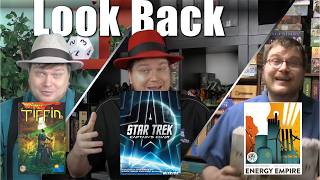
- Such a cool concept
- works really well
- a lot of complexity
- a lot of back and forth
- very interesting game
- orcs and trolls attacking a castle while one side defends
Mechanics (from transcript analysis)
Video topics + discussion points
Quotes (from this video)
- Hey everybody, I'm Tom Vassal. Welcome to Look Back, a series where I take a look at games that I reviewed a year ago, 5 years ago, 10 years ago, and 20 years ago.
- And I tell you what I think about these games now, if I think about them at all.
- When you talk about games that are cozy-esque, I think this is pretty close one of those as you build these nice streets.
- Thanks so much for watching. I'm Tom Vasel, and this is Look Back.
References (from this video)
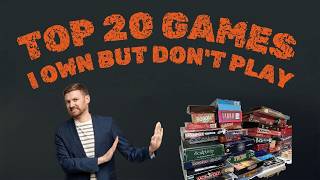
- Really awesome two-player game.
- Gets very tense.
- Feels incredibly balanced.
- Very fun two-player game.
- Haven't played it since Gen Con 5 years ago.
- Only played the second edition.
- Castle Siege
- Fantasy
Mechanics (from transcript analysis)
- asymmetrical gameplay — One player controls the defenders, the other controls the attackers.
- Resource Management — The monster player has unlimited resources, while the human player has finite warriors.
- tower defense — The human player defends a castle against waves of attackers.
- Worker Placement — The monster player's actions generate 'time tokens' that the human player assigns.
Video topics + discussion points
Quotes (from this video)
- And then you have to balance the Defcon track and then balance your military while also uh balancing the victory points
- The fact that every player has a very busted player power, but because they're all bro because they're all broken, none of them are.
- This was the first game that I played that had that element. And I've always liked that ever since.
- It it's the battle of Helms's Deep H just with a different theme.
- So it wasn't the most highly narrative game, but it was something that I feel like this game needed right off rip.
- Just buddy cop buddy cop the game.
- The problem with modular expansions for games like this. And the reason why it's on this list is because I don't play this all the time.
- I would go out of my way to probably say this is the best pirate game.
- this one's gameplay just really does it for me.
- It hit number one because I'm I'd be more inclined to play BattleCon than I would any of these other games, but it also has been games that I haven't touched in a long time.
References (from this video)
- Amazing art and production value from the Kickstarter.
- A very worthwhile nominee.
- Motivates continued hard work in developing great games.
- Took 4 years to be released.
- Undead/Zombies
Mechanics (from transcript analysis)
- cooperative play — Implied by the context of defending a stronghold.
- Resource Management — Likely involved in building and defending the stronghold.
- tower defense — Implied by the name 'Stronghold' and the context of defending against undead.
Video topics + discussion points
Quotes (from this video)
- Brian Boru High King of Ireland as soon as you put that on the on the table and as soon as I saw trick taking I was like uh oh I'm all in I I pushed all the chips in I was fully engaged in this game
- Clash of cultures Monumental Edition I'd like to commend the design development and Publishing team behind K C it's varied in strategy epic in scale and thankfully foot powder free
- man it's one of those games for me that just created an experience every time I played and I've played with four player I've played with three player I've played with two player and every single time I enjoyed what that game brought to the table
References (from this video)
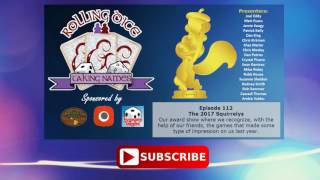
- Came out with a second edition
Mechanics (from transcript analysis)
Video topics + discussion points
Quotes (from this video)
- The Squirrelies are the type of award show that you would expect from RDTN.
- Get it? Gy. Not like game as in the smell, but gy as in playing board games. Get it?
- Man, brevity, I love it. You know, it speaks to me.
- Autobots roll out.
- So, the other guy gave me the award, not not Marty, you know, who's the guy, right?
- I wonder if they do automatic draft over there at Fantasy Flight from your checking account.
- And we really need to give that one another shot.
References (from this video)
- Well-earned history
Mechanics (from transcript analysis)
Video topics + discussion points
Quotes (from this video)
- The Squirrelies are the type of award show that you would expect from RDTN.
- Get it? Gy. Not like game as in the smell, but gy as in playing board games. Get it?
- Man, brevity, I love it. You know, it speaks to me.
- Autobots roll out.
- So, the other guy gave me the award, not not Marty, you know, who's the guy, right?
- I wonder if they do automatic draft over there at Fantasy Flight from your checking account.
- And we really need to give that one another shot.
References (from this video)
- Delayed release was disappointing for the speaker.
- Undead/Survival
- Stronghold Universe
- Stronghold
Mechanics (from transcript analysis)
- Standalone — Can be played on its own or merged with the base game.
- standalone expansion — This game is a standalone version of the original Stronghold game.
Video topics + discussion points
Quotes (from this video)
- it's gonna be a standalone game for the original game stronghold but it's gonna be published by stronghold games
- we are proud and thrilled to announce a new line of expansion for you for detective written and designed by the best storytellers in the industry robbed of you pandemic legacy and Mike's a linker Pathfinder this will be a standalone case is a one case you can save your friends not campaign not something you have to devote the whole crew for that some of the weeks
- I love the name of this I love it Imperial settlers rolling right it leaves nothing to the imagination you know exactly what the theme is you know exactly the time for game of it it is it's like so blunt that it's perfect
- the fact that you can sit down and this this is true the example that they use with monolith arena is a fantastic idea because I can totally see sitting there and and asking a question hey how does this unit work and I'll explain to you how that unit works so I think that's a fantastic idea
- I personally I like it when publishers put out less games cuz you could put more focus on those games
- I was honestly surprised honestly surprised that he didn't have a video montage I may be looking at a portal through the years some games they released early on pictures of them early in the year so I'm really surprised that he didn't put that that together maybe on his youtube channel maybe the eventually he'll do that in the future
References (from this video)
- One of the host's favorite two-player games.
- Very thematic and flows well.
- The asymmetric play is a key strength.
- Considered a heavy and difficult game.
- May not have mass market appeal.
- Medieval siege warfare
- Star Wars Rebellion
- War of the Ring
Mechanics (from transcript analysis)
- Area Control — Players vie for control of sections of the walls or bombard the stronghold.
- Asymmetric gameplay — Two players have completely different roles and objectives.
- card-driven — Gameplay revolves around resolving cards from a line.
- Resource Management — Players manage resources to build up defenses or launch attacks.
Video topics + discussion points
Quotes (from this video)
- it's gonna be a standalone game for the original game stronghold but it's gonna be published by stronghold games
- we are proud and thrilled to announce a new line of expansion for you for detective written and designed by the best storytellers in the industry robbed of you pandemic legacy and Mike's a linker Pathfinder this will be a standalone case is a one case you can save your friends not campaign not something you have to devote the whole crew for that some of the weeks
- I love the name of this I love it Imperial settlers rolling right it leaves nothing to the imagination you know exactly what the theme is you know exactly the time for game of it it is it's like so blunt that it's perfect
- the fact that you can sit down and this this is true the example that they use with monolith arena is a fantastic idea because I can totally see sitting there and and asking a question hey how does this unit work and I'll explain to you how that unit works so I think that's a fantastic idea
- I personally I like it when publishers put out less games cuz you could put more focus on those games
- I was honestly surprised honestly surprised that he didn't have a video montage I may be looking at a portal through the years some games they released early on pictures of them early in the year so I'm really surprised that he didn't put that that together maybe on his youtube channel maybe the eventually he'll do that in the future
References (from this video)
- Will be released via Kickstarter, offering potential for added content.
- Can be played as a standalone game.
- Kickstarter release date is May 2019, with potential delivery by year-end.
- Undead invasion of a stronghold.
Mechanics (from transcript analysis)
- Standalone — Designed to be a standalone game.
- two-player — Specifically designed as a two-player game.
Video topics + discussion points
Quotes (from this video)
- it's gonna be a standalone game for the original game stronghold but it's gonna be published by stronghold games
- we are proud and thrilled to announce a new line of expansion for you for detective written and designed by the best storytellers in the industry robbed of you pandemic legacy and Mike's a linker Pathfinder this will be a standalone case is a one case you can save your friends not campaign not something you have to devote the whole crew for that some of the weeks
- I love the name of this I love it Imperial settlers rolling right it leaves nothing to the imagination you know exactly what the theme is you know exactly the time for game of it it is it's like so blunt that it's perfect
- the fact that you can sit down and this this is true the example that they use with monolith arena is a fantastic idea because I can totally see sitting there and and asking a question hey how does this unit work and I'll explain to you how that unit works so I think that's a fantastic idea
- I personally I like it when publishers put out less games cuz you could put more focus on those games
- I was honestly surprised honestly surprised that he didn't have a video montage I may be looking at a portal through the years some games they released early on pictures of them early in the year so I'm really surprised that he didn't put that that together maybe on his youtube channel maybe the eventually he'll do that in the future
References (from this video)
- Standalone game
- Asymmetric gameplay
- Plays great
- Kickstarter potential for upgraded components and stretch goals
- Niche market may limit availability
Mechanics (from transcript analysis)
- Asymmetric — The game is 100% asymmetric.
- Asymmetric gameplay — The game is described as 100% asymmetric.
- Cooperative (implied) — While not explicitly stated for Undead, the base game's appeal suggests cooperative elements.
- Standalone Game — This is a standalone game and does not require the base game.
Video topics + discussion points
Quotes (from this video)
- The fashion world being a magnet
- I've never seen Devil Wears Prada you're dead to me
- this is a heavy euro I'm not talking like an imperial settlers he said this is a heavy crunchy euro heavy euros kind of have a niche market
- The art of those units that is so flippin cool
- there's going to be an Alexis skill such that there's going to be a standalone case that's narrated and handled by an Amazon Alexa its k-6
- this is to me personally I think this is trailblazing if other publishers don't see this going on and doesn't duplicate this they're crazy
- I think to this day that's - this is still one of my favorite two-player board games of all time
- The boxart for academics the art of those units that is so flippin cool
- I love economic games any I don't know why because it is so dry it is dry when you've got a market and you have a supply and demand and you drive up the price you drive down the price that sounds so boring to people when you explain it but I love love those games like stockpile
- The flowchart for how to play raccoon Tycoon which by the way if it's approved by bgg you should see it out there
- money is secret and if you had a bunch of stacks of coins and things like that it's not as easy as taking those paper bills fanning them out under the table to count them real quick versus a bunch of little tokens that you need to do
- The game ends when two out of the three items are void in other words the towns the railroads or the building tiles two out of the three have to be void before the game will end
- this game blew me away it is simple to play your flowchart is amazing
- Raccoon Tycoon top game for 2019 yes it's February imagine that
- it's always a fun tradition for us each year
- I can't believe it's our fourth annual fourth annual squirrely award I know I can't believe you came up with this four years ago amazing
References (from this video)
- Amazing two-player asymmetric game.
- Incredibly fun.
- Special memory of being taught by the designer.
- Still holds up well and is playable.
- The copy owned is not signed (unlike the one taught by the designer).
- The first edition copy needs some models glued back on.
Mechanics (from transcript analysis)
- Asymmetric gameplay — Players have different roles and abilities, making the gameplay asymmetric.
- two-player focus — While playable with more, it's highlighted as a strong two-player strategy game.
Video topics + discussion points
Quotes (from this video)
- Lorenzo that's that is the number one game I would not get rid of
- This is a game that I think people who like thinking games would like this as a filler
- for me a lot of rolling rights I've played has been like a pusher luck
- Castles of Burgundy was kind of a thinkI game and also think it translated well from the board game to the to the dice game this is the same thing
- The two things you like in games quick and dice and that's exactly what a rolling ride is exactly
- This game is a very hard game to master it will challenge you it will frustrate you but it was fun but special relations are not a thing for me
- A mark of a good game for me am i when I look at these things is a game that I even though if it hurts and I'm not good at it I always look at and say I can do better I will play it again so I can prove to myself that I can do better
- The Game Designers Documentary is a behind the scenes look at designers in their process for making games
- if you missed it you got a chance to go and be able to get a copy and get a digital copy you can get a physical copy but this is one project that was very interested in
- you may not realize you know the people behind the games were these designers and this stuff that they have to go through
- that is the outburst game table that is currently they'll be on Kickstarter on June 27th
- He's a pinball wizard and that's as far as I can go man
References (from this video)
- One of the first games played with the game club.
- Remake was exciting because the first edition was already played.
Mechanics (from transcript analysis)
Video topics + discussion points
Quotes (from this video)
- Lorenzo that's that is the number one game I would not get rid of
- This is a game that I think people who like thinking games would like this as a filler
- for me a lot of rolling rights I've played has been like a pusher luck
- Castles of Burgundy was kind of a thinkI game and also think it translated well from the board game to the to the dice game this is the same thing
- The two things you like in games quick and dice and that's exactly what a rolling ride is exactly
- This game is a very hard game to master it will challenge you it will frustrate you but it was fun but special relations are not a thing for me
- A mark of a good game for me am i when I look at these things is a game that I even though if it hurts and I'm not good at it I always look at and say I can do better I will play it again so I can prove to myself that I can do better
- The Game Designers Documentary is a behind the scenes look at designers in their process for making games
- if you missed it you got a chance to go and be able to get a copy and get a digital copy you can get a physical copy but this is one project that was very interested in
- you may not realize you know the people behind the games were these designers and this stuff that they have to go through
- that is the outburst game table that is currently they'll be on Kickstarter on June 27th
- He's a pinball wizard and that's as far as I can go man
References (from this video)
- The game is a standalone expansion to Stronghold.
- It can be combined with elements from the base game.
- The reviewer liked what they saw in the prototype.
- The game board is large and impressive.
- Ignasi (the designer) is a funny and great friend of the show.
- The game features new spells and tiles for the defender.
- The slow learning process ensures a good understanding before playing for real.
- The rules are still being worked on and tweaked.
- Learning the game can be a slow process due to the complexity of each side.
- The prototype components were basic (copy paper, penny sleeves).
- Invaders vs. Defenders in a stronghold.
- Fantasy
- Asymmetrical gameplay where each side has distinct playstyles and objectives.
- Netrunner
Mechanics (from transcript analysis)
- Action Point Allowance — Players likely use action points to perform various tasks.
- Area Control — Defenders are inside a stronghold, and invaders attempt to breach its walls.
- asymmetrical player powers — The invader and defender sides have entirely different rules, units, and objectives.
- Combat — The core of the game involves conflict between invaders and defenders.
- Hand Management — Players manage cards, possibly spells or unit abilities.
Video topics + discussion points
Quotes (from this video)
- Since H of sigmar came out you've had a problem because there's a faction that you wanted to play that you struggled getting an army together.
- The Army's beast carburetors by the way if you're familiar with ages Sigma and this is an army with an extremely low model count on the table and extremely limited unit choice.
- So they have these four grand allegiances now order chaos death and destruction.
- The other faction is brand-new like these models let this beast of bones box is your first chance to get a hold of these models and what are they they are called the Aussie arc bone Reapers.
- Doug has gotten Kapow - white wizard gaming that means it's gonna be able to get a lot more distribution
- So in that same theme same mechanic but instead of cards that you're using dice so I think it's a great arrangement relationship between those two entities
- The model starting at the bottom will go all the way through the top and can be used all the way the big game it's really smart this model that Games Workshop has put together.
References (from this video)
- Streamlined rules.
- Shortened gameplay.
Mechanics (from transcript analysis)
- Streamlined — Portal Games is releasing a second edition with streamlined rules and shortened gameplay.
Video topics + discussion points
Quotes (from this video)
- I prefer to play multiple games as opposed to one long game
- I could scratch that euro itch without a huge time investment
- with the right game you can get that de hora experience and leave time for other games to fit in your three or four-hour window
- streamlined
- it's as if it was a match made in heaven
- it's all about getting more games in the same amount of time
- typically the phrase quantity versus quality comes up
- there's some brilliant designers able to come up with some high quality deep games that can be played in their reasonable amount of time
- I want to maximize my time as much as possible
- it's very easy for me to find games that give me the play experience i want in a shorter amount of time
References (from this video)
- Will be released in 2019.
Mechanics (from transcript analysis)
Video topics + discussion points
Quotes (from this video)
- You will not do your what was that called oh crap his spiel what's that called wow that was a joke that just totally flat on his face right there
- We're just lolling people to sleep where the music of the board game board game podcast group you know music is like it's there but you don't notice it and then when you finally hear it you just realize how annoying it is
- I'm just not really into euro games meshed with push your luck cuz again I run the odds man in my mind I'm running the odds
- Why do you make me go out and buy $18 readers I haven't bought in the Sam's multi pack yet
- It's not an alliteration but anyway pod pledge okay so but if you say it too fast podge pledge oh you know so but thank you chairs
- The biggest thing in the hobby right now is roll-and-write
- It's the one that you can keep making and making money from that's my definition
- Good games are not good enough you need great games number one and you need games that are marketed well and stand out in some way
- A game from his experience has about a two-week shelf-life that if a game doesn't catch hold within two weeks it's gone and forgotten
- The reason why I was asking about that because if you don't know Steven is is really into he's I guess a beer connoisseur beer aficionado
- We're the background noise of podcasting or board games Kirk I guess that's beautiful
- It's just the fact that it's kind of the worker placement portion is matched with putting these cards in the play that becomes an engine builder much like a game you know you dimension seven wonders or something like a mural settlers but it's not an engine it's a city
- it does get a little long Tony because as in typical engine builders there's a lot of AP that can happen there is based on the cars
- you know the fifth year anniversary would you ever consider coming out with a deluxe version with the nice player boards and everything that people tend to buy third party
- So it's like lightning in a bottle catching lightning in a bottle
- you know that the three months of sales where you can then see what's gonna happen with the game
- We have a wonderful pre-order program and I believe you still do that at a discount right Steven
- There are still plenty about regular badge sales and kids badges oh nice
References (from this video)
- Castle Siege
Mechanics (from transcript analysis)
Video topics + discussion points
Quotes (from this video)
- I don't look at games and go this is too complex we couldn't do it it's more about do I think it's the right fit is a game I'm excited about and energized about
- I have some sort of a weird feeling of Purity in a game so let's say I was playing the path finder Adventure game um anytime that I was going to play the game again I'd be very careful to try to weed out anything extra that had get stuck in until certain points
- I love small Skirmish style games so
- I love that open world just getting to explore everything and just doing nonsense things for hours on end have nothing to do with the main quest and thoroughly enjoying it
- I'm so excited to see Spider-Man done by Marvel and not by Sony that I'm I'm just I'm over the moon
- superheroes are weapons of mass destruction yeah right so so some of them having them regulated probably makes sense
References (from this video)
- Video helped correct rulebook errors.
- Rulebook had many errors.
Mechanics (from transcript analysis)
Video topics + discussion points
Quotes (from this video)
- we need like a little intro fade in thing that would be good
- we've got a game on the table I had no idea that we were going to be doing
- we finished our near and far right our near and far playthrough
- we plan to have a near for our promo
- I feel like I'm I'm falling back in the group I'm coming down I'm losing some of my like Panic which is good
- it's a push your luck game because you're going to be constantly removing your equipment
- the biggest challenge honestly would have been early on realizing I really want to do this
- that's why I say frequently I always feel like a great deal of gratitude that I've been able to keep working on this show
- the games in my opinion are getting better all the time
- Streamlining does not equate to dumbing down; it's about efficiency and elegance
References (from this video)
- heavy with rules
- ambiguous rules
Mechanics (from transcript analysis)
Video topics + discussion points
Quotes (from this video)
- it's now becoming the sponsor moment in the description of this video
- I started with teaching and playing mansions Amanda's first edition and I absolutely loved doing it
- charter stone will be more fresh from the beginning
- I do have a tutorial video for it
- pandemic legacy season one has been a very popular
References (from this video)
- Had some real new ideas being implemented.
- You really did have a feeling that you were in the thick of it.
- Sense of theme.
- First edition rulebook is [__] terrible.
- Second edition rulebook was even worse.
- Rulebook is [__] [__].
- You against the [__] world
Mechanics (from transcript analysis)
- Card Play — In terms of car play.
- Horde vs. Castle — One of you is the horde, one of you is the castle gazer.
Video topics + discussion points
Quotes (from this video)
- So remember, if your number one tower defense game isn't on this list, that's because I haven't played it or B that we think it's complete and utter dog [__].
- Castle Panic's a fantastic game to play with children and stupid people that don't understand board games.
- It is actually quite a skillful game, but then I suppose you could argue that it's quite lucky as well, but games with an adequate level of skill and luck combined are generally the best games, aren't they?
- There's like a billion and one scenarios for Zombicide.
- This game is so [__] difficult, I think we've only beaten it once in like over 20 years.
- So, this is tense. It will make your testicles rise into your pelvis like a balloon moving through the stratosphere.
- And it's just a shame that these sort of games with this sense of theme aren't really made anymore.
- Dawn of the Zeds third edition is a fantastic production.
- Carnival Zombie's got a fantastic theme.
- Ghost Stories is one of a kind.
- Ghost Stories is a challenge that you'll keep coming back to because we've only beaten it. We have never beaten it.
- I've never experienced tension like this in a board game.
- Project Elite is an absolutely superb thematic tense action romp that I've been playing for [__] I don't know, years and years and years and I've never got bored with it and it just gives me a [__] hard-on every time I even think about Project Elite, yeah.
References (from this video)

- Orcs, goblins, priests, soldiers, and marksmen defending a stronghold.
Mechanics (from transcript analysis)
- Action Point Allowance System — The Invader chooses actions from a row of ascending values, moving left to right, potentially skipping ahead. The defender uses hourglass tokens to perform actions.
- Area Control — Invader units move to wall sections and ramp parts, potentially overwhelming defender positions.
- Area Movement — Units move along connected paths between foregrounds, ramp parts, and walls. Movement is generally forward only.
- Bag Building — Invader draws cubes (goblins, orcs, trolls) from a bag.
- Combat — Strength is calculated for units on wall sections, including bonuses from banners and defender equipment. The player with higher strength wins, potentially breaching the wall if the advantage is sufficient.
- Dice Rolling — Used implicitly when drawing 'hit' and 'miss' cards for siege machines and cannons. The 'bloodstone ritual' also involves revealing tokens.
- Hand Management — Defender draws and keeps two defense plan cards. Invader shuffles and draws action cards, keeping specific values and randomly drawing from others.
- Modular Board — Defender can place and arrange building tiles inside their stronghold.
- Player Elimination — The Invader wins if they breach any wall section before the end of the seventh round. The defender wins if they prevent this.
- Resource Management — Invader spends goblins, orcs, or trolls to gain wood tokens. Both players manage hourglass tokens for actions.
- Set Collection — Defender collects hourglass tokens and assigns them to building spaces to resolve actions. Invader collects specific tokens for machines, equipment, and other effects.
- track movement — A round token moves along a round track.
- Variable player powers — Hero pieces have unique movement and order capabilities. Different unit types (goblin, orc, troll) have different strengths.
- Worker Placement — Defender places hourglass tokens on action spaces of buildings to resolve actions. Some actions require filling a row of hourglasses.
Video topics + discussion points
Quotes (from this video)
- Orcs rolls and goblins build trebuchet work up incantations and Advance on the stronghold walls while inside priests cast blessings on soldiers and marksmen who prepare to protect their home from the encroaching Invaders only one side can Prevail
- The Invader wins the game if they can breach any one of those wall sections before the end of the seventh round and the defender wins if they can prevent this from happening.
References (from this video)
- historical/fantasy warfare
- medieval siege warfare and castle management
- grand strategy with siege elements
Mechanics (from transcript analysis)
- area control / war game — players contend for map control and resources in a siege environment.
Video topics + discussion points
Quotes (from this video)
- there's something intrinsically incredibly rewarding about winning a game with a faction no one thinks is any good
- i love games that understand that family friendly doesn't have to be boring and awful
- the fact that there's a game for everyone out there is pretty cool
- i love designing board games
References (from this video)
- Solid game
- Still in print
- Siege warfare
- Medieval fortress
Mechanics (from transcript analysis)
Video topics + discussion points
Quotes (from this video)
- I used to call this a shelf of shame that was a pretty common thing to call it back in the day and I don't never really liked that term because I don't feel shame that I haven't got to these games
- this is mostly work like this is just a backload of things I probably should get to
- people will still be looking for it
- it doesn't matter if the game is like 20 years old people will still be looking for it
- I've painted this one and I spent a lot of time doing it
- there's no point putting them on the channel I think both of them have been out of print for like a decade
- one of the worst kickstarters by one of the worst studios in board gaming history
- Golden Bell Studios did everything wrong you could possibly think of
- purely toxic company run by incredibly terrible people
- it would be kind of a joke that I'd be able to do a three minute video of feudum
- this game has a tutorial video online that's like 40 minutes long
- The Rose explanation video feels like a parody but it's actually how the game is played
- nothing personally to me puts me off playing a game that then sitting down unboxing it and having a craft assignment
- stop making me spend hours assembling your damn games
- this is an uncontrollable mess right now
- I'm a full-time dad and I'm really doing this in the evenings
- I have a finite space and also it just puts pressure and stress on me having a whole bunch of crap there that I know I'm not going to get to
- I'm going to do a big cull
- I will be published by this company but that doesn't mean I'm going to be slavishly devoted to every single game they put out
- I am a sucker for cute animal games like I really am
References (from this video)
- engaging siege mechanics
- nice production in some editions
- not strictly historical; some variants lean into fantasy
- siege warfare and fortress management
- fantasy/medieval siege context
- thematic tactical play with asymmetric goals
- D-Day Dice
- Lincoln
Mechanics (from transcript analysis)
- asymmetric_goals — sides have different victory conditions and constraints
- tactical_movement — maneuver cannons and units around a board to breach defenses
Video topics + discussion points
Quotes (from this video)
- the number one game on BGG was Twilight Struggle
- 13 Days which is based on the Cuban Missile Crisis and it's like a trimmed down version of Twilight Struggle
- Memoir 44 is a classic one to get into
- Watergate… very easy to learn
References (from this video)
- strong thematic flavor of siege warfare
- flavorful you-are-there feel with multiple scenarios
- encourages vivid storytelling and tactical imagination
- randomized elements can disrupt narrative flow
- expansion content influences balance
- siege warfare and fortress defense
- medieval castle siege with defenders and attackers
- story-driven siege scenarios with dynamic battle narrative
- Dixit
Mechanics (from transcript analysis)
- asymmetric roles — Defenders vs attackers with distinct abilities and win conditions.
- infrastructure/battle progression via siege engines — Attackers deploy siege engines that are deliberately inaccurate but improve with misses.
Video topics + discussion points
Quotes (from this video)
- Conan really captures the essence of those Robert E. Howard stories
- it's like a Conan story is playing out even to the fact that many of the characters are different in every story you listen to
- there's a ton of storytelling potential