/pic3904427.png)
/pic4933104.jpg)
/pic3904427.png)



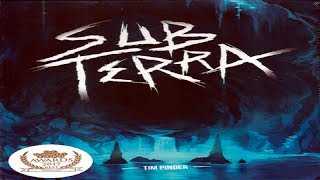
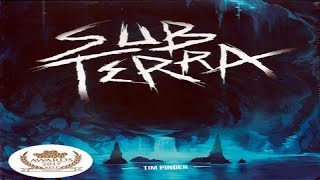









Sub Terra Deep Dive
What the Community Thinks About Sub Terra
Reaction to Sub Terra runs warm, with reviewers reaching for the same word: thematic. Board Games UnLocked calls it one of their favorite cooperative games, saying the cave-escape setup really feels like the spelunking experience of pushing through unexplored tunnels with something dangerous closing in behind the group. The Board Game Garden lands in a similar place, folding Sub Terra into a top-ten countdown of cooperative tile-placement titles and calling it a fun game and a thematic game in the same breath.
Not every reaction is uniformly glowing. On Foster the Meeple, the hosts openly disagree about how much they enjoy Sub Terra: one host is convinced the other secretly hates it, and that read gets flatly disputed on the spot. That split is worth noting alongside the praise, since it points to a game whose tension and pacing can land very differently depending on who is at the table. Even so, none of the channels walk back their interest in tracking down a copy, and the throughline across all three is the same: escaping a collapsing cave against a ticking flashlight is the part that sticks with people.
Core Mechanics That Define Sub Terra
Exploring one tile at a time
The Board Game Garden lays out the turn structure plainly: players flip over a tile to explore, then can move onto that space, drawing from a shared pool of actions that includes exploring, moving, and healing. That tile-by-tile reveal is what turns the cave into a real unknown at the table rather than a fixed board laid out in advance. Board Games UnLocked ties this to the game's other defining structural choice, noting that Sub Terra follows the familiar cooperative template where everyone shares the same core rules but each player also carries a unique ability that sets their role apart from the rest of the group.
A hazard deck that doubles as a countdown
The danger in Sub Terra is driven by a deck of hazard cards, and Board Games UnLocked describes that deck as also being the group's timer: it represents the flashlights running down, so the game does not end the instant the deck runs low. Instead, players end up rolling a die at the end of a turn for a chance to keep going one more turn before the lights actually give out. The same deck also tells the table what is still possible, since once every card carrying a specific hazard, like poison, has already been drawn, that danger is gone for the rest of the game and the tiles tied to it stop being a real threat.
The Sub Terra Experience
An atmosphere ritual
The Board Game Garden describes turning the whole session into a bit of a ritual: putting on spooky music, lowering the lights, and then working together to find the exit while avoiding monsters and poisonous gas along the way. That staging is presented as part of why the game is such a fun and thematic experience for the channel's group, rather than an optional add-on.
Getting stuck, and getting rescued
Board Games UnLocked recalls a specific pressure point from playing Sub Terra: a player who loses all their health is left stuck in place, and if the group still needs that character's ability, someone has to physically go back for them. That mechanic turns rescue into a real tactical decision under time pressure rather than a formality, since sending someone back costs the group turns it may not be able to spare against the hazard deck.
What Makes Sub Terra Stand Out
A spelunking theme that lands
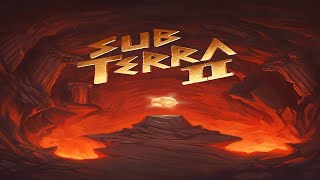
Board Games UnLocked keeps returning to how well the theme executes on the cave-escape premise, framing the appeal as the feeling of getting into a cave, getting trapped, and having something behind the group the whole way out. When comparing Sub Terra against its own sequel, the channel found the follow-up's treasure-hunting objective less exciting by comparison and ultimately rated the original higher, mainly on the strength of that theme.
An alternate way to escape
Sub Terra doesn't only ask players to find the exit. Board Games UnLocked mentions that the game includes different modes beyond the standard escape, including one built around blowing up support columns with explosives rather than simply finding a way out, giving the group a different objective to plan around from game to game.
Potential Drawbacks
Hard to find
Availability is a recurring frustration. Foster the Meeple has been trying to find a copy of Sub Terra for a long time and doesn't expect one to turn up, and while a reprint appears to be in the works, that channel isn't sold enough on it to back it themselves. The Board Game Garden echoes the same problem, calling the game pretty difficult to find even as a second printing looked to be available for pre-order.
Reactions can be uneven
The disagreement on Foster the Meeple between one host who is accused of hating the game and the other who insists that isn't true suggests Sub Terra's tension doesn't land the same way for every player. The rescue mechanic that makes a downed player wait to be saved can cut both ways too: it raises the stakes for the group, but it can also leave that player sidelined for a stretch while the rest of the table decides whether recovering them is worth the turns.
If You Enjoy Sub Terra
Board Games UnLocked places Sub Terra in the same genre as Forbidden Island and Forbidden Sky, calling it still very much part of that family of cooperative games, while feeling it overlaps a little less with Forbidden Desert.
What Reviewers Are Saying
"Your deck of cards was also your timer. Whenever you ran out, it was actually the deck represented your flashlights battery, so you didn't lose when the deck ran out."
— Board Games UnLocked
"This is such a fun game and such a thematic game. Basically it is cooperative, so you're all working together, and the story of the game is that you have gone into these caves and you are trying to find the exit before you die or before your flashlights run out."
— The Board Game Garden
"The first Sub Terra I have, it's one of my favorite cooperative games because I think it just really fits, or it really feels like the spelunking theme of going through a cave and having creatures run after you."
— Board Games UnLocked