













Taboo Deep Dive
What the Community Thinks About Taboo
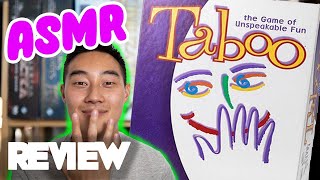
Reviewers treat Taboo as a dependable party game whose simple box hides a longer shelf life than most. Shelfside, a channel that reviews family-friendly titles, describes its copy of the game as lasting at least ten years and argues that the low price makes it an easy recommendation. Neon Gorilla approaches the game from a designer's perspective, placing Taboo beside Codenames as an example of a party game that either runs out of steam once the cards are gone or keeps producing new puzzles.
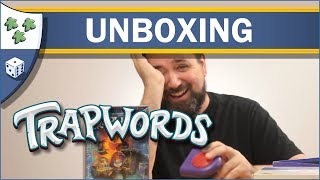
Agreement is strongest on accessibility and on the buzzer that gives the game its tension. Disagreement centers on the card content. Shelfside finds the cultural references dated and occasionally puzzling, while Ryan of Nights Around a Table focuses on the buzzer and the forbidden lists rather than on card content. Ryan uses Taboo as the reference point for Trapwords, a newer word game from Czech Games Edition, and frames that comparison as the main way to understand what the newer design changes.
Core Mechanics That Define Taboo
Word Deciphering
Taboo is a word deciphering game at heart. One player sees a target word and a list of forbidden words printed on the card, then gives clues until teammates guess the target before time runs out. Shelfside explains that each turn gives a player one minute to draw cards and give clues, and that the forbidden words are the part that makes the job difficult. Ryan describes the skill as a matter of vagueness and generality, not vocabulary, because the best clues paint a picture of the target without touching any listed word. Shelfside also notes that players sometimes sidestep the forbidden list with memes or references that have nothing to do with the word itself, which the reviewer considers a creative outcome rather than a flaw.
Because clues only work when both sides share a frame of reference, the mechanic also rewards common ground. Shelfside observes that the older edition contains references spanning several generations, which can make a family session a conversation about who knows which actor or cultural touchstone.
Deduction
Deduction is a weaker fit for Taboo than word deciphering, but the opposing team creates a layer of hidden information that rewards close attention. The defending team writes the forbidden list for the card, and the guessing team cannot see it. Ryan points out that the opposing team member waiting at the guessers' side is tracking every word that is said, so players must reason about what is safe to say without knowing the full list. Working out which phrasings the opposing team is likely to have blocked is what separates a cautious clue giver from one who gets buzzed.
The Taboo Experience
Nostalgic
Taboo feels like a fixture of the family game shelf, and reviewers connect it to childhood game nights. Ryan recalls a camping trip where the buzzer was damaged under a pile of gear, and the sound that followed turned a drive into an ongoing joke. The buzzer is the element that carries most of that memory. Its harsh tone is what makes a successful guess feel like a small victory and a mistake feel like a public correction, and Ryan is pleased with the sturdy sand timer and the pencils that come with the game.
Rewarding Mastery
Neon Gorilla argues that Taboo keeps rewarding players long after the first pass through the deck. Once a player has seen a card, the in-group shorthand they develop for a name or phrase carries over into later rounds, which gives the experienced table a clear advantage. The same reviewer contrasts this with Codenames, where a clue must be rebuilt for each new board. Taboo can feel repetitive when players fall back on the same tricks, which is why reviewers say the depth comes from the table's shared habits as much as from the cards themselves. Ryan describes being unusually good at the game, attributing that to a habit of describing things as generally as possible.
What Makes Taboo Stand Out
Teaching Takes Half a Minute
Shelfside stresses that Taboo can be taught in roughly thirty seconds, which makes the game easy to bring out with almost any group. The reviewer suggests it works on a couch, in a car, or on the floor, and that its accessibility is the reason it remains a standard recommendation for mixed-age groups.
Built-In Referee and Simple Scoring
The opposing team acts as a referee, so cheating is policed by the same people who benefit from catching it. Shelfside calls this punishing system one of the game's best features because it turns a simple party game into a more competitive session. The scoring also stays easy to follow. Points are tracked on a notepad, and because every team's score accumulates throughout the game, a team that falls behind still has a clear path back into contention.
Potential Drawbacks
Dated and Culturally Specific Cards
The most consistent criticism is that many cards depend on references that not every player will recognize. Shelfside points to a card built around a figure whose name meant little to the reviewer, and argues that cards like this would have been better placed in a separate, culturally specific edition. The same reviewer notes that the older version's references can become a conversation with parents, which softens the problem for some groups but does not remove it for newer players.
Speed, Frankness, and Difficulty Levels
Shelfside also warns that the game's speed and blunt style may not suit everyone, especially players who are not native English speakers. The reviewer adds that the green and purple difficulty sides of the cards were hard to tell apart in play, so the intended difficulty progression did not come through clearly. Taken together, these points suggest that Taboo rewards a group that shares language and references, and can feel uneven when those shared frames are missing.
If You Enjoy Taboo
Players who enjoy Taboo's word deciphering will find a similar pleasure in Codenames, where clue givers must link several targets with one word while avoiding opposing team cards. Neon Gorilla presents Codenames as the more repeatable design, since each new board changes the problem. Players who value the shared reference frame in Taboo may also enjoy Dixit, which Shelfside highlights for its accessibility across ages and languages because clues can be almost anything. For groups who want the guessing energy of Taboo without a word list, Pictionary offers fast group guessing, and Shelfside describes a family-friendly drawing variant as fun for teams with different levels of artistic skill. Finally, Charades shares Taboo's reliance on quick, improvised communication and its ability to turn a simple prompt into a lively table moment.
What Reviewers Are Saying
"Taboo is a good example of a game system where there's a cute, party game aspect, but then as soon as you've gone through the cards, people keep doing the same thing."
— Neon Gorilla
"This game is very accessible, it takes about 30 seconds to teach someone how to play the game, meaning this game is just begging to be played with almost anyone."
— Shelfside
"It's all about synonyms, right? And it's all about coming up with ways of saying the thing that you're trying to describe as vaguely and as generally as possible, creating a specific picture."
— Ryan, Nights Around a Table