





Tail Feathers Deep Dive
What the Community Thinks About Tail Feathers
Tail Feathers, designed by Jerry Hawthorne and published by Plaid Hat Games, is discussed as a standalone skirmish game set in the Mice and Mystics world. Reviewers cover it from several angles: full rules walkthroughs, a designer interview, and placement on two-player top lists. The tone across these discussions is broadly enthusiastic, and most reviewers single out the aerial side of the game as its distinctive feature. Ground troops fight over the forest floor and in the branches, while riders mounted on birds duel in the air between the trees.
The most detailed coverage comes from Watch It Played, where Rodney Smith works through setup, round structure, and combat, and from the campaign and custom-army breakdown in Watch It Played. Board Game Sanctuary takes a different angle, placing Tail Feathers on a list of favorite two-player games alongside Star Wars: X-Wing and praising the intuitive combat systems in both. Reviewers tend to emphasize different strengths. Some focus on the setting and the miniatures, while others focus on the procedure of flight and combat. The shared view is that the game rewards learning in stages, and that its optional rules can be added once the basics feel familiar.
Core Mechanics That Define Tail Feathers
Tilt-Based Flight
Flight is the heart of the system. During the tilt phase each player sets the tilt of every bird to the left, center, or right, and that tilt shapes the flight path. Watch It Played explains that a flying bird must use at least two flight templates and may use more up to its move value, with the templates joined at rounded maneuver points that depend on which way the bird leans. Because the posed model holds its tilt, the position also tells the opponent where that bird is likely to go. The designers add a counterweight to that predictability: a pilot can roll a piloting check during activation to change the tilt, so a bird can be adjusted at the last minute. As Watch It Played puts it in its overview, the tilt forecasts the direction you will fly, but your pilot's skill lets you change course to surprise your opponent.
Collisions are where the flight system becomes a fight. Birds that meet in midair enter a death spiral, a rolloff in which each side combines battle value and melee strength to inflict wounds, and a tie leaves both birds tangled for another round. Tail feathers dropped by wounded birds become obstacles that block clear sight and rattle pilots who fly through them, so the aftermath of one dogfight shapes the next. Birds that are defeated also gain grudge tokens that can be spent during later death spirals, which connects the tactical layer to the campaign.
Campaign Progression
The campaign is what turns a set of scenarios into a longer arc. The scenario book is meant to be played in order, and Watch It Played explains that the winner and loser of each scenario make decisions that affect their next battle. A pilot can be advanced from rookie to standard or ace, and a common bird can be exchanged for a unique one of the same type. Ground troops cannot be advanced in the same way, but players can agree on heroic conditions that turn a figure into a veteran, granting plus one to ranged and melee attacks and defense. Birds carry grudge markers forward from scenario to scenario, so a defeat leaves a visible mark on the unit. Outside the campaign, players can build custom armies under a point budget and reveal three objective cards to shape a one-off battle.
The Tail Feathers Experience
Narrative-Driven
Reviewers consistently describe Tail Feathers as a story told through the table. Isaac, a guest on a Watch It Played segment, sketches the premise: a forest is dying, rats are pressing toward a new forest, and the mice are defending it. The ground units try to complete missions while the birds try to intercept them, and players can bluff with decoy missions, which gives the battle a sense of deception beneath the combat. Campaign markers such as veterans and grudges make the history of each force part of the story, so the outcome of one battle colors the next.
Table Presence
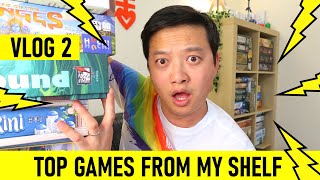
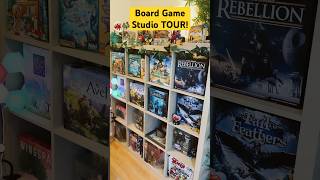
Tail Feathers is built to look good on the table. The battlefield is assembled from cardboard tree overlays, with nests placed on each player's home tree, and the vertical space between the branches gives the flying units room to climb. Board to Death TV - Board Game Reviews presents the modular trees as the core of the setup, and the tilting birds, scattered tail feathers, and rider figures give the aerial fight a three-dimensional look. Reviewers also highlight how striking the miniatures are on the table, which is a large part of why the battles feel so vivid.
What Makes Tail Feathers Stand Out
Mice and Mystics Compatibility
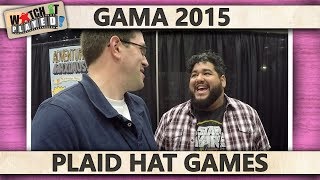
Reviewers consistently point to the link with Mice and Mystics as a practical advantage. Rodney Smith in Watch It Played notes that Tail Feathers includes unit cards for Mice and Mystics figures, so owners can bring those miniatures into the game. Jerry Hawthorne makes the same point in their interview, explaining that players who already own Mice and Mystics can take their figures and use them in Tail Feathers. For a collector, this turns the game into an extension of a world they already know rather than a separate purchase.
Miniatures and an All-in-One Box
The physical product gets consistent praise. Board Game Sanctuary highlights that the components, including all of the scenarios, are contained in a single box, and it calls the figurines very high quality. Watch It Played describes the miniatures as gorgeous, and the models are designed to show tilt clearly, which supports the game's central mechanic. Hawthorne, who began their career as a miniature painter, presents the figures as a natural part of the design rather than a decoration added afterward.
Potential Drawbacks
A Dense Rulebook With Optional Layers
The base game carries a lot of procedure, and reviewers acknowledge it. The full tutorial from Watch It Played covers templates, maneuver points, swoop attacks, death spirals, transported figures, drifting leaves, fire, and rattled pilots before reaching the campaign. The same reviewer points out that action cards, advanced leaf rules, and tail feathers can all be left out during early games, which is a useful release valve. Players who want a lighter first session will need to decide which layers to keep, and the overview in Watch It Played is intentionally brief on the detailed rules, so it is best treated as a preview rather than a substitute for the rulebook.
Setup and Bookkeeping
Tracking is the other common hurdle. Each unit needs a unit card, a matching ID tag, and an ID ring on the base, and players also manage nest dials, cheese wheels, mission clipboards, and several kinds of status and wound tokens. Rodney Smith's setup segment shows how choosing rookie, standard, or veteran versions and matching each rider to the right bird adds steps before the first round begins. Players who enjoy a light game may find this bookkeeping more demanding than the combat itself, though reviewers generally treat it as part of the appeal of a miniatures game.
If You Enjoy Tail Feathers
Mice and Mystics is the natural companion. Reviewers note that the cards and figures carry over, and the shared setting means the story of one game flows naturally into the other. My Mystics, which Board Game Sanctuary describes as a light dungeon crawler rich with story and well suited to two players, is another good choice for players who want the same warm, narrative tone in a different format.
For players who want the aerial combat with more tactical rigidity, Star Wars: X-Wing is the most frequently compared title. Board Game Sanctuary pairs the two for their defined play areas, movement strategies, and intuitive attack systems. Watch It Played also places Tail Feathers in the same realm as Star Wars: Attack Wing, while noting that Tail Feathers is more streamlined and easier for new players to enter.
What Reviewers Are Saying
"You set up a battlefield using these modular trees and you can fight in the trees or you can fight in the sky between the trees with your birds. The little mice ride around on these birds and the birds tilt as you can see."
— Jerry Hawthorne, Board to Death TV - Board Game Reviews
"In a campaign if a bird is defeated its pride is wounded and it gains a grudge marker. A bird can have more than one Grudge marker and these carry over from one campaign scenario to the next."
— Rodney Smith, Watch It Played
"All of the components that you need are encased in one box including all the scenarios and the figurines are very high quality."
— Denny, Board Game Sanctuary