/pic8080491.png)
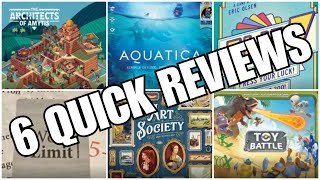
The King of Babylon wants to offer a marvelous present to his wife, Queen Amytis: The most beautiful city ever created. He asks two of the best Architects in the world to design the city, and only the very best one will be built. It's now up to you to create the best design.
Les Architectes d'Amytis ("Architects of Amytis") is a Tile placement game, containing some worker placement and even some "Tic Tac Toe" mechanisms.
During your turn, you'll have to select a tile among the available ones on the main board, and place one of your Architect Pawn on the corresponding pile.
Then, you'll place the tile on your board wherever you want (on a free spot, or covering another tile to make your city grow higher). Each tile is colored (4 colors) and represents a building (6 different types). Each building type will score directly when you place the tile. And the colors will allow you to reproduce some of the King's projects (a colored pattern inside your city) that will grant you points at the end of the game.
Furthermore, while placing your architects on the main board, if you manage to create a line, row or diagonal of 3, you'll be granted a King's favor: another type of score,triggered at the end of the game.
Buildings all have 2 types of scoring, so you can play different kind of games one after the other ;)
Which strategy will you choose to create the most marvelous city of the World? :)
—description from the publisher

- sleek visuals and approachable design
- meaningful decisions on each tile
- tight head-to-head play
- city-building, architectural design, patterns
- Ancient Babylon, design the city as a royal challenge
Mechanics (from transcript analysis)
- slightly_tic_tac_toe_mechanic — A mechanic where forming patterns (three in a row) triggers bonuses on the king's favor board.
- tile_placement — Tiles are placed into a city grid to score from building types and bonuses; patterns yield points.
- worker_placement — A worker placement element is used to select tiles; the worker remains on the board.
Video topics + discussion points
Quotes (from this video)
- it's simple sleek and really goodlooking it's super easy to learn but each choice is Meaningful
- what a cool two-player game
- it's brilliant
- it's such a good engine builder I like 51st state
- Zenith is marvelous
- Lone wolves is a two-player dueling trick-taking area majority game
- delicious decision
References (from this video)

- Freedom to place tiles anywhere on the board.
- Scoring points every turn.
- Hardest part is looking at the building and making sure it's correct while also matching colors for projects.
- Building a wonderful garden for the king's wife.
Mechanics (from transcript analysis)
- Pattern Building — Completing special projects by matching colors of tiles.
- Set Collection — Scoring points based on different types of buildings in your grid.
- Tile Placement — Placing architect characters on stacks to take tiles and place them on your grid.
- Worker Placement — Placing architect characters on stacks to perform actions.
Video topics + discussion points
Quotes (from this video)
- If you've ever wanted to be an anthropomorphic animal that makes weapons and armor this is your way to do it.
- The main new mechanic that it brings is a type of card called shrubs and these function like trees you can put them down and then place your animals on them but they are not trees so they don't count as trees for anything that would score trees but each shrub gives you an ongoing benefit when you play certain sorts of things
- It is a very simple scoring mechanism and game that is just a two player plays in about 10 minutes
- How good would they be at a hot dog eating contest
- Lying while playing Mafia
References (from this video)

Mechanics (from transcript analysis)
Video topics + discussion points
Quotes (from this video)
- Don't judge this this is what we do before we go to conventions
- when we get back we're going to be doing a recap video where we'll talk about our experience there
- type in what game you want to play
References (from this video)

- One of the best two-player games
- Phenomenal achievement
- Mind-boggling permutations from simple mechanisms
- Crams a lot into a tiny box
- Game play is awesome
- Thematically irrelevant
- Mediterranean/Persian temple
- Lost Cities
- Alhambra
Mechanics (from transcript analysis)
- Pattern Building — And if you manage to arrange your buildings in the same formation, doesn't matter which way around the card goes, you could orient it whichever way you like, then you'll score a truckload of victory points at the end of the game.
- Set Collection — You'll gain points dependent on how many tiles you got and the way they're placed on the board.
- Tile Placement — where you're going to be placing tiles. On your turn, you're going to be performing four steps.
- Worker Placement — If all of your architects are on the board, you're going to have to retrieve them.
Video topics + discussion points
Quotes (from this video)
- So, if your favorite small box banger ain't on this list, that's because A, we ain't played it, or B, we think it's complete and utter dog [ __ ].
- We have got down to three cards with this and it was agonizingly close that we didn't beat the game, but it's [ __ ] awesome.
- The idea of the game is to empty your plits pile before all the other players.
- But with four players, it is absolutely insane.
- And this game really does shine at six players cuz there is more chaos than the aftermath of a Garen air raid.
- This is probably one of the best two-player games that we have going to say ever played.
- So, how they managed to cram so much [ __ ] into this tiny little box is like astonishing.
References (from this video)
- Elevated familiar concept (tic-tac-toe)
- Escalating tension
- Distilled and fun focus
- Easy to pick up with elevated strategy
- Civilization building
- knots and crosses
- tic-tac-toe
- Arboritum
Mechanics (from transcript analysis)
- Card Drafting — Project cards add a layer, requiring specific configurations of building tiles to score.
- Pattern Building — Creating lines of three meeples of the same color (diagonal, vertical, horizontal) allows placing project markers.
- Set Collection — Scoring based on different tile types (gardens, forts, sentinels, location cards, banners) and their placement.
- Stacking — Building tiles can be placed on top of other tiles, creating stacks.
- tile drafting — Players draft tiles from a 3x3 grid.
- Worker Placement — Placing meeples on tiles blocks them for the opponent.
Video topics + discussion points
Quotes (from this video)
- Hi, I'm Danny. I'm an avid modern board gamer from Australia. Love sharing my passion for this hobby with you, my friends, and my family.
- If you've ever played a game called Arboritum, which has ways that you line up trees in ascending order in a grid, this game kind of has that very tense, tight feeling to it, which I really, really enjoyed.
- So, what did you think of those simple yet strategic two-player games?
- I hope your next board game experience is an amazing one, and I can't wait to share this entire library of games behind me with you in the future.
References (from this video)

- Direct two-player competition with multiple scoring paths
- Engaging tension for 2 players
- May be a bit abstract for some players
- Architecture, strategy, tactical placement
- Ancient kingdom with architects building structures
- Abstract, competitive two-player duel
- NS and crosses
- tic tac toe
Mechanics (from transcript analysis)
- Pattern/line scoring — Gain favors by aligning rows/columns; strategic planning to block the opponent.
- Tile Placement — Place tiles on your grid and score by color matches and line completions.
Video topics + discussion points
Quotes (from this video)
- I was really surprised of how much fun we had with this.
- it's the worthy recipient of our best party game of 2025.
- This is hands down the best two-player game that we played last year.
- it's a stunning masterpiece.
- it sucked ass.
References (from this video)
- Interesting combination of tic-tac-toe-like mechanics with tile placement and pattern building
- Potential for strategic depth with more plays
- Fast to teach
- Significant randomness in tile draws
- Frustration when you can't get needed tiles
- First impression was lukewarm
- pattern matching, tiling
- Patterns-based city-building with colored buildings
- abstract strategy
- Six Nymph
Mechanics (from transcript analysis)
- Dice Drafting — Draw tiles from a random pool; tile availability affects strategy.
- Pattern Building — Place colored building tiles to complete pattern goals on your board.
- pattern-building with tiles — Place colored building tiles to complete pattern goals on your board.
- tile drafting with randomness — Draw tiles from a random pool; tile availability affects strategy.
- tile stacking for alternate scoring — Stack tiles to meet alternative goals and gain points.
Video topics + discussion points
Quotes (from this video)
- My first impression was kind of lukewarm with this game.
- There is a lot of randomness in what tiles you are grabbing.
- I really enjoyed the synergies of mechanisms that are featured in this game.
- it's not something that immediately screams replayability to me.
- I did enjoy this game and would happily play it as someone else suggested it.
- Easy to learn and teach.
- This game has offered a lot of fun and replayability.
- The artwork is really nice.