Simple, Yet Strategic 2 Player Board Games
Games in This Video
4 games are featured in this video — they unlock as you watch.


Transcript
Are you looking for a simple yet super strategic game to play with your significant other or your BFF? You've come to the right place, my friends, because in this video, I've uncovered five simple but strategic two-player only games that are really going to liven up and strengthen your game night. Hi, my name's Danny. I'm an advid modern board gamer from Australia. Love sharing my passion for this hobby with you, my friends, and my family. And don't forget to subscribe for more wholesome board game content.
The first game I want to talk about has a cool theme. Uh, it's got this space theme where you've got three different races, the humans, the robots, and the animods all vying for control in this really interesting planetary tugofwar. The art in this game really reminds me of some of the Image comic art. So, if you've read any of the uh book series from Image Comics, in particular, Saga, this kind of has that really clean, crisp, cartoonish flavor to it while still feeling mature and uh evolved. So, the game I'm talking about is Zenith. I have had so much fun with Zenith because there are so many really cool, interesting threads to pull throughout the game. And this is one of those games where it feels like you've got your dominoes lined up, but as the dominoes collapse, you kind of have to quickly tug at them and try and really really build up your uh side of the board. Now, this is a game where basically you're trying to control planets. There are five planets in the middle of the board, and you're playing cards to push and pull, well, mainly pull the planets towards your side of the board, cuz once the planets come off, they kind of go to this little edge part of the board, which determines your windcon. So, there's quite a few there's three different ways to trigger the wind condition. Either have five planets overall, uh, three of the same planet or four different planets. And there's a multitude of ways to do it. The primary way that this game works is that you'll be playing cards from your hand against these five different planets. Each of
the there's five different colored cards. And every time you play a card for a planet, it's got a little ability that you can trigger based on your current game state. Um, depending on how many cards you've previously played uh for that color planet, you will get a discount for cards that you play in that same column, thereby strengthening the pull or the tug of that thread in that particular column for you. And so you feel like, you know, if you're playing one of those foots, not foot football, I don't think those um arcade games where you kind of pull the little soccer players along, you kind of feel like you're pulling those threads and trying to gain that majority uh towards you. At the same time, you've got this second section of the board, which basically allows you to take a uh bonus action, but also you get to become the captain.
And the captain's really important because uh it allows you to increase your hand size and thus increase the amount of options that you've got. And so the there's a bit of a interesting tension here where you're like, should I play cards to keep moving those planets over and inching it close towards your side of the board or do you try and gain a captaincy to try and broaden the strategies and the I guess the bonuses and the options that you have when you draw cards at the end of your turn. The other area of the board is the little tech side where there's like three little tech trees and you're moving these markers up and you're kind of incentivized to move up the three tech trees equally because as you move up to another level, your your bonus is to be able to move more planet icons to your side. And so there is this really interesting card play that is the the center of this fiveway tug-of-war. And depending on how your tableau builds up and how you kind of interact with your opponent's tableau because there's different ways to kind of like take cards from your opponent and put them on your side or your opponent can take them from you. That combination of uh trying to make sure that you're not letting your opponent get too many planet planetary controls and also trying to make sure your hand size is really big enough so the breadth of your choices is really good. It's got a lot of great micro decisions that all kind of link together holistically to make such for such a fun, short, easy to get into experience. It's very satisfying playing those cards down. The next game I want
to talk about is probably one of my favorite two-player games to have come along recently and entered my collection. It's really cool because it's got a really fun card playing synergy and you're essentially building an engine, but the way that you score in this game is phenomenal. Um, it's probably one of the best two-player games I've played that kind of evokes that really big box euro type feeling effect that you see in a lot of big box games, but it's very condensed down. It's a game called Avention. If you ever if you're a fan of Adventure Time, this kind of pays homage to that TV show. What I really like about Wild Venture is that you've got three different types of cards. You've got these uh creature cards, building cards, and um relic cards. And the way that scoring happens uh happens in three different ways.
There's three different suits. So you've got crows, you've got frogs, you got rabbits, and basically at the end of the game, whatever cards you've got in your scoring pile, that's going to help determine your final value. And so at the end of the game, you kind of want a balance of all three different types of species of cards because your lowest number of your what of the rabbit, frog, and crow species that you have will multiply the highest number that you've got. And so that will formulate 1/3 of your score. The other 30 is going to be um the amount of enchantment tokens that you have on your buildings uh that will multiply based on the number of relic cards that you kind of used and kind of buried over the course of the game. And then you've also got buildings with supply tokens on them. And so in this game, you're kind of contending with trying to collect all three suits, building a synergy where you are going to maximize the score in these three areas. Um, what I find really interesting is that the cards that you use uh are going to be limited use. You're kind of building up this engine, building up the tableau, but then you're slowly deconstructing the tableau over the time cuz every single card has a particular ability or effect on it. Every time you use the effect, you take a supply token off it, and that kind of counts down for how many more times you can use that ability. And I really like the idea that, you know, you could venture, you can gain money, you can um trigger multiple bonuses and try
and, you know, get that relic used. The other thing is the your opponent can use your relic. And so when they use your relic, they got to pay a little bit of money, but they get the benefit of the action there. The interplay of the final scoring as well as this really cool theme and the art is absolutely um beautiful. Honestly, it's like that Adventure Time comic style art that I absolutely adore. It's got this map and it's got two sides that where you can get treasure chests, you can get enchantment tokens, which are these little ladybugs. Yeah, it's just got these really great branching choices, but the layering of the cards and you basically going to be laying lots of columns of cards out and then you're going to be putting them into your scoring. One thing I played differently when I played this game that made it a lot easier was basically when you bury or put your cards into the scoring pile, I kind of put them all face up because I think the game rules kind of imply that you need to remember what your opponent scored for already. But I think it was much more strategic when we laid everything out. And this game really feels expansive whilst drawing you into this really cool world. Every now and then in the board gaming world, there's a mechanic that comes along that kind of sets the mark for a whole slew of games.
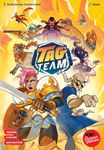
A couple of years back, it was rolling rights, there was flip and rights, and then it was cooperative games, and then it was like deck building games, and then basically everyone kind of gets on the bandwagon and starts creating all these different versions. These days, it's trick- taking games. I know Japan has been churning at trick taking games for years. Uh but more recently, the Autobatler game is one that just kind of has just started this design exploration process from a lot of game publishing companies and game designers where you basically pre-program a deck. You reveal the cards and then the effects of your cards kind of trigger and activate things. I guess it kind of reminds me of a game called Lord of Zidit where you basically pre-programmed your actions and moved it around the board. This next game was actually one that I discovered and I actually thought this is not really a theme that I normally dabble into, but it did tap into the '90s kid in me where I used to go to the local arcade, play Mortal Kombat, Street Fighter 2, and it is called Tag Team.
Tag Team is a lot more deceptively layered than one might think. It is an auto battler where you're basically going to be choosing two different characters and then you're going to take their starting cards and at the beginning of the game and each round you're going to be adding a new card to the sequence of cards in your stack. So you basically will start with the two starting cards order them and as you reveal the top card your opponent will re reveal their top card and then they'll resolve and then you reveal the second card and your opponent will reveal the second card and they will resolve and that's the end of the first round. And basically, you want to KO at least one of your opponent's characters. Now, what's really cool about this game is that each character comes with their own play style. There's like a golem that protects the other uh player. There's a Ching Xi that kind of uh is building up her fleet of boats and that increases the magnitude of power.
There's Shango that tries to put flame tokens on another player. And there's there's Meisto that allows that flips a snake coin that determines like whether they he gains power cubes or does damage. And you got the fa folk which is like a group of three little characters. And in order to defeat the fay folk you need to defeat all three little characters. As you defeat one you kind of get a little bonus. Then you've got Bodva which turns into a giant grizzly bear and Wong Feong who kind of likes everything to be balanced and he kind of supports and then evens out the playing field and your characters. And so the amount of combinations you can have in this game is quite phenomenal. And I know they're coming out with like a King Arthur expansion that's also standalone as well, but can be mixed and matched. But I've just really enjoyed exploring the different play styles like Morrid pals up his sword and then as the game progresses, the more and more power cubes he gets, the more powerful his attacks are going to be. And there's also like Mady who's got these little uh daggers and then you randomly flip them over and you get like little poison things that you can throw at the other player. What's really cool is that the way you sequence everything is going to matter. And then you have to think what is the opponent going to be doing if they've attacked you with card number one. Are they going to still leave that in position number one? Cuz you don't know where their next card is going to go. And so you're always drawing three cards from your mixed deck of two different uh characters. and then you're picking one and then putting the rest at the bottom of the pile. And so, do you
invest more in one character and not in the other? Or do you use the ability of one character to protect the other? There's all these really cool synergies and interactions and cross interactions that can really make for an unpredictable uh fun experience. This one, I think, at the price point that it comes in, uh, it is actually really really good. I just could not believe how late it was. I really want like a Mortal Kombat like IP themed one because I really love those movies and those games, but uh Tag Team just really hits it out of the park with the auto battler mechanic and the customizability that you can actually have in the game is cool because you're like, "Ooh, you attack me with your second card, so now I'm going to introduce a defense card to counter your attack." But if the other person has already preemptively thought about that, that might put a card before after it to reshift it again so that their attack still goes through. So good. The next game is a card game for two players. It has you taking on the role of a Japanese um I guess noble in the Japanese Imperial Court. And basically, the Shogun's law is strict.
the shogun does not want you to rearrange things and I guess not kind of change things up without his or his approval. And so this game really emulates the decision-m of where you're going to place everything uh based on how you're holding your cards and the cards in front of you in this interesting dueling game for two. The game is called Nishi and Nishi uh and don't be deceived by the blankness of the cover. The game has some interesting lays to it. And basically the crux of the game is that you'll start with five cards in front of you. Your opponent will start with five cards in front of them. You'll have a set of five cards in your hand where you cannot change the position of the cards and so will your opponent. And at the end of the game, you'll basically reveal your hand of five cards, keeping their position the same. And you'll end up creating a 2x5 array in front of you, which you'll use to score each card. And so half of your hand is essentially visible to the other player and the other half is hidden. And so this creates for an interesting conundrum when you're playing the game.
You can see the first row that your opponent is kind of building up over the game. And they can see yours, but they don't really know for sure what you're doing in your hand behind closed doors, behind those screens, and inside the walls of the Imperial Palace. And so each card kind of scores differently. They've got um cards with special ways to score. So there's a particular card that likes to be in the center. There's cards that want to be next to other cards. And you've also got landmark cards as well. And so the interesting synergy here is there is like a little river market in the center of the game area between you and your opponent. And the way you're acquiring cards is basically taking it from the top of these five different piles. either placing it into your visible row or placing it into your hand and replacing a card from it. And so you're you're kind of revealing information about how you're going to be scoring for things and what you're also giving away to the other player. So all of the cards essentially have a different way of scoring uh depending on their position at the end of the game. The nichi or the princess will always want to be in the central column in order to maximize points. The fort cards are going to want to be at the corners to try and I guess symbolically fortify uh your castle.
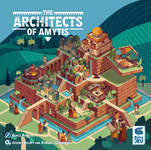
Sentinels will want to be on their own. There's also these location cards where you've got uh rice fields that you kind of want to cluster together as well as um using banners in your front line to increase the number of points. And so depending on the type of scoring strategy you want to go for and how the cards appear from the river and into your hand and into your uh front line, it's going to really play into the puzzle each time you approach it. And I really love how crunchy the positioning of everything is. It kind of evokes that same feeling. If you've ever played a game called Arboritum, which has ways that you line up trees in ascending order in a grid, this game kind of has that very tense, tight feeling to it, which I really, really enjoyed. And it comes in such a small box. Sometimes a game comes along that has an interesting aesthetic to it that just pays homage not only to the modern uh Euro board game designs, but also to traditional games you used to play when you were younger. If you've ever played knots and crosses or tic-tac-toe, this next game takes that concept and switches it up into a centralized or miniaturized civilization building game. This is a game called The Architects of Amethus.
And basically, you will be or players will be taking turns drafting tiles from a uh 3x3 grid. And as you draft a tile, you'll be placing one of your little meuples on it. And that essentially blocks that stack of tile from the other player and stopping them from accessing it. What you're essentially trying to do is that as you place your little workers out, you're trying to create a diagonal uh line of three of the same color workers or vertical or horizontal line. Because if you do that, you can then put one of your project markers on one of the scoring conditions on the favor board. And it might be getting three points for every single height tile that's on your board or you know extra points for every three stack of three building tiles you got on your board. And the other little element in this game is that every tile or building tile that you place on your board has a different way of scoring. It might be taking a garden tile and scoring for the number of uh scoring points equal to the number of tiles in a stack where you place the garden tile cuz you can place your building tiles on top of other pre-existing tiles. Kind of building up as you go. or it might be the number of visible markets. Or it could be um you know gaining two points for each wall piece that's on the edge of your 3x3 grid or even a palace tile that allows you to draw project cards. Now project cards add a third field to the game because each of the building tiles has a colored background and if you can kind of place the building tiles in the right configuration and layer on your playboard that matches these project
cards, you can then elevate your score further. So, it's kind of like a three layered puzzle that has three different elements that you're trying to work towards and build towards. And on top of that, you've got this interesting drafting element is where you're placing your little workers out and blocking particular spaces. Now, when you The only two conditions that um allow you to retrieve your workers off the uh drafting board is either when you have them uh three in a row or you've actually placed all of your workers out. And so then when you retrieve those workers, that now opens up those options or those stacks of buildings for the opposing player. So it's got this really cool sense of elevating, escalating tension that kind of rises up a step at a time. And I really love puzzle games that really just go, you know what, this is the main focus of the game. We're just going to hone in on this one idea and just really, I guess, extend ourselves in two or three different parts of the decision-m space to make this game feel really distilled and fun.
And the idea that, you know, a lot of us have played tic-tac-toe, this game is so easy to pick up because of that sense of familiarity, but they've really elevated it uh with these cool different powers and scoring synergies, which I think is fantastic. So, what did you think of those simple yet strategic two-player games? What are some of your favorite games to play with your significant other? I would love to hear them if you write them in the comment section below. Now, if you found this video super helpful, please consider buying me a coffee a month by heading over to my Patreon page or checking out some of my other videos and subscribing to my channel. Uh, I hope your next board game experience is an amazing one, and I can't wait to share this entire library of games behind me with you in the future. This is Danny signing out. See you soon. Goodbye.