








The Game of 49 Deep Dive
What the Community Thinks About The Game of 49
Reviewers tend to start from the same place with The Game of 49: the rules are simple, but the decisions underneath are richer than they first appear. TheGameBoyGeek calls it a modern-day classic and has been one of its most vocal champions since the first edition, using it to introduce groups to auction play. Their verdict on the second edition is enthusiastic, and the upgraded board, cards and paper money are the main reason they now see it as a game that can hold its own on a mainstream shelf.
Chairman of the Board is more measured. The reviewer likes the core tension of spending early to claim border spaces versus waiting for the right square, but finds the overall package only moderately satisfying. Their rating depends on the bidding format, landing around a six with a blind-bid house rule and closer to a five with standard round-robin bidding. Actualol came to the game after hearing TheGameBoyGeek praise it, and treats it as a sought-after niche title that was hard to find outside Essen. Across these videos, the consensus is that the game is simple, social and fun, with one structural weakness at the end of play that several reviewers recognize.
Core Mechanics That Define The Game of 49
Auction Bidding for Board Spaces
Each turn a numbered card is revealed, and the matching square goes up for auction. Bidding moves around the table, with each player either raising the price or dropping out. The last player still in pays the bank and places a chip on that square. Some cards carry a minimum bid, which TheGameBoyGeek recommends using in two-player games. The auction is where the social tension lives. Reviewers describe the moment someone raises the price and everyone else hesitates, and TheGameBoyGeek notes how players try to talk their friends into blocking a rival who then has to spend their money. Chairman of the Board points out that a player one piece away from a four-in-a-row will bid every coin to finish the line, which turns the endgame into a forced spending contest.
Payout Cards and the Money Engine
The second mechanic is what gives the auction its weight. Wild cards let the winner place a chip on an open square within a range, but every wild also pays out a set amount per chip already on the board, so everyone collects regardless of who played it. Payouts arrive often enough that players constantly weigh cash against position. TheGameBoyGeek highlights the $49 ceiling, which means extra chips stop adding income past a certain point. In the two-player variant, that ceiling produces an unusual twist: once a player has many chips, each additional one returns less cash, so the reviewer found the game scales surprisingly well to two. Chairman of the Board singles out the pacing of the money as the best part, describing how a player can burn through their cash and then wait through several cards before their supply is restored.
The Game of 49 Experience
Tension Between Spending and Waiting
The feeling reviewers describe is a constant push and pull. Spending heavily early can secure strong border positions and start the payouts sooner, but it also drains cash and leaves a player watching opponents bid. Waiting carries its own risk. TheGameBoyGeek describes the payout drought, where players with few chips hope a payout card shows up soon and players with many chips quietly root for one. Chairman of the Board frames the same tension as a question of pacing, noting that rushing markers onto the edges is an obvious approach because an early payout can leave everyone else behind. The decisions sound simple, but reviewers stress that they are painstaking to make well.
Laughter Around a Hidden Stash
Hidden money is a big part of the charm. Players keep their bills under the table, so nobody knows exactly how much anyone else holds. TheGameBoyGeek says the funniest moments come when a bid lands close to someone's limit and the whole table laughs, unsure whether the bidder can afford it. The same reviewer enjoys watching people constantly counting their money in secret. Paper money is the component reviewers most often complain about, and Chairman of the Board calls the original's money horrible to play with. Even so, the hidden-cash mechanic makes the paper feel appropriate to the game's tabletop bluffing.
What Makes The Game of 49 Stand Out
Works With Almost Any Group
TheGameBoyGeek describes a litmus test that the game consistently passes: it has never left a group disappointed, whether the players are dedicated gamers or complete non-gamers, and people almost always ask where to buy it afterward. The reviewer has played it with family and friends across age ranges and calls it one of the best family games. The simple rules let newcomers join quickly, while the bluffing and money management keep experienced players engaged. The reviewer's sense is that the game plays well almost anywhere, which is the quality that makes it easy to recommend.
A Stronger Second Edition
The graphic design overhaul is the most visible change. TheGameBoyGeek says the board is larger, and its brown and orange palette looks far more appealing than the first edition. The cards now show the payout amount directly, and the paper money has been upgraded from something resembling old board game money to a much nicer design. The reviewer also praises the new tagline about bluffing and buying your way to four in a row as a strong hook for shoppers. With the second edition heading into broader retail distribution, including Target stores, the reviewer sees a well-deserved reward for a designer who started out with stacks of copies at home.
Potential Drawbacks
The Final Spot and Turn Order
Chairman of the Board raises the most serious structural concern. When one player needs a single piece to complete a four-in-a-row, they will bid every coin to win the spot. Other players can simply pass and let that bidder empty their wallet to block them, which hands the advantage to whoever still has cash. The reviewer says this often leads to an anticlimactic finish and makes turn order matter more than it should. A house rule of simultaneous blind bids, where everyone reveals one secret bid, makes the auction feel fairer and reduces the problem, though it does not fully remove the final-spot issue.
Production Quality and Early Dominance
Chairman of the Board describes the production as cheap, with pieces and paper money that do not match the game's appeal. Some reviewers also flag a dominant early strategy. Chairman notes that rushing markers onto the border squares is an obvious approach, since an early payout can put one player well ahead, and that the other players may find it hard to recover. Chairman's enthusiasm has also cooled over repeated plays. The reviewer says the group is just about done with it and feels that a crowded auction collection makes it hard for this title to stand out. Their hope is that a future printing will fix these rough edges.
If You Enjoy The Game of 49
- For Sale: Chairman of the Board loves this game because its simultaneous reveal happens only so many times per game, which makes each selection feel more important. Fans of the auction-style decisions in The Game of 49 may appreciate that sharper focus.
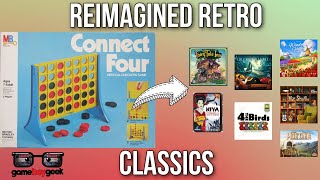
- Connect Four: TheGameBoyGeek describes The Game of 49 as basically Connect Four on a 2D grid, with auctions replacing the drop. Anyone who enjoys the four-in-a-row goal will recognize the target immediately.
- Drop It: TheGameBoyGeek calls Drop It one of their favorite family games and a great team game, and notes that it draws on the same Connect Four heritage. It suits groups who want another light, social game with that roots.
- Grog Island: Chairman of the Board singles out its dice-driven bidding as a mechanism the reviewer had not seen in other bidding games, calling it a great mechanism in an okay game. It offers a different take on bidding, although it runs longer at around an hour.
What Reviewers Are Saying
"This game feels like a modern-day classic, and in my opinion, it's going to be."
— TheGameBoyGeek
"I actually do like the rest of the game I particularly love the pacing of the money I think this is awesome."
— Chairman of the Board
"it's an auction game like a family weight it's very simple but kind of pure auction game."
— Actualol