












The Grimm Forest Deep Dive
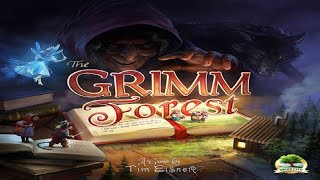
The Grimm Forest is a 2018 fairy-tale game from Druid City Games, now part of Skybound Games, designed by Tim Eisner of Weird City Games. It plays two to four players in roughly 45 to 60 minutes. Players gather resources, build small wooden, straw, and brick houses, and use Fable cards to bend the rules in their favor.
What the Community Thinks About The Grimm Forest
Reviewers agree on three things. The production is excellent, the miniature houses are charming, and the simultaneous selection at the core gives the game its personality. Opinion divides on the Fable cards. Some reviewers find that their randomness adds welcome surprise, while others feel it undercuts any skill a player builds. Most describe the game as light and family-friendly, and several suggest that its fairy-tale theme could support a deeper design.
Core Mechanics That Define The Grimm Forest
Simultaneous Action Selection
Each round, every player secretly chooses a gather location from a shared set of cards, and everyone reveals at once. When several players land on the same location, they split its resources, so the choice is less about the resources themselves and more about predicting where others will go. Reviewers repeatedly highlight this guessing game as the heart of the experience. One host describes the challenge as getting inside the heads of opponents and playing off what you think they think you will do. Fable cards add another layer, because some reward a player for standing alone and others reward a crowd, which pushes players toward spots they would otherwise avoid.
Set Collection Toward Finished Houses
Each house needs a specific combination of wood, straw, or brick before it can be finished. Players gather in pieces, first completing foundations and walls, then roofs, and each house type rewards a different mix of materials. Because a player may need only one house finished to win, the race often comes down to which resource a rival is still missing. Reviewers note that the endgame can turn on a single resource, and one full playthrough ended with a tiebreaker decided by the sturdiest completed house, which shows how tight the final turns can be.
The Grimm Forest Experience
Whimsical Storybook Charm
The theme arrives through the Fable cards, which bring characters such as Cinderella, Snow White, the Fairy Godmother, and a wolf into the forest. Their effects are playful rather than grim, and reviewers appreciate how the cast turns each turn into a small story. The houses themselves are cute enough that one reviewer calls them the cutest things in the entire world. The game leans into that charm rather than fighting it.
Tactile Pleasure of the Components
Reviewers keep returning to the physical pieces. The wooden houses have leaning roofs and little smoke stacks, and the miniatures give the board a tabletop presence that many reviewers praise. Players handle resources and cards constantly, so the table stays busy and visually engaging from start to finish.
What Makes The Grimm Forest Stand Out
Production Quality
Multiple reviewers single out the production as a strength, and one notes that the publisher consistently delivers high-quality games. The art and miniatures are the most-mentioned attractions, and they make the game easy to recommend to people who value components as much as rules.
Fable Card Interactions
The Fable deck is where the game's surprises happen. Cards such as the Golden Goose, the Fairy Godmother, and Red Riding Hood can swing a turn, and combinations between them and the gather cards often produce big moments. One long playthrough highlighted how a single well-timed play could flip the board, and how some planned combinations paid off while others fizzled because opponents acted differently than expected.
Potential Drawbacks
Fable Card Randomness
The most common criticism is that Fable cards can overwhelm strategy. One reviewer argues that the only real strategy is trying to read the opponent, and that random cards can negate even that skill. Some players accept this as part of the fun, but others want a game where planning matters more than luck.
A Light Game That Can Feel Forgettable
Several reviewers view the game as a kids or family title first. One Fantastic Run-Throughs review rates it highly for children but lower for adults, and a Board Game Co ranking calls the game fine but forgettable. For players who want lasting depth, the lightweight decision space may not hold their interest for long.
If You Enjoy The Grimm Forest
The Grimm Forest suits families and mixed-experience groups who want an approachable game with charming pieces and a constant guessing game about opponents. Players who want more planning and less luck, as in Santorini or Glenmore 2, may find it too loose, while those drawn to the fairy-tale tone of Near and Far will recognize a similar appetite for story-driven choices. Players who prefer shared pressure and cooperative problem solving should look at Pandemic instead. The Grimm Forest is most rewarding when the table enjoys reading one another and can accept that the Fable deck will sometimes decide the outcome.
What Reviewers Are Saying
"This style of game where all the players simultaneously choose a thing to do and then reveal them is on the more challenging side for me because of course I'm making all the decisions for all the characters. This game is about getting inside the head of your opponents and trying to figure out what they're going to do and play off of what you think that they think you are going to do."
— John, Getting Games
"You're trying to collect resources in order to build these little houses which are the cutest things in the entire world."
— Jenna, The Board Game Garden
"Everything was great from a visual production standpoint, which honestly Druid City Games does across the board. They always make their games incredibly high quality from the production standpoint."
— Alex Radcliffe, Board Game Co