/pic3719610.png)
/pic6434099.jpg)
/pic3719610.png)






The Grizzled Deep Dive
What the Community Thinks About The Grizzled
The Grizzled occupies a unique place in the board gaming landscape. Reviewers consistently describe it as one of the most emotionally resonant cooperative experiences available, a game that transcends typical mechanical analysis to create a profound shared experience. The community recognizes it as a design achievement that successfully marries a devastating historical subject with accessible mechanics, creating something that feels both intimate and universally relevant.
Core Mechanics That Define The Grizzled
Hand Management Under Pressure
At its heart, The Grizzled operates as a sophisticated hand management puzzle. Players receive cards dealt by the mission leader and must strategically decide when to play each one. The mechanic is deceptively simple: play cards into the center, but if three identical threat symbols accumulate, the mission fails. This creates constant tension as players balance the need to empty their hands against the risk of triggering failure. Unlike traditional hand management games where discarding is often straightforward, every decision here carries weight. Players cannot openly communicate about their cards, forcing them to read their teammates and make educated guesses about what threats remain in play. This restriction transforms a mechanical constraint into a thematic element about the fog of war and inability to fully understand one's comrades' burdens.
Cooperation Through Asymmetric Information
The game deliberately prevents players from discussing their hands or support choices, creating a profound collaborative puzzle. Speech tokens allow the mission leader to call out a threat type, enabling other players to discard matching cards without revealing what they held. Support tokens function as a form of unspoken communication after each mission, with players secretly choosing who they support. The real depth emerges from having to trust fellow soldiers without being able to explicitly coordinate strategy. This mirrors the actual experience of soldiers relying on their comrades through instinct and shared history rather than perfect information. The game rewards players who play together regularly, who begin to understand one another's patterns and decision-making tendencies.
The Grizzled Experience
Overwhelming Difficulty as Thematic Element
The Grizzled is genuinely brutal. Reviewers note that winning requires not just skill but also a degree of fortune, and many groups struggle to achieve victory even after multiple plays. This difficulty could feel punishing in isolation, but instead it becomes integral to the theme. Each loss reinforces the historical reality: these soldiers did not triumph against war itself, they merely survived it. The game explicitly rejects the fantasy of military victory. The best outcome possible is not defeating the enemy but making it home alive with your brothers in arms. Even victory can feel bittersweet when soldiers fall along the way. This design philosophy elevates The Grizzled beyond mechanical challenge into historical commentary. The failure spiral, where early losses compound into greater hardship, mirrors the actual grinding attrition of trench warfare.
Emotional Resonance Through Hard Knocks
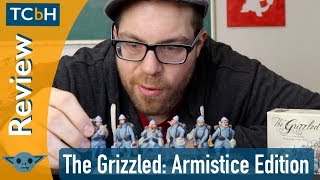
Hard Knock cards bring the psychological dimension of war into the mechanical system. When a player draws a trauma card like "Fragile" or "Prideful," they place it on their character where it creates ongoing effects that often contradict what they wish to do. A soldier who becomes fearful must withdraw when threatened symbols appear, even if their team needs them to stay. A prideful soldier cannot withdraw unless they've emptied their hand or are the last player fighting. These mechanics create moments of genuine emotional weight. When a character accumulates four Hard Knocks, they are defeated, they fall. This isn't simply losing resources; it's the game telling a story about psychological and physical breaking points. The beautiful grungy artwork reinforces this tone, showing soldiers who are tired and traumatized but still fighting. Reviewers consistently highlight that the game generates these emotions naturally through mechanics, not through narrative scripting.
What Makes The Grizzled Stand Out
Thematic Integrity in Every Design Choice
Few games achieve the alignment between theme and mechanics that The Grizzled demonstrates. The threat symbols (night, rain, snow, shells, whistles, masks) represent the sensory and psychological assaults of trench warfare. Each card mechanic serves the narrative: you cannot communicate with your allies because soldiers in combat cannot always do so; you must manage your trauma cards because soldiers carry psychological wounds; support tokens are passed without discussion because soldiers understand each other without words. The late artist tignous's iconic artwork binds all these elements together, presenting soldiers as individual human beings rather than abstract pieces. The artwork carries a distinctive style, slightly rough, European in sensibility, that conveys both the humanity of these men and the grit of their situation. This visual language makes every card draw feel weighted with significance.
A Portable Gateway to Cooperative Gaming
The Grizzled achieves something remarkable: it contains one of gaming's most complex emotional experiences in a small box that plays in thirty minutes. For players new to cooperative games, it serves as a potent introduction to what the format can accomplish. The rules fit on a single reference card, accessible to anyone, yet the game's depth unfolds across multiple plays. Players who engage with The Grizzled often find themselves reflecting on it long after the game ends, reconstructing moments where a particular soldier fell or remembering the tension of hoping a teammate could discard a crucial threat. This combination of accessibility and depth makes it endlessly teachable and re-playable, a game that works equally well as someone's first cooperative experience or as a touchstone for veteran players.
Potential Drawbacks
Unforgiving Difficulty and Failure Spirals
The Grizzled's primary challenge for many groups is its consistent punishments for failure. Early mistakes compound, making recovery extremely difficult. Some players find the failure spiral demoralizing rather than thematic, preferring games where skilled play can overcome setbacks. Additionally, the game requires playing with the same group repeatedly to truly master it. New players mixed into an experienced group can find themselves at a disadvantage, and pick-up games with strangers may lack the unspoken understanding that makes The Grizzled shine. For players who value feeling in control of their destiny or those who play board games specifically to win, The Grizzled's design philosophy, that survival itself is victory, may not resonate.
Heavy Subject Matter and Playstyle Dependency
The game's World War I setting and themes of trauma, potential death, and psychological breakdown create a decidedly serious tone. Players seeking lighthearted or escapist entertainment should look elsewhere. The game also depends heavily on how players engage with it. A group focused purely on optimizing mechanical decisions may miss the emotional journey The Grizzled offers. Conversely, groups that embrace the thematic experience report profound satisfaction. This dependence on group mentality and table energy means The Grizzled is not universally appropriate, and its rewards depend partly on player attitude rather than being mechanically guaranteed.
If You Enjoy The Grizzled
Players drawn to The Grizzled typically appreciate cooperative games that prioritize narrative tension over mechanical complexity. They should explore This War of Mine, which shares similar WWI-adjacent survival themes through a different lens, or Hanabi, which captures that same feeling of trusting teammates without perfect communication. Paths of Glory offers deeper strategic complexity around World War I itself for players who want to combine The Grizzled's theme with heavier mechanics. For those interested in other emotionally resonant cooperative experiences, games like Robinson Crusoe (which generates emergent stories of survival through smart mechanics) or Arkham Horror Third Edition (which creates thematic narrative through tight cooperative puzzle-solving) provide similar emotional satisfaction through different thematic lenses.
What Reviewers Are Saying
War isn't pretty and the bulk of games about war treat the subject with a degree of emotional separation. The Grizzled is not that. It's a game about camaraderie of friends keeping each other going while they push through exhaustion and terror.
— 3 Minute Board Games
The sole goal of the game is not to win World War one, it is to survive World War one with your friends. You're working together as a team of people who love each other and just want to survive. It generates emotions of stress and frustration and a little bit of sadness when bad things happen to your brothers in arms.
— The Secret Cabal Gaming Podcast
It is a game of feelings. It conveys emotions unlike pretty much any game I have ever played. When characters get injured or characters go a little insane because they're dealing with the hardships of war, the game generates those emotions naturally through mechanics, not through narrative.
— The Cardboard Herald