/pic1615179.jpg)
/pic1720276.jpg)
In The Lord of the Rings: The Fellowship of the Ring Deck-Building Game, you take on the role of Frodo, Gandalf, Aragorn or one of their brave and heroic allies in the struggle against the forces of the Dark Lord Sauron! While you begin armed only with basic combat maneuvers, you will add new, more powerful cards to your deck as you go, with the goal of defeating the deadly forces that serve Sauron as you make your way towards Mount Doom. In the end, the player who has accumulated the most victory points (VPs) from the cards in his deck wins.
Each player takes the role of one of seven iconic heroes from The Lord of the Rings: The Fellowship of the Ring: Aragorn, Frodo, Gandalf, Legolas, Gimli, Samwise, and Boromir. Each hero comes with a special power unique to that character and usable only by that player.
Each player starts with his own basic ten-card deck and draws a hand of five cards each turn. Power is the currency you will use to buy new, stronger cards to add to your deck. The goal of a deck-building game is to craft your personal deck into a well-oiled machine. There are five different types of cards that can be acquired: Enemies, Allies, Artifacts, Manuevers, and Locations.
To bolster their existing deck of cards, players use Power to acquire cards from "The Path", a large, central stack of cards that supplies a five-card line-up from which players make their purchases. Each player will always have five face-up cards from which to choose each turn, so every turn there are new options and surprises.
When a player has amassed enough Power, he or she may defeat more powerful enemies from the "Archenemy" deck. "Archenemy" cards are represented by the notable enemies from The Lord of the Rings: The Fellowship of the Ring, including Saruman, and the Balrog, among others. When an "Archenemy" is defeated, a new one appears and makes an Attack against each player in the game! Players can defend themselves with Defense cards like Boromir's Shield, Mithril Armor, "You Shall Not Pass!" and several others.
The objective for each player is to acquire the most VPs by the end of the game. Nearly every card acquired during the game has a VP value, with the "Archenemy" cards providing the most VPs. In the end, the player who has accumulated the most VPs from the cards in his deck wins.
Cryptozoic's The Lord of the Rings/The Hobbit deck-builder series:
The Lord of the Rings: The Fellowship of the Ring Deck-Building Game
The Lord of the Rings: The Two Towers Deck-Building Game
The Lord of the Rings: The Return of the King Deck-Building Game
The Hobbit: An Unexpected Journey Deck-Building Game
The Hobbit: The Desolation of Smaug Deck-Building Game Expansion Pack
Part of the Cerberus Engine – Middle Earth family — see The Lord of the Rings: The Two Towers Deck-Building Game for the combined view.
/pic1615179.jpg)


- Loved by the host, who is a big fan of trick-taking games
- Each round features an iconic character
- Strategic card play with The One Ring ability
- Trick-taking game based on The Fellowship of the Ring
- The Fellowship of the Ring
Mechanics (from transcript analysis)
- Trick-Taking — Whoever plays the first card sets the suit and you have to try and follow suit. Whoever plays the highest number from that suit wins the round and therefore wins all the cards from the trick.
- Variable player powers — If you play The One Ring, you can decide whether to win the trick or lose the trick. Some characters want to win a certain amount of tricks.
Video topics + discussion points
Quotes (from this video)
- It's that time again, the top 50 board games in my collection numbers 45 through a 241
- Great collection, don't you agree?
- These five games are so good and deserve their place in my top 50.
References (from this video)

- Super fun cooperative trick-taking game
- Awesome IP
- Playing through the first book of Lord of the Rings is loved
- Getting to play different characters
- Progressively more difficult with different challenges
- Surprising twists
- Experience was awesome
- Fantastic at four players
- Really good at two players
- Lord of the Rings
- Middle-earth
- Playing through the first book of Lord of the Rings
- The Two Towers
Mechanics (from transcript analysis)
- cooperative play — A super fun cooperative trick-taking game.
- Trick-Taking — A cooperative trick-taking game.
- Variable player powers — You get to play all different kinds of characters, and scenarios specify some, but others can be chosen.
Video topics + discussion points
Quotes (from this video)
- We want to give you a little bit of a heads up on our criteria, how we made our lists this year, just in case you haven't watched our other videos, although you should.
- My number 30 was 29 last year.
- Number 26 on my list is the White Castle.
- This is a game that had me at hello.
- No, this is such a good game. We have had a great time playing this game.
- My number 25 was number 14 last year.
- My number 24 was 49 last year. So it has definitely come up.
- I cannot believe it is this high on your list.
- It is my favorite of the Span games.
- Fantasy Realms. Yes.
- My number 22 was 21 last year.
- My number 23 was not on the list last year.
- My number 21 was number six last year.
- Space Base is so good.
- All right, my number 21 is Space Base.
- Two crossovers? In the same video.
- Now we want to hear from you guys. Tell us down below in the comments, what are your numbers 30 to 21 games of all time?
- We're counting down our top 50 games of all time. In this video, we're doing 30 to 21. Let's jump right in.
- my number 22 was 21 last year. Um and it is Lord of the Rings: The Fellowship of the Ring trick-taking game. So, it hasn't really changed that much at all. This is a super fun cooperative trick-taking game with an awesome IP. We love Lord of the Rings.
- Number 21 on my list was number six last year. It's come out of my top 10, but I love this game. It is one of my favorite quick games of all time. Space Base.
- All right, my number 21 is Space Base. No way. Two crossovers? In the same video. Wow. Yeah, true crossover. That is wild.
- Now we want to hear from you guys. Tell us down below in the comments, what are your numbers 30 to 21 games of all time? We want to hear about it.
- Thanks for watching and we'll see you next time.
References (from this video)
- Plays through the chapters of the first installment of one of the best trilogies of all time.
- Playing through the chapters of The Fellowship of the Ring
- Chapters of the first installment of The Lord of the Rings trilogy
Mechanics (from transcript analysis)
- Special card — the One Ring to rule them all rules this game, and this overrides any card in the game, and you can choose if you play it whether to win the trick or lose the trick.
- Suit Play — Whoever plays the first card sets the suit, and whoever plays the highest number of that suit wins the trick.
- Trick-Taking — Fellowship of the Ring trick-taking game.
Video topics + discussion points
Quotes (from this video)
- the top 50 games in my collection, and we're at the top 10.
- Starting off our top 10 with number 10, Piña Colada Ice.
- It is one of the best dice rolling filler games that you can play, and guess what? It's about £11. Well, that's a really good bargain. Get Piña Colada Ice.
- Number nine, The Lord of the Rings: The Fellowship of the Ring trick-taking game.
- You'll have never been more happy to make a journey to Mordor.
- Number eight, Stella.
- Stella is pretty, it's silly, it's fun, and I like it a lot.
- Number seven, River Valley Glassworks.
- It's just so adorable.
- Number six, Critter Kitchen.
- I want to live in this game.
- Five more games in my collection and they've made the top 10. Join me in the next video, my top five games ever.
References (from this video)

- Very fun system
- Great application to the Lord of the Rings IP
- Lord of the Rings, first film
- DC Comics deck building game
Mechanics (from transcript analysis)
- card combat — You play these different characters as you're fighting the different enemies and villains that they meet in that film.
- Deck Building — You are getting better cards, stronger cards, you're leveling up, getting rid of weaker cards.
Video topics + discussion points
Quotes (from this video)
- So, let's go ahead and jump right into it.
- It's kind of a fun random uh fantasy borderline horror game and I really really enjoy it.
- It is just an incredibly fun and innovative game.
- It's a great game of trying to figure out who you can trust and and when to backstab and how to avoid a backstabbing and all sorts of great things.
- Time flies like an arrow, but fruit flies like a banana.
References (from this video)
- Unique blend of trick-taking and narrative
- Restricted communication encourages non-verbal cues
- Individual mission objectives
- Decentralized decision-making
- Journey of the Fellowship
- Middle-earth (First Book)
- Narrative trick-taking, chapter-by-chapter progression
Mechanics (from transcript analysis)
- Individual Mission Objectives — Different missions reward or require different approaches, and players may not have the same information about active missions.
- Narrative Chapters — Natural break points for strategy discussion between missions, but play itself is decentralized.
- restricted communication — In many chapters, players cannot freely discuss their hands or plans, conveying information through card choice and timing.
- Trick-Taking — Uses a trick-taking system with limited or coded communication.
- Trust-based Play — Forces players to trust each other's judgment in the moment and develop a shared language of plays rather than verbal instructions.
Video topics + discussion points
Quotes (from this video)
- You ever sit down for a cooperative game, and within 20 minutes one person is basically playing the whole thing while everyone else just moves pieces where they're told?
- Yeah, the alpha player problem. It's one of the most common complaints in cooperative board gaming, and it's especially prevalent in the older designs.
- Pandemic is the textbook example.
- The alpha player problem is addressed through several deliberate design choices.
- The alpha player problem is solved through strict mechanical asymmetry and divided physical control.
- The alpha player problem is solved primarily through asymmetric information distribution.
- The alpha player problem is addressed through extreme asymmetry and simultaneous play combined with high complexity.
- alpha player problem is mitigated through personal deck ownership and investigator specialization.
- Groups that succeed long-term tend to be those that respect each investigator's niche and communicate needs rather than issuing commands.
References (from this video)

- Fellowship of the Ring
- Middle-earth
Mechanics (from transcript analysis)
- Deck Building — Mentioned as a deck-building game.
- Trick-Taking — Mentioned as a trick-taking game.
Video topics + discussion points
Quotes (from this video)
- This game is literally you draw a card it's kind of like twister with your hands it is it's not kind of like twister with your hands it's twisted with your hands and sticks yeah
- Combo is a good way to understand rankings of poker hands or of hands in general
- The Gang was a game that came out and there are some really memorable hands and I feel like that game just always makes me filled with joy
- it's important now that we're especially now that we're working in the hobby that we take some time to enjoy the hobby because we never want that fire to burn or the fire to continue to burn we don't want it to dim
- Do you want to see me and Tyler go head-to-head in yellow house do you want a how to playay video of Cascadia Jr do you want to see a tether competition
References (from this video)

- Really fun game
- Love the theme
- Love the gameplay
- Cool artwork with a stained glass feel
- The Lord of the Rings
- Middle-earth
- Campaign-based, following chapters of the story
- The Crew
Mechanics (from transcript analysis)
- Campaign play — The game progresses through different chapters, functioning as a campaign.
- cooperative play — The game is cooperative.
- Trick-Taking — It is a trick-taking game.
Video topics + discussion points
Quotes (from this video)
- Baghdad crafting the cosmos from Office dog is my next game on my most anticipated games list
- you are an Interstellar architect competing to build the Galaxy one star at a time
- manipulate the laws of the universe to your advantage shifting gravity or the flow of time to activate useful Power Cards and even spawn Advanced life that can earn you extra victory points at the end of the game
- use your resources wisely as you craft your Cosmic creation
- the last one on my list is propolis from Flatout games
- I'm really excited about this because of what it says the game's all about worker placement engine building area control and Tableau building woo it's getting me excited
- my one concern is it says it plays in 15 to 30 minutes with all those different gameplay mechanics I'm concerned is the game going to play too fast for my taste
- they usually put out really really good games I mean they put out Cascadia they put out Calico Point salad um love love those games
- this game you are taking on the role of competing medieval be colonies and taking turns to deploy your worker bees to collect pollen fortify their positions and construct your hives to appease your queen and become the most glorious in the land
- theme's kind of cute um but the gameplay could be amazing um I hope it's amazing as my number one on my most anticipated list here
References (from this video)

- Clever mechanics
- Enjoyable initial plays
- Uncertainty about long-term cleverness
Mechanics (from transcript analysis)
- deck-building — the Fellowship of the Ring trick taker
- Trick-Taking — the Fellowship of the Ring trick taker
Video topics + discussion points
Quotes (from this video)
- that is above retail it's very far above retail I don't know what's going on there
- oh Critter kitchen I was like now means we got to play this five times you got to commit to it
- it's terrible it's it's it's like I have nothing that's how bad the production is
- all of us think it's the the best of all of them
- which everyone knows was my my game of the year
- it's a legacy now I think it's like a 10 or 12 game thing and it's tile laying and it has an app
- every game you add one new section of map that is whoever I think it's whoever wins whoever wins or whoever loses gets to pick the new section of map
- every single section introduces a new mechanic to the game
- the story wasn't super compelling
- Betrayal Legacy is brilliant the way they do the story and unlocking stuff is incredible
- however not a satisfying ending story-wise and never remember it
- it still felt weird even up to the last game was that you don't score points as you go
- the mechanics it's very sound and I legitimately am interested in playing the game again
- make sure you're taking time for yourself and one of the best ways to do that is to play games with people you enjoy
References (from this video)
- highly anticipating this
- rules seem very simple but interesting
- people who have played it have priced it up and down
- The Lord of the Rings
Mechanics (from transcript analysis)
- Trick-Taking — It is a trick-taking game.
Video topics + discussion points
Quotes (from this video)
- we also always want to try new stuff
- we don't need this many games there's no reason for that if you don't have a YouTube channel
- I'm going to be telling you all about how the game box looks because that's the extent of my knowledge about this game
- this is the thing in this whole video which I'm the most excited about
- I backed a Kickstarter to get a lid
- I have a problem it looks really good
- I'm so happy to see that we can get new versions of these games maybe there's hope for Mad some way down the line
References (from this video)
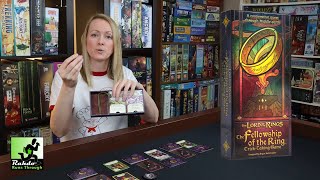
- Strong thematic integration
- Engaging character-specific goals
- Campaign structure with evolving gameplay
- High replayability after campaign completion
- Unique twist on cooperative trick-taking
- Well-made components and presentation
- Satisfying cooperative experience
- Occasional unclear rules or card text
- Two-player variant, while functional, changes the dynamic significantly
- Following the story of The Lord of the Rings: The Fellowship of the Ring
- Middle-earth
- Campaign-based, following story progression through chapters
- The Crew
- The Crew: Mission Deep Sea
Mechanics (from transcript analysis)
- bluffing/hidden information — Gimly's blindfolded play and the general inability to communicate hand contents add elements of hidden information and deduction.
- Campaign play — The game progresses through a series of chapters, unlocking new content and story elements.
- Card Drafting — Players draft characters at the start of each chapter, often influenced by who holds the One Ring card.
- Character Goals — Each player controls a character with specific objectives they must achieve within a chapter.
- cooperative play — Players work together to achieve shared and individual character goals within each chapter.
- Set Collection — Some character goals involve collecting specific types or numbers of cards (e.g., Ring cards).
- Trick-Taking — The core mechanic involves players playing cards into tricks, following suit if possible, with the highest card winning the trick.
- Variable player powers — Characters have unique abilities and objectives that affect gameplay.
Video topics + discussion points
Quotes (from this video)
- "This is your game for this special day."
- "The box itself is really really organized."
- "The One Ring is the only Trump quality that you'll you're used to in a trick-taking game."
- "You are not allowed to talk to other players about what you have in your hand."
- "The theme was much much stronger and the cards you're playing with feel more engaging."
- "I love a campaign style game this offers just a lot of satisfying play."
- "I'm a big trick taking fan and I love the Cooperative trick-taking genre and sub genre so this does not disappoint at all."
References (from this video)
- Good game
- Liked it enough to want a copy
- Very hard
- Host loves Lord of the Rings
- Only played a demo
- Falls down the list due to limited play time
- Fellowship's journey to destroy the ring
- Lord of the Rings universe
- Pandemic
Mechanics (from transcript analysis)
- crisis management — So a crisis management game
- Variable player powers — Everybody plays two different characters and one of your characters does one action, the other does four every turn
Video topics + discussion points
Quotes (from this video)
- if you took Sudoku and made it a board game with a little bit of adventure in it.
- This is an intensely clever game.
- It's super clever.
- Small game, quick filler, It's right up there with Mouse, Cheesecat, Cucumber for me.
- This is a bidding game where each of your different skyscrapers on this flying island has a different number on the bottom
- And the thing with this game is it's easy to teach. It's quick to play. And it is beautiful. Just beautiful.
- But it is exceptional.
- this is a crisis management game that has a little bit of RPG leveling up, a whole bunch of worker placement, and as I said, crisis management, and you're chucking some dice to do some fighting and all those kinds of things.
- This is to me my handsdown favorite deck builder out there. Period. I adore it.
- It's a dice placement game and I I loved it.
- It's just super asymmetric, which has that moment of, you know, some people don't know what you're doing, so maybe they don't know if you're cheating or breaking the rules or whatever it is.
- This is based on Dante's Inferno. The game's called Inferno, which is a very cool theme to me.
- And just it's a heavy game.
- In fact, I think this is the absolute top limit of how heavy a Euro game can be and I still would be interested in playing it regularly.
References (from this video)

- Really liked this Pandemic-style game.
- Very hard and can be swingy, but clever.
- Beautiful production.
- Makes me interested in playing Pandemic Fall of Rome.
- Can be really swingy, leading to quick losses.
- The theme can be creepy and too real for some.
- A riff on Pandemic Fall of Rome, focused on moving armies across Middle-earth.
- Middle-earth
- Pandemic
- Pandemic: Fall of Rome
Mechanics (from transcript analysis)
- Action Point Allowance System — Each player gets four actions for one character and one action for the other each turn.
- Area Movement — Armies move across Middle-earth along defined lines.
- Cooperative — Players work together to accomplish missions and save Middle-earth.
- Set Collection — Collecting different colored troops to specific areas to draw Sauron's attention.
Video topics + discussion points
Quotes (from this video)
- It is disrespectful of me to do something with my evenings.
- There is a special circle of hell for people who show up to a graduation with an air horn.
- I really appreciate El Paso, you know, taking pretty much that same experience but distilling it down to the essential moves and it's a quick I don't know how long it took us. Less than an hour.
- It's really hard and it can be really swingy.
- You don't always have to teach a new game. Sometimes it's good to go back to something you know people like.
- It is hard to teach because of the exact thing that I watched Don's face get confused about when you say you're in my garden. I'm in your garden.
- It is chesslike in that you just try to optimize your moves over everybody else's moves.
- It's a heavier game than I usually like, but I just think it's really clever the way it's put together.
- The timer fits the theme in this game. You're driving 50 miles an hour in traffic trying to fight off bad guys.
- Definite Spy Hunter vibes from this game.
- The dice represent nature, which screws up your whole plan for that magic.
- If you're going to play Twilight Imperium, you need to drink water, hydrate or not play.
- And so Gunnet is a game that was sent us specifically reached out to me, asked me if we wanted to cover and they were interested in us covering it on this podcast, which is a first first time.
- The core of the game is having the discussion of, okay, well, I'm going to give you this because you're going to act first and the first thing that's going to happen is we're going to drive the car to the left one space and then you're going to shoot.
- I usually don't like a game with a timer, but you know, the timer fits the theme in this game. You're driving 50 miles an hour in traffic trying to fight off bad guys.
- For a game that's seems like it's about making you feel stressed out for a brief moment and then that stress turns into moments of joy and glory. Like I think it accomplished that more often than it didn't.
- The other game is Rollin One, uh, which is a golf game. Again, small footprint. It's a small box.
- You take turns designing the course. So you take a number of cards that represent parts of the the you know the golf course and you put them together.
- The golf clubs are represented by dice. So there's a d20, d12, d10 and so on.
- And so there's actually some serious strategy to picking your club.
- I thought it was very clever and I think both of the games are pretty darn thematic.
- Make sure you are in the mood for the thing that you're going to partake.
References (from this video)
- Very thematic and story-driven
- Character-specific objectives
- Challenging journey with risks
- Immersive storytelling
- Unique movement and action system
- Can be difficult if Frodo is left alone
- Less mathematical than Pandemic
- Journey of Frodo to Mount Doom
- Lord of the Rings universe
- Thematic story-driven
- Pandemic
Mechanics (from transcript analysis)
- Action Point Allowance System — You control two characters, one of which does four actions and one of which does one.
- cooperative play — Everyone has to kind of help Frodo along and have all these, you know, spend stealth so he moves quietly or have all these mitigations in there. And if if you leave Froto to kind of do it alone, you can it can really go badly on you.
- Movement — You could no longer move quickly across the map made for this interesting different way to play with distance.
- Objective Completion — You were trying to complete objectives that were true to the characters.
- Set Collection — Trying to get to a location where you could exchange the card of that location in order to create sets.
Video topics + discussion points
Quotes (from this video)
- As usual, we're going to share you games that we played in June 2025, the first time we played. So, not necessarily new games.
- It's all our opinion.
- All the new to us games for June.
- So, we are going to alternatively share from the number five to number one.
- Very aggressive, very hatedraft induced, but it's really great game.
- This is a really clever market uh economic type of game.
- It's really satisfying when you upgrade things when you try to all right what do we do first?
- This is the new pandemic system game set in the Lord of the Rings universe.
- Pleasantly surprising was how was the differences between this and Pandemic and how it felt like a very different game to Pandemic.
References (from this video)

- Considered incredible by the host.
- The journey of the Fellowship of the Ring.
- Middle-earth
- Narrative-driven gameplay.
Mechanics (from transcript analysis)
Video topics + discussion points
Quotes (from this video)
- The rule books for those games which were co-written by Vlarger and Jason. Uh those are really really good rule books. very very well written, absolutely perfect in terms of teaching you the game. Zero questions afterwards.
- Well, Mage Knight, but only just Mage Knight is my number one favorite game of all time.
- Elder Scrolls is very likely in my top 10 or top 20, but yeah. Um, it depends how much time I've got. If I had 12, 14 hours free, I'd play Elder Scrolls. If I had four or five hours free, I'd play Mage Knight.
- Okay. Well, let's say Voidfall because the last two times that I've played Voidfall, I have specifically said I don't want to play this with people who haven't played before.
- It's a great game. It's from QuinnD Games. They always do really good games and I'm doing a giveaway and it's not had many entries.
References (from this video)

- Love the theme.
- Beautiful combination of elements.
- Super fun.
- So much fun.
- Top 10 gaming experience.
- Difficult to complete in one sitting.
- Very difficult.
- Making your way through The Fellowship of the Ring story, accomplishing chapter-based missions.
- The Shire
- Chapter-based trick-taking game, progressing through story beats.
- The Crew
- The Two Towers
- Return of the King
- The Hobbit
- Top Gun
Mechanics (from transcript analysis)
- character-specific goals — Each playable character has a specific goal within a chapter (e.g., taking the fewest tricks, collecting specific cards).
- cooperative play — Players work together to complete chapter objectives.
- Scenario/Chapter-based — The game is structured into chapters with specific missions and qualifications.
- Trick-Taking — The core gameplay involves trick-taking mechanics.
Video topics + discussion points
Quotes (from this video)
- It's time for the better, let's be honest, more more accurate list.
- We're re-ranking our list.
- You got to subscribe. Okay. Subscribe right now.
- It's the search for Extrestle Intelligence.
- It's just so good. Like, the art's good. It's so simple. It's
- So, we're going to talk about our kind of now as of today 10 favorite games from 2024.
- But nonetheless, Imperium Horizons, uh, which is a new game for sure, but was building on Imperium Classics and Legends, but it is its own game.
- So, like the Romans, you're trying to get a bunch of reasons because the Romans be expanding. They out there taking over reasons. That's what they do, right?
- every faction plays very differently.
- play this game solo or two-player and that's it.
- The solo mode's really fantastic as well.
- soloing this game is awesome.
- This is my favorite game from last year and it's still not that close.
- for me it's still not that close.
- I love STEI so much.
- It's such a good year.
- the aliens are the coolest part of the game.
- I love the mid-game reveal. It's so cool.
- Seriously, crazy good year.
- Crazy good year for games uh in 2024.
References (from this video)
- Lord of the Rings
- Middle-earth
Mechanics (from transcript analysis)
Video topics + discussion points
Quotes (from this video)
- It's a to me it's the perfect sort of intro game to a board games day.
- there's Easter eggs on the cards for all the games which was really cool.
- It's beautiful and it's just very enjoyable.
- I think it's just the theme, the way it looks. It just it gives something more than the mind.
- It's really tight resource management.
- as soon as the treasure is found, it becomes a cat and mouse chase.
- I would argue that the only thing that I think lets it down a little that I would probably change might be the roll and move.
References (from this video)

- Full cooperative trick-taking
- Set in the Lord of the Rings world, following the book
- Fun to see plot points from the books
- Each chapter is a mini-game with new parameters and goals
- Gets more complex as the game goes on
- Sequel available and already started
- Better than The Crew
- Different parameters for different characters
- Works well as a two-player game
- Impressive designer, leading to following their work
- Fantastic artwork
- Recommended highly for fans of trick-taking games or Lord of the Rings
- Based on the book 'The Fellowship of the Ring'
- Middle-earth
- The Crew
- Seven Wonders Duel
Mechanics (from transcript analysis)
- Campaign play — Going through the campaign, looking at chapters, reading flavor text.
- cooperative trick-taking — A full cooperative trick-taking game.
- Tableau Building — Works out well in two-player, similar to Seven Wonders Duel with a drafting tower.
- Variable player powers — Different parameters for different characters, with required and additional characters each chapter.
Video topics + discussion points
Quotes (from this video)
- This is Tag Team. This is a dueling game, but it's a deck programmer as well.
- So, this is five, Bethany's number four. Yes, this is a legacy game um based on Flash Point.
- And this is one of I you can you can speak to this as well, but this is probably this the only legacy game that I would ever go back to just because of how it's set up.
- My number four is a Valkyrie, a Black Orchestra game.
- Whereas Valkyrie gives you that same emotion, that same challenge level, but in a half an hour, 45-minute package.
- This is Lord of the Rings: The Fellowship of the Ring, a trick-taking game.
- Uh, think something like The Crew, I guess, would be the most similar, most relatable kind of game.
- And uh, it's I just really enjoy being able to see all these little Easter eggs and little plot points from the books popping up throughout these card games.
- I love The Crew and this is way better than The Crew.
- My number two is Potions of Azmaré and this is an order for fulfillment game where there's just a bunch of people coming into your village and so you're building all these um you're making all these potions, but there's all also these kind of like um kind of tech trees, but not really that you're trying to build up so you can do better things, more things and you kind of have to go up on everything to do well on everything.
- All right, my number two is a game called Flip Tunes.
- I saw this game and I just hated the artwork. I didn't like that classic old school like Disney cartoon style artwork or Cuphead. And they had that vintage cartoon and I just don't I don't know. It doesn't appeal to me. It's a big turn-off. And this whole game it uses that artwork.
- But, I do love deck-building games and I will try any deck-building game I can get my hands on.
- Um and it's just kind of a race to get to to 30 fame and then you have one final round after that as well.
- This is Luthier. Luthier is from Peterson Games and it is basically a big old Euro where you are a luthier who is either making instruments, repairing instruments, or doing performances with certain kinds of musical genres, musical instruments as well.
- It's absolutely stunning art. It's a huge table hog.
- This right here is a giant pipe organ dice tower.
- So even if you take all the cool stuff away, this is one of those perfect games where you can see a unique and interesting theme that you haven't seen before implemented so well into the gameplay.
- Man, Lutiear so good visually, gameplay, every bit of it is awesome.
- Number one game of 2025 Lutiear.
References (from this video)

- Great thematic integration
- Fun cooperative trick-taking
- Escalating scenarios with unique character objectives
- Lord of the Rings
- Middle-earth
- Storyline progression through scenarios
- The Crew
Mechanics (from transcript analysis)
- Character roles — Everybody picks a character at the start of each chapter and those characters need have objectives.
- cooperative trick-taking — A really fun cooperative trick-taking game.
- scenario progression — Working through escalating scenarios and they get more and more difficult as you go.
Video topics + discussion points
Quotes (from this video)
- Most of the time I want to play competitive, but it's really nice to have good games where you can work together and not work against each other.
- Essentially turns the regular game of Santorini into a bit of a cooperative campaign puzzling game.
- If you want an introduction to deduction games, I think a carnivore did it is really fun for that reason.
- I like cooperative games that have real cooperation, that have real dialogue to them.
- I had an epic day playing The Elder Scrolls where we were playing it for like 5 6 hours and it was awesome and it was so memorable and it is a great game.
- This is essentially this game is taking the pandemic system and making a new game out of it.
- You cannot communicate when you're placing cards down.
- It is a cooperative polyomino tile laying game, and there aren't that many cooperative polyomino games.
- It has gotten compared to The Crew, and I think the comparison is appropriate.
- It is full of a bunch of dumb puns, which makes it silly and fun, too.
- You know, it's one of those games where it's like you you're not guaranteed of a win in in Ham Hell Singh, which I like about cooperative games.
References (from this video)
- Strong Lord of the Rings theme
- More narrative than similar games
- Fun puzzle-like gameplay
- Satisfies trick-taking desires
- The Fellowship of the Ring version is preferred over The Two Towers for the reviewer.
- Cooperative trick-taking with a narrative
- The Lord of the Rings
- The Crew
- The Two Towers
Mechanics (from transcript analysis)
- Card Drafting — you are each drafting a character at the start of every round, and that character will determine what type of tricks you want to win or lose that round.
- cooperative play — It is a cooperative trick taking card game.
- Set Collection — Maybe this character needs to win a trick with a mountain card, and this character can't win more than one trick, and this character needs to win tricks with the rings in it.
- Trick-Taking — I love trick taking games.
- Variable player powers — And that character will determine what type of tricks you want to win or lose that round.
Video topics + discussion points
Quotes (from this video)
- These are my top 10 cooperative board games of all time.
- I promised you that I would do a top 10 of all time video each month this year and I am delivering on that promise.
- For the past year, I've been shooting a series of professional comedians playing different board games and I plan to release that series soon.
- Number five on my list is the party game So Clover.
- Number four on my list is the game Chronicles of Avel.
- Number three on my list of top 10 cooperative games is the game The Gang.
- Number two on my list is The Lord of the Rings trick taking game, The Fellowship of the Ring.
- And then my number one cooperative game of all time is a little bit of cheating, because it's mostly a cooperative game, but there is a hidden traitor in your midst, and that is the game Obscurio.
- There are a lot more that I considered for this list, you know.
- I hope you're liking them as well. Thank you so much for being here.
References (from this video)

- Really dynamic and awesome.
- Great theme to use.
- So much fun.
- Still never won it.
- Very bad at the game.
- The journey of the Fellowship
- Middle-earth
- Cooperative gameplay with escalating stakes.
- Pandemic
- Pandemic: Fall of Rome
- Doing Imperium
- Lost Ruins of Arnak
- Ark Nova
Mechanics (from transcript analysis)
- Action Point Allowance — Uses a mechanism similar to Pandemic's action points.
- cooperative play — Players work together to achieve the game's objective.
- escalation — The game features an escalating challenge.
- variable player roles — Players control two characters, managing actions between them.
Video topics + discussion points
Quotes (from this video)
- It's time for the Golden Geek Awards where you, the people, get to vote on your favorite games of the year.
- The nominations are open right now, so you can go vote on those.
- This is quite possibly my favorite time of the year, the time where the artist series comes out with Board Game Geek.
- It's just really, really fun. I like Settlers because each individual action that you can do in Settlers is pretty darn simple.
- I love that concept for a game.
- It's just got like a really cool art style and I think it's in the Hokkaido area of Japan but one thing that's really cool is there's these like those crates are made of wood and stuff.
- This is Brass: Birmingham. This is the third installment in the Brass series.
- The stakes are very real.
- This is just like a game where you could like really make a hybrid build and kind of engine for yourself. That was super duper cool.
- It's worker placement, but there's no blocking.
- If you can have some flair along with your function, why the heck not?
- The best inserts, of course, help your games go into the box nice and neat and stuff.
References (from this video)

- Incredibly thematic and immersive.
- Unique character-specific objectives enhance cooperative play.
- Exceptional narrative integration with the Lord of the Rings story.
- Cooperative trick-taking where players embody characters and complete chapter-specific goals.
- Middle-earth, following the narrative of The Fellowship of the Ring book
- Follows the narrative arc of the book, with characters and challenges changing per chapter (round).
- Lord of the Rings: The Two Towers
- Lord of the Rings: The Return of the King
- The Crew
Mechanics (from transcript analysis)
- Chapter-based rounds — The game progresses through chapters of the book, with each chapter acting as a round.
- character-specific goals — Each character has unique conditions for winning tricks or achieving objectives.
- cooperative trick-taking — Players work together to achieve common goals.
- Dynamic player roster — The characters available change depending on the chapter/location in the story.
- narrative integration — Gameplay elements are directly tied to the plot and characters of The Lord of the Rings.
Video topics + discussion points
Quotes (from this video)
- Wow, straightforward.
- One of the best mechanisms ever and and most everlasting.
- This is just like seriously one of the like most bafflingly amazing mechanisms ever created for games.
- Keep making new ones. How?
- It's fantastic.
- The scoring in this game is nuts.
- It was one of the greatest like board gaming experience of my life.
References (from this video)

- short, approachable yet still thematic
- feels like a journey through Middle-earth
- may feel light if you expect heavy depth
- transition to the next installment may invite comparison
- cooperative progress through chapters and narrative beats
- Middle-earth journey from the Shire toward Mount Doom
- chapter-driven progression with a journey feel
- The Two Towers
Mechanics (from transcript analysis)
- chapter-driven progression — chapters reshape what counts as success as you move along the journey.
- Cooperative Game — players work together to reach objectives.
- cooperative play — players work together to reach objectives.
- Track Advancement — chapters reshape what counts as success as you move along the journey.
- Trick-Taking — chapter-based trick-taking sequences drive success.
Video topics + discussion points
Quotes (from this video)
- This is The Climbers.
- This is a fast, wacky racing game for two to six competitors who draft a team of ridiculous runners, roll dice, and watch the track turn into a parade of deeply unfair superpowers.
- Agent Avenue just got a lot more dangerous with the Division M expansion.
- One of the great hooks of Fate of the Fellowship is its modular structure.
- Gold Country is blazing at number one right now.
References (from this video)

- strong IP flavor and thematic fit
- excellent solo implementation of a trick-taking skeleton
- enjoyable tension in trick resolution against AI
- availability and components vary by print run
- may not be as engaging for players who dislike trick-taking
- heroic quest with thematic flavor and recognizable IP
- The Lord of the Rings universe, Fellowship-era adventures
- solo/AI-driven, narrative-driven turn-by-turn progression
Mechanics (from transcript analysis)
- Set Collection — cards drive scheduling and scoring decisions for building the track
- set-collection and card play — cards drive scheduling and scoring decisions for building the track
- solo trick-taking — one player faces an AI opponent in trick-taking rounds
- Trick-Taking — one player faces an AI opponent in trick-taking rounds
Video topics + discussion points
Quotes (from this video)
- the art on these menus are absolutely amazing
- Evergreen is absolutely beautiful
- this is focused on Paris 1920 and specifically the Phantom of the Opera
- it's a very cool game
- I love this so much, solo
- it's just so beautiful
References (from this video)
- Engaging bid mechanic that avoids drowning in anxiety
- Character drafting gives thematic flavor and strategic tension
- Solid group game with recurring play
- Theme integration can be niche for non-LotR players
- Older design may feel dated to some players
- trick-taking bidding where drafted characters have trick targets
- Middle-earth, fantasy realm with fellowship characters
- theme-forward with mechanic-driven tension
- Camel Up
Mechanics (from transcript analysis)
- Character drafting — Before each round, players draft characters that influence bidding goals
- Trick-Taking — Players bid and play cards to win a number of tricks; draft characters with stipulations that affect bids
Video topics + discussion points
Quotes (from this video)
- Cascadia is just one of the best kind of welcoming games.
- Time You Killed Me? It's a thinkier two-player game.
- That time you killed me—it's even thinkier.
- Sim City the board game if there ever was one.
References (from this video)

- Thematic appeal for LOTR fans
- Cohesive trick-taking experience that can be enjoyable with a group
- Not as varied as some other trick-takers (e.g., The Crew)
- Artwork and presentation may not be to everyone's taste
- Cooperative trick-taking with chapter-based progression
- Middle-earth, Fellowship of the Ring theme
- The Crew
Mechanics (from transcript analysis)
- chapter_progression — Rounds are organized as chapters, each introducing new rules or quirks to manage the evolving challenge.
- cooperative_trick_taking — Players work together to achieve round-based objectives, with character-driven quirks and round-long conditions.
- Trick-Taking — Players work together to achieve round-based objectives, with character-driven quirks and round-long conditions.
Video topics + discussion points
Quotes (from this video)
- And, you know, I love trick-taking games, so naturally, I was keen to see what this one is like.
- This is a neat little game. Very clever.
- The Crew is better. The Crew is a fantastic trick-taking game.
- Comfort food can be nice to just play through over and over again.
- I hate Concordia.
- Replay value doesn't necessarily mean... oh, the game has no replay value.
References (from this video)
- Strong IP familiarity and thematic pull
- Potential for broad appeal due to license
- High cost and license risk
- Reliance on IP strength rather than original design
- Licensed IP integration; adventuring party mechanics
- Middle-earth / fantasy realm
- Epic fantasy narrative with familiar IP
- Memoir 44
- Star Wars Battle for Art (concept referenced)
Mechanics (from transcript analysis)
- Trick-Taking — Card-driven trick-taking with some hand management aligned to theme
Video topics + discussion points
Quotes (from this video)
- IP dominance has been a thing this year, in some of those big hitters.
- the board game industry operates in the world of very fine margins.
- By the time we film something and release it, it's out of date.
- We do it for the love of the game.
- Two-tier hobbying... two different worlds at that point.
References (from this video)
- Strong theme for Tolkien fans
- Rich table presence and missions
- Long, name-heavy title
- Requires many players or long sessions
- Lord of the Rings characters cooperating to achieve goals
- Middle-earth, fellowship missions
- Epic, cinematic
- The Crew: Quest for Planet Nine
Mechanics (from transcript analysis)
- Cooperative trick-taking with full hand play — Players play entire hands to fulfill goals.
- Trick-Taking — Players play entire hands to fulfill goals.
Video topics + discussion points
Quotes (from this video)
- it's one of the first trick taking games that I would think of bringing out to show somebody
- I would give this an S
- A for me
- I give this one an A
- the theme is great but still a D
- Gummy Trick is fantastically fun
- Vivo is a sleeper hit for me