/pic4283642.png)
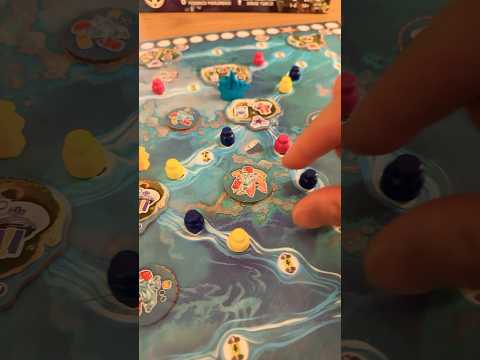

















The River Deep Dive
What the Community Thinks About The River
The River has emerged as a thoughtful addition to Days of Wonder's catalog of accessible gateway games. Reviewers like Actualol and Getting Games recognize it as an entry-level worker-placement title that manages to deliver both approachability and meaningful decision-making. The design represents a deliberate middle ground between familiar mechanics and fresh twists that keep players engaged without overwhelming them. Most notably, reviewers appreciate that The River works as both a genuine stepping stone for newcomers and a solid design that respects players, offering enough tension around timing and engine-building to satisfy those graduating from lighter gateway games.
Core Mechanics That Define The River
Worker Placement With Meaningful Scarcity
At its heart, The River employs a worker-placement system where players dispatch a limited crew to action spaces. The competition for spots is fierce, and the timing of when to commit a worker and when to recall your crew becomes a constant pressure. Designed by Sebastian Bleasdale and Ismael Perrin and published by Days of Wonder, the game rewards reading what your opponents need and grabbing key actions before they do. Because workers are a scarce resource each round, both the action you take and the action you deny become part of the decision, and the desperation to build the right structures early creates a palpable push and pull that prevents runaway leaders.
Resource Management and Engine Building
The River challenges players to gather raw materials and convert them into buildings and points. When you send a worker to gather a resource, you collect as much as your buildings and storage allow, but exceeding your capacity means losing the excess, which creates a puzzle around expanding production before it bottlenecks. As the game progresses, players who built the right infrastructure earlier enjoy cascading benefits, while inefficient early decisions can leave you scrambling later. The engine-building tension stays tight throughout, rewarding both long-term planning and opportunistic pivots based on what opponents leave available.
The The River Experience
Accessible Yet Engaging Tension
The River succeeds because it captures the essence of worker placement without demanding the rules mastery of heavier euros. New players learn the basic flow in minutes: place a worker, take the action, manage resources, build structures. Yet within that simple loop lies genuine tension. Reviewers consistently highlight that the game avoids feeling either trivial or punishing. The theme of settling land along a river resonates without overwhelming the mechanics, and turns flow quickly once players understand the core loop, keeping momentum high from start to finish.
Approachable Scoring and a Clear Victory Path
Unlike many euros where final scoring involves elaborate tables, The River uses straightforward point sources. Buildings award points, completed stretches of landscape tiles yield bonuses, and some tiles grant direct end-game points. This clarity helps new players make meaningful decisions without paralysis. Reviewers note that The River rewards focused strategies, whether you pursue a particular type of structure, maximize your terrain layout, or balance several approaches, and all paths feel viable. The transparency of scoring encourages thoughtful play without requiring number-crunching or hidden information that breeds anxiety rather than fun.
What Makes The River Stand Out
Days of Wonder's Elegant Design Philosophy
The River embodies the accessible-yet-strategic approach that made Days of Wonder famous through titles like Ticket to Ride. Reviewers frequently invoke that comparison, noting that The River delivers a similar feel: beautiful production, straightforward rules, and surprising depth. The artwork is genuine eye candy without being distracting, and the components feel solid and evocative of the theme. Rather than feeling designed by committee to offend no one, The River makes deliberate choices about which mechanisms to include and which to omit, resulting in a coherent whole rather than a grab-bag of features.
A Tile-Building Layer That Adds Texture
Beyond placing workers, players build out their personal riverside landscape with tiles, gradually developing the area in front of them. This tableau growth gives each player a visible sense of progress and a second axis of decision-making alongside the shared action board. Reviewers point to this development as the element that gives The River its own identity, ensuring it feels like more than a simple reskin of other gateway titles and giving players a satisfying little world to cultivate as the game unfolds.
Potential Drawbacks
Theme as a Double-Edged Sword
While The River's riverside-settlement theme creates pleasant visual appeal and intuitive flow, some reviewers felt the theme does not generate the same emotional resonance as Days of Wonder's strongest titles. The mechanics serve the theme without the theme driving the mechanics in a way that creates unforgettable moments. The experience is pleasant and mechanically sound, but it can feel a touch understated compared with the thematic punch of route-building in Ticket to Ride. For players seeking games where theme and mechanics create real magic, The River offers a professional performance rather than a spectacular one.
Limited Strategic Diversity and Replayability
Because the core loop stays consistent from game to game and the tile drafting is relatively straightforward, some reviewers expressed mild concern about long-term replayability for experienced gamers. Optimal strategies can crystallize after several plays, and the base game lacks variable setup or modules that force fundamentally different approaches each session. For families and newcomers this consistency is a strength, but enthusiasts with extensive collections may view The River as an excellent game to introduce others rather than a regular fixture in their own rotation.
If You Enjoy The River
Players drawn to The River should explore Ticket to Ride, Days of Wonder's flagship gateway game, which shares the same philosophy of elegant rules layered with genuine decisions. For worker-placement fans seeking their next step up, Stone Age offers a classic, slightly meatier take on gathering resources and feeding an engine. Imhotep delivers another approachable placement game with clever spatial decisions, and A Feast for Odin awaits players ready to graduate to a much deeper worker-placement experience once The River has whetted their appetite.
What Reviewers Are Saying
"I like that it's a newbie-friendly game, but it doesn't go easy on you when it comes to tension and thinkiness. If you're after an entry-level worker-placement game, I think this one is great."
— Actualol
"For me personally, it doesn't quite have a spark that's going to make me actively want to keep playing it, but I think that's because it's pretty simple and straightforward. If you're after an entry-level worker-placement game, this one is really well positioned."
— Getting Games
"The River is a fantastic little worker-placement game targeted to families. It's gorgeous, with a little bit of tableau building as you build some of the areas out as you go. We've played this three or four times, and I think I'm going to get it back out again. It's a great intro for families who like these sorts of games."
— Board Game Spotlight