/pic8485703.jpg)
/pic7974364.jpg)
/pic8485703.jpg)
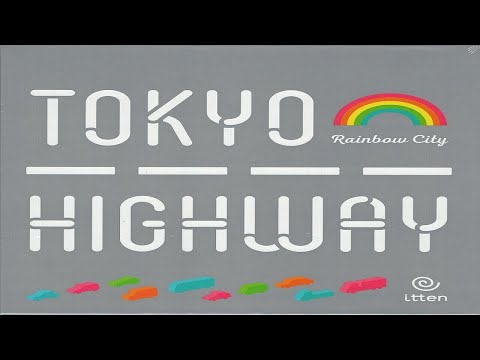





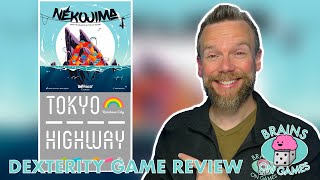










Tokyo Highway Deep Dive
What the Community Thinks About Tokyo Highway
Tokyo Highway stands out in the modern board gaming landscape as a dexterity game that transcends the typical expectations of the genre. Reviewers consistently highlight its unique visual appeal and sophisticated puzzle-solving mechanics. The game has earned respect from diverse gaming voices, from casual enthusiasts to veteran board gamers who typically avoid dexterity-focused experiences. While not universally beloved, Tokyo Highway commands genuine appreciation for its distinctive approach to spatial challenges and creative use of unconventional components.
Core Mechanics That Define Tokyo Highway
Spatial Puzzle Building
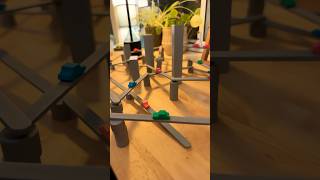
At its core, Tokyo Highway challenges players to construct interconnected road networks using wooden sticks and pillars, where the spatial arrangement determines success. Players must carefully plan how their routes cross or pass under opponents' roads, creating an intricate three-dimensional puzzle that evolves throughout the game. This mechanical foundation rewards thoughtful positioning over pure dexterity, transforming what might appear to be a simple stacking game into a sophisticated logistical challenge. The puzzle element drives every decision, from initial placement to final expansion, making strategic planning as important as steady hands.
Incremental Placement and Risk Management
The game progresses through careful, methodical turns where each player adds one road segment at a time. This measured pace creates genuine tension around when to place cars and how high to build. Since players cannot place a car without successfully crossing or underlining an opponent's road, the decision-making becomes tactical and deliberate. The penalty for mistakes runs deep: a single misplaced stick can collapse entire sections or block future movement options. This risk-reward dynamic forces players to weigh the benefits of ambitious routes against the consequences of failure, creating moments of real strategic significance.
The Tokyo Highway Experience
Meditative Puzzle Atmosphere
The game creates a contemplative, almost meditative quality that distinguishes it sharply from high-energy dexterity games. Rather than celebrating catastrophic failures or frantic moments, Tokyo Highway invites careful observation and methodical problem-solving. Players find themselves absorbed in the spatial puzzle, adjusting height and direction as the road network emerges. The slower pace and emphasis on precision positioning rather than speed or spectacle gives the experience a zen-like quality. This tone appeals to players who want intellectual engagement from their dexterity games, offering quiet satisfaction through successful execution rather than dramatic reversals.
Futuristic Cityscape Aesthetic
The physical assembly of Tokyo Highway creates a stunning visual that resonates across the table. As roads rise and fall, overlapping and underlining each other, players collectively construct what resembles a compact metropolitan expressway system at night. The fluorescent-colored cars glowing against the wooden framework evoke the essence of criss-crossing urban highways in densely packed modern cities. This aesthetic transforms from abstract puzzle into something that genuinely captures the look and feel of contemporary metropolis infrastructure. The visual impact emerges naturally from gameplay rather than decoration, giving the table presence authentic weight.
What Makes Tokyo Highway Stand Out
Elegant Simplicity Masking Depth
Tokyo Highway accomplishes sophisticated strategic gameplay through remarkably simple components: wooden sticks, plastic pillars, tweezers, and cars. There are no elaborate rules or complex subsystems. The component list reads more like a craft project than a board game, yet the emergent puzzle complexity rivals games with substantial rulebooks. This economy of design appeals to players fatigued by overproduction and excessive mechanics. The game proves that elegance and strategic depth need not come from expensive components or intricate ruleset architecture. Every element serves the core experience, with nothing extraneous or decorative.
Variable Construction Possibilities
No two plays of Tokyo Highway produce the same board state. The open construction system means players can architect entirely different solutions based on their opponents' choices and available space. This variability keeps the puzzle fresh across multiple sessions, preventing the game from becoming formulaic or solvable through memorization. Each playthrough generates a unique configuration of interlocking highways, challenging players to adapt their spatial reasoning and planning to novel circumstances. The game genuinely rewards creative problem-solving and encourages players to discover new approaches, making repeated plays feel distinct rather than repetitive.
Potential Drawbacks
Emphasis on Puzzle Over Dexterity Spectacle
Players drawn to dexterity games specifically for the physical challenge and dramatic moments may find Tokyo Highway disappointingly restrained. The game prioritizes careful planning over precision hand coordination and avoids the cathartic collapse moments that define classic dexterity experiences like Men at Work or Catch the Moon. The tweezers requirement enforces deliberate placement rather than quick flicking or balancing acts. For those seeking the adrenaline rush and theatrical failures characteristic of high-energy dexterity games, Tokyo Highway's meditative puzzle focus may feel underwhelming or lacking the immediate satisfaction of physical accomplishment.
Mechanical Difficulty and Accessibility
The dexterity demands, while manageable, prove genuinely punishing when execution falters. A slight mistake during placement can cascade into structural problems that cost players points or constrain future options. Some players find this precision requirement frustrating rather than engaging, particularly those with fine motor control limitations. The need for steady hands and careful coordination excludes some players or creates anxiety around turn execution. Additionally, the spatial reasoning required becomes increasingly complex with three or four players, as the board state grows dramatically more crowded and the puzzle constraints multiply significantly.
If You Enjoy Tokyo Highway
Players captivated by Tokyo Highway often gravitate toward other games celebrating elegant spatial design and creative problem-solving. Men at Work shares the dexterity foundation but emphasizes physical precision and dramatic collapses. Catch the Moon offers similar meditative hand-eye coordination but with a construction theme centered on balance rather than network building. Super Rhino delivers careful stacking mechanics with escalating complexity, though it leans more heavily toward dexterity challenges. Meeple Circus combines spatial reasoning with physical manipulation, creating tableau-building challenges alongside careful component placement. All four games reward thoughtful planning within dexterity constraints, though each approaches the balance differently.
What Reviewers Are Saying
"I'm not usually a fan of dexterity games, but Tokyo Highway is definitely one that I'd keep. It looks completely different every single time I play this game, and it has a bit of a vibe to it, as if you're a giant looking down on a miniature city at night as the cars light up in this cool fluorescent color palette."
— Board Game Sanctuary
"Tokyo Highway is a really interesting dexterity puzzle game. It's not like your average dexterity game, and it's not a game that is pushing so much to have these big failures and these big moments. It's very much leaning towards that puzzle and how do you work out the best way to get points."
— Actualol
"Tokyo Highway is how could you not love a dexterity game that uses lolly sticks as rulers and has tiny tiny little cars with a little tweezers to put them on. For a dexterity game, it's quite punishing. You just get it slightly wrong and you cannot do your circle around the tower, zero points."
— Board Stupid