/pic1848490.jpg)
/pic2456554.jpg)
/pic3024378.jpg)
When you die, you can take it with you!
Take on the role of Egyptian nobles at the time of the pharaohs, preparing for death and burial in the Valley of the Kings. Players want to fill their tombs with food, canopic jars, statues, amulets and other treasures, and to do so they acquire cards that are laid out in the shape of a pyramid; purchase cards at the base of the pyramid, and it "crumbles" to bring cards higher in the pyramid to the base where they can be bought. The pyramid resets each round with new offerings.
You score only for cards that you remove from your deck and stash in your tomb, so if you keep using valuable cards for their effects and don't entomb them before the game ends, you could lose out on big points! Whoever collects the most valuable artifacts in her tomb wins.
This page includes videos and mentions from the whole Valley of the Kings family. Drill into a specific game below.
/pic1848490.jpg)

Valley of the Kings Review

- Interesting card drafting mechanism with a collapsing pyramid.
- Unique scoring mechanism where cards must be entombed.
- Lovely art and production quality (e.g., includes sleeves).
- entombing cards in a tomb to score points
- ancient Egypt
Mechanics (from transcript analysis)
- Card Drafting — Cards are drafted from a pyramid, affecting availability of other cards.
- deck-building — Acquiring more cards into your deck to score various things.
Video topics + discussion points
Quotes (from this video)
- I'm not being possessive about this whole thing. What I want you to pay attention to is this game room part of the sign. What kind of room is it? A game room. Got it? Okay, come with me.
- If you're a deck building fan, it's worth digging into those pyramids with Valley of the Kings.
- The packaging alone earns a bunch of bonus points.
- It is silly, fun, great for a crowd, Hot Streak.
- Thematically, this one really really grabbed me.
- It is a dense game, not one that was easy to pick up at first... but rewarding once you get there.
- I think this is a hidden gem hidden under the sand.
- I mean, they won me at the title. This is This is an odd duck.
- There's something very charming about the speed of Jump Drive.
- No, this is pretty darn cutthroat.
- Flying whales hauling cargo. I was absolutely in on this game.
- If you make a move in your first turn that's not good and it ruins your game, um, that's your fault.
References (from this video)
- Sacrifice making.
- Promotion mechanism.
Mechanics (from transcript analysis)
- Deck Building — Features sacrifice and promotion mechanisms.
Video topics + discussion points
Quotes (from this video)
- For me it's quite important let's say you find out about the game or somebody suggests it to you a game you know that you know just like in this game have you heard this my automatic response would be to go to war game get calm page and then look at it and in my eyes guys from the title do the I remember it's on the on the desktop anyway I think on on the mobile phone or mobile the fastest different the title and obviously the picture make sure it's the right game and then my eyes go to the right down for mechanics first thing every time before going through the description
- Mechanics for me it's the quickest one of the quickest way to find out what's the game's about
- The mechanics are less important than the the tightness of the game
- A giant tableau eventually breaks my brain
- I think the perfect engine builder is is the one where you're basically winning or losing not on the quality of your engine but when
- Mechanics for me it's the quickest one of the quickest way to find out what's the game's about.
- I think overall for me the mechanics are less important than the the tightness of the game.
- You want the actions that other players are taking to have a significant impact on your options or the profitability in your options.
- Simultaneous action and turn order drafting.
- Colome is another one I can see up there on the shelf with simultaneous oh yes he's got that same happy pigs thing yeah where you don't want to pick the most popular action and you've got a look at what around what people can do because again you can you can get yourself stuck in a situation where there's only one obvious thing for you to do and if that happens it's that's it I don't want to lose that for nobody so you gotta feed that into your strategy.
References (from this video)

- Amazing solo challenges
- One of the best deck-building games
- Pharaohs and tombs
- Ancient Egypt
Mechanics (from transcript analysis)
- Deck Building — Described as one of the best deck-building games.
- Set Collection — Implied by the theme of collecting pharaohs' artifacts.
Video topics + discussion points
Quotes (from this video)
- this one is an abstract game that actually worked pretty well
- oh boy oh boy this is a game I don't have to think about it I I I could even think about giving it lower than a d but I will give it a d now
- the design doesn't work at all it's so specific there's like so much text on the cards it's i' I've I've never seen cards like that
- this is we have the suspicion that this is AI generated or at least some of it uh like what the regarding the rules in the design because wow this is really cumbersome
- it's a solid game this is like a game that is has a cool premise it works very well but it's nothing special but still I keep coming back to it because the Bame Marina implementation is so great
- Kaber of course uh this needs to be an S tier because it's my top three game in both my list solo and general
- Secret identity I will also give an a yeah it works really well
- it's very very tough but I like it it's always fun
- very good Abra game I can just I just recomend can recommend that to pretty much everyone
- Not turn I just reviewed on my channel uh I like this game I will give this a B I think B is fine uh it's a good game it has a very interesting Bing mechanism and a it has a few mechanisms that are very unique
- Missana uh I'm still really torn now that I played the cave of Gins which is really good um I might rank this higher I would also give this a B I don't know this game I think this game like will become even better like when you have more expansions right the base game is okay it's fine probably just a b Toc
- just one srank one of the best party games out there definitely srank uh I always like to pull it out it's one of my most favorite party games
- K grip also clear srank let me just put it up here clear srank game is one of my most most favorite portable solo games ever
- Kites Kites I will give a H A or B uh it's a very good game but I think I will give it a b it's also like a fun time you play like one two three four games and then you're over it and then you don't want to play it for a few weeks right at least that's how I feel but every time I pull it out it's very very fun I like it
- fun facts also clear S rank I like this a little bit more than just one uh but they're both incredible party games so definitely also S rank
- belati um a game that is not very well known I think internationally but a very cool deduction party game I also have to give this an S it's always a fun time like really really fun party games
References (from this video)

- Distinct scoring via trashing that differentiates it from typical deck-builders.
- Engaging color-set collection with deck-building.
- deck-building with unique trash-to-points scoring
- Egyptian theme
- Tyrants of the Underdark
Mechanics (from transcript analysis)
- color set collection — Accumulating multiple cards of the same color yields more points.
- deck-building — Players acquire and optimize a deck of cards.
- trash-to-points — Trashing cards contributes to scoring (points are gained through trashing).
Video topics + discussion points
Quotes (from this video)
- This is probably the most complex game that I've mentioned so far because I'm omniamer.
- It's just planning ahead and trying to see what other people are doing as well and then pivot your strategy is very tactical.
- Ticket to Ride is more popular because it's more gateway.
- Dixit is a really fun party game. It’s a ice breaker.
References (from this video)

- ancient Egypt
Mechanics (from transcript analysis)
Video topics + discussion points
Quotes (from this video)
- This is the grooviest board gaming weekend in all of Knoxville is the promise here.
- The dice are shaped like heads.
- This is the best game of Medici I've ever played.
- You're the biggest loser.
- We wanted to do something that had some ways to get people connected really quick right from the jump.
- Well, Funky Town Games, it's been real, it's been fun, but it hasn't been funky.
- I haven't seen one in the wild, probably decade.
References (from this video)

- General idea is likeable
- Few cool turns where card effects could be combined
- Boiled down to a repetitive cycle of buying and burying cards
- Didn't really escape that cycle
Mechanics (from transcript analysis)
- Deck Building — The core decision involves deciding whether to leave cards in the deck or put them in the grave for scoring.
- Grave area for scoring — Players put cards into their 'grave' for scoring purposes.
Video topics + discussion points
Quotes (from this video)
- As soon as I finish playing Ark Nova, I'm thinking about Ark Nova again.
- This is the game that made me want to try and figure out how to play card drafting games, how to play action selection games.
- It's a classic engine builder, and it still holds up today.
- The scale of the game is huge and it feels like you're really accomplishing something.
- Each faction plays completely differently, offering huge replayability.
- It's a challenging game with a lot of moving parts.
References (from this video)
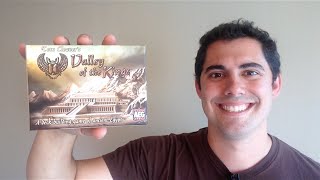
- In-tomb mechanic keeps the deck lean and creates repeated exposure to interesting card interactions
- Starting deck contains unique, meaningful cards with lasting impact throughout the game
- Egyptian theme is cohesively woven into the mechanics and pyramid structure
- Some players may have a poor first impression if they don't quickly grasp endgame pacing and tomb thinning
- tomb-building with pyramids, pharaohs, and tomb-based scoring
- Ancient Egypt / tomb-building
- pyramid-card progression with endgame tomb scoring
Mechanics (from transcript analysis)
- card actions — Each card has an action (bottom text) that can be executed when played.
- Compound Scoring — End-of-game scoring depends on the types and counts of cards in your tomb, with color-based multipliers.
- Deck Building — Each player starts with an identical 10-card deck and draws five cards per turn.
- Deck Manipulation — Some cards interact with the discard pile, and players frequently shuffle to form a new deck.
- deck-building — Each player starts with an identical 10-card deck and draws five cards per turn.
- discard pile interactions and shuffling — Some cards interact with the discard pile, and players frequently shuffle to form a new deck.
- endgame and age progression — Age 2 and 3 cards appear later; they are more expensive and powerful, driving the late game.
- one-time free tomb placement — Once per turn you can place a card under your tomb for free, removing it from your deck.
- pyramid layout and bottom-level access — Only cards on the bottom level are purchasable; the pyramid collapses as cards are taken.
- scarab-based buying — Cards show a Scarab value used to purchase cards from a pyramid layout.
- starting deck composition — Starting 10 cards include four shop cards, three ears, two boxes of food, and one offering table.
- tomb thinning and deck size — Cards moved to the tomb are no longer shuffled back into the deck, keeping the deck lean.
- tomb-based scoring — End-of-game scoring depends on the types and counts of cards in your tomb, with color-based multipliers.
Video topics + discussion points
Quotes (from this video)
- this is a deck building game
- the ining mechanic where you take cards out of your deck and you put them into your tomb even from the first turn of the game
- you are slowing your engine down by destroying it so you want to slow down at the right speed so that it's completely dead right as the game ends
- the starting deck of 10 cards that you start with all have interesting things that you'll want to use
- it's a tiny little $20 game
- three players is best that is the happy medium between the two
References (from this video)
- cool example of multi-use cards
- cards have multiple uses
Mechanics (from transcript analysis)
Video topics + discussion points
Quotes (from this video)
- Remember it's only a game
- I am very much one of these people that if you go after my family or friends there will be hell to pay
- Five out of ten is average, it's a game that I would still play if you put it on the table
- I do really like closed drafting in games
- I love the way that you plan for this sort of stuff
- Power Grid is the worst contender for this, auctions in this just refuse to freaking end
- I want to see it more - the typewriter mechanic
- Area control is just kind of meh
- It's just so many of these games are just like oh we need to make a quick buck
References (from this video)

- tight, choose-your-path deck-building
- compact and approachable for groups
- mythic archaeology and exploration
- ancient Egypt tomb exploration and deck-building
- Descent
- Gloomhaven
Mechanics (from transcript analysis)
- deck-building — build a deck to explore tombs and collect artifacts
Video topics + discussion points
Quotes (from this video)
- I guarantee that 90 of the games here I think you will enjoy
- this shelf is like this any game you pull out you know you can immediately play even if you don't remember all the rules
- I want it as well
- you have to move with the culture next to the wine I think he's a fan of me
- two players two player versus games exactly
References (from this video)
- compact and approachable for a light convergence game
- nice thematic flavor for a tiny box game
- mechanics can feel repetitive to some players
- some players may want deeper engine interaction
- dormant mysteries, deck-building mechanics layered into storage
- ancient Egyptian tomb exploration and tile/board interaction
- mythic, exploratory
- No Thanks
- Joker
- Byblos
Mechanics (from transcript analysis)
- area/tiles interaction — collect and place tiles to optimize scoring paths and set collection
- Risk Management — decisions about which tiles to take or avoid to optimize points
Video topics + discussion points
Quotes (from this video)
- the druids expansion is a must-buy
- it's not difficult to teach because what if essentially does it gives you more of the same but with a slight twist on top of it
- the biggest decision you're gonna have to make in this game
- it's a take that element and balance it out
- all in all it's a decent game, a alliance of convenience and towers, but at the end of the day everybody's got their own agenda
- Neon has kind of only just hit the market and most people don't have a clue what it is
References (from this video)

- beautiful Root-inspired artwork
- tight, multi-use card mechanics
- can feel heavy and long for some players
- multi-use cards and entombment-based scoring
- Egyptian tomb exploration and artifact collection
- mythic archeology with a root-styled aesthetic
- Fort
Mechanics (from transcript analysis)
- Multi-use card design — cards serve multiple purposes and scoring paths depending on use
- Multi-Use Cards — cards serve multiple purposes and scoring paths depending on use
- Set-collection and entombment scoring — timing of entombment influences end-game scoring and deck composition
Video topics + discussion points
Quotes (from this video)
- it's a cool theme with good components and artwork, and a little twist on the normal worker placement
- Game of Life as a Euro game that's the best way to describe it
- deck-building very fast, almost Dominion speed deck building
- I love it; it's quick and easy once you get used to it
References (from this video)
- solid deck-building core and drafting twist
- well-rounded and familiar for fans of the genre
- dated feel; not as engaging as modern deck-builders
- not a standout in the era of similar titles
- set collection bonuses and hand-elimination to optimize scoring
- ancient Egypt deck-building with pyramid drafting
- dated but polished abstraction
Mechanics (from transcript analysis)
- Deck Building — build and refine a deck to draft bottom cards first for scoring bonuses
- deck-building — build and refine a deck to draft bottom cards first for scoring bonuses
- pyramid drafting — cards are drafted from a pyramid with bottom-first access and cascading fills
Video topics + discussion points
Quotes (from this video)
- This is probably one of my favorite Uwe Rosenberg games I've played to date.
- it's a weird one because it's kind of like a full-size game but didn't quite feel like it
- the rules overhead was quite high in terms of remembering what they do
- usually trying to build these routes and establish these with blocks and then get the cards
- it's a pretty much a paint by numbers deck builder game