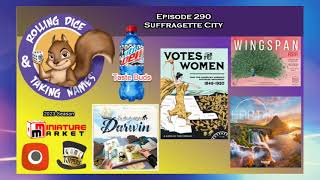
Votes for Women is a card-driven game covering the American women's suffrage movement from 1848-1920, culminating with the ratification (or rejection) of the Nineteenth Amendment. The game provides competitive, co-operative and solitaire play, with co-operative and solitaire play against the "Oppobot."
To win, the Suffragist player must have Congress pass the proposed Amendment and then have three-fourths of the states (36 of the then 48 states) ratify the Amendment. The Opposition player wins by either preventing Congress from passing the proposed Amendment or by having 13 states reject the Amendment.
The game lasts for six turns - a turn consisting of drawing cards from the players' own decks, bidding on strategy cards, and then six rounds of card play where a player may play a card for an event or discard a card to campaign, organize or lobby Congress. If Congress has proposed the Amendment but neither 36 states have ratified nor 13 states have rejected, then the game goes to Final Voting.
- Strong educational value
- Historical depth
- Engaging theme
- Potentially heavy for newcomers
- Women's suffrage, social reform
- Early 20th-century suffrage movement
- Educational, biographical
- Undaunted
- Watergate
Mechanics (from transcript analysis)
- deck-building — draft and play cards representing historical actors and events
- group decision mechanics — team or competing actions to influence policy outcomes
Video topics + discussion points
Quotes (from this video)
- I consider a historical board game to be a board game that covers some aspect of history
- they're educational and they will often include a significant amount of historical background text
- it's easy to learn
- the rules are broken by the cards; you offload complexity onto the card
- it's getting better and better
References (from this video)
- addresses a pivotal, timely historical topic
- potential to broaden historical outreach
- mechanics not fully detailed in the interview; interpretation may vary
- civic participation, suffrage, constitutional change
- American suffrage movement and voting rights struggle in the late 19th/early 20th century
- education-forward with documentary flavor
Mechanics (from transcript analysis)
- document-driven mechanics — Incorporates historical documents and issues alongside gameplay (e.g., Susan B. Anthony's indictment).
Video topics + discussion points
Quotes (from this video)
- i am actually pretty happy with how the shores of tripoli turned out
- it's a one or two player game where you are representing... if you're playing by yourself you're always the united states but if you're playing two players somebody's united states and then somebody is representing tripoli
- i like games that you can play in 45 minutes an hour, hour and a half
- the US player has a deck of legislative actions that were representative of the legislation that occurred at the time
- votes for women is designed by Tory Brown
- you know the biggest difference is that in Shores of Tripoli you either play a card for an event or you discard a card to take an action
- i really love the political phase i love how it plays
- i'm not really averse to games outside of the US
References (from this video)
- educational and historically informative
- integrates civics concepts with gameplay
- two-player symmetry creates tense play
- rules can be heavy for newcomers
- final roll-off can feel anticlimactic to some players
- political strategy and constitutional change
- United States suffrage movement (1848–1920)
- educational, civics-forward
- Shore of Tripoli
- Red Flags Over Paris
Mechanics (from transcript analysis)
- area_control — states as regions are contested for influence to gain votes
- campaign_dice_and_lobbying — campaigner dice determine regional leverage; lobbying actions move state outcomes
- card_driven — cards supply events or standard actions; you must play a card to take an action
Video topics + discussion points
Quotes (from this video)
- I love engine builders I mean I love things like Imperial settlers it scratches that engine builder itch
- it's a card-driven game
- the theme enhances the gameplay
- this is a light game as far as when it comes to these type of area control games
- I really enjoyed Wingspan Asia; it's a two-player standalone
References (from this video)
- approach to heavy topic with accessible euro aesthetic
- may require context for full impact
- women's suffrage, social reform
- 19th-20th century suffrage movement
- gesture toward history with a deployable mechanism
- Molly House
- Land of Freedom
Mechanics (from transcript analysis)
- card-driven — cards drive political action and moves; accessible presentation
Video topics + discussion points
Quotes (from this video)
- historical wargaming is more of a mixed stew than ever.
- evocative rather than granular to make it easier for you to play.
- the boundary lines are getting blurrier and blurrier.
- I acknowledge that games are product and that those two things are inseparable.
- we need more people who see games that way.
References (from this video)

- edu-taining and theme-fitting
- brief mention; not deeply discussed in the session
- history and civic process
- Women's suffrage movement
- educational, civic
- Twilight Struggle
Mechanics (from transcript analysis)
- card-driven civic actions — simulate votes and reform motions
Video topics + discussion points
Quotes (from this video)
- it's a logistics and Resource Management bag drawing game with the theme of the night witches
- it's smaller and simpler than Twilight Struggle but not less than Twilight Struggle
- I want to play it more damn it
- Open Windows is about Putin and the West
- this is the single coolest aspect of heavy cardboard
References (from this video)
- Streamlined card-driven wargame mechanics (takes concepts from Paths of Glory and Twilight Struggle, distills them)
- Easy to learn relative to appearance and complexity
- Excellent depth for experienced wargamers
- Dynamic reversals of fortune and exciting card play
- Fast-paced game flow
- Multiple historical documents included in box (represents best of historical wargaming)
- Thematic and historically accurate treatment of subject matter
- Accessible to competitive players
- Great change of pace game for experienced wargamers
- Brutally honest and respectful treatment of historical subject matter
- Good solo mode
- Directly confrontational game focused on crushing opponent
- Not suitable for players who dislike confrontational gameplay
- Might be too aggressive for some play styles
- Women's suffrage movement
- Political campaigns
- Historical conflict
- State-based elections
- Opposition movement
- Array
- Array
- Array
Mechanics (from transcript analysis)
Video topics + discussion points
Quotes (from this video)
References (from this video)

- Educational historical context
- Flavorful, well-researched text on cards
- Complex rules may deter casual players
- history, political strategy
- American women's suffrage movement
- documentary-style, historical
Mechanics (from transcript analysis)
- area majority — players compete for influence in defined areas
- Cooperative/competitive play options — play cooperatively or competitively; bots available
Video topics + discussion points
Quotes (from this video)
- There is a giant world map and it is great for teaching geography
- the core mechanic of this game is math
- open information is best
- a history lesson in a box
- Wingspan has brought board gamers to become more interested in nature
References (from this video)

- streamlines card-driven war games
- retains nuance and depth
- great game and historic teaching device
- clever design
- womens suffrage movement
- american history
- historical_educational
Mechanics (from transcript analysis)
- war game streamlined — streamlined war game mechanics
Video topics + discussion points
Quotes (from this video)
- this is my list the video says the top 100 board games of all time but it really is just my top 100 board games of all time
- three minute board games is an independent channel we dont take money from publishers and we do not do any form of paid content
- Mosaic has the ambitious goal of being a civilization game that can be played in two to three hours and it very much succeeds at this goal
- a game that does not need to be played with a traitor because the inherent selfish goals in this game created enough internal conflict
- I love space racing games and space corp is the game that is most racy as far as space racers go
- the term I use instead of gateway game is foundation game
- Sentinels could easily be a forever game the kind of game you just play over and over and over and over again endlessly
- Modern Art is a simple and brilliant and beautiful game and easily the best pure auction game Ive ever played
- Black Orchestra models some very clever things about how conspiracy is run
- when I asked the question hey what game should I play with my non-gamer friend who's interested in gaming but hasn't done much gaming I almost always answer Sentient Golem Edition
- Arkham Horror is the game that really made board gaming my number one hobby
- there are a few things more fun and rewarding in board gaming than organizing a fight in the arena
- Twilight Struggle is one of the best head-to-head games out there
- Santorini is the definition of an elegant design
- Arkham Horror the card game absolutely should be for you it's a hundred percent for me and it is my number one game of 2023
References (from this video)
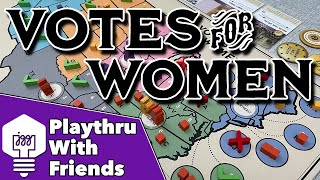
- Strong thematic focus and historical setting
- Tense endgame with meaningful decisions
- State cards create dynamic ebb and flow
- Learning curve and rule depth
- Dice-driven variability can affect outcomes
- constitutional amendment campaign, lobbying, and factional politics
- US suffrage movement from pre-Civil War to post-World War I
- asymmetric two-player political strategy with historical setting
- Twilight Struggle
- 1960: Making of the President
Mechanics (from transcript analysis)
- Card-driven actions — cards trigger events, campaigns, and lobbying actions
- state control and campaigners — place colored campaigners in regional states; cannot have conflicting colors in a single state; battlegrounds managed via stars
- strategy cards bidding — players bid buttons to claim powerful strategy cards that alter play
Video topics + discussion points
Quotes (from this video)
- This is excellent
- It felt highly thematic
- The war in Europe really changed everything
- The state cards work; they provide ebb and flow
- Great game
References (from this video)
- serves as a rare political history within game form
- educational and thought-provoking for civics/history enthusiasts
- less conventional war-game feel; different audience
- women's rights as a political and civic process
- American suffrage movement; political and social reform
- CDG (card-driven game) approach to social/political history
Mechanics (from transcript analysis)
- card-driven gameplay — uses event cards to drive political actions and victory conditions
Video topics + discussion points
Quotes (from this video)
- it's a tricky one so one thing that I think really helps in this kind of through the podcast process is working with people who know basically nothing about it
- I think it's important to intellectually engage with things that make me uncomfortable
- you're telling two stories when you're doing history: you're telling what you think happened and you're also telling something about yourself
- the Confederacy ran on slavery like slave labor is how they functioned
- Yankee is just a shorthand for American, and being called a Yankee as a Southerner is an insult
- this conversation isn't about banning games; it's about understanding and engaging honestly with difficult histories
- votes for women is a war game because if you like CDGs you'll like votes for women and that's the purpose of genre
- the ideology of the Lost Cause is tricky because it was embedded in education, family memory, and regional identity
- films like Gone with the Wind and public memory shape how people think about the Civil War long after the fact
References (from this video)

Mechanics (from transcript analysis)
Video topics + discussion points
Quotes (from this video)
- Don't sleep on this game folks.
- It's a lunchtime game now.
- It's a strictly card based game.
- This is a really unique racing card game you're like doing a bike race with these fun creatures.
- It's a freaking hoot.
- I am so excited to try it.
References (from this video)
- engaging asymmetrical play between suffragists and the opposition
- strong online UI features (state card highlighting, voting overlays, automation of final voting)
- dramatic late-game sequencing with meaningful choices
- thematic flavor and humor (buttons, campaign atmosphere) enhances immersion
- subject matter can be politicially sensitive; potential for contentious framing
- steep learning curve for new players due to multiple interlocking mechanics
- button economy and dice luck can create swings that feel harsh
- women's suffrage, political activism
- United States, late 19th to early 20th century, political campaigning around the 19th Amendment
- historical simulation with player-driven campaigning and legislative process
- Rally the Troops
Mechanics (from transcript analysis)
- card bidding and event deployment — players bid on strategy cards and use event cards to gain immediate benefits or long-term tempo.
- Deck/hand management — players draw, discard, and manage a hand of event/strategy cards to optimize campaigns and tempo.
- dice-based campaigning — campaign actions are resolved with dice rolls (D4 or D6 depending on cards) to determine cubes gained.
- endgame final voting — after a round, final voting occurs across states to determine whether the amendment passes.
- lobbying vs campaigning — players choose between lobbying (risking failed dice rolls) or campaigning (dice-based progress) to influence Congress and states.
- state cards and board overlays — state-specific cards grant ongoing advantages; the online version highlights which states are affected and tracks progress.
- state/campaign cube placement — players place campaign cubes in states to influence outcome and power region control.
Video topics + discussion points
Quotes (from this video)
- The online play is so nice and it tells you which region you still have to put influence in.
- this is the Hail Mary in the sixth turn.
- Buttons, button button, look at all those buttons.
- the board overlay with intermediate voting results is very intuitive.
- this is my favorite thing to do is putting out these 32 cubes.
References (from this video)

- Excessive randomness
- Lack of strategic depth
- Unsatisfying win condition
- Poorly implemented theme
- Political Movement
- Women's Suffrage Movement in America
Mechanics (from transcript analysis)
- card-driven — Players use cards for effects and actions
- Dice rolling — Random elements determine success of actions
Video topics + discussion points
Quotes (from this video)
- I feel with content creators these days everything is just so overly positive
- our goal with this channel has always been to treat you the viewer as if you were a friend
References (from this video)
- immersive treatment of a pivotal historical topic
- strong charitable partnerships ( League of Women Voters )
- expands appeal beyond hardcore war-game fans
- logistics of distribution and retailer adoption noted
- activism, political process, and social change
- American suffrage movement and early 20th-century civic life
- document-driven with historical essays
- Night Witches
- Shore of Tripoli
Mechanics (from transcript analysis)
- campaign-style simulation — players navigate political processes toward amendment ratification
- document-based mechanics — integration of historical essays and primary documents to drive decisions
- educational accessibility — aims to be approachable to non-traditional gamers through clear tutorials
Video topics + discussion points
Quotes (from this video)
- it's a story that I'm really excited about
- we're publishing night witches
- our copy editor ensures there's not typos and we treat our boxes with the care of premium products
- historical documents immerse the player in the history
- we partner with charities for each game that we publish
- we want to widen the scope of historical gaming
- not all games have to be military; we are a historical game publisher with a broad scope
References (from this video)

- accessible entry into card-driven / political games
- tense, nail-biting decisions
- thematic and historically informative
- theme may be unfamiliar to some players
- as with many CDGs, teaching could be heavy
- tug-of-war across states with political influence
- US suffrage era; campaigning for women's right to vote
- historical, event-driven card play
Mechanics (from transcript analysis)
- area control / lobbying — state-by-state influence to push a side toward victory
- event-driven card play — cards trigger political events and actions
Video topics + discussion points
Quotes (from this video)
- three kittens in a row they'll upgrade to three cats
- this is a great two-player game it is I'm very bad at it though
- to me Dice Throne is a lifestyle game
- Undaunted is amazing
- it's such a fun puzzle when you link cards and resources
- Star Wars rebellion is Star Wars in a box
References (from this video)
- teachable and accessible for a mid-weight euro, especially in library and casual groups
- strong historical accuracy and thematic integration
- three-act structure with meaningful pacing and escalating tension
- well-designed card interactions and state cards that reflect real historical actors
- multi-front strategy encourages broad thinking beyond single states
- middle act's focus on the Congress track can cause frustration or 'undoing' of progress
- potential for tunnel vision or over-emphasis on one front if not careful
- debates about how to categorize the game for awards and classification in the war game space
- subject matter may be polarizing or challenging for some players
- political campaigning and lobbying for women's rights
- Pre-19th Amendment United States; suffrage movement, early 20th century
- historical, multi-perspective with real historical actors
Mechanics (from transcript analysis)
- area/campaign control with cubes — placing influence cubes in states to win majority and gain state cards or benefits
- Card-driven actions — players select cards to perform events, campaigning actions, or other effects; card choice drives turn flow
- Congress track and bidding — tracking progress toward ratification via a Congress track; bidding with campaign buttons to influence strategy cards and rolls
- event and long-term consequences — events have lasting effects; choices can shape later rounds or the political landscape
Video topics + discussion points
Quotes (from this video)
- votes for women belongs in the category of games that are really trying to say something
- the game doesn't give suffragists a break in terms of presenting them all as saintly good people
- the Congress track is the most exciting part
- the game is training you right to think broad
- it's a pretty doable game
References (from this video)
- Voting rights and women's suffrage
- Historical social reform era
Mechanics (from transcript analysis)
Video topics + discussion points
Quotes (from this video)
- Our mission statement is about to create a diverse and supportive Gaming Community dedicated to playing discussing designing and promoting historically based board games.
- We're not here to make money. We're here because we love this hobby and we want to help people doing something that we love.
- SD Hiscon is an incubator—a place where designers meet, learn, and iterate, and where new voices can grow within a passionate community.
References (from this video)
- historically rich and educational
- car-driven design that remains accessible while offering depth
- optional opposition adds tension and realism
- replayability from evolving deck and strategy card systems
- tactile components (historical buttons) enhance immersion
- presentation of sensitive historical contexts (racism, exclusion) requires careful framing
- asymmetrical design could affect balance across plays
- may be challenging for players new to heavy historical abstraction
- Voting rights, women's suffrage, social movements, political activism
- United States, 1848-1920 (map of the United States as of 1920, 48 states without Alaska/Hawaii)
- historical, educational, scenario-driven
- Watergate
- 1960: Making American President
- Ticket to Ride
Mechanics (from transcript analysis)
- button_economy_and_re_rolls — physical buttons representing political capital are used to bid, lobby, or re-roll dice, adding a tactile layer.
- card_driven_actions — hands of event/character cards drive actions, historical context, and narrative moments.
- congress_vote — players call votes in Congress; passage requires three-quarters (36) of states, opposition can block with enough denials.
- opposition_and_oppo_bot — an Oppo bot deck simulates counter-movements; players can choose cooperative or competitive modes for opposition.
- six_turns — the game unfolds over six turns during which power is built and contested before a vote is called.
- state_cards_and_power_economy — state-specific cards reward power in regions and drive deck progression, encouraging map-wide movement.
- strategy_card_bidding — strategy cards are bid on, granting diverse in-game functions and strategic flexibility.
- territorial_control — players vie for control of states on a map, representing political power distribution across the country.
Video topics + discussion points
Quotes (from this video)
- Votes for Women is a board game about the 19th Amendment and the suffrage movement
- The game board itself is a map of the United States as of 1920
- it's a car driven game that depends on area territorial control
- A man's world unless you vote
- Voting is like the base layer
- not a pure representation of good or bad—there are moments of discomfort
References (from this video)
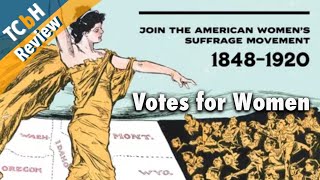
- Strong thematic resonance with minimalistic, authentic visuals
- Tight asymmetric design that maintains tension without overcomplication
- Climactic final vote delivers a memorable, exhilarating crescendo
- Well-curated supplemental materials lend historical context and depth
- Limited depth in lever variety; replay can feel similar from session to session
- Some players may seek more varied scenarios or longer campaign arcs
- Women's rights, political lobbying, constitutional ratification
- United States, 1848-1920, six eras depicting the suffrage movement
- historical abstraction with minimalistic, card-driven representation
- Shores of Tripoli (Fort Circle Games)
Mechanics (from transcript analysis)
- Area influence / region control — Players spread influence across states/regions to build leverage and unlock key effects.
- asymmetric faction play — Two factions—the suffragists and the opposition—have different capabilities, resources, and strategic options, creating a push–pull balance.
- card drafting / deck-building — Players start with a hand of cards and draft or play cards to trigger effects, influence regions, or gain momentum toward ratification or rejection.
- Dice resolution / dice rolling — Votes in each state are resolved via dice rolls, modified by faction influence and re-roll tokens, introducing tension and uncertainty.
- Endgame victory via fixed condition — A side wins by achieving four ratified states; the opposing faction aims to block that outcome through timed defenses and counter-moves.
- Resource management — Cubes and buttons function as currency to lobby, re-roll dice, recruit campaigners, and deploy actions.
Video topics + discussion points
Quotes (from this video)
- it is one of the most exhilarating conclusions to any game I’ve played
- not a complex game nor is it one with many levers to pull for new experiences each time it hits the table
- thematic resonance
- the game carries on with players populating removing and deflecting political influence cubes
References (from this video)

- Engaging multiplayer experience
- Historically significant topic
- Very replayable
- Can be addictive/time-consuming
- Political struggle
- American women's suffrage movement
- Historical campaign
Mechanics (from transcript analysis)
- Online multiplayer — Available on Rally the Troops platform
Video topics + discussion points
Quotes (from this video)
- what's more fun than fighting out the naval campaign of the War of 1812 if there's something I don't know what it is
- it just really captured the nasty ambitious mess of it all
- got me to a place of extreme selfishness and frustration with the selfishness of others
- it's such a deeply it it's one of those games that as a game I'm not actually sure that any individual thing you're doing is any fun
- it's a block game but I still like it
- I love feeling bad playing that game
- the human baseness that it brings out is so pleasing
References (from this video)
- Strong art style
- Historical educational value
- Engaging gameplay
- Electoral mechanics
- Women's suffrage movement
- Historical America
- Electoral politics
Mechanics (from transcript analysis)
- Electoral politics — Simulate political campaigns for women's voting rights
Video topics + discussion points
Quotes (from this video)
- I have played very very few board games since Anne arrived in our lives
- XCOM is probably my favorite if not the only app driven board game I enjoy
- I'm not going to apologize for my tastes which are excellent
- This is the one I was literally dreaming about
- It's an absolute Banger of a co-op game
- This game somehow captures the movie's essence
- Two really different styles of gameplay wrapped into one beautiful theme under a fantastic iconic IP
- Right now with the state of global geopolitics I really really want to kill Hitler
- The game that we have had in our collection so long we do not own the original box