/pic613309.jpg)

/pic613309.jpg)

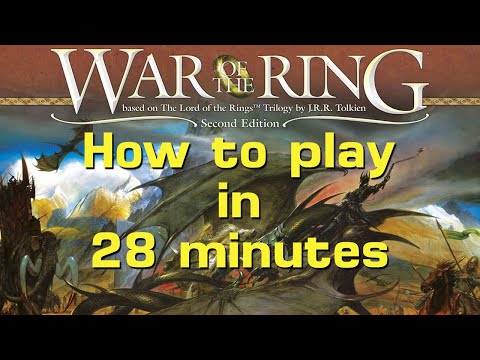




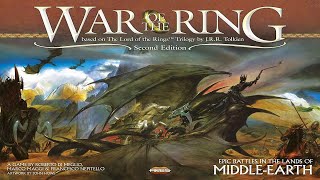




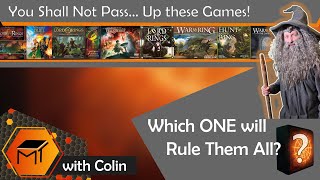






War of the Ring Deep Dive
What the Community Thinks About War of the Ring
War of the Ring stands as one of the most celebrated and ambitious board games in the hobby, consistently appearing on reviewers' lists of greatest games ever made. The community's response is nearly unanimous: this is a masterpiece of thematic design that brings Middle-earth to life in ways few games achieve. For players willing to commit to its lengthy playtime and complexity, War of the Ring offers an epic experience that stays with them long after the game ends. One reviewer noted it was the only game of similar length that they prioritize replaying, a testament to how well the design reinforces the source material.
Core Mechanics That Define War of the Ring
Action Dice and Asymmetric Decision-Making
The game's turn structure revolves around dice-based action selection, where players recover action dice each round and must decide how to allocate them. The Free Peoples player works with a limited pool, constantly facing the tension of needing to move the fellowship while also managing military defense. The Shadow player, conversely, must balance between hunting the Ring and building armies to achieve military victory. This fundamental asymmetry creates a strategic puzzle where both players operate under different rules and win conditions, yet remain deeply interconnected through the ever-present threat of pursuit and counter-action.
The Hunt for the Ring
At the heart of the game lies the legendary hunt mechanic, where the Shadow player rolls hunt dice to locate the hidden fellowship. Each successful hunt draws tiles that deal corruption and damage, pushing the Ring-bearer closer to succumbing to the Ring's influence. The system creates genuine tension because the Free Peoples player must decide between moving carefully and moving quickly. Reveal your position to move fast and risk multiple hunt rolls; stay hidden but move slowly and risk corruption accumulating. Cards from two separate decks, the Character Deck focused on fellowship abilities and the Strategy Deck with military and political actions, give both players meaningful choices about which resources to prioritize each turn.
The War of the Ring Experience
Thematic Immersion and Narrative Arc
What elevates War of the Ring above pure mechanical elegance is how thoroughly it captures the epic struggle of Tolkien's source material. The game tells a story: the Free Peoples desperately trying to reach Mount Doom while corruption creeps ever higher, the Shadow building unstoppable armies across Middle-earth, and the constant awareness that the Ring-bearer might fall to darkness at any moment. Unlike many games that feel distant from their themes, every mechanic here reinforces the narrative. The Witch King moving to hunt the fellowship is not an arbitrary rule but a visceral moment of dread. A siege at a stronghold plays out with siege cards and combat rolls, evoking the great battles of the books.
Head-to-Head Confrontation and Player Agency
This is a two-player game of constant, intimate confrontation. The Shadow player watches the Free Peoples' every move, trying to read whether the Ring-bearer is hidden or revealed, whether they're running or standing their ground. The Free Peoples player makes decisions knowing the Shadow is actively plotting against them. There is meaningful bluffing in how the Ring's position is kept secret, genuine nail-biting moments when hunt rolls come up high, and tactical depth in deciding which cards to play for events versus operations. Multiple paths to victory keep both players honest: the Free Peoples can win by destroying the Ring or achieving a military victory, while the Shadow can win by corrupting the Ring-bearer or taking strongholds. Neither player knows which path their opponent is prioritizing, creating rich opportunities for misdirection and adaptation.
What Makes War of the Ring Stand Out
Asymmetric Design Excellence
Few games balance asymmetry as successfully as War of the Ring. One player controls a vast Shadow empire with multiple armies, while the other shepherds a small fellowship of heroes. The Free Peoples' power is limited but focused; the Shadow's power is broad but difficult to concentrate effectively. This design choice means experienced players cannot simply optimize a single winning strategy and repeat it. Every game becomes a unique story where the players' relative advantages shift. A Shadow player might achieve early military dominance only to find the Ring-bearer slipping through their grasp at the last moment.
Production Quality and Table Presence
War of the Ring is a gorgeous game that commands the table. The map of Middle-earth is beautifully illustrated with evocative artwork. The tokens are substantial and satisfying to move. The hunt tiles, the fortress strongholds, the armies arrayed across regions create visual weight to every decision. This production value is not merely aesthetic; it reinforces the theme. Looking at the Shadow armies spreading across the map creates genuine dread. Watching the fellowship creep closer to Mordor builds tension. The game's physical presence mirrors the narrative stakes, making the experience feel epic and consequential.
Potential Drawbacks
Complexity and Playtime Commitment
War of the Ring is not a casual game. The rulebook is substantial, the interaction of mechanics creates surprising situations, and first playthroughs can easily stretch toward three to five hours. Players need to come prepared to invest significant time and mental energy. Teaching the game requires explaining action dice, hunt mechanics, political tracks, combat resolution, and numerous special abilities. A player who loves quick, elegant designs might find the system overloaded. The learning curve is real, and new players should expect to make mistakes their first time.
Luck Variance in Critical Moments
The game includes bag-pulling for hunt tiles, which some players find introduces unwanted randomness. While reviewers generally embrace the tension that randomness creates, it mirrors the uncertainty of warfare. Players seeking perfect information or purely strategic experiences might find the luck element frustrating at critical moments. The dice-based action selection also means that sometimes the actions you need simply don't appear on a given turn, requiring adaptation rather than execution of a predetermined plan.
If You Enjoy War of the Ring
If War of the Ring clicks for you, several other designs offer similar experiences. Star Wars Rebellion uses many of the same principles: one player controls a hidden rebel base while the other commands an empire, creating asymmetric cat-and-mouse gameplay. Twilight Struggle shares the tense two-player confrontation and the elegant use of multi-purpose cards that force constant tactical decisions. Dune Imperium offers asymmetric player powers and thematic conflict in a more compact package. For players drawn to the epic scale, Twilight Imperium Fourth Edition delivers the same sense of managing multiple pressures simultaneously. Undaunted offers lighter tactical gameplay in a historical war setting.
What Reviewers Are Saying
"War of the Ring is really the definitive epic Lord of the Rings experience. You have this giant board of all of Middle Earth and you begin the game with the fellowship having been formed in Rivendell. One side's playing the shadow and one side's playing the free peoples, and it's this game of conflict as the fellowship tries to make its way to Mount Doom. Every one of my games has been a different story and just a really rich experience."
— 3 Minute Board Games
"War of the Ring is an extremely interactive, tense and aggressive game where you're jousting back and forth with your opponent. It's a big war game that has card play. The fellowship tries to make its way to Mount Doom while the shadow player is largely trying to win a military victory. This is one of the most aggressive but just so much fun games you can play."
— Foster the Meeple
"War of the Ring is my number 10 game of all time. It's a two-player competitive game which simulates the books. One plays the free folks and the other player plays the dark side and you fight against one another. Thematically it's so well represented and the theme feels amazing. It's the type of game that requires a committed friend, somebody who's a bit more dedicated."
— Board Game Hangover