/pic5275651.jpg)



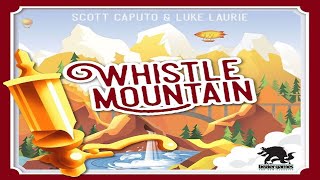









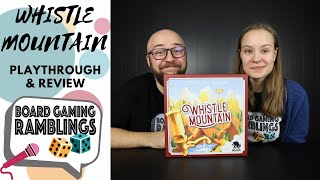








Whistle Mountain Deep Dive
What the Community Thinks About Whistle Mountain
Whistle Mountain commands respect as a sophisticated worker placement engine where every decision carries weight and no turn feels wasted. Reviewers consistently praise its mechanical elegance and thematic integration, though some find the sheer breadth of strategic options demands considerable mental effort. The game presents a compelling puzzle wrapped in a theme of industrial optimization, where players build scaffolds and machinery while managing an ever-rising flood that threatens to submerge their progress. Those who embrace the game's complexity discover rewarding turns where careful placement and resource management pay dividends; those who find themselves overwhelmed by the decision space may struggle with analysis paralysis during early plays.
Core Mechanics That Define Whistle Mountain
Worker Placement with Airship Movement
The heart of Whistle Mountain is a worker placement system built on elegant spatial constraints. Players control three airships of different sizes, which they position on a grid to activate adjacent actions and machines. What makes this tick is that the size of the airship and where it lands matter equally, you're not just choosing an action, you're solving a spatial puzzle. The grid flexibility means players can land their airships almost anywhere, so long as they respect adjacency rules. This creates an ocean-sized decision space on every turn, as nearly infinite positioning options open up compared to traditional worker placement games with discrete, pre-set slots.
Building Under Pressure: Scaffolds and Rising Water
As machines are built above the danger line, the water level rises, a visible, visceral threat that forces escalating tradeoffs. Placing meeples on scaffolds to protect them from the flood becomes a strategic consideration. The flood doesn't randomly eliminate players; it creates predictable pressure that shapes long-term planning. Workers swept into the whirlpool incur penalty points, making water management a second axis of tension alongside resource acquisition. This theming isn't window dressing; it directly informs meaningful decisions about when to build, when to protect, and when to race.
The Whistle Mountain Experience
Rewarding Puzzle Solving
Whistle Mountain satisfies players who love sandboxes with open-ended options. Each turn presents dozens of viable moves, but the consequences of those moves ripple across future turns in ways that reward foresight. Building the right scaffold in the right spot not only scores immediate points but creates opportunities for future placements that synergize with your engine. The game doesn't penalize you for playing suboptimally the way some Euros do; instead, it rewards clever observation and sequencing. This creates an experience more akin to exploring a puzzle museum than racing against opponents in zero-sum combat.
Analysis Paralysis and Analysis Rewards
The breadth of options cuts both ways. Players comfortable with quick decisions and tactical improvisation find themselves freed by the game's generosity; almost any reasonable move advances your position. Those accustomed to calculating long chains of optimization, however, may find themselves paralyzed by the volume of branching possibilities. Early plays can stretch longer than expected as players map out implications. Veterans report that knowing the machines and their activation patterns dramatically accelerates turns, transforming early-game deliberation into snappier mid-career decision-making. The first play is often a teaching game; the second play rewards pattern recognition.
What Makes Whistle Mountain Stand Out
Flexibility in Spatial Construction
Most worker placement games constrain where workers can go. Whistle Mountain unfolds on a grid where placement rules are simple but the strategic implications sprawl. Unlike games that lock you into eight pre-set actions, here the board itself evolves with every scaffolding placement, opening new activation paths for future airship positioning. This spatial dynamism means two plays of Whistle Mountain unfold with completely different board states, even when the same strategies are attempted. The game doesn't tire from sameness across plays because the physical puzzle resets and reorders itself.
Resource Economy with Teeth
Water, coal, gold, and iron don't just meter player power; they reflect scarcity. The water bar is the most visible constraint: you physically run out of space to exceed four of any resource type at turn end. This forces real discarding decisions and makes resource management a puzzle unto itself. Whistles serve as wild cards, creating moments of scarcity-driven tension. The game trusts players to balance immediate gratification against long-term positioning without resorting to heavy scoring penalties or sudden-death conditions. Watching an engine pay off, buying the right machines, playing the right cards, then executing a turn where resources multiply through clever cascading, feels genuinely satisfying because the path was difficult but navigable.
Potential Drawbacks
Loose Enough to Feel Forgiving
Some strategists dislike games where resources feel abundant and punishment feels light. Whistle Mountain errs toward generosity, there are many viable paths to solid scores, resources flow steadily, and the game rarely corners you into hopeless positions. Reviewers who prize tight economies and scarcity-driven tension occasionally found the game lacking teeth compared to heavier worker placement titles. The lack of confrontation or direct blocking means your opponents' success doesn't inherently limit your own. This openness is accessibility; to purists seeking brutal Euro optimization, it's slack.
The Board Lacks Visual Appeal
Whistle Mountain's aesthetic doesn't sing. The modular grid of scaffolds and machines creates a industrial landscape that doesn't invite the eye the way thematic games do. Components are functional rather than gorgeous, and the brown-and-gray palette prioritizes clarity over beauty. The board works, spatial relationships are easy to parse, but it never commands a room the way games with striking art direction do. This is purely a production matter and doesn't affect gameplay, but it means Whistle Mountain won't win friends on table presence alone. The game must be experienced mechanically to be appreciated fully.
If You Enjoy Whistle Mountain
Whistle Mountain shares DNA with Whistle Stop, its spiritual predecessor, though the two diverge significantly in execution. If you appreciate the core worker placement loop, especially one with spatial flavor, try Manhattan Project: Energy Empire, which offers similarly generous action economies and modular player boards. For those drawn to rising tension mechanics, games like Eldritch Horror and Gloomhaven deliver constant pressure alongside expanding options. If you crave thematic immersion alongside crunchy systems, Dominion and Terraforming Mars blend card play with engine-building satisfaction. Reviewers familiar with Kingfisher and Longshot: The Dice Game found Whistle Mountain distinct enough to own alongside them, suggesting it carves its own niche even among spatial worker placement games.
What Reviewers Are Saying
"You're placing three different air ships and you're building good spots to place your ships next to, or anyone can put their ship there. So that's kind of cool. I like it a lot. A lot of fun."
— The Dice Tower
"The decision space is like an ocean because like anytime you can play scaffolding or any kind of building out there, it's this grid that is very flexible. The rules aren't very restricting. It's like you could put things almost however you want."
— Rolls in the Family
"I find his games a little bit too loose. I found whistle mountain too loose where you'd always be flooded with resources. You could always kind of do what you wanted to do, and I found that with each play that I experienced with whistle mountain, so again I tend to like my euro games to be a little bit tighter."
— Chairman of the Board