
/pic575043.jpg)
































Alhambra Deep Dive
What the Community Thinks About Alhambra
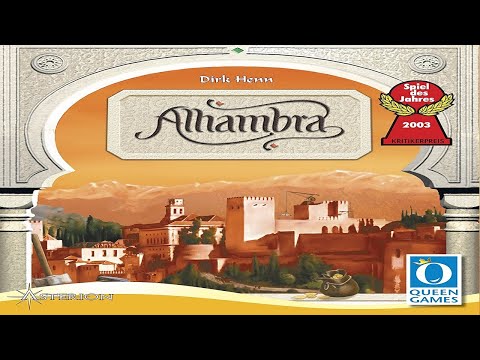
Alhambra holds a special place among board gamers as one of the great accessible Euros from the early 2000s. Reviewers consistently praise it as a well-rounded, pure strategy game that has aged gracefully over two decades. One reviewer called it "a classic at the end of the day," acknowledging its Spiel des Jahres win in 2003 as deserved recognition for a design that continues to deliver engaging gameplay to both newcomers and experienced players. The game strikes a balance between accessibility and depth that keeps drawing players back to the table, whether they are learning the game for the first time or revisiting it after years away.
Core Mechanics That Define Alhambra
Tile Placement and Tableau Building
At its heart, Alhambra is a simple tile placement game where players spend currency cards to acquire building tiles and construct their own palace complexes. Players must always be able to trace newly placed tiles back to their fountain piece, creating a natural constraint on where buildings can go. Walls serve a dual purpose: they must match with existing walls on adjacent tiles, and when players completely surround a location with walls, they earn bonus points. This creates layers of tactical decision-making, as players balance which tiles to pursue based on their long-term tableau layout while managing their available currency.
Four-Currency Card Drafting
The game's unique economy revolves around four different types of currency cards. Each round, players draft from a shared market, selecting the money cards that will give them the purchasing power they need. This element adds a push-your-luck dimension, as players must commit to specific currencies while uncertain what buildings will become available. Players who plan carefully and read the market well gain significant advantages, making card selection a critical skill that rewards forward thinking.
The Alhambra Experience
Breezy Fun with Satisfying Puzzles
Reviewers describe Alhambra as having a "real breezy fun but slightly thinky feel." The game moves quickly, with turns consisting of simple actions: taking money from the open market or purchasing a building from the building market and placing it in your palace. Despite the straightforward turn structure, the spatial puzzle of fitting buildings into your tableau keeps the mind engaged without feeling overwhelming. The pacing remains fast throughout, preventing the game from dragging while still rewarding careful consideration of placement and currency choices.
Good Competition for Tile Majorities
Throughout the game, scoring occurs three times based on who has the most buildings of each type. This creates moments of genuine tension as players compete to control majorities in gardens, towers, pavilions, and other building types. The competition feels healthy rather than cutthroat, as there are enough scoring opportunities and tile types that players can pursue different strategies. The system encourages players to watch what their opponents are collecting while planning their own path to victory, creating an engaging interactive experience.
What Makes Alhambra Stand Out
Elegant Accessibility and Longevity
What distinguishes Alhambra is its ability to welcome new players while remaining mechanically engaging for experienced ones. The core concepts of currency cards, tile selection, and placement are intuitive enough that anyone can grasp the fundamentals within a few minutes. Yet the puzzles of placement, the timing decisions around currency selection, and the subtle jockeying for majority control create meaningful strategic depth. This combination of ease of learning with rewarding strategic play has kept the game relevant and in print for more than twenty years, which speaks volumes about its enduring design quality.
Moorish Theme with Immersive Flavor
The Alhambra Palace of southern Spain provides thematic resonance that elevates the game beyond abstract mechanics. One reviewer noted that the historical flavor text creates immersion, transporting players into the role of tile-laying artisans beautifying a royal palace. The symmetry between the game's puzzle and the historical context of palace construction makes the experience feel coherent, as if players are actually participating in the careful artistic work of embellishing the walls of a royal residence rather than simply moving abstract components around.
Potential Drawbacks
Expansions and Complexity Management
With a substantial collection of expansions available, newer players may feel uncertain about which modules to add without muddying the elegant simplicity that makes the base game special. While some players are tempted to add spice to the game through expansions, the risk exists of overcomplicating what works so well in its pure form. Thoughtful consideration is required when deciding whether to layer additional mechanics onto a design that already delivers satisfaction in its fundamental version.
Luck in Currency Card Drafting
While skilled players can mitigate variance through careful reading of the market and strategic currency selection, the draft of available money cards introduces an element of luck that occasionally forces compromises on what players would ideally purchase. Some players may find that unfavorable currency distributions in a given round limit their options, though this mechanism also prevents any single player from running away with the game through superior resource management.
If You Enjoy Alhambra
Players who love Alhambra often gravitate toward other accessible Euro games that balance spatial puzzles with engaging strategic systems. Carcassonne, another tile placement classic, offers similar intuitive mechanics and surprising depth. Ticket to Ride shares Alhambra's emphasis on accessible yet rewarding card management and route construction. For those seeking more economic decision-making, Puerto Rico offers a deeper dive into role selection and resource optimization, though with greater complexity. Kingdom Builder and Marrakech provide thematic tile-placement experiences with different spatial constraints, while Splendor captures that same satisfying arc of card collection and economic development.
What Reviewers Are Saying
"It is a classic South Alhambra, and he ended up being a classic it is a classic."
— Board Stupid
"This one puts me right into the Palace of Ivor every time I play it, and it is a Zorro the even from the tiling techniques of taking tiles."
— Beyond Solitaire
"It has a real breezy fun but slightly thinky feel and definitely good competition for these majorities as well so definitely a well-rounded pure style game that's definitely going to hold up well."
— Chairman of the Board