
Game Info
Players
2-8
Age
7+
Playtime
15 min
Collection
Ratings
Creator Score
Mechanic profile
Not enough video data yet
Vibe profile
Not enough video data yet
Description
No description available.
Featured Videos


Ask a Rules Question
All mentions
Browse transcript mentions, sentiments, pros/cons, mechanics, topics, quotes, and references.
Total mentions: 10
This page: 10
Sentiment:
pos 6 ·
mix 1 ·
neu 1 ·
neg 1
Showing 1–10 of 10
Video SCiYQt9-Y5o
Grant Lyon Top List at 0:27 sentiment: positive
video_pk 83648 · mention_pk 211261

Click to watch at 0:27 · YouTube ↗
Overall sentiment (raw)
positive
Pros
none
Cons
none
Thematic elements
Comparison games
none
Mechanics (from transcript analysis)
Mechanics unknown.
Video topics + discussion points
No key topics recorded for this video.
Quotes (from this video)
- If you're doing some last minute Christmas shopping, Target has a lot of board games on their shelves these days, but which ones are actually good?
- Telestrations is the best drawing game out there. I've had so many memorable nights with that game. It's one of the games that got me into games.
References (from this video)
No references stored for this video.
Video boV4_W4ztuc
The Dice Tower Analysis at 10:57
video_pk 81649 · mention_pk 203752
Click to watch at 10:57 · YouTube ↗
Pros
none
Cons
none
Thematic elements
Comparison games
none
Mechanics (from transcript analysis)
Mechanics unknown.
Video topics + discussion points
No key topics recorded for this video.
Quotes (from this video)
- the nomination lists are more important than the awards because you can go out and just buy any of these and play them.
- We're nominating them now, and as I always say, the nomination lists are more important than the awards because you can go out and just buy any of these and play them.
- These are going to be games that are fantastic to teach to someone who is not necessarily part of our fantastic little world of games. Something to get them in the door, get them excited about board gaming, get them introduced to all these amazing things you can do on the tabletop now.
- And so, we got together a group of 50 plus people, that's Dice Tower staff and the other reviewers, different reviewers, and we vote on the nominations, and so we're going to present them to you.
- Well, too bad to each of those nominations because you have to go up against the other four. That is a tough slate.
- if you enjoy heavy strategy games, you were eating well in 2024.
- This is a category for games that play really well with two. It doesn't mean they are exclusively two, although that's usually what is nominated, but it's just a great game for two players.
- This is something that for the last several, several years has become an increasingly large segment of the board gaming hobby.
- Not only are those like pretty strong solo games, but they're also some of the games that were mentioned in top lists of last year. That shows where the category has come.
- So, these are games that do something different. We see a lot of the same stuff, which isn't necessarily a bad thing because same can be good and comforting. But, something that does something unusual or different or feels fresh, here's some games that meet that category.
- My goodness, you now have to ask every time you sit at the table, 'Wait, is this cooperative or competitive?' That's something that was unheard of, you know, a decade ago even.
- I used to not really appreciate how good party games can be.
- So, this is going to be just that implementation of the theme, really immersing you into this world and this setting, uh doing something cool, or maybe just showing you a different kind of light on a thing that you're familiar with.
- I always find it odd how the new designer category often also every year seems to dominate best games of the year category, and I like that a lot.
- Artwork is something that just walking by a table, you can convince me to play a game just by showing me a good box cover. And I think that it's something that can We talked about the theme, can really sell that, but it's that first entry point in the game, and can grab your attention.
- Games are a total production, and what this category is about is saying, 'This is the most impressive full productions of a board game we've seen this year.'
- Now, in this category, we have 10 um 10 nominees, and they kind of encompass the whole package here. You know, we're we're looking at the mechanisms, we're looking at the theme, we're looking at the artwork, just all of it. Which one brought its best to the table?
- Games that are fantastic
- Then our next one is Codenames, a game that really brought party games back into the light, especially word team party games.
- This has sold a gazillion copies.
- And that is Pandemic Legacy Season 1.
- But this is the game. It wasn't the first legacy game, but it was definitely the one that people that kind of exploded and changed
- changing the landscape.
- Talk about a game that truly shook everything up.
References (from this video)
No references stored for this video.
Video W8i0khf2a54
The Board Game Garden Other at 49:01:52 sentiment: positive
video_pk 81299 · mention_pk 201003

Click to watch at 49:01:52 · YouTube ↗
Overall sentiment (raw)
positive
Pros
- Had quite a bit of fun with this one.
- Fun real-time building game where you play with a partner and have to build the thing that's on the card.
Cons
none
Thematic elements
Comparison games
none
Mechanics (from transcript analysis)
- Real-time building — A fun real-time building game where you play with a partner and have to build what's on the card. One person has the card, the other is building it, and the person with the card explains what to grab and build.
Video topics + discussion points
No key topics recorded for this video.
Quotes (from this video)
- This is basically a board game industry kind of conference thing that is presented and run by Asthma Canada.
- I kind of think of this as the Canadian Gamma, which gamma is kind of like the industry board game industry convention conference that is held every year in the US, but we kind of have a little mini version for us here in Canada where board game publishers as well as retailers and media all come together to just talk new games, better ways to help support the board game industry here in Canada.
- So, we're here. Of course. There he is.
- We've all been the first giants content creators in the wild behind the bushes in their natural habitat. In their natural habitat or oi none of that things batteries.
- Guys, I am obsessed with this card game. It is fantastic.
- This is the final version of nature. I believe this is like the retail edition.
- As someone that loves like potions, witchy things, this is a party game that I could get down with.
- This is a fantastic game if you haven't played it yet. Such a good hand management card game.
- This is a very fun game. If you guys have seen me, I've talked about Ohanami quite a bit, which is a game where you're creating gardens of cards in a line that are either having to be in uh like ascending or descending order. This has that kind of vibe, but plays in a very different way.
- Katan on the Road. I actually just did a how to play of this game and it's actually quite enjoyable.
- Toil and troubles. Toil and troubles. This is a game from grandpa beck.
- I love the like magical kind of uh forest creature kind of vibe to it.
- Dixit kids, which is very cute. I love this.
- One thing, one like big highlight for me was just being able to hang out with friends, either local friends. All of us are very local, but it is really nice to have some specific thing that brings us all together, to be able to hang out and play games.
- Obviously, like I mentioned, I played Denup a ton. That was a huge highlight for me.
- Remember, you are somebody's reason to smile.
References (from this video)
No references stored for this video.
Video f-KV94HuXdQ
kovray Event Coverage at 10:35 sentiment: positive
video_pk 81129 · mention_pk 199992

Click to watch at 10:35 · YouTube ↗
Overall sentiment (raw)
positive
Pros
- Fun team-based racing
- Enjoyable challenge mode
- Novel partner combinations
Cons
none
Thematic elements
- LEGO building
Comparison games
- LEGO
Mechanics (from transcript analysis)
- Competitive race — Teams race against each other to build.
- Cooperative Building — One player teaches and the other builds within a team.
- Role assignment — Players take on specific roles (teacher/builder).
Video topics + discussion points
No key topics recorded for this video.
Quotes (from this video)
- It's a gem.
- It's a bop.
- It's just this combo-tastic game where there's a bunch of different actions happening that you'll have to go through.
- It is such a clever game that is still very unnatural because you're trying to create gaps with tiles, and my brain despises that cuz I like when things go together nicely.
- It is the silliest game because what you're trying to do is you have stacks of cards in front of you in different stacks, and you're trying to get each of those stacks to have all of one item.
- This is such a good small card game from Capstone.
- The art on Dixit is just unparalleled.
References (from this video)
No references stored for this video.
Video 2jjyFAtASJM
Discussion at 0:02 sentiment: positive
video_pk 67658 · mention_pk 163840
Click to watch at 0:02 · YouTube ↗
Overall sentiment (raw)
positive
Pros
- It is pretty fun.
Cons
none
Thematic elements
- Building LEGO shapes based on card silhouettes
Comparison games
none
Mechanics (from transcript analysis)
- Card drafting/drawing — Cards with silhouettes dictate the shapes to be built.
- Pattern Building — Players attempt to build specific shapes based on cards.
- Set Collection — Players collect points by successfully building the described shapes.
- team-based — Players play in teams, with one player describing and the other building.
Video topics + discussion points
No key topics recorded for this video.
Quotes (from this video)
- Woah, is that a LEGO board game?
- It's called Brick Like This.
- You play it in teams and it is pretty fun.
References (from this video)
No references stored for this video.
Video l4X49Ujv2Fo
Let's Table It Review at 0:14 sentiment: positive
video_pk 64291 · mention_pk 157741
Click to watch at 0:14 · YouTube ↗
Overall sentiment (raw)
positive
Pros
- Accessible for kids and non-gamers
- Co-op mode adds a low-pressure option
- Quick playtime makes it versatile for gatherings
- LEGO-based appeal is strong for families
Cons
- Timer-centric play may be stressful for some groups
- Simpler than some other party games
- May rely heavily on verbal communication; groups with quiet players may struggle
Thematic elements
- Communication under pressure; spatial reasoning
- LEGO-inspired team-based building under time pressure
- Casual, instructional, family-friendly
Comparison games
- Monkey Palace
Mechanics (from transcript analysis)
- Analog social interaction — Requires real-time communication and quick decision-making under pressure.
- Challenge cards — Optional cards add extra restrictions to increase difficulty for experienced players while keeping it accessible for newcomers.
- Co-op mode — A 10-minute cooperative variant where teams work together to maximize points with a shared timer.
- Cooperative Game — A 10-minute cooperative variant where teams work together to maximize points with a shared timer.
- Describe-and-build communication — One player draws a card with a silhouette and explains how to build it to their teammate without showing the card; the goal is for the teammate to replicate the silhouette.
- Point-based silhouette scoring — Teams earn points based on how well their completed shape matches the silhouette; higher points for more complex shapes.
- timed rounds — A sand timer gives 30 seconds for other teams to complete their silhouette after finishing.
Video topics + discussion points
No key topics recorded for this video.
Quotes (from this video)
- The silhouette has to match exactly to score.
- This is definitely a realtime game.
- If you're looking for a light, interactive, and genuinely fun LEGO based game, this one's worth checking out.
References (from this video)
No references stored for this video.
Video -3AmSjhHY-0
Watch It Played Rules Teach at 0:12 sentiment: neutral
video_pk 63820 · mention_pk 157331
Click to watch at 0:12 · YouTube ↗
Overall sentiment (raw)
neutral
Pros
- Supports 2-8 players
- Uses Lego bricks and emphasizes communication
- Optional challenge cards add extra depth
- Kid-friendly variant for 2-3 players
Cons
none
Thematic elements
- communication and building teamwork
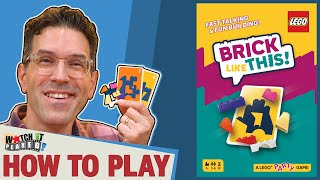
- teams build Lego brick models guided by an instructor
- instructional demonstration
Comparison games
none
Mechanics (from transcript analysis)
- Action Timer — A 30-second sand timer limits the building phase per round.
- Compound Scoring — Each shape card has a value on its back that determines minimum bricks and the points for a correct build.
- Hidden shape cards — The shape card is kept hidden from the builder; only the instructor knows the required model.
- Instructor-guided clueing — The instructor sees a hidden shape card and verbally guides the builder on which bricks to collect and how to assemble them.
- Optional challenge cards — Optional decks add coins that increase points and difficulty; challenges must be followed during a round.
- Penalties for rule-breaking — If a rule is broken, the builder must take apart the model and restart, costing time.
- Round structure and role rotation — The game runs six rounds with three steps per round; roles reassign each round and different players may observe.
- Scoring and card retention — If a model exactly matches its card, the team keeps the shape card and earns its points; otherwise the card is returned.
- Shape card values and scoring — Each shape card has a value on its back that determines minimum bricks and the points for a correct build.
- timer — A 30-second sand timer limits the building phase per round.
Video topics + discussion points
No key topics recorded for this video.
Quotes (from this video)
- No, directly on top.
- colors of the Lego bricks doesn't matter. All that matters is that you get the right shapes.
References (from this video)
No references stored for this video.
Video WAnGwvF3nZs
Rahdo Runs Through Top 12 List at 54:37 sentiment: negative
video_pk 42356 · mention_pk 128524

Click to watch at 54:37 · YouTube ↗
Overall sentiment (raw)
negative
Pros
- fun art and theme for lego fans
Cons
- engineer players easily solve; casual players struggle
- hype exceeded experience; gimmick-heavy
Thematic elements
- building and pattern matching via blocks
- lego-inspired puzzle party game
- light, whimsical
Comparison games
- Monkey Palace
Mechanics (from transcript analysis)
- communication challenge — engineer-level players can solve patterns via rapid communication
- team-based puzzle solving — describe patterns and have teammates assemble bricks
Video topics + discussion points
No key topics recorded for this video.
Quotes (from this video)
- it's distilling the core essence of Great Western Trail down
- rules are confusing because it's based off of feelings
- the biggest disappointment is the thing that truly makes Seven Wonders special
- I spilled beer across pediquette and it disintegrated the components
- this is the ultimate journey, not the destination
- the cardinal sin that a co-op game can do: no scalable difficulty
References (from this video)
No references stored for this video.
Video zrKH9wzlO9E
Game Night Picks - Pair Of Dice Paradise Playthrough at 0:06 sentiment: mixed
video_pk 40317 · mention_pk 122006
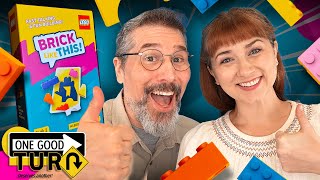
Click to watch at 0:06 · YouTube ↗
Overall sentiment (raw)
mixed
Pros
- Engaging two-player puzzle with a strong emphasis on communication
- Accessible and humorous; appeals to casual and family audiences
- Live-play format fosters spontaneity and entertaining miscommunications
Cons
- Parts can be fiddly and fragile, which adds frustration
- Difficulty spikes and variable visibility can be stressful
- Not ideal for players who dislike meticulous, step-by-step construction
Thematic elements
- construction, communication under pressure, collaborative competition
- A two-player, timer-driven build-off where players assemble Lego-inspired shapes under constraints, with one player unable to visually confirm the final design.
- structured challenges and improvised dialogue in a live-build contest
Comparison games
none
Mechanics (from transcript analysis)
- card_driven_difficulty — Difficulty levels are dictated by cards that escalate the required shapes and complexity as rounds progress.
- challenge_cards — Special cards introduce new constraints or tasks that complicate the build and scoring.
- Compound Scoring — Points are awarded for successful builds, with additional points awarded through challenge cards.
- limited_vision — One player sees the target while the other follows verbal instructions to recreate it.
- point_scoring — Points are awarded for successful builds, with additional points awarded through challenge cards.
- timed_rounds — Players alternate building within a preset time, scoring on completed models and meeting card requirements.
Video topics + discussion points
No key topics recorded for this video.
Quotes (from this video)
- I am so ready to carefully follow instructions. I was a straight A student.
- We're gonna brick like this so hard.
- Bob's your uncle.
- Time is happening. Can you be a team player?
- I did it. I did it.
- 49 points is not bad.
- I am scared. And I'm ready.
- This is so stressful.
- Not that one.
- Oh my gosh. Oh my gosh.
- That deserves another. It's like we've planned that on purpose.
- Two good turns in a row.
References (from this video)
No references stored for this video.
Video bFpzATDYd6A
TheGameBoyGeek - Hi Quality Hi Energy Board Game Reviews Discussion at 1:22 sentiment: positive
video_pk 33572 · mention_pk 99832

Click to watch at 1:22 · YouTube ↗
Overall sentiment (raw)
positive
Pros
- family-friendly and approachable
- lego-themed charm
Cons
- no deep mechanics discussed in the clip
Thematic elements
- lego/brick-building
Comparison games
none
Mechanics (from transcript analysis)
- Tile Placement — players place bricks/tiles to create structures or patterns
Video topics + discussion points
No key topics recorded for this video.
Quotes (from this video)
- Gen Con was awesome, but as always, the best part wasn't the games, it was the people, reconnecting with old friends, making new ones, and sharing this amazing hobby together.
References (from this video)
No references stored for this video.
Transcript Navigation
Showing 1–10 of 10