













Rowdy Partners Deep Dive
What the Community Thinks About Rowdy Partners
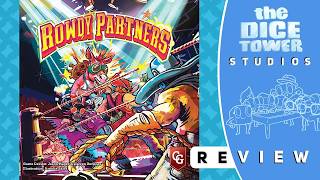
Rowdy Partners has earned strong approval across the board gaming community, with reviewers consistently praising its commitment to theme and its fresh take on trick-taking mechanics. The consensus is clear: this wrestling-themed partnership game successfully delivers on both fronts. While it plays at two to four players, most reviewers agree the four-player team-based format shines brightest, creating moments of genuine teamwork and thematic roleplay. Even when played at other counts, the game maintains its charm through clever design accommodations. Some reviewers note occasional concerns about game balance under certain hand distributions, but these concerns rarely outweigh the game's overall appeal.
Core Mechanics That Define Rowdy Partners
Trick-Taking with Damage Resolution
At its heart, Rowdy Partners is a trick-taking game, but with a wrestling-flavored twist. Players follow suit if able, and the player who plays the lowest card wins the trick. However, winning matters in a different way than traditional trick-taking: the value of your winning card determines the damage dealt to your opponent. Win with a one, and you deal a single point of damage. Win with a five, and you deal five. This reframes the strategic calculus entirely. Players must balance the desire to win tricks against the need to minimize their opponent's health damage. Additionally, when multiple players play cards of the same value, those cards flip face down and are eliminated from the trick, potentially opening up new winning conditions. This counter-mechanism creates dramatic reversals mid-trick.
Team Partnership and Tag-In Mechanics
In the four-player game, players form two teams of partners who share a combined health pool and communicate through an in-ring and out-of-ring position system. Only the wrestler in the ring takes damage. Teams can use tag tokens earned by progressing up the pop track to swap their in-ring wrestler with their partner, protecting the damaged player while bringing fresh health into play. This mechanic creates genuine tactical depth: do you rotate to save your partner from repeated damage, or hold the tag token for a more critical moment? The tag system transforms the trick-taking experience into something closer to tag-team wrestling, where partnership becomes as important as hand strength.
The Rowdy Partners Experience
Theatrical Energy and Roleplay Moments
Playing Rowdy Partners feels less like a cerebral card game and more like hosting a wrestling spectacle. The wrestler characters, with names like Dynamite, Amazing Grace, and The Wretch, come with thematic flavor that invites players into the world. Winning a trick with a well-timed counter-play feels like landing a finishing move. Tagging your partner in at just the right moment creates genuine shared celebration. The health tracking and pin zones (where opponents must overcome increasingly difficult damage thresholds to be knocked out) keep everyone engaged in the narrative. Even the terminology reinforces the theme: the ring, the damage track, the pin zone. This thematic saturation transforms what might otherwise feel mechanical into something memorable.
Interactive Collaboration Within Competition
The team-based format creates a unique social dynamic. You are simultaneously competing and collaborating. Partners must coordinate strategy through hand management and signal-reading without explicit communication. When your teammate lands a trick and swaps into position, you feel the weight of their trust as you take your turn in the ring. The shared pop track builds resources that benefit the entire team, encouraging both individual brilliance and collective planning. This creates moments of genuine tension: your partner is taking damage, and you're hoping your hand develops the cards needed to help them. The combination of partnership bonding and team victory delivers satisfaction that extends beyond the typical trick-taking experience.
What Makes Rowdy Partners Stand Out
Thematic Integration That Actually Works
Rowdy Partners pulls off what many trick-taking games attempt but few achieve: a theme that feels intrinsic to the mechanics rather than pasted on top of them. The wrestling setting isn't window dressing. It justifies the team structure, explains the health tracking, validates the tag-in system, and makes the lowest-card-wins rule intuitive. Health representing wrestler endurance, the ring position matching wrestling roles, and the pop track earning signature moves all reinforce the theme naturally. This thematic coherence means new players grasp the game quickly because the fiction explains the rules, and experienced players stay engaged because the theme keeps rewiring their expectations in fresh ways.
A Genuine Alternative to Standard Trick-Taking
Reviewers frequently note that Rowdy Partners stands apart in a crowded space of trick-taking games precisely because it leans so hard into partnership and theme. Most trick-taking games focus on individual play or rely on traditional trump mechanics. Rowdy Partners instead commits to tag-team wrestling as its core identity. The combination of the in-ring/out-of-ring position system, the shared pop track between partners, and the asymmetric wrestler powers creates a genuinely different strategic puzzle from Seven Wonders Duel, The Lord of the Rings, or other partnership trick-takers. It feels like a board game, not merely a card game, because the physical board, tracks, and token system work together to create something larger than cards alone.
Potential Drawbacks
Hand-Dependent Variance and Luck of the Draw
Like many trick-taking games, Rowdy Partners can suffer when one team receives a significantly stronger hand. With no trump suit to create comeback opportunities, a team holding mostly low cards can find themselves unable to stem the tide of damage. Reviewers note that certain rounds can feel predetermined before they begin if one side receives a hand full of ones and twos while the opponent has higher values. While the health track's pin zones create a catch-up mechanism that requires escalating damage to finish an opponent, bad hands can still feel frustrating. The shared pool of cards (eight to each player, four burned) means luck plays a role that can override positional strategy and partnership communication in some scenarios.
Complexity and Fiddly Rules at Non-Four-Player Counts
While the four-player game flows naturally, the two and three-player variants introduce the headliner system and manager card pyramids that feel disconnected from the core theme and add cognitive overhead. The asymmetric boards and revealed card pyramids (similar to Seven Wonders Duel) increase visible information and decision space in ways that can slow the game. Reviewers report that two and three-player games feel less energetic, more cerebral, and lose some of the cooperative energy that makes the four-player experience memorable. New players joining at lower player counts may struggle to grasp why these alternative rule sets exist, and experienced players may find themselves preferring a different trick-taking game for two or three players rather than adapting to these variants.
If You Enjoy Rowdy Partners
Players who enjoy Rowdy Partners's team-based structure will find similar satisfaction in Seven Wonders Duel, though its Civilization theme and tableau-building focus differ significantly. Those drawn to partnership and cooperative-competitive balance should explore The Lord of the Rings: The Card Game for a different flavor of coordinated play. The wrestling theme and asymmetric character powers echo games like Gloomhaven and other character-driven experiences, though those games emphasize campaign play over quick trick-taking. For players specifically seeking more partnership trick-taking, options remain limited, making Rowdy Partners a unique offering in a space that could use more innovation.
What Reviewers Are Saying
"It's a team-based card game with a great theme attached to it with some nice new elements, keeping it more interesting and more than just, you know, a card game, per se."
— Let's Table It
"There's a plethora of trick taking games being released, but I felt like this one stood out. It has a theme which almost no trick taking games do."
— The Dice Tower
"I think anybody who's like really looking for a sweet theme will really really like this one."
— Before You Play