
Game Info
Collection
Your Tier
Loading…
Mechanic profile
Not enough video data yet
Vibe profile
Not enough video data yet
Description
No description available.
Featured Videos


Ask a Rules Question
All mentions
Browse transcript mentions, sentiments, pros/cons, mechanics, topics, quotes, and references.
Total mentions: 3
This page: 3
Sentiment:
pos 2 ·
mix 1 ·
neu 0 ·
neg 0
Showing 1–3 of 3
Video _0Ga62XZuCw
Board Gaming Ramblings Review at 8:45 sentiment: positive
video_pk 83738 · mention_pk 211562

Click to watch at 8:45 · YouTube ↗
Overall sentiment (raw)
positive
Pros
- Really good.
- Very interesting game to play more.
- Easy keep.
Cons
- Was so bad at the game.
- Rules not that complicated but is complicated as a trick-taking game.
- Hard to prepare for what's smart.
- Feels a little unpredictable.
Thematic elements
Comparison games
none
Mechanics (from transcript analysis)
- Card Drafting — Players draw cards from a reserve to influence trick outcomes.
- Set Collection — Bonus points are awarded based on specific combinations of tricks and false tricks.
- Trick-Taking — A trick-taking game with the added layer of 'false tricks'.
Video topics + discussion points
No key topics recorded for this video.
Quotes (from this video)
- And you are watching Board Gaming Ramblings.
- We decide whether to keep them or cull them.
- Many good games have to go, and many good games have to stay.
- It's a double keep.
- It's a double cull.
References (from this video)
No references stored for this video.
Video TP-p0UBmm_w
Board Gaymes James Playthrough at 0:00 sentiment: mixed
video_pk 64791 · mention_pk 158285
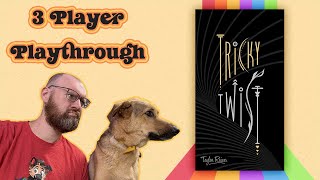
Click to watch at 0:00 · YouTube ↗
Overall sentiment (raw)
mixed
Pros
- Beautiful card art and vivid components
- The game has interesting twists on trick-taking mechanics
- Fun thematic bonuses (alien, Galileo, Inquisitors)
Cons
- Rules are confusing and complex; the five-card setup adds unnecessary complexity
- Scoring system can be ambiguous and hard to follow
- Needs clearer instruction or examples
Thematic elements
- Competitive trick-taking with probability and color/suit matching
- Abstract trick-taker with variable bonus and scoring cards; themed around alien/galilean/Inquisitors cards
- Abstract, card-based scoring with decorative imagery
Comparison games
- The Crew (cooperative trick-taking)
- The Lord of the Rings (cooperative trick-taking)
Mechanics (from transcript analysis)
- Bonus and scoring cards management — Eight bonus cards are revealed and set nearby; certain bonuses apply to scoring and tactics.
- Bonus card purchases and usage — Collecting a seven allows taking a bonus card with specific effects (reversing a trick, changing status, extra points).
- Compound Scoring — Edge scoring depends on matching the revealed scoring cards with the four variable bonus cards.
- End-of-round scoring based on suits and odd/even values — Points are awarded according to total tricks, odd/even number cards, and suits dominance; some bonuses depend on odd/even cards.
- False tricks vs real tricks — Tricks that do not win must be tracked and regulate scoring; false tricks can be redeemed or rearranged via bonus cards.
- Five-card reserve and draw from pile — Dispose five cards randomly from the draw; players can pick up or interact with the reserve.
- Multi-Use Cards — Collecting a seven allows taking a bonus card with specific effects (reversing a trick, changing status, extra points).
- Pattern matching between scoring cards and variable bonuses — Edge scoring depends on matching the revealed scoring cards with the four variable bonus cards.
- Trick-Taking — Players must follow the leading suit if possible; otherwise play a non-follow card.
- Trick-taking with must-follow rule — Players must follow the leading suit if possible; otherwise play a non-follow card.
Video topics + discussion points
No key topics recorded for this video.
Quotes (from this video)
- This is a trick taker.
- I really like Galileo.
- Oh, they're pretty.
- This is an interesting game, but these rules are very, very bad.
- I had a lot of fun kicking the Inquisitors over to the tea room.
- I bought the alien one.
References (from this video)
No references stored for this video.
Video aAsnzyKK7UM
The Dice Tower Review at 0:40 sentiment: positive
video_pk 63896 · mention_pk 157415
Click to watch at 0:40 · YouTube ↗
Overall sentiment (raw)
positive
Pros
- clever twists on classic trick-taking that add mitigation and decision meaningfulness
- production quality is strong with durable, decorative cards
- accessible to a wider audience while retaining strategic depth
- quick rounds and modular bonuses offer varied play experiences
Cons
- iconography and bonus-card effects can be confusing at first
- teaching the system, especially the bonuses and seven-powers, requires a thorough rules explanation
- some players may view the bonuses as optional clutter rather than integrated hooks
Thematic elements
- trick-taking with misdirection and scoring puzzles
- 1920s New York, stylized Prohibition-era urban setting
- abstract, rules-driven puzzle with modular bonuses
Comparison games
- Short Zoot Suit
- Sears Catalog
Mechanics (from transcript analysis)
- bonus/bonus-card deployment — bonuses collected via seven cards (lightning bolt) grant varying abilities or scoring opportunities
- Deck Manipulation — each player removes five cards from their initial hand to form a draw deck they may draw from between tricks
- false/trick control (false tricks) — players may off-suit play to create false tricks that are kept face-up and counted separately from regular tricks
- personal draw deck customization — each player removes five cards from their initial hand to form a draw deck they may draw from between tricks
- round termination and draw decisions — before a trick, players may draw from their personal deck; if a player cannot continue, the round ends and scoring occurs
- round-based scoring with target parity — rounds consist of a fixed number of tricks; points are awarded for regular tricks and for matching false tricks with bonuses
- Trick-Taking — players follow suit when possible; highest card of lead suit wins the trick and collects the cards
Video topics + discussion points
No key topics recorded for this video.
Quotes (from this video)
- Tricky Twist. A high score of an 8.5. Give this one a seal of excellence from us here.
- I think they're both really nice twists.
- I love when you can end a round and you have, you know, four tricks face down, four cards face up. That feels so good.
- If you like trick-taking games, you absolutely should try it.
References (from this video)
No references stored for this video.
Transcript Navigation
Showing 1–3 of 3