
Game Info
Collection
Ratings
Creator Score
Mechanic profile
Not enough video data yet
Vibe profile
Not enough video data yet
Description
No description available.
Featured Videos

Ask a Rules Question
All mentions
Browse transcript mentions, sentiments, pros/cons, mechanics, topics, quotes, and references.
Total mentions: 7
This page: 7
Sentiment:
pos 7 ·
mix 0 ·
neu 0 ·
neg 0
Showing 1–7 of 7
Video V6RrASFEk0c
The Discriminating Gamer Top List at 5:50 sentiment: positive
video_pk 99356 · mention_pk 276204

Click to watch at 5:50 · YouTube ↗
Overall sentiment (raw)
positive
Pros
- Fun competitive gameplay
- Strong immersion into the Game of Thrones IP
- Great artwork
- Successfully translates the IP to gameplay
Cons
none
Thematic elements
- Game of Thrones
Comparison games
- Game of Thrones books
- Game of Thrones TV show
Mechanics (from transcript analysis)
- Competitive play — This one is a competitive game. You each kind of have your own player board.
- Player vs. Player — You are competing against each other. You have allies that come out on a board that that that people are trying to defeat. Um and you're trying to go after each other players kind of mastermind.
Video topics + discussion points
No key topics recorded for this video.
Quotes (from this video)
- So, let's go ahead and jump right into it.
- It's kind of a fun random uh fantasy borderline horror game and I really really enjoy it.
- It is just an incredibly fun and innovative game.
- It's a great game of trying to figure out who you can trust and and when to backstab and how to avoid a backstabbing and all sorts of great things.
- Time flies like an arrow, but fruit flies like a banana.
References (from this video)
No references stored for this video.
Video qw04Em0Qd7A
Stonemaier Games Discussion at 7:12 sentiment: positive
video_pk 82235 · mention_pk 206615

Click to watch at 7:12 · YouTube ↗
Overall sentiment (raw)
positive
Pros
none
Cons
none
Thematic elements
Comparison games
none
Mechanics (from transcript analysis)
Mechanics unknown.
Video topics + discussion points
No key topics recorded for this video.
Quotes (from this video)
- One of Aaron's favorite games.
- Having Walter in a in a closed, secure place with familiar smells and items will help reduce stress during the move.
- maybe I'll move some of my clothes first so he can sit on them and and be near something that smells familiar to him uh during the move.
- And if you can, take a second, if you haven't already, look at the survey down in the description below.
- Three questions about games that you've already played.
- Only answer for games that you have already played and they will impact something that I showcase in April, what I'm currently calling the power rankings.
References (from this video)
No references stored for this video.
Video rdUrFmAWz7Y
The Discriminating Gamer Top 30 List at 0:43 sentiment: positive
video_pk 81816 · mention_pk 204517

Click to watch at 0:43 · YouTube ↗
Overall sentiment (raw)
positive
Pros
- great artwork
- fun deck-building with deck interactions
- cutthroat competitive play
- house-specific cards and alliances add depth
Cons
none
Thematic elements
- political intrigue and cutthroat competition between houses
- Game of Thrones universe with rival houses
- deck-building card-driven conflict with house-specific agendas
Comparison games
- Legendary: A Game of Thrones (other Legendary games)
Mechanics (from transcript analysis)
- Deck Building — players acquire and play cards to recruit allies and defeat masters while competing with others
- deck-building — players acquire and play cards to recruit allies and defeat masters while competing with others
- house-alignment and alliances — players align with specific houses and use house-specific cards and strategies
Video topics + discussion points
No key topics recorded for this video.
Quotes (from this video)
- This one is cutthroat competitive.
- Essentially this is a riff on Pandemic but it's so much more than just a Pandemic game.
- I love the exploration mechanic and you're actually building out the board it's evolving.
- no dice. I mean, you can play it with dice, but what you can do is you actually have a deck of cards and at the bottom you have different rows. And so, for different things, you can determine okay oh I got that number so it means this.
- the creepy claustrophobic feel of Nemesis. It's a scary scary game
References (from this video)
No references stored for this video.
Video PluDn42znqA
Analysis at 0:03 sentiment: positive
video_pk 79408 · mention_pk 192814
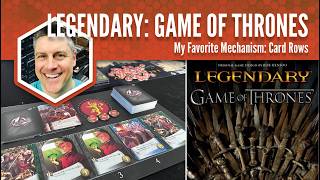
Click to watch at 0:03 · YouTube ↗
Overall sentiment (raw)
positive
Pros
- The dynamic central card row lends itself to interesting competitive play.
- Appreciates the private card market for accessibility and readability of card text.
- Did not miss competing over cards in a shared market.
- Liked the mix of a private card market and the dynamic shifting row in the middle.
Cons
none
Thematic elements
Comparison games
- Legendary the Marvel version
- Legendary the Aliens version
- Wingspan
Mechanics (from transcript analysis)
- Card Rows — Discusses two distinct uses of card rows: a dynamic central row for interaction and a private card market for acquisition.
- Central card row — A dynamic row in the center of the table where allies and events appear, leading to interaction.
- Deck Building — Mentioned as a common mechanic in similar games, with a contrast drawn to how this game handles its market.
- Private market — The game features a private card market on each player's mat for card acquisition.
Video topics + discussion points
No key topics recorded for this video.
Quotes (from this video)
- Hey, I'm Jamie from Stonemaier Games
- My favorite mechanism in the game Legendary Game of Thrones
- I went into assuming that it would be a cooperative game or at least a semi-cooperative game like Legendary the Marvel version, the Aliens version that I really love.
- But it is not. This is a competitive game.
- So yeah, two different uses of card rows in this game. One very interactive and dynamic, one less dynamic, a lot less interactive, but it was kind of nice.
References (from this video)
No references stored for this video.
Video lu1ExjNRkQs
The Discriminating Gamer Review at 0:15 sentiment: positive
video_pk 34505 · mention_pk 102744

Click to watch at 0:15 · YouTube ↗
Overall sentiment (raw)
positive
Pros
- Fresh competitive variant within the Legendary framework
- Dedicated hero deck per player enables rich deck-building and combos
- Artwork is evocative and thematically aligned with the source material
- Engaging and tight play with meaningful strategic choices
- House sigil board customization adds flavor
Cons
- Terminology inconsistencies between the board and the rulebook (guards vs defenders)
- Hero deck terminology refers to 'protagonist pile' in places, causing confusion
- Ally deck naming can be confusing, since 'ally' can refer to enemies in some contexts
- Rulebook and board could be better aligned; some terms feel rushed or unfinished
Thematic elements
- fantasy political intrigue, alliances and conquest
- Westeros and Essos with the four great houses (Starks, Lannisters, Baratheons, Dothraki)
- deck-building with faction-based heroes, ally events, and master-strike escalation
Comparison games
- Marvel Legendary
Mechanics (from transcript analysis)
- Ally deck interaction — An ally deck introduces allies and events; allies may be recruited or advanced, and certain events drive the action.
- Boss Battler — A central boss (mastermind) can be attacked after clearing defenders; master strikes affect other players and can reshuffle threats.
- Cycle and draw — When cycles occur, cards move to the bottom and new cards come into play, changing purchasing options.
- Deck Building — Each player starts with a small personal deck and gradually buys stronger cards from their pool to improve their engine.
- deck-building — Each player starts with a small personal deck and gradually buys stronger cards from their pool to improve their engine.
- Defenders and attackers — Defenders block progress toward the mastermind; players must defeat or bypass them to progress and gain points.
- Events — Event and ambush cards trigger global effects that shape the board state and player strategy.
- Events and ambushes — Event and ambush cards trigger global effects that shape the board state and player strategy.
- Master strike and mastermind — A central boss (mastermind) can be attacked after clearing defenders; master strikes affect other players and can reshuffle threats.
- Resource Management — Recruit and attack values determine which cards can be acquired and enemies defeated.
Video topics + discussion points
No key topics recorded for this video.
Quotes (from this video)
- This is a great game. I've had a ton of fun with this in every game I've played.
- I love the deck building here. I love the building, the combinations.
- On the Cody scale, I'm going to give Legendary Game of Thrones an eight.
- I think it's the Lannisters have a thing where they can actually look at the top few cards of an opponent's deck and purchase cards from their opponent.
- I would have been fine if they went with screen caps from the TV show, but I really like the artwork.
References (from this video)
No references stored for this video.
Video ZU3yhpQ2CmY
Board Game Hangover Top 10 List at 4:37 sentiment: positive
video_pk 33026 · mention_pk 97970

Click to watch at 4:37 · YouTube ↗
Overall sentiment (raw)
positive
Pros
- Highly accessible within the Game of Thrones theme
- Clear, self-contained boards with distinct market economies per player
- Versus-play adds aggressive, competitive tension
Cons
- Luck can influence outcomes when card draws swing heavily
- Not as thematic for players seeking non-competitive experiences
Thematic elements
- deck-building with house-specific markets and multiple factions
- Westeros, political intrigue, house-based conflict
- competitive but cinematic, house-specific arcs
Comparison games
- Other Legendary deck-builders
Mechanics (from transcript analysis)
- attacking and events — Direct interaction with other players through card play and event-driven effects.
- central market control — Each house has a unique market on its board that affects buys and actions.
- Deck Building — Build a personal deck to recruit allies, defeat masterminds, and gain victory points.
- deck-building — Build a personal deck to recruit allies, defeat masterminds, and gain victory points.
Video topics + discussion points
No key topics recorded for this video.
Quotes (from this video)
- I really really want to play it.
- This is the most accessible Game of Thrones in a box the planet in the world.
- It's one of the best dungeon crawlers I've played.
- The best thing is the miniatures; they're eating those gems.
- This is a very unique product.
References (from this video)
No references stored for this video.
Video crDLYvMIla4
The Discriminating Gamer Review at 0:00 sentiment: positive
video_pk 11805 · mention_pk 34594

Click to watch at 0:00 · YouTube ↗
Overall sentiment (raw)
positive
Pros
- Stunning, thematic artwork and strong visual identity
- House-specific boards and components add flavor and strategic depth
- Core Legendary deck-building mechanics are robust and familiar
- High content volume with a broad card pool for replayability
- Thematic tie-ins to Game of Thrones are vivid and immersive
Cons
- Setup and teardown can be lengthy and involved
- Large box and numerous components demand careful organization
- Artwork consistency across all cards is not perfect, leading to occasional visual misalignment
Thematic elements
- political intrigue and house rivalry
- Westeros during the political struggle for the Iron Throne
- deck-building with faction-specific boards and competitive play
Comparison games
- Legendary Marvel
- Legendary James Bond
- Legendary Firefly
- Legendary Aliens
- Legendary Civil War
Mechanics (from transcript analysis)
- Area Control — Each player or house has a board and set of objectives influencing control and scoring.
- Area/board control via factions — Each player or house has a board and set of objectives influencing control and scoring.
- Deck Building — Acquire and curate a personal deck to improve capabilities and unlock powerful interactions.
- deck-building — Acquire and curate a personal deck to improve capabilities and unlock powerful interactions.
- Hand Management — Strategic drawing and utilization of cards to maximize gains each turn.
- Unique Player Powers — Decks and events introduce variability per session, shaping strategies and outcomes.
- Variable player powers / master strikes / events — Decks and events introduce variability per session, shaping strategies and outcomes.
Video topics + discussion points
No key topics recorded for this video.
Quotes (from this video)
- I absolutely love this artwork.
- Legendary Game of Thrones looks fantastic.
- There are a lot of cards in this game.
- If you know how to play the core game of Legendary, you already know the majority of how to play the game.
- Winter is coming.
References (from this video)
No references stored for this video.
Transcript Navigation
Showing 1–7 of 7