


















Game Info
Collection
Mechanic profile
Not enough video data yet
Vibe profile
Not enough video data yet
Description
No description available.
Featured Videos
Rules Teach
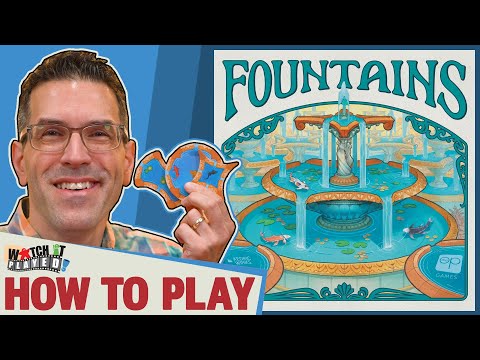
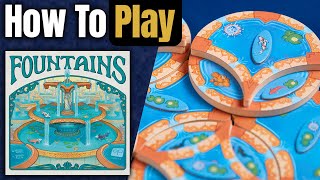
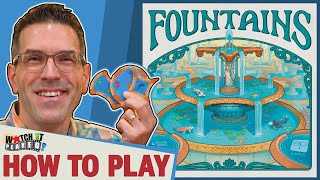
Fountains - How To Play
Playthrough
Fountains Playthru
Ask a Rules Question
All mentions
Browse transcript mentions, sentiments, pros/cons, mechanics, topics, quotes, and references.
Total mentions: 9
This page: 9
Sentiment:
pos 8 ·
mix 0 ·
neu 1 ·
neg 0
Showing 1–9 of 9
Video EXMnYYYypxE
Playthrough at 0:34 sentiment: positive
video_pk 68534 · mention_pk 164808
Click to watch at 0:34 · YouTube ↗
Overall sentiment (raw)
positive
Pros
- Satisfying to build a grand fountain.
- The flow mechanic is central and interesting.
- Multiple scoring opportunities add depth.
- Visually appealing with fountains and fish.
Cons
- Misinterpreting rules about water flow upwards led to incorrect play.
- Struggled with adjacency for lily pad scoring.
Thematic elements
- Building fountains
Comparison games
none
Mechanics (from transcript analysis)
- area majority — Players compete for the most pools with flow and fish of specific colors.
- End game trigger — The game ends when a stack of tiles is emptied or all bonus tokens are gone.
- Goal cards — Advanced play includes scoring based on three goal cards.
- Movement — Players move pawns up to three spaces on community ponds to select tiles or bonus chips.
- set collection — Players collect fish of different colors and lily pads for scoring.
- tile placement — Players place tiles to build their fountains, matching dark areas for placement and ensuring support.
Video topics + discussion points
No key topics recorded for this video.
Quotes (from this video)
- Hello everyone. Welcome back to Foster the Mele, a channel all about board games and board gamey things.
- The fountains, the jets, the pools need to have jets either the same level or above. Do you want to know why water doesn't flow up? Correct.
- It ended up 192 to 197.
- Shout out to the OP for sponsoring this video.
References (from this video)
No references stored for this video.
Video uVtGwGmN8M4
Playthrough at 1:54 sentiment: positive
video_pk 67753 · mention_pk 163972
Click to watch at 1:54 · YouTube ↗
Overall sentiment (raw)
positive
Pros
- Straightforward rules, easy to learn
- Changing goals add replayability
- Tactile and well-made tiles
- Fun to play with five players
- Easy to teach
Cons
- Can be difficult to get to level three without a clear plan
- Covering up icons can be a downside
Thematic elements
- building fountains
Comparison games
none
Mechanics (from transcript analysis)
- Movement — Players move a token clockwise on a track to select a tile.
- set collection — Collecting sets of fish or lily pads to score points.
- Stacking — Tiles can be stacked on top of each other to build the fountain higher.
- tile laying — Players take tiles and add them to their fountain area.
- Variable objectives — Scoring goals change each game.
Video topics + discussion points
No key topics recorded for this video.
Quotes (from this video)
- The handicam. It's not or or the ceiling. It's not turning.
- We're here for the chaos, the joy, and the thrill.
- This is how you play.
- You can't turn it sideways.
- But folks at home, this wrist belongs to a black belt.
- The real strategy in the game is scoring like triggering the points when you're going to get two or three more points than everybody else.
- Beginner's luck.
References (from this video)
No references stored for this video.
Video Y4nJc-0ZwOM
Top List at 14:42 sentiment: positive
video_pk 67594 · mention_pk 163741
Click to watch at 14:42 · YouTube ↗
Overall sentiment (raw)
positive
Pros
- Looks very pretty on the table
- Satisfying 3D building aspect
- Engaging spatial puzzle
- Interactive and strategic tile selection
Cons
none
Thematic elements
- Building a fountain
Comparison games
none
Mechanics (from transcript analysis)
- action drafting — And when the green uh pawn hits the green spot, we all score four lily pads. And when the, you know, white one hits the white spot, we all score four koiish.
- drafting — You are moving these pawns around uh this sort of central platform and each stop along the platform will get you a certain type of tile.
- tile placement — The tiles do have funky shapes. So there is a spatial puzzle and how you are arranging your fountain.
Video topics + discussion points
No key topics recorded for this video.
Quotes (from this video)
- These are lighter strategy games.
- I love strategy games that have interesting decisions but still play in an hour or less.
- if I have four hours to play games, I would rather play three games than one single game.
- it has a little bit of everything in it.
- The dice battle system is really clean and fun in this game.
- it makes for those big emotional moments
- This is a really silly and unique game.
- you will build a bunch of cards and be feeling pretty good about your engine. And then all of a sudden, a lot of bad cards are going to get added to the deck.
- It makes me laugh every time I play it.
References (from this video)
No references stored for this video.
Video tOSNKYeTT8o
kovray Rules Teach at 0:06 sentiment: positive
video_pk 64786 · mention_pk 158282
Click to watch at 0:06 · YouTube ↗
Overall sentiment (raw)
positive
Pros
- Clear setup and rules explanation in video
- Engaging visual design and thematic integration
- Advanced variant cards provide additional depth (optional)
- Moderate length with thorough rule coverage
Cons
- Advanced variant cards may overwhelm first-time players
- Difficult to fully master tile placement rules for new players
Thematic elements
- Water flow, pools, lily pads, fish, and coins-based scoring
- Abstract water garden/fountain construction in a tabletop board game
- instructional/tutorial with demonstration of setup and rules
Comparison games
none
Mechanics (from transcript analysis)
- end game bonuses — Game ends when a fountain tile stack or bonus token supply is depleted; final scoring determines winner.
- End-game condition — Game ends when a fountain tile stack or bonus token supply is depleted; final scoring determines winner.
- Resource Scoring — Score via pools, fish, lily pads, and bonus tokens depending on tile placement and end of round.
- tile drafting — Players draft fountain tiles or bonus tokens using a shifting base pawns; move pawns clockwise to draft.
- tile placement — Place fountain tiles with rules about adjacency, stacking, and support; ensure water flow connections.
- variant rules — Advanced design cards provide additional scoring options; optional for first game.
- water flow engine — Jets and pond weeds affect water flow and scoring; water cannot flow uphill.
Video topics + discussion points
No key topics recorded for this video.
Quotes (from this video)
- The game will end when one of the stacks of tiles runs out.
- Oh, so much gorgeousness.
- For your first game, we recommend you use these cards.
- The coins will only score once and only when placed.
References (from this video)
No references stored for this video.
Video ldT2Gc2U-yQ
kovray Playthrough at 0:14 sentiment: positive
video_pk 64782 · mention_pk 158278
Click to watch at 0:14 · YouTube ↗
Overall sentiment (raw)
positive
Pros
- beautiful and thematic production
- tight, puzzle-like placement with clear feedback on scoring
- multiple scoring vectors (lilies, pools, fish, coins) create depth
- advanced objectives add strategic variety and replayability
Cons
- complex rules can be challenging to internalize for new players
- weave between blocking and progressing can feel punishing
- endgame scoring can hinge on subtle layout changes
Thematic elements
- designing and optimizing a water-feature tableau for scoring
- ornamental fountain garden with fish, lily pads, and jets, as a tabletop puzzle
- live-playthrough with strategic commentary and objective tracking
Comparison games
none
Mechanics (from transcript analysis)
- advanced objectives — optional goals such as achieving jets, sets of fish, or fully visible fountain tiles add depth.
- coins and irrigation — some tiles provide immediate points when fed by water flow (jets) or form connected coin pools.
- Compound Scoring — lily pads, ponds, fish, and pools contribute points, with bonuses for visibility and connected flows.
- end game bonuses — the game ends when a certain pool or tile stack runs out, prompting final scoring and tallies.
- endgame triggers — the game ends when a certain pool or tile stack runs out, prompting final scoring and tallies.
- jet flow / water routing — the flow of water (jets) must connect through placed tiles to maximize scoring opportunities.
- placement constraints — tiles must touch two brown points and be adjacent; stacking and blocking choices influence future options.
- pond weeds blocking scoring — pond weeds can block scoring unless a jet feeds and maintains flow to the affected area.
- scoring by features — lily pads, ponds, fish, and pools contribute points, with bonuses for visibility and connected flows.
- tile drafting — players draft fountain tiles using available pawns and place them on their board to build the fountain.
Video topics + discussion points
No key topics recorded for this video.
Quotes (from this video)
- This is fountains. This is a fountain.
- It's flowing and we're good.
- The jets, the water flow still corresponds.
References (from this video)
No references stored for this video.
Video iUtQICFWCHQ
Watch It Played Rules Teach at 0:14 sentiment: neutral
video_pk 63822 · mention_pk 157333
Click to watch at 0:14 · YouTube ↗
Overall sentiment (raw)
neutral
Pros
none
Cons
none
Thematic elements
- beauty and renewal
- a city where players build fountains to impress the mayor
Comparison games
none
Mechanics (from transcript analysis)
- Advanced fountain design cards (optional) — If used, fountain design cards provide additional scoring conditions during final scoring.
- Bonus tokens and icon stacking — Drafting can grant bonus tokens; collected tokens are placed on top of existing icons in your fountain or shaded spaces and can be moved onto jets or fountains later.
- Coin icons, scoring track, and banking — Certain tiles with coin icons grant points that are tracked on a score track; points can be banked after reaching multiples of 50.
- Drafting and tile collection — On a turn, a player moves a pawn 1-3 spaces to collect the top tile from a stack and then places it into their fountain when allowed by placement rules.
- End game and final scoring — The game ends when the last face-up bonus token is moved to the basin or a fountain tile stack runs out; final scoring tallies pool, fish, and lily pad rewards.
- end game bonuses — The game ends when the last face-up bonus token is moved to the basin or a fountain tile stack runs out; final scoring tallies pool, fish, and lily pad rewards.
- Fish and lily pad scoring — Fish in different colors and lily pads are scored based on their height in the fountain; only the highest scoring group of adjacent pools with lilies scores.
- Open channels, pools, and water flow — Tiles create pools connected by open channels; water from jets flows to connected pools at the same or lower levels.
- Pondweed and water management — Pools not receiving water from a jet gain pondweed tokens; adding jets can clear pondweed from connected pools.
- tile placement — Placed tiles must touch two matching dark bricks on the fountain and may be stacked on top of other tiles if fully supported.
- tile placement and stacking — Placed tiles must touch two matching dark bricks on the fountain and may be stacked on top of other tiles if fully supported.
Video topics + discussion points
No key topics recorded for this video.
Quotes (from this video)
- The mayor is on a quest to bring beauty back to your city and she wants your help.
- On your turn, you'll perform three steps. Starting with drafting.
- To set up, use these two pieces to make a stand in the center of the play area and then put this basin board on top of it.
- the one to five player game Fountains designed by Kedrick Winks and published by VOP who helped sponsor this video.
References (from this video)
No references stored for this video.
Video B3eigfBcC-4
Get into games Review at 0:12 sentiment: positive
video_pk 61694 · mention_pk 154354
Click to watch at 0:12 · YouTube ↗
Overall sentiment (raw)
positive
Pros
- Beautiful squishy foam tiles that are visually appealing
- Multiple scoring options add depth and replayability
- Upward building multiplies scores, increasing strategic tension
- Risk vs reward when uncovering tiles adds tension and interaction
- Solo mode and strong replayability
Cons
none
Thematic elements
- tile placement and water-flow puzzle
- water fountain gardens and decorative water features
- procedural/puzzle-like
Comparison games
- Acropolis
- Patchwork
- The Swan
Mechanics (from transcript analysis)
- color_scoring_choice — 鱼/fish scoring requires selecting a color; all players score that color when the space is activated.
- end game bonuses — Game ends when a stack is depleted; final scoring occurs after one more round.
- end_game_and_final_scoring — Game ends when a stack is depleted; final scoring occurs after one more round.
- flow_blocking_tokens — Pond weed tokens can be placed to block water flow, affecting future scoring opportunities.
- flow_management — Water flow must be maintained across tiles; blocked flow requires pond weed tokens.
- level_mmultipliers — As the fountain grows taller, scores are multiplied by the current level.
- pawn_movement — Pawns move to reveal tiles and potentially acquire scoring opportunities.
- risk_vs_reward — Uncovering tiles can help you or enable opponents; decisions balance personal gain against disruption.
- scoring_triggers — Three scoring options are activated by markers: fish colors, lily pads, and ponds.
- tile placement — Players place foam tiles around a fountain to build layers and determine flow.
- tile_placement — Players place foam tiles around a fountain to build layers and determine flow.
Video topics + discussion points
No key topics recorded for this video.
Quotes (from this video)
- Fountains. Fountains is a stunning tile placement games.
- There are three different ways to score.
- This game has endless replayability and one I recommend you seek out and try for yourself.
- When you're moving the pawns, you're going to uncover tiles that other people are going to be able to use.
- There's so much strategy in this game.
- And that is Fountains in its absolute simplest form.
- One stack is completely depleted.
- You start with a basic water fountain piece.
References (from this video)
No references stored for this video.
Video A_LhxtS-piw
Jamie, Tabletoptiktok Review at 0:03 sentiment: positive
video_pk 61389 · mention_pk 154068
Click to watch at 0:03 · YouTube ↗
Overall sentiment (raw)
positive
Pros
- Tactile, satisfying construction experience
- Multiple scoring opportunities and bonus tiles keep decisions interesting
- Strong solo mode that provides a satisfying puzzle
- Thematic integration between water flow and scoring is well realized
- Strategic depth without heavy complexity
Cons
- Risk of creating unfed pools if water flow is mismanaged
- Overhang rule can constrain placements and require careful planning
- Some players may experience analysis paralysis due to many interacting bonuses
Thematic elements
- water management, aesthetics, and scoring through evolving fountain layouts
- A fantastical fountain-building environment centered around a modular central board and water features.
- tactical demonstration with emphasis on construction and flow
Comparison games
none
Mechanics (from transcript analysis)
- area majority — at certain steps, players compare pools and vie for the most pools to gain points
- area majority / pool control — at certain steps, players compare pools and vie for the most pools to gain points
- Compound Scoring — tiles fed by jets trigger scoring bonuses (coins, lily pads, area majority, etc.)
- end-game trigger by depletion — end of game is triggered when tiles are depleted and turns are evenly distributed
- flow maintenance — water flow rules require active jets to keep pools fertilized; unfed pools rot and score penalties
- jet-driven scoring — tiles fed by jets trigger scoring bonuses (coins, lily pads, area majority, etc.)
- stacking / elevation — players can stack tiles upward to create higher level pools, increasing scoring potential
- tile placement — place pieces around a central board to create connected fountains, ensuring waterways remain fed by jets
Video topics + discussion points
No key topics recorded for this video.
Quotes (from this video)
- moving water is water that stays nice and pristine and looks great
- it's tactile. You're building. You're trying to maximize your bonuses
- the solo mode is enjoyable
References (from this video)
No references stored for this video.
Video 9GuJ3pKUYU4
The Board Game Garden Playthrough at 0:00 sentiment: positive
video_pk 35582 · mention_pk 106341
Click to watch at 0:00 · YouTube ↗
Overall sentiment (raw)
positive
Pros
- Excellent solo mode with meaningful ramp-up that creates a satisfying challenge against the 'machine' AI
- Tightly integrated mechanics where tile placement, water flow, and scoring tie together into a coherent whole
- Strong tactile and aesthetic components: thick tiles, foam-core-like materials, and visually appealing fountain designs
- Compact design that fits 1-5 players well and scales nicely for solo play and small groups
- Creative thematic focus on fountains and water management that remains approachable but deep
- High variability in tile draws and token placement supports replayability and strategic diversity
- Clear, instructive streaming content that helps new players learn the rules through observation and commentary
- Public objectives and design-card elements in multiplayer mode provide additional strategic layers and discussion points
Cons
- Early game can feel slow or overwhelming due to the density of rules to absorb; learning curve is nontrivial
- Solo mode lacks fountain-design public objectives seen in multiplayer, which may reduce variety for solo sessions
- Endgame scoring has many moving parts (layers, coin placement, pondweed) that can tax memory and calculation under time pressure
- Tiles and tokens require careful handling; misplacing tokens can disrupt flow or scoring visually
- AI ramp-up is powerful and requires careful planning to avoid falling behind in pools and lily pads
- Some players may prefer a more straightforward puzzle without multi-layer water-flow constraints
- Component aesthetics, while strong, may not appeal to players who favor minimalist or ultra-lightweight production
Thematic elements
- Water design and garden aesthetics meet strategic puzzle-solving. The core idea is to build a beautiful, functional fountain while maximizing points from lily pads, pools, and koi across a layered water system.
- A modular fountain-and-pond garden built from tiles where players arrange jets, ponds, lily pads, and decorative tokens to create flowing water features. The board represents multiple vertical layers of water, with interactions between high and low levels that influence scoring throughout a session.
- Educational and instructional with streaming commentary flavor; the host translates the mechanical rules into a live, approachable puzzle narrative while peppering in humor and personal anecdotes.
Comparison games
- Huton Life in the rainforest
- Earthborn Rangers
- Bargain Quest
- Kinfire Delve
- 20 Strong
- Fate Flipped: Washed Ashore
Mechanics (from transcript analysis)
- Coins, pondweed and scoring tokens — Tiles can carry coins and other tokens. Coins score when their pool has flowing water at placement time; pondweed (or similar coastal/pond weed) can alter counting rules, sometimes excluding pools from lily pad scoring if water flow is absent. This mechanic ties resource placement to real-time hydrology and rewards careful timing and sequencing of tile acquisition.
- Compound Scoring — At game end, lily pads, pools, and fish are tallied across the fountain. The scoring system blends multiple dimensions: connected lily pads, water flow across tiers, coin collection, and pawns-to-tile interaction. Final rewards may require players to choose among color-specific fish or pool types, adding a strategic layer to endgame decision-making.
- Endgame cycle and AI ramp (solo mode) — In the solo variant, an artificial opponent ('the machine') moves around the basin, collecting tiles and escalating scoring as it goes. The machine completes loops around the basin, and the game ends on a second loop or when supply piles run out. This ramps up difficulty and creates a tense, time-limited race against an adaptive, rules-driven opponent.
- Final rewards and multi-criteria scoring — At game end, lily pads, pools, and fish are tallied across the fountain. The scoring system blends multiple dimensions: connected lily pads, water flow across tiers, coin collection, and pawns-to-tile interaction. Final rewards may require players to choose among color-specific fish or pool types, adding a strategic layer to endgame decision-making.
- Layered water flow and jets — The board encodes multiple levels of water flow; jets on higher layers push water into lower pools. A pool only scores if it has flowing water, which requires a correct arrangement of tiles and jets. Players must anticipate cascading effects: placing a tile may improve water flow for some pools while closing off others, creating a dynamic, evolving puzzle across turns.
- Pawns movement and token collection — On each turn, a player moves one of three pawns 1–3 spaces, land on a colored space, and collect a tile to add to their fountain. Scoring is triggered by landing on color spaces, creating a direct link between movement tactics and scoring opportunities. The pawn mechanic adds an element of tactical navigation and risk assessment as players choose which pawns to advance and which tiles to claim.
- Tile laying and connection — Players place fountain tiles to form a connected network that provides flowing water to pools. The goal is to align pipes and edges so that water can traverse from the top layer down through the layered basins, enabling scoring for pools, lily pads, and koi. The mechanic rewards forward planning and spatial reasoning, as new tiles may disrupt or enhance existing connections.
- tile placement — Players place fountain tiles to form a connected network that provides flowing water to pools. The goal is to align pipes and edges so that water can traverse from the top layer down through the layered basins, enabling scoring for pools, lily pads, and koi. The mechanic rewards forward planning and spatial reasoning, as new tiles may disrupt or enhance existing connections.
Video topics + discussion points
No key topics recorded for this video.
Quotes (from this video)
- Race Against the Machine, which is funny because I love Rage Against the Machine.
- This game can be played one to five players.
- Water is the essence of wetness, and wetness is the essence of beauty, but it's moisture, not water.
- This seems like a very satisfying game because of all the different shapes. It's very cool how they're going to fit together.
- I'm obsessed.
- This is the best thing ever.
- This is the most wild fountain I've ever seen in my life.
- Killing in the name of fountains.
- This solo mode is 'Race Against the Machine' and it ramps up as you go, which makes the endgame feel like a race.
- The AI ramp-up is truly a key tension point; updating tiles and pools becomes a pressure-filled puzzle.
References (from this video)
No references stored for this video.
Transcript Navigation
Showing 1–9 of 9