










Yahtzee Deep Dive
What the Community Thinks About Yahtzee
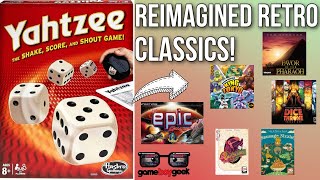
Yahtzee holds a special place in the hearts of board gamers across generations. Reviewers consistently praise it as a timeless classic that endures because of its elegant simplicity and accessibility. While modern games have introduced increasingly complex mechanics, Yahtzee's straightforward design continues to deliver genuine enjoyment and memorable gaming moments. The game has spawned numerous themed versions in recent years, from pop culture properties to specialty editions, reflecting its sustained appeal in the mass market. Even reviewers steeped in modern roll-and-write design return to Yahtzee with affection, treating it as the foundation the genre was built upon.
Core Mechanics That Define Yahtzee
Dice Rolling and Risk Management
At its heart, Yahtzee revolves around rolling five dice up to three times per turn across 13 rounds to build the highest possible score. The push-your-luck mechanism sits at the core of the experience: players must decide after each roll whether to lock in their current results and move forward, or risk rolling again to chase better combinations. This risk-reward tension creates moments of genuine drama, especially in later rounds when the available scoring categories narrow and stakes grow higher. The randomness of the dice keeps every game unpredictable, ensuring no two sessions feel identical. Reviewers note that this simple loop of roll, keep, and reroll remains satisfying even after decades of play.
Compound Scoring Categories
Yahtzee's scoring structure asks players to strategically allocate their rolled combinations across distinct categories such as number groups, straights, and full houses, with the Yahtzee itself (all five dice matching) representing the ultimate prize. Hasbro's classic design requires players to fill each category only once over the course of the game, forcing meaningful decisions about where to place each result. This scarcity creates a planning layer beneath the surface randomness, rewarding players who think several turns ahead about which combinations they still need and which categories remain open. A wasted high roll dropped into a low-value category can haunt a player for the rest of the game.
The Yahtzee Experience
Nostalgic and Accessible Fun
For many players, Yahtzee evokes warm childhood memories. The game works just as well around a campfire with basic materials as it does in formal gaming sessions. Its minimal setup requirements, simple rules, and quick playtime of around 30 minutes make it an ideal choice for family gatherings, casual evenings, or introducing new players to tabletop gaming. The experience feels unpretentious and inclusive, inviting players of all ages and skill levels to the table without requiring extensive rule explanation or strategic depth.
Engaging in Unexpected Ways
Despite its age and simplicity, Yahtzee continues to create compelling moments. Reviewers who have played both classic and modern roll-and-write games note that Yahtzee still holds its own in terms of fun, particularly because the final rolls in tight scoring situations can feel genuinely tense. One reviewer flatly preferred hours of Yahtzee to a more elaborate modern dice game, a reminder that mechanical innovation alone does not guarantee entertainment value. There is something satisfying about the tactile experience of rolling physical dice, marking off a score sheet, and competing with opponents in real time.
What Makes Yahtzee Stand Out
Enduring Design and Mass Market Appeal
Yahtzee arrived in the 1950s, making it one of the oldest games still actively played and purchased today. Its longevity speaks to the robustness of its core design. The game requires nothing more than five dice and paper to play, yet it delivers a complete game experience. This minimalist approach contrasts sharply with modern board games that often demand extensive component management and rule books. Yahtzee proves that innovation and complexity are not prerequisites for lasting appeal or repeated enjoyment.
Versatility and Cultural Reach
The game's commercial success has spawned countless themed variants, from character-branded editions to licensed properties. Manufacturers continue to release new versions because the base game remains so mechanically sound that reskinning it proves reliably profitable. Each iteration reaches different audiences and gift-giving occasions, extending Yahtzee's presence in popular culture. The game serves as a gateway for many players into the wider world of tabletop entertainment, introducing fundamental concepts like push-your-luck and compound scoring that appear in more sophisticated designs.
Potential Drawbacks
Limited Strategic Depth
While the push-your-luck mechanic creates meaningful moments, Yahtzee ultimately relies heavily on chance. Players with excellent strategic play cannot fully overcome a string of poor rolls, and the decision tree available on any given turn remains comparatively narrow. Some gamers prefer titles offering more levers to pull, more systems to master, and more opportunities to outplay opponents through pure skill. Modern roll-and-write games have expanded the genre by layering additional mechanics atop the dice-rolling foundation, which some players find more engaging than Yahtzee's pure simplicity.
Repetition Over Extended Play
The core loop of rolling dice and marking categories can become routine during longer sessions. Whereas modern games often introduce new rules, special powers, or evolving boards as play progresses, Yahtzee maintains identical mechanics throughout all 13 rounds. Players seeking constant novelty or who tire of similar actions across multiple turns may find the experience monotonous. However, this consistency also contributes to the game's accessibility, as players never need to learn or adapt to shifting rules mid-game.
If You Enjoy Yahtzee
If you appreciate Yahtzee's push-your-luck tension and dice-rolling foundation, consider exploring modern roll-and-write games that build on these mechanics. Welcome To maintains the simplicity and quick playtime Yahtzee offers while introducing tactical layers through card-driven number placement. Trails of Tucana applies the draw-and-mark format to map building, rewarding spatial planning. For players who love the dice specifically, Qwixx and Ganz Schon Clever keep the fast dice-rolling rhythm while adding combo-driven scoring that deepens the decisions on each roll.
What Reviewers Are Saying
"And for a game that came out as like it's not a modern board game I thought it played pretty well, you know it's just some fun dice rolling and crossing it off and it does what a roll and write should do."
— Allies or Enemies
"I still really enjoy it. And they come out with so many fun versions of this, which I think makes a great gift for people. I think this is still such a fun game. I still enjoy playing Yahtzee. It's a fabulous dice checker."
— Watch Review
"I'd play six hours of Yahtzee over this."
— Watch Review