















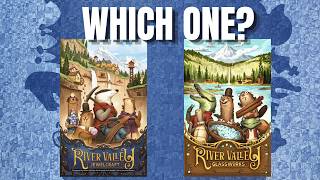


River Valley Jewelcraft Deep Dive
What the Community Thinks About River Valley Jewelcraft
River Valley Jewelcraft has generated genuine enthusiasm from board game reviewers exploring this spiritual successor to the beloved River Valley Glassworks. Players consistently praise the game for finding a unique niche in the crowded engine-building space. The design successfully takes a familiar concept, mining and crafting jewelry, and adds layers of spatial puzzle-solving and strategic tile placement that make each game feel fresh. Reviewers highlight how the game keeps everyone engaged turn after turn, avoiding the isolation that plagues some multiplayer games. The light-to-midweight balance appeals to players seeking clever, thinky moments without drowning in rules overhead.
Core Mechanics That Define River Valley Jewelcraft
Dice Selection and Resource Gathering
River Valley Jewelcraft's dice system stands at the heart of what makes it tick. Each round, the active player rolls two dice (silver for columns, gold for rows) and chooses one die for themselves, leaving the other for all inactive players to use. This elegant mechanism ensures that even when it is not your turn, you are gathering gems and progressing meaningfully. The spatial twist comes from your character's position on the mining board; where your miner sits determines what resources you collect from that die roll. The game from AllPlay introduces a pickaxe face on the dice that triggers excavation of your character's current row, adding another layer of positioning strategy. This design avoids the typical multiplayer solitaire problem by making every turn relevant to every player at the table.
Tile Placement and Board Evolution
The true strategic depth emerges from the tile exploration phase. Each turn, the active player chooses from available rock tiles to add to their mining grid. These tiles are not decorative; they reshape your future income. Some tiles provide directional bonuses, others double your resources when your character lands on them, and still others activate secondary gem sources. Players face constant tension between clearing space (removing rubble that blocks placement), improving layout (rotating and stacking tiles for efficiency), and building long-term engine potential. The contiguous group scoring system rewards players who build spatially cohesive sections of matching rock colors, meaning tile choice is not just about immediate resources but about the endgame landscape you are building.
The River Valley Jewelcraft Experience
A Satisfying Puzzle That Evolves Each Game
Reviewers consistently note that River Valley Jewelcraft feels like a roll and write without the writing, a game where shared dice rolls drive collective action, yet everyone's board evolves uniquely. The character movement mechanic, restricted to downward and rightward movement, creates an enjoyable puzzle. You cannot clear everything in one path; you must plan multiple trips through your mine, and the tiles you place determine which routes are still accessible. This dynamic puzzle aspect ensures that early-game decisions constrain and shape your options later, making each mining operation feel like a personal puzzle box. The solo mode deepens this experience, adding an extra excavation phase and allowing players to experiment with different strategies without the negotiation of multiplayer play.
Character Asymmetry and Replayability
River Valley Jewelcraft ships with a basic side for all character boards where everyone plays similarly, making learning approachable. But flip the board over, and each character gains unique asymmetric abilities. One character can remodel by excavating multiple spaces when a tile lands on cleared rubble. Another can rearrange tiles in their mine when exiting the board. These asymmetric powers completely reshape how players approach their individual puzzles, encouraging multiple plays to experience different board configurations. Reviewers praise this design choice as significantly more interesting than the character boards in River Valley Glassworks, where characters were purely cosmetic. Here, your character choice meaningfully impacts your strategic options and path to victory.
What Makes River Valley Jewelcraft Stand Out
Clever Resource Conversion and Jewelry Crafting
The jewelry crafting phase transforms mined gems into victory points through a three-tier system. Basic jewelry provides cheap ways to start set collection, while fine and artisan pieces offer expensive upgrades with special abilities. Many cards include engine-building effects: converting one gem type to another, collecting bonus gems when played, clearing rubble instantly. This resource transformation layer prevents the game from feeling like a simple collect-and-convert experience. Players are not just optimizing their mining; they are building personal engines where each jewelry card potentially amplifies future turns. The craft limit system, where basic cards take one capacity slot and advanced cards take two, forces meaningful trade-offs between quantity and quality, adding another dimension to turn planning.
Shared Downtime Management Through Simultaneous Engagement
Rather than watching opponents take long turns while you sit idle, River Valley Jewelcraft keeps inactive players constantly busy. When the active player rolls dice, inactive players immediately move their characters and perform work actions using the unchosen die. The game eliminates what reviewers see as a plague of multiplayer solitaire by building engagement into the core turn structure. Even in a four-player game, each player is gaining significant resources during the other three players' turns, meaning by the time your turn arrives, you have accumulated options and momentum. This pacing keeps table energy high and ensures that everyone is thinking about their mine even when it is not their turn to craft or explore.
Potential Drawbacks
Heavy Emphasis on Tile Placement Complexity
The tile exploration and placement system, while strategically satisfying, adds cognitive weight that some players might find overwhelming. Each tile choice carries long-term consequences for board layout, character movement paths, and gem access. New players can easily spend their turns in analysis paralysis, particularly on the advanced character boards where asymmetric abilities compound the decision space. The interaction between character position, tile placement, and future dice outcomes creates a chain of dependencies that demands forward-thinking play. While reviewers appreciate the strategic depth, players seeking quick, streamlined experiences might find the puzzle-solving element demanding.
Resource Scarcity and Limited Crafting Opportunities
The game is deliberately designed so that gathering resources and crafting jewelry are both constrained. Jewelry set collection is the primary scoring mechanism, but players often find themselves unable to craft the specific pieces they need to complete sets until late in the game. The craft limit restricts how many jewelry cards you can create each turn, and the three-tiered market means coveted cards can be scooped away by other players or cleared from the market by unchosen dice. Reviewers note this creates genuine tension and interesting choices, but it also means some games feel tight on resources. This tightness can frustrate players who prefer looser, more forgiving games where you feel abundant resources flowing into your engine.
If You Enjoy River Valley Jewelcraft
River Valley Glassworks offers the spiritual predecessor in the same cozy River Valley setting, though it leans more toward lighter pattern-building and straightforward efficiency puzzles rather than the strategic depth and engine evolution of Jewelcraft.
Salt Fjord shares the dice row-and-column activation mechanic that makes River Valley Jewelcraft click for many players. If the spatial dice-drafting system appeals to you, Salt Fjord explores similar territory with fishing and different resource themes. Fans of cozy, approachable euros that still reward planning should also try Cascadia, which pairs gentle tile-laying with multiple scoring paths.
What Reviewers Are Saying
"One thing I appreciate here is how interactive the dice system is without being overly punishing. You're always making a meaningful choice in the dice you're choosing, but you're also giving something to your opponents. It keeps everyone engaged each turn, and it avoids that downtime you see sometimes in multiplayer solitaire games."
— Tanger Mouse Studio D
"This game lives in kind of the perfect spot of like a light to midweight euro but with some clever thinkiness to it too. That's a really great space to live, especially for where we are right now. We want those kind of brain burning thinky moments, but at the same time not be overwhelmed by rules or anything."
— Ryan and Bethany Board Game Reviews
"So, you are constantly engaged even when it's not your turn because when someone chooses the dice, you are still going to get some resources based off of whatever dice that you are given, the leftovers, and that could be really good for you still."
— Ryan and Bethany Board Game Reviews