Things on Strings Review - Cascading Flowcharts of Cooperative Deduction!
Games in This Video
5 games are featured in this video — they unlock as you watch.


Transcript
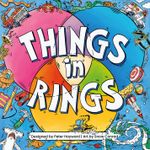
Hey all, it's Michael from Board Game Co, and today I'm reviewing Things on Strings from All Play. The box is not actually this orange, but I do think it looks better than the prototype box. So, uh we'll do away with that, and we are back with a this box over here. But, Things on Strings, the spiritual successor to Things on Rings, Things in Rings, Things on Strings, Things in Rings, the game that hosts me makes me hope that there will be Things in something else. This should be a trilogy. Although, I'm curious what they'll do differently because this definitely does feel very similar, different enough that I think there's room for both, but also like how many ways can you do the same thing? We'll get into it. Let's go ahead and get into it. Before we do though, please note that while this video is not sponsored, All Play, the company that makes this game, is the channel sponsor, which means please take any bias into account, any of those things. I I am on record of very much enjoying Things on Ri- Things in Rings. I keep calling it Things on Rings now. Uh I Things in Rings, I think is fantastic, one of my favorite All Play games, and this is very much built on that. I will tell you right now, I very much enjoy this game. In fact, the current crowdfunding campaign it's a part of, this is my favorite from the games in that crowdfunding campaign, which I find the past few times All Play's had a crowdfunding campaign, the main highlight is not the game I'm most excited for. Like, I loved Triangulation in the Container crowdfunding campaign, also Grunts for that matter. I loved Enchanted Ivy in the Mountain Goats Legacy campaign, and I loved Things on Things on Strings in the in the oh my gosh, River Valley Jewelcraft crowdfunding campaign. Anyways, all of that said, this is a prototype. I'll have linked to the crowdfunding campaign down below, and All Play is the channel sponsor. You decide if this video is of
any value or use to you. With that said, if you've played Things in Strings, this is a basic this is a very similar concept that is structured more as a cooperative entity. Uh technically, the knower, the person who gives hints, is a neutral entity, but I like to think we're all playing this together. And for this example, I'm going to be the knower, and we'll play this game together. So, we're going to divide up these cards over here. We're going to draft up not draft, we're going to shuffle up four cards, and we're going to see what we got. We have jam, we have ketchup, we have a ham, and we have megaphone, okay? And the problem is we need to divide these into sets of two. Now, you might think food, but we have three foods already, which is already going to make our life tough. Now, we're going to take these various clue cards and I'm going to shuffle them up and I'm going to remove one of them. That's going to remove one of the options by removing this one. We're removing a blue card, okay? An attribute, which means across the course of the game, we need to do three to a two word base clues, one attribute clues, and two context clues. So, what I'm going to do is I'm going to go ahead, uh take a look at these things, and I am going to Hm. This is rough. We have two word clues. Let's go ahead and start off early, okay? Now, this is the tricky part because depending on your group, I do find this is a game that you want to level up with your group together. So, I'm going to pretend you're already on level two. So, what I'm going to do is I'm going to say the following, okay? By level two, what I mean is and uh let's go. Okay.
That is probably a mistake in hindsight, but you know what? It is what we're going to go with. Anyways, when I say level two, what I mean is that I am trying to give a clue that hopefully across the course of this game, you'll be able to figure out, but I don't want it to be so simple because the simpler it is, the less fun it is for you. The first game, go as simple as possible. As you escalate, try to be a little bit more interesting. So, this is my clue that I've written down. I will put it over here. Uh and then I'm going to take this word over here and I'm going to arrange it so you can see things. So, we're going to say a two of the words match the clue or don't match the clue as the red string, and two of the words do match the clue, okay? So, I'm placing it like this over here. We have our word clue. I'll place this higher up because we're going to need all the space as we go through this. And I'm going to say that the two words that match the clue are going to be uh these over here, and the two words that don't match the clue are going to be those. Now, depending on the players you have, well, it doesn't really matter. You have one card per person. Let's go ahead and decide where the card goes. So, you should take a look and you should figure this out.
We're going to play around in two together, okay? So, over here, we have this word mouse. Pretend this is your card. Where are you putting this? Okay? Where are you putting this? And I'm going to play this out trying to role play the sides, but you get the basic idea. So, over here, I'm going to go ahead and I'm going to put this over here because I I mean I know the clue, but I don't think I have a I have a hypothesis that I'm going to go with over here. I'm going to pretend I don't know my own clue, and I'm going to go with that, okay? Great. That's correct. That's correct. I as the knower tell you that that is correct. Next card. We have this one over here. Okay, I'm once again going to place it over here. Great. Okay, that's correct. But now there's four cards on this side of the board. As soon as there are four cards that were correctly placed, if a card was placed here and I had to move it, you would put a mark on it and it would not count towards the four. But once there are four cards that were placed correctly, not moved by the knower in its own, then you then split it again. So, I once again as the knower am giving you the clues as to where that's going to go. This time let's focus on attributes. Okay? We're going to focus on the attribute. We'll keep it pretty straightforward this time. We only have one attribute to play with.
Oh, if you only have one attribute to play with, um you know what? I will I will still go with it. I'm going to I'm going to go ahead and do the following, okay? We're going to We're going to do something, and you might have theories. This is the problem, okay? I'm going to talk you through my theories. My theories are going to be wrong because otherwise it's uninteresting because I know all the stuff. So, we're going to subdivide this next batch of clues under things that don't match my word rule are going to be subdivided into the following. Going to put these over here like so. We broke them up, okay? We broke them up over here, and we're going to put another string, okay? It's things on strings, remember? Not things in rings, things on strings. Things under strings is really the correct terminology, but I think it's just less catchy as the title goes. And we draw a card. Where do we place this? Well, the first thing you want to do is you want to see does it go over here? If it doesn't go over here, and I don't think it does, oh, maybe it does.
Maybe it does. You see, this is the problem. What if the rule was a three-letter word? Because if it's a three-letter word, then maybe I do think it goes over here. Okay, we're going to put this over here because maybe the clue was three-letter words here and non-three-letter words here. So, we're going to put it over here. Eh, turns out I'm wrong. I know the clue, but turns out I'm wrong. We're going to move this where it belongs instead, and I'm going to take this and I'm going to put it down over here, okay? With a little mark on it that I don't have in front of me. We're going to grab a little token because I have tokens next to me. We're going to put that marker onto it. Uh this is a wrong clue. Beautiful. Next card. Okay, we have this one. Where does this go? Well, if it's not three letters, then I have another theory. I have another theory what it could be. It can't be A's because there's an A over here. It could be ends with M. That could be. None of these end with M, so in that case this would go here. Uh and then which way do I think this can go?
Are these things that are soft? Things that are wet? None of these are really things that are wet. Are they I can't be soft and hard because this is more soft, hard, and hard. What if What if it's things that make things that make noise, okay? And then even then it's up to interpretation. Lava bubbling, does that make noise? Who Who Who's really say? We'll go ahead and take that out. I'll put it down. It is correct. There are four things over here, but one of these has a mistake on it. We'll draw another card. We have the laundromat over here. What if it's a has A and M? If it has [clears throat] an A and M No, megaphone has an A and M, so it can't be that. It can't be that, okay? Um so, from there in that case, let's go ahead and put the laundromat. If it's doing things that make noise, laundromats are definitely noisy. Let's go ahead and put it over here. And it's correct. This is how you play the game. You keep going on and you keep subdividing until you can't subdivide anymore, meaning we have all of these.
This is out over here. We got rid of that. So, we have three more subdivisions we have to make. We have two context ones we have to use up, and we have one word one we have to use up. Once these are all on the board and we've subdivided accordingly, and we would have to subdivide again, we win. Or if we get five mistakes, you lose. And obviously, you can adjust difficulty however you want. You can say it's only three mistakes or two mistakes. In theory, you can play this competitively as well. I don't see a reason why you can't. I like this one more cooperatively. I think I like things in strings more more competitively, even though you can play it cooperatively and I like this one more cooperatively even though you could play it competitively not that the rules say that you can do that but I don't see a reason why you couldn't structure that way if you wanted to. Anyways, that's the basic game. If you've played things in in Strings, it's going to be very familiar. It's using the same idea as three different clue categories, words, attributes, and context, but unlike in Things in Strings where you are given random rule cards and you have to try to place things, it's up to you, the knower, to be more involved and invested creating interesting rules and subdividing things. By the way, for the record, all the clues were makes noise which I felt was the choice over there.
Again, I know them, it's harder. And I did ends with A and M just to throw people off because I want clues to be interesting and again part of the challenge of the knower is you're not trying to trick your teammates so to speak but you are trying to you're trying to level up the game to their level. So if it's the first time playing, I would have done ends with M. Second night playing, ends with AM is just that more complicated or you could do A and M together with each other. There's all this whole little rulebook as far as the types of rules that are good and how to structure those but again if you played a lot of Things in Strings, you'll find ways to be clever always trying to subdivide things into even groups. With that, time for my review. I I like it. I like it. I I love Things in Strings. I think Things in Strings is amazing. I There's things I like more about this one and things I like more about that one. I think my main takeaway is that I I'd rather play Things in Strings when I want to play competitively and I'd rather play Things on Things in Rings, Things on Strings. I'll never do this correctly. I'd rather play Things on Things on Strings when I want to play cooperatively. But the same vibes are there. The same vibes as far as trying to figure out the puzzle as the guesser, you're again trying to figure out the patterns. It's not that different than Things in Strings. The only difference is I know you created the clue but the general idea of trying to find these archetypes and figure out where things go, that's very similar. It's a little bit more flow charty as opposed to Venn diagram cuz like you start with this then you move down a chat then you move down a path, then you move down a path.
So, the structure of it is different, but the thought process is very similar. So, as someone who likes figuring out patterns without knowing what the rule is, all the same things that I like about things in strings are here in things on things in rings, things on strings. As the guesser, as the knower, as the knower, it's more involved. So, you're not a passive person, you have to come up with the rule. So, I think you have a better time as the knower. So, I'm going to kind of divide this into different things. As the guesser, same experience, love it. I like things in strings, I like things on rings. I'd say the same level as a guesser. As a knower, it is more involved in this game than it is in things in strings because you're creating the rules. So, I have a better experience playing as the knower in this game. Although, depending who you are, you might like enabling things as opposed to having to come up with things. There's definitely going to be people who'd rather be passive, who'd rather, this is the clue, I'm going to do the clue. I don't have to be clever and figure out what a good clue is. For me personally, I prefer being the knower here. The one thing I don't love about this is the table set up, and I don't have a suggestion as to how to make it better, but once you have all your five clues, it does become a little weird weirdly unwieldy on the table and a little harder to follow. So, it's a little messier from a table presence standpoint. Not in any noticeable way, like this is not a big deal. This is me trying to find something to be critical of. I definitely have found that the table space in things in strings is friendlier and more easily adaptable.
This is like you need a weirdly long space, but not really a deep space, and it could be like it's a it's a little it's a little weirder. It's not a big deal. It's a small little complaint. Overall, final thoughts on this, I love things in strings, I love things on rings. I'm going to keep getting those confused whenever I talk with them. I think I like them about an equal level. I'm going to give this a 4.5 out of 5. And if you're like, "But wait, Alex, you gave things in strings a 5 out of 5." I did, I did, but I also over time, the more I played it, I did drop it down a little, but it's still a fantastic game. I still think it's incredible, but it is one of those things that my first like 20 plus plays were on a more of a high, and the more I played it, I I've gotten to experience a bit and I do adjust my ratings over time. I do think this is the same level of enjoyment. It does have a lot of overlap. If you don't need both of these, you don't need both of these. It's one of those weird things, like if we were talking about like $80 games, I would say get one of them.
They're similar enough. It's 90% overlap in the feeling you get as a player. Just pick which one is better. Because they are so cheap, I would say if you like them, go ahead and get both. Why not have slight variations on your shelf, but also you certainly don't need to. If you have things in strings already, you do not need things in wings. If you have things in wings already, you do not need things on strings. It is a slightly different flavor profile of the original game, but I like the original game enough that for me it's an easy recommendation. I'm just trying to give you all that information. In any case, until next time. I hope you found this review helpful in some way. I'm Alex Radcliffe from Board Game Co, and as always, I hope you have a good one.