




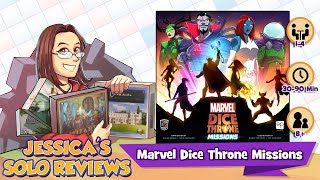



Marvel Dice Throne: Missions Deep Dive
What the Community Thinks About Marvel Dice Throne: Missions
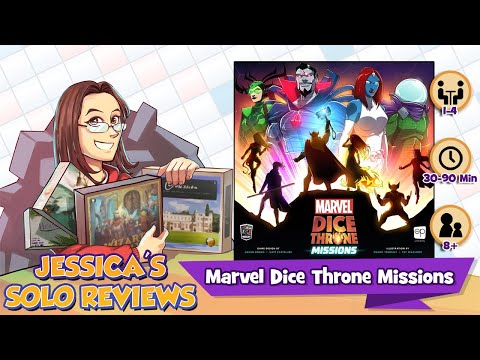
Reviewers across the board are enthusiastic about Marvel Dice Throne: Missions, viewing it as the definitive way to experience Dice Throne. The consensus centers on accessibility paired with meaningful player agency. Unlike the competitive base game or the campaign-heavy Adventures expansion, Missions strikes a balance that appeals to solo players, families, and cooperative groups. The strong Marvel IP integration draws praise for its thematic execution and flexibility. While reviewers acknowledge minor component issues and occasional pacing quirks, the overall reception frames this as the evolution the Dice Throne system needed for cooperative play.
Core Mechanics That Define Marvel Dice Throne: Missions
Cooperative Dice Rolling Combat
The core of Marvel Dice Throne: Missions uses the familiar Yatzy-style dice rolling system from the base game, but redirects its competitive tension toward shared objectives. Players roll five dice and form combinations to trigger abilities, attack enemies, or defend against incoming damage. The mechanic translates the satisfying tactile experience of building dice combinations into a system where success benefits the whole team. Reviewers praise how this keeps the accessibility of the base game intact while creating a fundamentally different strategic experience. The simultaneous play structure means downtime stays minimal even with multiple players working toward the same goal.
Momentum and Ally System
Momentum operates as a new resource that rewards tactical play and builds variety throughout the game. As players defeat enemies or trigger certain effects, they accumulate momentum on a spinner dial, which unlocks increasingly powerful options. The ally cards represent one major use of momentum, allowing players to recruit Marvel characters that grant unique offensive, defensive, or economic abilities. Reviewers highlight how the ally system adds replayability and thematic flavor, with each ally offering different strategic pathways. The flexibility of spending momentum on diverse options keeps decision-making interesting across multiple playthroughs, while the visual progression on the spinner provides satisfying feedback.
The Marvel Dice Throne: Missions Experience
Tension and Pacing Through the Crisis Clock
The crisis clock provides a mechanical heartbeat that drives urgency without overwhelming players. Each round, the clock advances based on player count, triggering negative effects from minions and a central threat. The timer forces meaningful choices about whether to consolidate power or push toward objectives, preventing the game from devolving into pure optimization. Reviewers note that the clock works best on higher difficulty settings, as lower player counts sometimes allow too much breathing room for preparation. The variable difficulty system addresses this, letting groups recalibrate intensity to match their preferences and skill development.
Flexibility and Control in a Cooperative Framework
The game grants players remarkable autonomy despite the cooperative structure. The episodic nature of missions eliminates the commitment of a full campaign, allowing players to drop in and out without losing narrative thread. Mission variety extends across board layouts, henchmen types, and boss encounters, ensuring that repeated plays feel different. Reviewers consistently highlight this freedom as the experience's greatest strength, particularly for players fatigued by lengthy campaign commitments or rigid rule structures. The ability to choose hero, mission order, and difficulty level before each session transforms the game from a scripted experience into a playground with meaningful boundaries.
What Makes Marvel Dice Throne: Missions Stand Out
Thematic Integration of Marvel IP
The Marvel license sits comfortably within the Dice Throne mechanical framework rather than feeling bolted on. Reviewers consistently praise how the game captures the spirit of Marvel comics over the Marvel Cinematic Universe, with asymmetric heroes that play meaningfully different from one another. The board layouts, henchmen types, and boss encounters all reflect the iconic villains and conflicts from source material, grounding abstract dice rolls in thematic context. The diverse hero roster, both base game characters and ally cards representing characters not yet featured as playable heroes, provides visual and mechanical variety that keeps the setting fresh.
Modular Difficulty and Long-Term Progression
The perk system creates a light progression arc that addresses a core problem in cooperative games: snowballing advantage. Players unlock perks after each mission based on performance, slowly adding stronger abilities and better starting resources. Rather than derailing the game's balance, increased difficulty options scale the challenge upward, maintaining tension as the group improves. This system works equally well for players grinding through their first few missions and veteran groups pushing toward perfect runs. Reviewers note the elegance of treating difficulty modulation as a core feature rather than an afterthought, giving players agency to chase mastery without surrendering the game's accessibility to newcomers.
Potential Drawbacks
Component Quality and Physical Play Space
The boost tiles, which represent bonuses on the minion board, have a tendency to slide off their spaces during play. While this issue is relatively minor and does not impact game rules, it creates friction in the tactile experience. Some reviewers also note that the health tokens, though functional, lack the premium feel of other components like the custom dice. The game requires a moderate amount of table real estate to accommodate the folded mission boards, enemy tokens, and player components, which can be tight in smaller play spaces. These concerns are minor enough not to undermine the experience but significant enough to mention for players with limited space or a preference for premium components.
Boss Variety and Minion Stage Imbalance
The boss encounters, while thematically appropriate and mechanically sound, receive less praise than the minion stages. Reviewers note that boss fights lack the dynamic decision-making of minion stages, devolving more toward pure damage optimization. With 20 stages across the game, boss variety in attack patterns and status effects can start to blur together over extended play. The crisis clock also runs less consistently challenging at lower player counts, sometimes allowing groups to hang around late-game grinding momentum and health without real threat. Addressing these concerns requires players to deliberately increase difficulty or exercise restraint in power-seeking, placing some burden on the group to self-regulate the experience.
If You Enjoy Marvel Dice Throne: Missions
The closest relative is Dice Throne Adventures, the earlier cooperative campaign for the system. Reviewers who have played both tend to prefer Missions: DaniCha calls Missions far better and describes Adventures as a chore to bring out, though Mike of One Stop Co-op Shop still thinks the Adventures bosses were more interesting and dynamic. Anyone who enjoys the heroes and dice here but wants player-versus-player fights can return to the original competitive Dice Throne.
For the save-the-world feeling of a Marvel co-op, The Dice Tower's Joey Evans compares Missions to Marvel Champions, a card-driven cooperative game that DaniCha also ranks among their favorite Marvel titles.
What Reviewers Are Saying
"Everything about this is great. You play as obviously the iconic Marvel heroes and things. And the included missions have different boards, different henchmen. You have a final boss fight and everything feels like the comic, not the movies."
— Dice Tower
"I do have all the Marvel characters. My husband and I play this a lot, so we enjoy having all of those available. But when I decided to play through this and start with a hero, I said, I can choose anybody that I want. I know exactly who I want, Santa."
— Watch Review
"You are cooperatively working together, one to four players, to go through these different stages, fight off minions, achieve different objectives, and eventually flip things over and go against a boss on the other side of each of the stages."
— OneStop Co-op Shop