


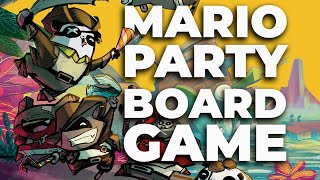




Party Panda Pirates Deep Dive
What the Community Thinks About Party Panda Pirates
Party Panda Pirates has captured the hearts of reviewers as a modern take on the party game formula. Published by Draco Studios in 2024, this light, accessible game brings together colorful pirate pandas, physical dexterity challenges, and a rapid-fire sequence of mini-games that feel both chaotic and carefully designed. Reviewers consistently highlight its vibrant production quality, clever component design, and ability to create genuine moments of hilarity at the table. The game lands squarely in the family party game space, with clear DNA from titles like Mario Party, but with its own distinct personality shaped by physical challenges and a whimsical pirate theme.
Core Mechanics That Define Party Panda Pirates
Mini-Games as the Centerpiece
The heart of Party Panda Pirates is its collection of diverse mini-games, each a complete rules set that rotates through the session. Over six rounds, players select and play different games that blend dexterity, luck, strategy, and pressure. Reviewers emphasize that each mini-game feels distinct in spirit: some require hand-eye coordination like throwing dice, others demand physical balance like stacking components on the pirate ship, while others involve card flips and tile placement. This variety keeps the energy high and ensures no two games feel identical. The design elegantly handles teachability by providing quick reference cards on each game and QR codes that link to video tutorials, making it simple for new players to learn each challenge as it comes up without heavy rulebook consultation.
The Turtle-Ship Dexterity Mechanism
The standout component is the large turtle-ship in the center of the board, which serves multiple roles throughout the game. In the navigation phase each round, players slide their panda meeples through the turtle's mouth, attempting to land them on specific islands to earn bonus coins. The ship's three-dimensional design creates a memorable tactile moment and a light dexterity puzzle that requires aim, slight positioning adjustments, and sometimes a bit of luck as players' pieces jostle each other. This mechanism exemplifies what reviewers appreciate most about the game: it captures the playful, pirate-themed tone through its physicality and serves as an elegant visual anchor for the entire experience.
The Party Panda Pirates Experience
Chaotic Party Atmosphere
Party Panda Pirates creates an atmosphere that feels chaotic without being overly complicated. Reviewers describe how the game generates moments of genuine laughter when players succeed spectacularly or fail in unexpected ways. The mini-games range from silly dexterity challenges to strategic puzzles, but all are quick-resolving, which keeps the group engaged and prevents the common party game problem of extended downtime. The prediction phase, where players vote on who will finish first or last in each mini-game, adds a social layer of bluffing and guessing that deepens player engagement beyond just executing the physical challenge.
Playful Pirate Vibe
The game's thematic wrapper holds up remarkably well. From the adorable panda pirates to the colorful island board and varied mini-game artwork, every element reinforces a lighthearted, maritime adventure setting. Reviewers consistently praise the production quality and art direction, noting that Draco Studios has put real care into making the game visually appealing. The theming doesn't overshadow gameplay or slow it down; instead, it enriches the experience by creating a consistent playful tone that gives context to abstract challenges. Players competing to collect treasure chests while navigating islands and executing silly dexterity games all feel part of the same cohesive pirate party narrative.
What Makes Party Panda Pirates Stand Out
Accessibility Meets Variety
The game manages the difficult balance of being genuinely accessible to families and casual players while maintaining surprising depth in its mini-game collection. Each mini-game can be learned and taught in under a minute, yet players can develop strategies around which challenges suit their strengths. Reviewers note that the game requires no prior board game knowledge to enjoy; instead, players need only a willingness to participate in physical challenges and embrace the silly moments that inevitably arise. This accessibility, combined with the promise of additional mini-games in the full retail version, ensures the game offers both immediate fun and long-term replayability as new challenges rotate in.
Production Quality and Component Design
Reviewers repeatedly emphasize that Draco Studios has invested in quality production. The turtle-ship is a gorgeous centerpiece that immediately draws attention. The color palette is vibrant and inviting. Small details like the panda-shaped scoring tracker show thoughtfulness in design. Most importantly, every component is functional and integrated into gameplay rather than feeling decorative. Players use their meeples in the ship, roll dice for meaningful decisions, and handle cards with purpose. This integration of aesthetic appeal and mechanical function creates a game that feels premium without requiring a premium price point for a family party experience.
Potential Drawbacks
Physical Playfield Durability Concerns
At least one reviewer noted that the turtle-ship can occasionally snag or stick during the launching mechanic, particularly if players apply too much force or the board rests on an uneven surface. This appears to be a minor issue, but it's worth noting for players with older tables or uneven playing surfaces. The inclusion of a relatively small play area in the center of the board means all players need reasonable table space access, and players should exercise care when manipulating the ship to avoid repeated wear on what is clearly one of the game's most-used components.
Playtime Scaling at Higher Player Counts
While the game plays up to six players, reviewers note that playtime can extend considerably beyond the advertised forty-five minutes when using higher player counts. Each mini-game must be played by all participants, and with more pirates at the table, execution and judging inevitably take longer. Some turns can include downtime as players wait for their specific mini-game to be called out, and while this is managed reasonably well, it's not entirely absent. Groups preferring snappier games or with younger players requiring constant engagement should consider starting with three to four players to hit the optimal balance of chaos and pacing.
If You Enjoy Party Panda Pirates
Party Panda Pirates sits comfortably in the Mario Party tradition of tabletop party games, as reviewers frequently mention. If you enjoy Mario Party's blend of mini-games and path-based progression, this game offers a comparable experience with a fresh theme and physical components instead of digital interaction. Reviewers also noted similarities to Catastrophe and Dodo's Riding Dinos, both by the same publisher, suggesting that Draco Studios has a consistent design philosophy around playful, chaotic gameplay for families. Games like Camel Cup, which combines physical dexterity with turn-based strategy, or Crokinole, which features that same precision-and-luck dexterity feel, may also appeal to players who love Party Panda Pirates. For those seeking more mini-game variety, the retail version promises eighteen or more challenges compared to the prototype's six, offering depth for repeated play.
What Reviewers Are Saying
"It's fun, it's accessible, and it holds a lot of value for family-oriented games."
— Quackalope
"This game is a blast."
— Gaming with Edo & Jessica
"It's a silly little thing, a little dexterity game, but it actually does take a little bit of skill and aim and luck."
— Stonemire Games