


In the Shadows: Resistance in France 1943-1944 Deep Dive
What the Community Thinks About In the Shadows: Resistance in France 1943-1944
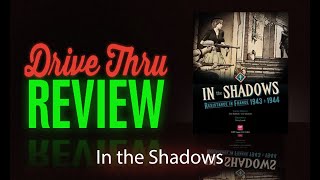
In the Shadows occupies an interesting position in the wargaming community. Reviewers recognize it as a clever, elegant design that delivers meaningful decisions and historical tension in a compact package. The consensus leans toward strong appreciation, particularly for two-player competitive matches, though opinions on solo play vary. Drive-Through Review calls it "fantastic" after initial skepticism, while The Discriminating Gamer ranked it #28 on a carefully curated list of 2025 releases. One Stop Co-op Shop found the competitive variant more compelling than solo, describing the experience as quick but calling it ultimately for their collection rather than a keeper. What emerges across these perspectives is a game that delivers on its promise of card-driven French Resistance gameplay, with the caveat that two-player offers a richer experience than the solo alternative.
Core Mechanics That Define In the Shadows: Resistance in France 1943-1944
The Resolution Deck System and Dynamic Probability
At the heart of In the Shadows lies a resolution deck that shifts probabilities based on board state, creating a genuinely elegant feedback loop. Players draw event cards to take actions, but success or failure depends on the resolution deck, where the odds are printed on a reference chart. The breakthrough comes in recognizing that board positioning directly alters those odds: more alert markers increase detection risk, more visible resistance units change ambush chances. Drive-Through Review identifies this as "really cool" and highlights a critical moment mid-game when players realize "the stuff I'm doing on the board is changing the probabilities of the deck like in real organic time." This isn't window dressing; it makes the board state consequential to every single resolution check. The game avoids the trap of resolution decks feeling like arbitrary randomness by tying them directly to player strategy and positioning.
Asymmetric Solo Bot Versus Two-Player Cat-and-Mouse Bluffing
In the Shadows presents genuinely different games depending on player count and asymmetry. In two-player mode, the German player manages resource extraction while preventing resistance uprising, forcing internal tension between competing priorities. The French player pursues sabotage and recruitment, creating a genuine cat-and-mouse dynamic with bluffing elements. One reviewer notes "you have this kind of tug-of-war" as the German player must decide whether to prioritize confiscating resources or suppressing the resistance, and players can choose to hide or expose units strategically. The solo bot operates via a straightforward targeting system and priority chart, eliminating the psychological bluffing but replacing it with a fainting mechanic where the player predicts bot behavior. Drive-Through Review describes this as "you're sort of doing a faint" and praises how the bot "feels very thematically like just the like the full-on like brute force of the German occupation." Each mode works well for its intended purpose, but they are not interchangeable experiences.
The In the Shadows Experience
Historical Tension and WWII Immersion
The theme isn't merely attached to In the Shadows; it drives decision-making and creates thematic coherence throughout play. The Discriminating Gamer describes it as "really a fun and immersive game of the French Resistance." Players inhabit the asymmetric positions of occupied France: the resistance limited in personnel and reach, forced to work covertly and manage risk; the occupiers enjoying numerical superiority but vulnerable to coordinated uprisings if they overextend. The card-driven structure mimics the uncertainty of wartime intelligence and operational readiness, where actions depend on what cards you've drawn and which region you can efficiently reach.
Cat-and-Mouse Bluffing Tension
The two-player experience hinges on a taut psychological element. Drive-Through Review repeatedly emphasizes the cat-and-mouse feel, comparing it favorably to Robin Hood (their game of the year prior). Units can be hidden or exposed, resistance pieces can be moved or left in place to mislead the German player, and the German player must decide whether to commit resources to uncovering threats or defending territory. The comparison to Robin Hood is apt because both games hinge on bluffing and calculated risk. One reviewer found the competitive gameplay compelling enough that solo play, though playable, felt less immersive by comparison. The tension arises not from perfect information combat but from incomplete knowledge and positioning tactics.
What Makes In the Shadows Stand Out
Elegant Resolution Deck Design
The resolution deck avoids the pitfall of feeling arbitrary by anchoring success probability directly to board state. Rather than a static deck that simply randomizes outcomes, this deck's effectiveness ebbs and flows with player positioning and alert levels. The game does not explain this dynamism clearly in its rulebook, which contributes to an initial perception of dryness; but players discover mid-game that careful board management translates into meaningful changes to odds. This discovery moment elevates In the Shadows from a competent wargame to an elegant design that rewards spatial reasoning and planning. Drive-Through Review captures this realization perfectly: after initially feeling the game was "very like dry," players recognize "the stuff I'm doing on the board is changing the probabilities of the deck."
Asymmetric Design That Works Both Ways
In the Shadows manages the rare feat of delivering two distinct experiences from a single ruleset. Most games with solo variants feel grafted on; In the Shadows gives each mode its own flavor while maintaining mechanical coherence. Solo play introduces personas with special abilities and unique win conditions, which provide variety without doubling the rule complexity. The two-player German player role carries more burden than the solo player's additional persona requirements, an interesting design choice that acknowledges the inherent advantage German has. Rather than force symmetry, the designers leaned into asymmetry and built around it. This approach resonates with players seeking replayability within a compact footprint.
Potential Drawbacks
Dense, Split Rulebook That Obscures Elegant Systems
In the Shadows' rulebook is efficient to the point of opacity. The designers split rules into two separate booklets, one for solo and one for two-player, which sounds clever but creates confusion when learning both variants. More critically, the rulebook does not adequately convey the resolution deck's dynamic nature or why certain mechanics matter until players have played halfway through. Drive-Through Review notes the rulebook feels "too efficient" and "crammed in too much," forcing players to dig into play to grasp the elegant interactions. The reference chart for the resolution deck, while compact, buries explanatory details at the bottom of the page. New players may initially experience the game as dry card-drawing before the brilliance clicks.
Solo Experience Less Nuanced Than Two-Player
While the solo bot works mechanically, the cat-and-mouse bluffing element vanishes. One Stop Co-op Shop found solo "exploitable" and noted that "several mechanics that the solo leaves out" exist in the two-player game, resulting in less varied tactical challenges. The solo experience feels more puzzle-like: the bot follows a straightforward priority system, making player decisions revolve around manipulating known information rather than reading an opponent. Additionally, the randomness of which cards appear in solo felt excessive to at least one reviewer, who found two-player more "balanced" as a result. Players primarily interested in solo play should temper expectations accordingly.
If You Enjoy In the Shadows
Fans of two-player asymmetric wargames should immediately look to Robin Hood, which shares the cat-and-mouse bluffing dynamic and hidden information tension. Both games pit an occupier or tax collector against a resistance figure operating from disadvantage. For players seeking more historical depth in a compact footprint, other GMT Games card-driven wargames in the fast-playing weight class may satisfy. In the Shadows works best for those who value elegant mechanical elegance and asymmetric player roles over crunchier simulation, and who prefer their WWII-era games focused on covert operations rather than grand strategic sweeps. The comparison point from The Discriminating Gamer is telling: they were wowed enough to rank it in the top third of a competitive 2025 list, not for raw innovation but for delivering a clean, immersive experience of French Resistance gameplay at the table.
What Reviewers Are Saying
"The stuff I'm doing on the board is changing the probabilities of the deck like in real organic time. That's a phrase. And so yeah, so that's pretty cool. But the rules don't really like help you get there. You got to really like dive in and play the game to get there."
— Drive-Through Review
"A card driven war game in the shadows. This one can be played solo or competitively, and I did find the competitive play better. I do think that the competitive mode is more varied and more balanced, but still, if you want a quick playing, pretty simple card driven war game that plays solo, you can't go too wrong with In the Shadows."
— One Stop Co-op Shop
"Really a fun and immersive game of the French Resistance, and really enjoyed this one quite a bit."
— The Discriminating Gamer