Lone Wolves Board Game Review | Battle for Survival in the Wild!
Games in This Video
1 game is featured in this video — it unlocks as you watch.
Transcript
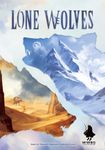
Let's talk about Lone Wolves, a dueling trick-taking game that's all about area control. Welcome to Brains on Games. I'm Dr. Brian McDonald. In this episode, we're going to talk about a brand new tricktaking game that's just releasing maybe as I'm recording this video. Uh it's a game that was sent to me by the folks over at Wonderful World Games. Uh, and it's a game called Lone Wolves. Now, Lone Wolves is a game for two players. It's a dueling trick taker. Kids aged 14 and up. Well, I think younger kids can figure this one out, but the box says 14 and up can play this one. And games take only about 15 minutes to play. Let's take a deeper look at Lone Wolves from Wonderful World Board Games. I've got the board all set up here. This is the basic board. It's actually double-sided. And if if you flip it over, you can play a more slightly more advanced version of the game where there are different number of spaces for tokens on on different parts of the board. So, you can make it a little bit asymmetric. Um, but this is the basic version of the game. You've got victory point, honor point, counters, uh, in each of these areas.
You want to control these areas of the board to win the game. And then there's these scar tokens that I'll tell you all about. This is a a light trick take. While tricktakers typically are light, this is a light trick-taking game, but it is on the heavier end of light. Uh it is a little bit tricky uh to kind of figure out how points in this game work and how exactly where exactly to play those cards. You're going to win this game not by winning the most tricks or even by controlling the most areas on this board. You're going to win the game by earning the most honor points at the end. So, area control is going to give you a chip that's going to give you some honor points, but there are other ways to earn points as well. This is a deck of 30 cards. You've got uh five different suits. The cards are numbered two to seven. You're going to deal out 13 cards to each player and four go face down in the box. You're not allowed to know what those four cards are. As I said, they are numbered from 2 to 7. Uh, and a couple of cards have actually special abilities. So, a two will beat a seven. It doesn't beat any of the It's the lowest number. So, if you're up against any other number besides seven, the two is going to lose. But the two beats a seven in the same suit. The other card that has some ability is a three. If you play a three to the table, you get to flip over one of these faceown tokens on the board. As I said,
there's a little bit of mystery here about who has what card because four of the cards go into the box. There's also three extra of these tokens. They're called scar tokens. There's three extra ones, too, that go into the box face down. So, there's a few things. There's a little bit of uncertainty here in terms of what cards the players might have and what tokens are available on these different areas of the board. How do you play this game? Well, this is a mustfollow trick-T game. I did a video a while back about all these definitions about different trick taking terms. This is a mustfollow trick taker, meaning that if I play a card that's in the red suit, you have to play a card in that suit if you have it. Otherwise, you can play any card. Now, at the beginning of this game, there's no trump suit. Meaning that any card in the lead suit is going to lose. Uh eventually, Trump is revealed and there is a suit that's more powerful than the suit that's led.
So, you've got 13 cards. That means you're going to play this game over 13 tricks. And it's very simple. You play a card onto your side of the board. Your opponent does the same. Now, your opponent does not have to play in the same area that you did. They could play in a different zone of the board. Then you just compare the numbers. Who wins the trick? This this smaller number here, number four, is going to be the loser against a seven. it flips over and it's only going to be worth it's only going to have a power of one when it comes to area control. The player on my side has seven power in this zone, but over here my opponent only has one. Now, what's interesting about losing a trick is that you then get to take one of these tokens from the area that you played into. You could take the face up one or one of these face down ones and you play it somewhere on your side of the board. Eventually, these zones are going to lose all of their tokens. And that's how TR how the Trump suit is determined. So, as soon as one of these areas no longer has any of these scar tokens in the middle of the board, they get this full moon token on here. Now, green is trump. Uh, the winner of this area is going to also get an extra five honor points at the end of the game. The second time that happens, the second zone that loses all of its tokens is going to get the blood moon. That's worth three points. This is the new Trump suit. So, if I happen to eliminate all of the tokens from this zone, then it's there's it's going to be worth
three extra points. But now, instead of green, white is going or blue actually is going to be the trump suit. Eventually, these different areas are going to start filling up with cards. And one of the other things uh that you need to pay attention to in this game is that each zone can only contain a maximum of six wolves. And that's on both sides. So here we've already got five. So if one player plays one more card over here, no more wolves can go in that spot. Uh and on this side at least, the number the strength and the number of victory points you're going to get is already sort of predetermined. At the end of the round, the end of the game, your board's going to look something like this. And then you're going to be looking at area control. You're basing your area control totals on the numbers here that are on the wolves. Sometimes there are power bonuses. So here on this side, we've got plus one per card, and that's power. You can tell from the dark background. So here we've got a total of six points on this side. Uh only two points on the other. This player on this side is going to get five honor points.
Nothing. There's no extra honor for these guys over here because there's no token that allows that to happen. Here we've got another win on this side. So, six points plus an extra five for that token, plus an extra three for the blood moon. Now, we've got a bit more of a contest. So, you've got six points on one side. You've got more than that on the other. Plus, there's a plus one strength here. So, here the player on this side is going to earn a total of 17 points just for that one zone. Doesn't take very long to play. It's only about 15 minutes. It's all about just resetting the board. And like I said, if you want to play a a more asymmetric version, the flip side of this board has a different number of spaces for tokens on either side in different areas. The other thing that I'll mention about the advanced part of the board is that some of these token spaces cross cross borders. So, they affect both sides. So, it does make things quite a bit more complicated uh and give you a bit more in terms of the strategic options of where you're going to play those scar tokens.
What skills though are you practicing when you play Lone Wolves? Well, this is a trick taking game and so memory is important here and and one of the things that I think uh increases the demand on memory is that these cards are going to be face down as they lose tricks. So, you need to remember which cards did you play that are now turned upside down and are lone wolves and which cards did the opponent play. there's still going to be some question marks and you'll have to think about probability because some of those cards are in the box and they're they don't come out to be played with. So, you're you're not going to be 100% certain which cards your opponent has the option to play. But, we are talking about some demands here on memory, visual memory in particular. You're remembering that that card in the suit uh that you've placed face down. There's also the spatial puzzle here of the area control part of the game. This is not just a trick- taking game where you're winning by number of tricks. You want to control a particular zone or lose a trick in a particular zone so that you can take advantage of the tokens that are available to you that are going to increase your power for the area control part or increase your victory points at the end of the game. Final thoughts though about Lone Wolves. Uh this is I think a very clever trick-taking game that's a lot of fun. We had a good time playing this one because of the the addition of these scar tokens and the area control elements. It's very simple.
It's a two-player trick taker with the high number that wins, but there's so many little twists that make it unique. There's no trump suit until one of those zones is cleared of tokens. And then the trump suit changes probably very soon after. So, you've really got to think ahead a little bit in terms of which cards are you hanging on to. You've got a two that can beat only a seven. So that makes things a bit more tricky. You've got those threes that allow you to reveal, but you're revealing the scar tokens to both players when you play a three. So that makes it interesting as well. And then you've got all of those tokens that could add victory points or rob your opponent of victory points or change the power level in a particular zone. I mean, I lost the last game by just a couple of points because my opponent had one empty space that he was able to play a scar token into. He lost a hand so that he could get a plus one per card on his side of the board and that allowed him to beat me by one in that zone and earn it earned him 12 points and then I lost those points and I lost the game. So the area control makes things so interesting uh because you are going to lose intentionally sometimes there's some maybe cognitive dissonance there. I I want to lose this hand so that I can get that token and play that token into a zone that's going to help me later on. Um what a what a a a unique I think um tricktaking game. I would say there's a lot of replayability here again because you're going to be
trying different strategies. You're going to have different combinations of these scars on the board. And as you get better at the game and you start to remember what the different options are in terms of these face down tokens, it's going to give you a bit of an advantage uh when it comes to guessing. Okay, where do I want to lose so that I can get one of those face down things? What could that face down token be? And then you've got the artwork. You've got these lone wolves with the scarf as they lost a battle. Uh, but I kind of like that the lower numbers are younger wolves and then the higher ones are the stronger. And this is the alpha of the pack maybe. Well, when you get to the seven, you've got the pack alpha over here. That's the strongest one in the game. So, you know, it it makes it a little bit more thematic maybe. Uh, but we really really enjoyed this. This is one of the better trickt takers that I've played um in some time. It's been a really good year actually for tricktakers. I've played three really good ones uh in 2025, but um this is this is definitely uh one of the better trick takers that I've played in ages. Are there downsides though to Lone Wolves? I mean, I would say not many. You've got the the double-sided board with the replayability that that that allows. You've got all the different tokens and combinations of tokens. I mean, maybe the tokens are going to be confusing to new players who haven't played these kinds of games before, or the the the area control versus the um the honor points was something that was a bit confusing even to us at first. We had to wrap our head
around the idea that these are not points at the end. These are just power to control the zone to earn you the points and it's the points that are important at the end of the day. So I I mean it was a little bit tricky to grasp at the beginning, but I don't think it's I mean it's a light game. It's there's nothing too complicated there and you can play a few rounds and get used to it pretty quickly because it's a fast playing game. Um it is two-player only though, so that is one disadvantage if you have multiple players. I've got a bunch of people coming over tomorrow to play some games. We can't play this one because there's too many of us. So we won't be playing Lone Wolves unfortunately. But what a great two-player trick-taking game. A competitive two-player trick taker. Uh, and I've been lucky enough to play some really good trick takers lately. So, it's a mechanism that I love. It's a kind of game that I really like. So, thanks so much to the folks over at Wonderful World Board Games for sending this one my way. If you have any questions or comments, you can, of course, leave them in the comments section below the video or you can email me at bryantbrainsgames.ca. Brainssonames.ca is the website. That's where future episodes will go and the previous ones are already up there. Brains on Games is the X handle in the Facebook page and the Instagram feed and the Blue Sky page. We're all over the place. And so if you enjoyed this video and you want to be notified of future ones though, you can head on over to YouTube and click that subscribe button. Thanks for joining me and hopefully I'll see you next time.