Ishtar: Gardens of Babylon
Games in This Video
1 game is featured in this video — it unlocks as you watch.
Transcript
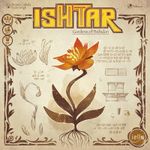
Hello. So, today I want to talk to you about the game Ishtar: The Gardens of Babylon. And this is a game that came out, I think like sixish years ago or so. And I just feel like it is underrated and doesn't get talked about enough because it is a really solid game. Its theme works really well for the way that it plays. And I think this is fantastic. It's for two to four players and there is a good fan-made solo mode available on Board Gamegeeek as well that I have played and think that it represents the game very very well. So, in this game, you are trying to help with these gardens and you want to get your assistants out there in the best spots to make for the best gardens. So based on player count, you have these different tiles and you will put out a certain number again based on how many people are playing and you can kind of arrange them however you want. Um there's sort of like a standard arrangement that it suggests, you know, for your first play, but after that get wild with it. So then there are going to be fountains placed out and these fountains are different colors and the colors are important. White fountains are the most valuable and will score you the most points if you control them at the end of the game. A lot of this is about controlling different things in the game. And these fountains are what provide water. And obviously gardens need water. So the gardens must connect to the fountains. And then you want to have your assistants be the ones who are controlling the most in that
area. You're going to start out with some assistance and some you're going to have to earn. There's only a maximum of four in the game for you. So, when you place them, you want to be very strategic about where you're placing them, knowing you can continue to build onto them. On each place on this board, you can see, or not on each place, on each of the rocky places, there are different colors of gems. So, there will be white, which are the most rare, and then purple and red gems out there. And when you place a tile covering those, you will collect those gems that you can then spend for benefits and upgrades throughout the game. So, every player is going to have their own player board. And there are lower row benefits that you can unlock. And once you've unlocked a lower row, you can unlock the one above it if you meet the requirements.
But you cannot unlock these until you've unlocked these. The bottom rows are going to get you some immediate benefits and the top row is going to get you usually a benefit or an endgame scoring condition in some way. So things might be worth points at the end of the game that if you have not unlocked that they otherwise wouldn't be. So this is your board that is very important and it tells you what you can do. So everybody will have that. But how are we placing stuff out in this game? Well, we have a central tile that looks like this. And there will also be some singles in here that will be out there. And then we have these different tiles that have shapes on them and they correspond to the shapes of the tiles that we have. So we are going to place these out on the board which again gives us a little bit of variability game to game. And so then we know which shapes go where.
Let's see. These are here and here. And then these are here and here. And there will be the watering can. And so on your turn, you will advance the watering can one position. And you will take that tile and you will place it out on the board. And you will then potentially get gems which will help you. And you'll see some tiles have symbols on them that will allow you to do different things. And some tiles will have a lot of garden spaces and a lot of flowers. and those are what are going to score you a lot of points in the game. So, you're going to pick the tile on your turn that's the next in the order and place it out on the board according to the various placement rules. There's ways that things can touch. And if I have an assistant out there controlling an area and someone else has an assistant out there controlling an area, you can't place a tile such that it would cause them to touch. So, there's different rules about how you can place it. So you need to be strategic about how you are going to place the tile that you are choosing and looking at what you have out there. You want to see how you can maximize everything like how can I get more flowers because at the end of the game the more flowers I have the more points I get. Can I build onto my own garden? What color gems do I want? Can I place a tile such that I can get those?
Because then the gems are how you do the upgrades on your board. But also, there will be these different tree cards out there and they will allow you to get some big endgame points. So, for this one, if I have three purples and two whites, I get to take this card, which will be worth 13 points at the end of the game, and I get to place this tile out there. And you can buy as many cards as you have gems to do. So that's where placing these tiles out there to get the gems of certain colors and especially ones that are rare are going to be worth tree cards that are worth more. So as you can see, it all just kind of flows together and there's a lot to think about on each turn of, okay, this is the piece that I'm getting. What do I want to do with it? Where do I want to place it? Do I want to build onto something I have existing? Do I want to start something new? Do I want to try and play defensively in a way that I think may block other players? Am I going for straight gems? So, there's a lot of different things you can think about, but the game is very approachable and I love anything with tile placement. I think the theme is lovely. I think the game is fantastic and I wish more people knew about it because I highly recommend Ishtar Gardens of Babylon. If you've played it, let me know what you think or if you've never heard of it and have questions, let me know. Give me a like and a follow and I'll keep bringing you more board game content. Thanks. Bye.