Barony: Royal Edition - Game of the Month June 2025!
Games in This Video
1 game is featured in this video — it unlocks as you watch.
Transcript
Hey there, I'm Jonathan with Getting Games and this is my game of the month vlog. This is the game that I had the most fun with over the last month, this being June of 2025, and that is Barreny the Royal Edition. Now, I talked about this in a Patreon exclusive segment where I discussed how the game worked as well as the things I thought about it. And you'll see live chat on screen because I record these as a live perk for the Patreon supporters. So, if you want to join in on those, then please go to gettingames.com/support to learn how. And I think let's jump into the game. Although, real quick, if you have thoughts, leave a comment down below, like, subscribe, all that kind of stuff. Okay, now let's go into the game. Barren is a brand new game, except that it's not. So, this game came out in 2015, and a new version just released.
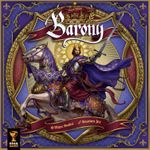
It's the Royal Edition. It's fancy. It integrates uh a sorcery expansion, which I think was kind of hard to get. It was an expansion that came out for the original game and it also has this new version of Barreny which I'm pointing at. This is the version that I played. It has asymmetric player powers that you can also start with. That being said on screen I say Barony 2015 because I've played this for the first time ever. I played my royal edition and we did not use sorcery the expansion and we did not use the variable player powers. So we functionally played the rules for the original game. Now I remember when Barren came out in 2015 and it was kind of a thing. It's like, oh my gosh, the designer of Splendor has a new game. And so I, you know, went to look at it and I was like, oh wow, I don't want anything to do with this. Because at that time, I was all about that multiplayer solitire indirect interaction Euro type thing.
And then this is a big hexagon map where you have pieces like knights on the map that move around and kill each other and destroy villages and you steal things from your opponents when you destroy their villages. And I was like, nope, nope, nope, nope, nope, nope. But I do remember I watched a playthrough like in 2016 or so. It was a two-player playthrough and I remember watching it being like maybe like there was like a little sparkle in the back of my head like maybe I do actually kind of want to try this even though it goes against everything that I think I like about board games right now. Well, fast forward. It's 2025 apparently and a Kickstarter for this one went out last year and I backed it because these days I love highly interactive shared space old style Euro games and that is kind of what this is. This is also a troops on a map game to a certain extent. Although, well, I'll talk about the although to that in just a little bit. It's a troops on a map game in the sameish way that Scythe is a troops on a map game. That's maybe an extreme example that people won't agree with, but I'll get to it soon. So, let's do like a highle overview about how this game plays. You have a hexagonal board, a hexagonal grid. You assemble it uh together. You kind of smush things together um into sort of an amorphous shape. The rubric says try to make it symmetrical. So, we did. And then, much like katan, actually, at the beginning of the game during setup in a snake draft, people are going to put their starting positions down um as a snake. So, by katana, I mean the beginning, like you're putting down the initial settlements. In this game, you put one, one, one, one, one, and then two, two, two, two22. So, at the end of setup,
everyone has three cities on the board, and you only have five cities total, so you can build them more as the game goes on. Then you start playing the game, and on every turn, you do one action out of seven options. I think the sorcery expansion brings in an eighth option. And we all have a really good player aid. Let's Yeah, there we go. The game comes with a a great player with icons. It explains all of the different actions and we don't need to share that too much. But essentially at a high level, the first action is recruit. You have these troops. You only have seven of them. Nine. Nine or seven I of these. Not that many. And you start with three of them on the board. And when you recruit, you put two or three of these down onto one of your cities. So your cities are focal points where you can essentially put new troops onto the board. The next option is you can move your troops around. I'll just call them knights because that's what they're called in the game. When you do this, you move up to two knights once and you cannot move the same knight twice. So, the movement is really slow and incremental. If a knight moves onto a space that has another knight or another like village, that's fine. They just coexist. Like, hey, what's up? Yeah, we don't like each other, but that's fine.
As soon as you have as soon as a player, let's say, has two pieces of wood on a a spot where there are any other player pieces with only one piece of wood, the two pieces of wood player annihilates the rest of the pieces. You remove those knights, you remove those villages. It's just it just happens. There's zero randomness in this game. This is a 100% perfect information multiplayer abstract game like entirely, which is fascinating to me. So, uh, when you remove a knight, it just goes back to that player supply. When you remove a village, if they have any resource tokens, you get to steal one of your choice. Now, the next action after this, after removing, is you can convert your knights into villages. And this is where in a lot of ways the rubber meets the road because when you do this, you remove the knight from the board, you put a little village down onto that spot, and then you take a resource token based off of the spot that you went on. So if let's uh let's zoom in a little bit over here. If you put a village down onto the planes, which are these light green areas, you will take a four point token from the supply and put it in front of you. Like that village has gained you four points is uh if you put it into a forest, you only get three. If you put it in the mountains, you get a two. Gh. That's terrible. The fields, you get a five point token. That is pretty attractive.
And the reason for that is because, well, there's another action where you can make cities. Whatever. That's boring. It just gives you points. The um really where the rubber meets the road is if we zoom in one more time for an action on your turn, you can cash in 15 or more point tokens back to the supply to move your victory point token 15 points ahead. So essentially, these are potential points that you have. You have not banked them yet. You bank them by discarding them and advancing your track, your token. This track is really strange. Uh, it's a victory point track and it goes up in 15s as you move to the right and as you go down it goes up in tens. When you build cities, you can convert villages into cities. You get 10 victory points and then you have a new city where you can put new troops down. So, you are trying to move your knights around to then bump people out of the way. Of course, if they're in the way, you're trying to get them to the lucrative spaces on the map and then convert them into the best resource tokens, which are potential points to then try to cash those out and get permanent points that people can't take those away from you. The game ends, there's one trigger. The game ends as soon as anybody hits the last section. I think they become a duke. You start out as barren. The like as you go up the score track thematically, your your title increases and then you finish the round and most points wins. Um, you might not win if you're the person who actually pushes it to the end. You might not be the person that wins in this game. That was actually the case, but you are just posturing trying to take these things. And of course, 15 divided by three is five. So these yellow fields, you just need three of them. You just need three of those tokens to get the 15 that you need to advance. And you
need to advance 1 2 3 four times to trigger the end of the game. Let's talk about what happened in this play. Uh to start off, I had a great time. We played this four players. Um the map gets bigger with more players and I uh like right from the very beginning of the game I was like okay fields are five points. You need three fields to advance once. That is my game plan. At the very beginning of the game I was the purple player. We put down our cities and I went for the outside like really close to the perimeter with all three of my first starting cities and I proceeded and I put them down specifically next to as many of the yellow fields as I could. And I was just like that is what I'm going for. And that was my game plan. As I proceeded to play the game, I would get three fields, cash it in. Three fields, cash it in. In fact, I think at the end of the game, on my last turn, I did reach the very last level. Three out of the four of us actually reached this last Oh, no. That's not true. Whatever.
I'll talk about in a second. I could have reached the last level. Only on that last one would I have used anything else. The first three steps were just field field. So, I guess I got 12 fields over the course of the game, which seemed like, oh yeah, that's definitely what I'm going to do. Like that's the be best math. You only need three tokens. The other ones you need to piece together other things. The problem was as the game proceeded that I realized I was burning lots of turns slowly moving my pieces over to get to these fields. Whereas I could have spent way less turns going to less lucrative spots to then put down the villages, pull back the tokens, and then have more tokens to get up to that 15 without burning so many turns moving these troops around. But I had a goal. I was like, I'm all fields all the way. And when the dust settled in this game, the very last round, I actually I'm not 100% sure about this anymore, but I was sure at the time I that I flubbed. Like I I had a situation where I could pull back, have the perfect 15, go to the end. I didn't think anybody else would be able to get there, but I flubbed it. I missed it. Another player did something which kind of threw me off guard and I ended up in third place. But the scores were so close that um the top three people were jostling. It realistically it almost felt like a game of uh musical chairs, cakewalk, that kind of thing if you're familiar where everybody like the three out of the four of us were just like slowly walking around waiting for the music to stop to jump into the chair to be the person to actually claim the win. And the way that posturing worked was fascinating. Um I do want to briefly cut in. It says uh Rishi says uh is the map fully random? Yes. Uh it's made up of triple hex tiles, but it's a ton of
triple x tiles. And uh what about point tokens? Is the field always the most points? Yeah, it's always the same. Every field is always five. Every uh plane is always four, forests are three, mountains are two. Always. So I mentioned at the back of the beginning that this game is a troops on the map game in the similarish way to the way scythe is a troops on the map game. And what I meant by that is the threat of the troops is way more of a factor than the actual fighting that happens in this game. There was some fighting. I think I I took over one village over the course of this game. The person who won ultimately, again, it was crazy close. They maybe took over one village throughout the game. The other two players, one who was also right there and the other person, they were tit for tatting all game long. Like they probably fought each other like four or five times, which is why I was surprised that one of them was posturing to potentially they got really close to winning cuz I assumed that they were just going to tank each other. But for the most part, when I was playing this game, I was constantly thinking about the threat of somebody taking over my stuff. But the fact that knights always move exactly one space. You can move two of them one space, but you can't move one knight multiple spaces means you could see things coming. You can plan ahead. So almost every single turn, I was like, "Okay, as it's going around the table, I'm like, okay, if Andrew advances that one troop there, then on my turn, I'll have to do this so that I can counteract them in time. If they don't, then I'm going to do that. And there are many situations where it's like if Andrew does this and then uh Aaron does that, then I am in trouble because I cannot defeat both of those
things. But every single turn, it seemed like I was able to just kind of posture or like you'd squeeze in a recruit and the next person's like, "Oh no." Because they can tell that like I could recruit, move, move, and they haven't recruited. So they would be recruiting behind and they wouldn't be able to get to that spot and then you could fortify. Also, if you have two pieces on a space, you're safe. Nobody else can go into there. Nobody can take it away from you. So there's a lot of ability to kind of protect yourself, wall yourself in. But of course, if you have two pieces, like two knights, you only have like nine knights total. So you're investing a lot of your potential doing that. Especially considering when you convert your knights into the villages, you bring your knights back. So you can project um force onto somewhere else on the board. In this game, I was spending so much of my time posturing that I never really had a force to project out onto the board. So people were able to kind of not really worry about me at all because I was just being so defensive with my knights. And again, I was this close to winning. So it's not was not necessarily a poor strategic decision on my part. It was just fascinating to see all of these different styles work. Uh the person who ended up winning, they did not gun after fields. They got a few of them, the five point ones, but that was not their main strategy point. Instead, they began the game moving out their knights to the ideal city locations. Twice in the game, you can convert a village into a city.
And it's just like that. Like, you just convert a village into a city. The only restriction is you cannot have cities directly adjacent to each other. And by the time I kind of realized this, I realized that all of my good city spots were gone. Like, so Andrew at the very beginning of the game said, "Not really going to worry about points. I'm going to posture to get all five of my cities out to the best locations on the board to quickly put down recruit uh to recruit troops and move them out to to get to the various spots." Essentially, he played for the mid to late game. And I just started I was like field field field field and and yeah the moment I looked up and I'm like oh crap I can't really city anywhere that's good because you can't put a city down onto the forests and there were a lot of forests near me. There's other little rules about the mountains and you can explore to appear on the map. But what a fascinating game. Like it did take us like an hour and 45 minutes so it was not the quickest game in the world.
There was a decent amount of crunching. I think some of the players kind of groed it a little bit better than I did at the very beginning. I always kind of had a plan. Like it was rarely my turn where I had to sit there and think for a long time because I was just constantly thinking on my turn, analyzing everybody else's board position because if you slip up and you don't realize, oh, you know, Andrew, move that one token here. If you don't notice it, you could, oh my gosh, it could just wreck you because based off of that positioning, this example is a bad one, but if they destroy one of your villages, they can steal one of those five-point fields and that is devastating. I do want to I I guess mention that at the end of the game, you may have noticed these uh victory point tokens have two numbers on them. The second number is smaller and it's two points less. Each of these is worth two points less than their value at the end of the game. So yeah, every field that you have that you don't cash in, it's worth three points instead of five. And because of that, actually two out of the three of us who were jockeying for the win, we did not advance to the last position because we um by doing that action, we would be banking those 15 points, which you know, if we have three tokens, it's like, you know, minus six if you kind of keep them. But it made more sense on our last action to just pull up more tokens from the board. Like I think I got 16 points total at the end by I think I got one more point by not cashing them out and just grabbing from the board. Anyway, those are some minutiae details. Let's see here. Rishi asks, "What did the cities do?" So, cities are invulnerable.
Nobody else can move on to them. But the primary thing about cities is that's where you recruit new troops. So, if people kill your troops, then you could put them down somewhere else. And the primary thing is when you convert a troop into a village, now you have it. You remove the troop and you put the village back down again. And if the city is next to water, which I made sure all of mine were, for one action, you could put three troops down. If it's not next to water, you only put two. But that one action is huge because then those knights are there and they can move out and they can threaten other people, forcing them to do less efficient actions because they're worried about you. Um, oh yeah, I kind of lost track of my scythe thing. So, in my experience playing Scythe, I don't generally do much combat. I don't actually see that much combat except for the one player who really wants to do combat. Usually, it's the threat of combat that matters in this game. I'm not saying there shouldn't be combat in Scythe. I think it's incredibly important to play around the worry about being attacked. Like I said, I I never got attacked. Actually, I I attacked once and I was never attacked because I played so defensively, but I was constantly aware that I could be attacked and I played around that extremely. And I think that's a really smart thing. So, in a game that looks like it's going to be just like a blood bath, it actually wasn't. It was largely peaceful. just that that threat was just omnipresent and you had to play around it. And yeah, that that's kind of where I landed with this one game. I I really enjoyed this first play. I think a three-player game would be fascinating. I think a two-player game would be fascinating. I mean, like kind of chesslike in a lot of ways because again, 100% open information. Um, after, you know, you
assemble the board at the very beginning of the game. I'm not sure if I'm ever going to play with the sorcery expansion, though. Like I guess it's cool that this outer print expansion is now baked into the game, but it brings in spells and you can spend magic to cast spells and these spells let you do things like move a troop two times or kind of teleport around or like your villages act like this or that. And I'm not sure if I want that kind of extra stuff going on. Like I like the simplicity of every knight can only move once. You can plan things accordingly how many turns it's going to take. I could see if I played this game a bunch with my friends who played it a bunch, it could be fun to bring the spells in for some extra variety. So, never say never, but I'm not really sure I want that. And similar thing for the asymmetric player powers. I should look at them. I'm curious to see what they are. But again, that that's I feel like that's going to bring in situations where like I play and then the next person says, "Okay, now I do this." And I'm like, "You can't do that." Oh, that's your power. I forgot about your power. I have a power and all of you do.
And I I could see situations where I play poorly because I forgot about a power as opposed to fully understanding the situation. So again, I might try it if I play this game a bunch, but it wouldn't surprise me if I only played this original version of the rules. Speaking of the version though, I do want to briefly highlight that I think this is a gorgeous version of the game. Uh I got it on Kickstarter and it had like I don't know if this is the deluxe version or whatnot, but this is the way I like deluxe tokens. Big chunky wooden pieces that are not too big and that are silkcreened. I I think silk screen wooden pieces look on like 10 times better than any plastic miniatures. I'm just not really a plastic miniatures person. They're fine like when they're in there, but like when we played Cichlides, I I got the extra screen printed wooden minis version and that's that's the way I will play it in the future. I will not use all of that plastic because I think these just look gorgeous. The map tiles themselves look standard good. The score track ah it looks nice. The artwork is nice. It's a good looking game. But the biggest thing is these pieces just popped so well from the board with the screen printing and the the shapes of them. Like the cities are just big. You could really see those cities. And the player array is really good. Um I'm not really going to go into like the details of it, but just glancing at it, it's like, okay, spawn um two knights where there's a city or three nights where there's water, move the knights, um you know, spawn the uh convert into cities and get the stuff blah blah blah blah blah. And then there's some stuff for sorcery, which I really don't understand cuz I didn't even read the rules to. It's just a really good version of the game. I'm not sure how expensive it is, and I'm not
sure how to how like out of print the original version was. Um, actually, I'm curious. What did the original game look like? Pretty good, honestly. Wow. You got these uh multi-layer cities. That's cool. And the knights, huh, it's a good looking game. Yeah, that's a really good looking game.