Wild Gardens - Board Game Review
Games in This Video
1 game is featured in this video — it unlocks as you watch.
Transcript
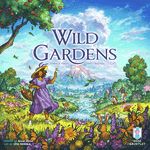
welcome to allies or enemies I'm Jess and I am Sean and today we are talking about wild Gardens and our copy was provided for review but the thoughts in this video are all our own wild Gardens is a one to four player game designed by Isaac Vega and it is all about forging you go around collecting different ingredients use those ingredients to make re recipes and then serve those foods to various guests collecting a whole bunch of points along the way now let's take a closer look at how it plays you start the game with an empty board a few action tokens and a forager ready to forage on your turn you choose one of your action tokens move whatever distance is on that token place it on one of the sections of your player board and then do that action the actions include foraging which lets you gain ingredients from your space cooking a recipe using the ingredients you have serving a cooked meal to a guest reserving a card to cook or serve later and studying to check out a book and gain a new skill if you have any skills attached to your chosen section you will also activate those at the end of each day you choose one of your action tokens to place on the location board and get a bonus at the end of 3 days you flip your location and start a new trip and at the
end of two trips or six rounds you add up all the points you gained from both normal and jar scoring any endgame scoring from guests plus a few extra points for leftover ingredients and then the greatest forager is named so I think the most interesting part is that you've got your basic actions but you're going to be upgrading those and that is a really key thing because we learn very quickly the value of being able to pick and choose what additional actions you want to do along with those basic actions and that can really shift the direction you go as well yeah I think in our first game we were like oh it feels like you have to do so much foraging to like finally get to make recipes and do the rest of it and then it took us kind of a game to realize like oh no we should really be adding all different ways to ingredients onto the bottom of that yeah and it can be a tough decision of what to buff it up with as well cuz forging always seems strong or being in the same space that gets you double of an ingredient as well but even just getting points like it is quite beneficial to be able to have more choice on where you land so the plus or minus one movement space can be particularly helpful on like the picnic if you want to land on a picnic spot to serve Gest or to cook food that just lets you do that more often as well yeah and I should use that more so I really like to buff something up with a whole
bunch of the foraging for sure and I like to put that on the cooking serving one because it feels like then I can cut out a step go there and as long as I kind of Target what I'm foraging with I I can like make a a recipe immediately get the stuff make the recipe if unlucky enough yeah there doesn't ever seem to be a completely wasted action the the one that might come the closest is reserving somebody but then you also get two points and I have found that reserving can be incredibly important because it's quite often that we're gunning for the same person and if I'm really kind of hoping I could get them but I'm a few turns away I'll want to reserve them to make sure I do and if you're mean as well and we've both done this at least once where we see oh I see they have all the ingredients for this person I'm just going to take them even though I can't make them I'm going to make them at some point and it's two free points for me um so there definitely is interaction in that part of it as well there's actually quite a bit of interaction in this game more than you'd think yeah and one of the key bits of interaction is that you can't land on the same space as somebody so just somebody moving ahead of you can interrupt your plans and you do have to try and like plan things out in advance because your action tokens let you move only so many spaces and so you do want to have an idea if you're collecting ingredients this one turn but you want to make them the next turn that you have the right movement spaces to do that and then if someone gets in your way that might throw that off as well so there there is a lot of planning it's it's certainly uh like a thinker game than I
had expected in our first play and it is tricky because each journey is three days and at the end of each day you lose one of your movement tokens so by the third day you only have three tokens left so that restricts your movement even more and those bonuses are going to change most times that you play as well because there's this deck of cards that is your the places that you're foraging and those all have different in the morning bonuses and then also at the end of the day bonuses and those morning bonuses are going to give you like free foraging or they're going to let you cook something or they're going to do quite a few different things that are really kind of gamechanging and that's just kind of one of the points of replayability in this the other biggest differences are well there's two sides to the board as well and it actually does feel pretty different on both sides as well one of them lets you like wrap around yeah you kind of Pacman out one side and Pac-Man back into the other side yeah yeah exactly and then there is I think the the biggest thing are all of the different guests you can serve because the different guests have different bonuses so some of them will give you like just a lot of points some of them will give you a power if you discard them some of them give you a pretty strong power when you serve them some of them might be like not a lot of points but give you a jar so that's another path you can take because there really are are these two different scoring tracks where there's just the regular points and then the the jar scoring track and for the jar scoring usually
those cards will just get you one point and a jar but then anytime you're able to score your jars you add up everything in your play area and the way the jars work on the scoring track is like sometimes it moves like Five Points along so even just moving your jar a few times can get you a lot of points when you add the two together at the end yeah and that is really satisfying as well like that have those two ways to go cuz last time we played I was doing everything as like immediate gratification and you were doing everything like building this engine and at the end of the game I think I won but only by like three points because all of a sudden in those last couple rounds you had this huge catch up because that jar scoring you score like five jars can equal like 20 points if you're doing that in the right part of the track yeah and it is a little bit tricky because you have to find the jar scoring opportunities but they are usually included as one of the end of the day bonuses and the thing I hadn't mentioned yet too is a lot of the guests come with end of game scoring as well and so that's going to shift too because often you're going to have to like collect a whole bunch of one type of ingredient or various scoring conditions that will shift what direction you go and one thing though with a lot of the replayability is it is kind of dictated by what comes out so there is you know a fairly good chunk of Randomness in this game so you may have to kind of hedge your bets a little bit it's not really a negative but it does mean that you can't always have exactly the path you want to take so there is a little bit of a mix of planning ahead and you know going with what is available and I think not
being able to take the path you want to take ties into how you're building your actions as well that we already talked about but that is a huge part of the replayability because depending on what tokens are available to study will change what actions you choose and how you're using those actions significantly and the other thing that is going to change how it plays is the player count and we've only played it at one or two but it really feels like it's going to play differently I think from from two to four players yeah and I really like the two-player game because at two players you have a pretty good idea of what spaces you can end up with on that shared board like if you're really far away from me then I don't have to worry too much about you getting in my way whereas at more players you it's going to be a bit more chaotic you don't necessarily know where you end up and that might work out in your favor CU you might be like oh I can only go one space and I need to get to a picnic table and then be like oh good people ended up right in front of me so that worked out well so if you like that like interaction and a little bit of that chaoticness then you'll find that in more of the three four player game but if you want more control of like where you end up you'll find that in the two-player game in neither case is there like negative interaction you aren't stealing ingredients or anything but you might just be like taking customers that the person wants or reserving recipes that you know the person's going to build so it's more of that like
passive interaction I'd say passive aggression sometimes especially with stealing the customers and the recipes yeah there can be it's not like like take that but it's certainly a little bit of like I know you want that so I'm going to take that there's a little bit of that in there and the boards it's worth mentioning as well the boards uh there's no Extra Spaces for two players or four players so you're playing with the same number of spaces and there's not Oodles of spaces on that board so I would think at four players you can pretty much like run all the way around the world in one turn if you're just hopping over people's heads all the time and there is also a solo mode for this game and it's kind of a campaign based solo mode so there's not like a bot player that you're playing but you've got a bunch of specific goals sometimes there's a bit of a specific setup but the main thing that you're doing is serving specific customers and then there's a bit of kind of a Charming little story to it as well so all the cards have a little number at the top I didn't know what that meant at first but it's story bits that are going to come up in the solo mode book so you'll go through and it'll be like oh someone like stole my fruit where's my fruit there's like a fruit thief and then there's like this little kid with a watermelon on his head who's like I really love fruit and it's all just so Charming that is a little bit of a sweer for the very first beginner one I haven't played past that so I don't know about the rest of them but from what I've played it's super Charming it works really well actually even though it is kind of a best score mode it's the best score mode with all of these specific
challenges that you have to hit and there's a like a good chunk of challenges in the game as well that you have to get to so I I really like the solo yeah the solo comes in like a pretty hefty book that I was interested in it and I might want to try it sometime the components here really across the board all look really lovely it's all very Charming I really like the bright colorful art I think one of the highlights is like the big personalities that come across with all of the guests that you're serving like they all seem to like you can kind of tell at a glance what kind of person they are yeah you get more of that out of the solo campaign obviously so there's already some of those guests come out and I'm like oh yeah I remember them they did this thing in the story but even without that yeah they all had like you just look at them and you think oh yeah this is the story for this person and there's some animals in there that are really cute and the cards are really lovely yeah and I really like the chunky meeples that you are the people that you move around they look really lovely there are the different types of tokens so in like the base game you just get the cardboard chits but those work really well there is like we have the wooden upgraded version which is nice too if you like the wooden bits but I don't think you need cuz the are nice yeah I don't think that they're necessary especially the ones that go on the board they are nice they're definitely nicer so if you like to have things blinged out by all means but if you don't and we often don't need that I
don't think you're going to feel like oh I wish like I need to have that because all of the all of the ingredients are you know they're all individually shaped they all look really solid everything is good across the board and the recipes as well um because you talked about the character cards but those recipe cards there's been more than a few of those that we're like we really want to eat that tonight we got to go there's a pine nut Pizza that all I want now is pine nut Pizza yeah and it's all vegetarian as well so that's quite nice for us cuz we are too and the study books those are the real highlight and in the base game they're just as fancy there's no up those aren't an upgrade and they look so fancy the one because I I do I want to just find some negative because I feel like we're just gushing over this but the one negative is on the board it can sometimes be tricky to see which ingredients connect to which space it's not always obvious and so that can be just like a tiny bit of a hassle at times but that's really the only thing that I can think of yeah I wasn't sure at first and then you're like well it's the tree that it's on or the bush it's on if you that's part of it but I I would agree that that you get used to it but it is maybe like the one little negative so in terms of who we think this is for this does seem to fit very much in a Gateway level game it seems very approachable with a bright colorful art and in particular the theme the theme is like it's all about foraging
making recipes serving friends I think that opens it up to a lot of people yeah foraging is just super popular it seems like a lot of folks are into that gameplay-wise it is a fairly light game and it reminded me in some ways of flamecraft where the actions that you're doing aren't huge but your turns can go a little long sometimes because of the little combos that you can make and it just has kind of a flame crafty Vibe I would say if you like flamecraft you're probably going to like this or other games like that if you didn't like flamecraft there's still a chance that you will like this because I think it is just a little bit smoother than that game but I think you're going to see a lot of people comparing this to that yeah and I I think part of it is it's like Charming they both have this really great world that they've created and I think like it sounds like from what you mentioned that this also works well for solo players if you want a a cozy campaign type of game and I think cozy is the big word here with this game this is just a very very cozy game and there is there is a little bit of of depth in in it more than you would think but at the same time it is still a game where you are you know you're kind of moving around in a circle eight you're picking up ingredients you're using those ingredients to get stuff you're using that stuff to get stuff but there is a cozy Charming in how you do all of that stuff so I guess if you hate cozy things then this isn't for you well if you if like if instead of cozy you want like a jagged and like like a heavier if you
want a heavier game then I guess this wouldn't be the fit and I will say that if you want a light game this may be too heavy cuz it can cause a little bit of AP but I do think there is a wide range of people that would really enjoy this game and that is it have you played wild Gardens what did you think are there any other foraging or cooking or serving people games that you enjoy and you might recommend thank you so much for watching as usual please like subscribe and hopefully we'll see you next time for another game