Cascadia Rolling Hills & Rivers Preview! | Flip, roll and write the landscapes of Cascadia!
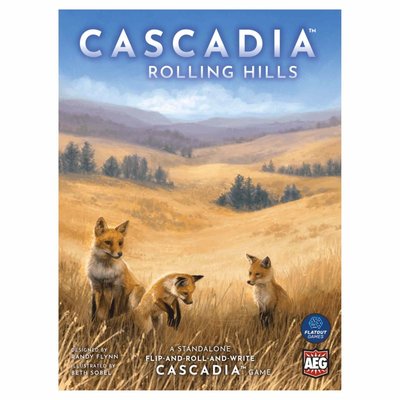
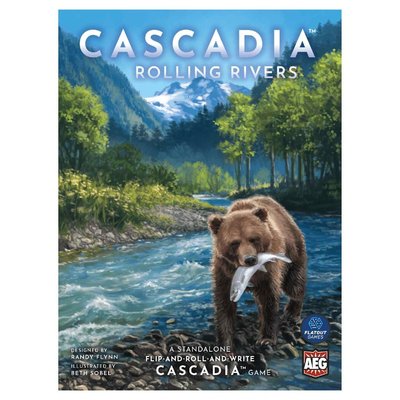
[Music] [Applause] [Music] [Music] [Music] hey friends it is Jenna what is up and welcome back to the board game garden and welcome to a preview of these games right here I'm sure you can recognize a part of it if you've heard of the game Cascadia which I'm sure you have um but if you have not Cascadia is a wonderful game published by flat games and AEG flat games is sponsoring today's video so a huge huge thank you to them and it is designed by Randy Flynn and he has now come out with a flip SL roll and WR version of Cascadia called Cascadia rolling and the reason why you are seeing two different boxes is because they are coming out with different versions of the game so we have Cascadia Rolling Hills on my right here and we have Cascadia rolling rivers on my left and these are going to be different versions of the games that you can combine in order to play with more players and also introduce some different things into the gamees so if you guys want to see all about Cascadia rolling the series um as well as Cascadia Rolling Hills Cascadia uh rolling riverse then just keep on watching give this video a big thumbs up if you enjoy Also hit the Subscribe button down below if You' yet to do so I will also have a link in the description box to the crowdfunding campaign so you guys can go and check that out there if you're interested in backing Cascadia rolling but without further Ado let's get in this preview of Cascadia rolling shall we all right so getting into a little bit of an aim of the game as well as taking a look at all the components in front of me so you guys might notice that I have two different boxes beside me they've actually made two different versions of this game and I believe possibly in the future that they might be coming out with more because there are five different terrain types and each of these here are kind of mimicking two of the terrain types so you have here Cascadia Rolling Hills which is kind of the Prairie um terain in Cascadia and then you also have Cascadia rolling Rivers which is the water terrain or the river terrain um so there's also the swamp land the forests and the mountains so we might see more who knows but uh yeah in Cascadia rolling you're ultimately trying to get the most victory points um this game plays one to four players it plays in about 15 to 30 minutes and it's for ages 10 plus so when you are playing the solo game you are trying to beat your own high score or they also do have the like achievements and different scenarios in the back of the rule book look like a lot of the other flat out games that we've seen in the past um but in a multiplayer game you are trying to be the player with the most victory points and you're going to be getting victory points in different ways based off of the map that you're using and each of the maps is going to be playing in a completely different way you have the first map here which is the a map that is the easiest um not a lot of complexity and then the complexity kind of goes up and ramps up as you get to uh b c and d at the end so let's get into all of the components over here I have all the components for the Rolling Hills um which you do have the pad of paper here with all of the different Maps they are two-sided which is great and then like I said you do have Maps a through D um you also have this set of papers here which this is going to be your like animal inventory so this is going to how um be how you track what animals you have um and then when you spend them you're going to minus that and kind of keep track of how many animals you have on this sheet here um you have these dice the smaller dice which are going to be for each player each player is going to have their own two personal Dice and then you're also going to have a set of public dice that are going to be unique to that box which I will say that if you do get more than one of the boxes you can mix and match things so you could play with the Rolling Hill Maps but use the rolling Rivers dice um the completion cards can get shuffled together the other cards can get shuffled together um and ultimately pretty much everything can be mixed and matched um within the game but yes each of the boxes does have some public dice so the Rolling Hills have these yellow ones here the rolling Rivers have these blue ones here um each player has their own personal dice they have a round summary a little player reference here so the one side is the round summary and what you can spend your nature tokens on um and then on the other side there is a family mode so I haven't looked too too much into the FL family mode but I'm sure it's just a more simple uh way to play the game so you can play it with younger kids um each box is going to come with a set of completion cards um so there are going to be some that are like introduction completion cards and then you can bring in some more advanced ones and these ones are going to be placed either above the card or below the card you're just simply going to be choosing four of these for the game and it's just going to add different discounts to a card or different um like rewards to a card in this little conveyor belt here which I will explain um also like I mentioned each of the boxes is going to have a different mini expansion so the Rolling Hills is going to offer some like public objectives some like if you're the first one to complete this objective you get this you flip it over no one else gets it kind of thing um also they do come with some additional completion cards as well um but yeah these ones the Rolling Hills adds Summit goals so those are some public goals and then also over here you have pretty much all the same things but again like I mentioned we have some variety um some different completion cards um you also have some different Main cards here which you're going to have these different cards with different amounts of animals which I will explain um but you have different ones here for the rolling Rivers um you have some more player references again and then as for the mini expansion with rolling Rivers you have this right here which is the forces of nature mini expansion which allows each player to start with a um like asymmetric player power and then also it allows each player to kind of start with different resources and different things each box like I said is going to have very similar components but they are going to add a lot of variety and then also you can decide to combine the two boxes in order to play with more people so each of these boxes right now is only able to play four players but if you combine these two you could play up to eight players um which is awesome that is everything for the aim of the game as well as the components so let's get into how exactly Cascadia rolling plays so starting with the setup each player is going to get one of the uh papers so you will all decide on what map you want to play with each player is going to get a sheet of paper as well as a sheet for their animal inventory down here they're going to place the animal inventory just below their paper you need some sort of writing utensil as well as each player needs a player reference and their two personal dice so that is everything for the setup for each play player um if you are playing with the forces of nature mini expansion each player would get one of those as well um to set up the like public pool here um you're going to take two of each of the terrain types from each tier so you're going to have two different tiers you're going to have tier one and tier two and each tier is going to have three of every single terrain type so like I said you have the rivers the mountains the Prairies the swamp and the forest so you are going to be if you're just playing with one box you're just going to be for each of the different tiers and each of the different train types you're going to be um taking out one of them and then keeping in two of every single one from each tier you're going to shuffle those up so you are going to have a total of 20 cards and those cards are going to start um for this example let me move these out of the way so these would actually start over here and I'm actually set up for like kind of the mid game but if you were starting a game you would only start with one card up and then as each round uh proceeded you would move over that and add another one so the first few rounds you're only going to have one two three and then the complete set of four to choose from and then also at the beginning of the game like I mentioned you're going to have completion cards which you're going to shuffle these up and then choose four of them you're going to place these either at the top or the bottom of the starting for uh spaces so like I said there's only going to be one card out but as it proceeds um the spaces are going to be filled but there are two different types of completion cards so there are the like brown and beige completion cards and there's also the uh blue completion cards these are going to work in two different ways so if you do have uh Brown completion cards they're going to go at the bottom of the card um if you have a blue completion card it is going to go at the top so you guys can see what I have kind of set up right now so we have the four cards here like I said this is kind of a few turns in or a few rounds in um we have three that are at the bottom and one that is at the top so whenever a card is in this column here it's going to have this completion cards effect which is if the little um terrain number here is a 1 to three you're going to gain one nature token if it's a four to five you're going to gain two nature tokens so that's if you are able to complete this card um in this round when it is in this column so generally looking at these Brown completion cards that are going to be placed at the bottom these ones are going to be bonuses that you can get if you complete that card in that round when it is that in that column if you do not it's going to get shifted over and then there's going to be a different completion card that is going to be connected to it so the brown ones are going to be rewards um or you can like spend nature tokens to do something um but then the blue ones that are going to be at the top are going to be discounts for that card so this one here is a little bit complicated but basically it means that you can use any type of animal in order to complete this card but then you would have to add an additional three to the total cost of that card so it's going to cost you more but you're able to spend whatever animals you want so if you had a lot of a lot of other animals and not necessarily the ones that needed were needed for that card then you could use that ability um to just use all of the animals uh wildly so yes those are all of the different completion cards um and then you do have the different cards here which are going to uh get you differing amounts of uh numbers in different terrains that you're going to be able to place into your map which I will explain um but yes overall that is the setup of the game you're G to have that public area with all the cards that continuous conveyor belt of cards to choose from with the completion cards every player is going to have their board and yeah let's get into exactly how the round is played so starting off with rolling dice so one player it doesn't really matter what player it is is going to roll the four dice in the middle I'm going to move these four blue ones out of the way and they would simply roll the four in the middle and then place them in the center which I will say that there are three special dice um or Central dice um that are kind of normal they're going to have all of the different animal types um some of them are going to have like wild um spots on them so you can choose which animal that represents some of them are going to have like a half and half so it's going to either be a fish a salmon or a hawk um and then one of them specifically is the special dye so this is going to have a various amount of different things that it can do and when the person rolls the four Central dice in the middle the first thing that you're going to do is look at the special Dy so the special dye is either going to have there's a half and half face um for a fox or an elk there's a half and half face for a bear and a hawk then there is a single spot that is a uh any animal of your choice and then there are three different beige sides that are going to give you some sort of ability for that round or it's going to give all players a special ability for that round um so you have one here that has three different dice this means that this turn instead of choosing so basically on your turn you are going to be um after all dice are rolled which all players would roll their personal diee as well when you roll all the dice basically you're going to be choosing one animal type to add to your inventory and then you're going to count up how many of that specific animal were rolled then you're going to add that so if I rolled this and there are actually three bears as well as a pick any type so I could use the pick any type as a bear and then I have three other Bears so I could actually choose bear and I would add four Bears into my inventory but if this special die where did my special die go if the special die was the three diey face this actually means that instead of only choosing one animal type and gaining all of that animal you would be able to choose three dice of any type so you could actually choose three different animals if you wanted and that would actually take place of your um Gathering Animal Action you would just simply take that action on that die um there's also this one here which is you get a discount when using any of the dice action abilities so these are going to be different different things that you can spend your nature tokens on in order to manipulate the dice to things that you will want um so that allows you to get a discount and then lastly you have this die face here which I am going to be putting in some b-roll but this one here is that you can roll or choose to roll your personal die up to two times and you can decide to lock in one and then roll the second one that is the rolling of the dice and then like I mentioned each player will then choose what animal that they want to take they're going to count up all the dice that have that specific animal face on it and then they would add that to their inventory so so this right here is your inventory or your like animal tracker so you're just going to be adding and subtracting as you go um you're not going to get to Crazy amounts so the math is not going to get um very complicated at all it'll simply be like add three to two so you'd scratch out the two you'd put a five you spend four you would scratch out the five and then put a one uh and so on and so forth like that and quickly I do want to mention the different dice actions that I quickly touched on before um so when players are deciding what dice they want to use they can optionally decide to use some of their nature tokens in order to perform a dice action so this is going to be um kind of manipulating your own personal dice um as well as manipulating the public dice as well you're not going to be physically ulating them but you are going to be manipulating them in order to get the animals that you want um so you can decide to spend one nature token to convert down which this means that um each of the animals is going to have like a hierarchy so the Bears is the highest and then it goes elk Fox uh Hawk and then salmon so you can actually decide to spend one nature token to uh whatever animal you decide on you can decide to um go go down one so if I you know for some reason decided you know I'm going to get three bears but I don't want them to be Bears I want them to be elk so I could spend my nature token in order to kind of convert those Bears down one to Elks so then I would be able to put three elk into my animal inventory like that there's also an option to convert up so um the vice versa of that if I had three elk and I really wanted those three elk to be three bears I could decide to spend two nature tokens uh to do that and then also you have the most expensive thing which is you can spend three nature tokens in order to take two different animals so for example if I rolled three bears and three salmon I would typically have to choose between the two because you can only take one type of animal but if I had three nature tokens to spend I could spend those three nature tokens and I could get both those three bears as well as those three salmon so then once all players have used any d nice actions that they wanted and they have collected the animals in here every player this is optional can decide to purchase a habitat card so that's what these are called they're called habitat cards and you can decide to spend whatever animals you would like in order to um successfully kind of achieve or buy these animal cards again each of these are not going to be like taken out they're always going to stay here unless they are pushed off because of the conveyor belt effect um but yeah every player can decide to purchase the same one if they want um it's not going to be purchased by someone and then taken away um so I could decide if I wanted to um spend my animals on one of these um I don't really have any examples here but I would spend those animals and then I would get whatever is at the bottom so what is at the bottom of these cards you ask they are going to be whatever terrain type it is and then it's going to have hexagon of that terrain type with a number in in the center so that's going to be the number that you are going to be writing in to one of the hexagons or you're going to be like outlining uh that number of spaces in another map um and then each of the maps is kind of going to use this number in a different way um but in the first one here you are simply just going to be writing this number into that terrain type um starting from the top and going to the bottom and then this one also uh rewards you two habitat tokens as well additionally with the completion cards um if there was a discount completion card on that that would affect what animals you were spending on that card um and then if there was any of the brown completion cards so like the reward completion cards you would additionally gain whatever reward that was so for this one here on the far right um if I completed that card I would get this completion card here which means that I can roll both of my personal Dice and gain the results so I would simply roll these two dice and then I would gain a bear and a hawk into my inventory so that would be everything for the round each player would optionally be able to purchase a habitat card uh if they wanted to or if they were able to and then he would move on to kind of a little bit of a cleanup um which simply is that the far right card would get pushed off and discarded the other ones would get pushed over to the next column and then a new one would get flipped over and then you would go right back into rolling the dice collecting your animals purchasing habitat cards and then continuing to do that over and over again for 20 rounds so the way that you can see that it is going to be the last round is the last card that you flip over from this pile because there are 20 cards in here once this pile here is completely gone that would be the end of the game tally up everything on the right side and then put the total in the bottom right hand corner and then the player with the most victory points would be the winner and I believe if there is a tie the tie player with the most nature tokens would be the winner and if there is still a tie the winners would share the victory now I think I mentioned that I was going to go into depth on each of the maps and kind of explain how each of them plays but I'm sure if you guys want to know exactly how each of them plays you can go over to the campaign page and check those out but just know that each of the maps you do have more and more kind of being added and each of the maps are going to be playing in some different ways so the first one here you are simply going from top to bottom writing in numbers of the terrain of each of the habitat cards that you completed going from top to bottom and once you have reached uh filling in two of them then you get some sort of bonus and then once you get to filling in all four of them you get some sort of bonus and then if you're able to complete uh rows of one of each of the habitats you get some bonuses there as well and at the end of the game You're simply just going to be counting up the numbers that you put into each row row and that's going to be the amount of victory points you got on each of these spots here um some of the rows is going to be some bonuses and then that is going to be your final score the B map is going to instead of putting in the number you are actually going to be filling in in rows and so for example if I completed this card here that has a three Forest I would actually Outline Three of the hexagons in that line and you're trying to get through these lines and you're going to be gaining different rewards when you pass things and when you kind of complete different like diamonds between two rows and then C and D are going to add even more additional things uh C adds in some land marks and it's more of like a cluster of different hexagons instead of like the rows and the columns and then D finally is going to be adding in those objectives that you know and love from Cascadia so you do have different objectives at the top and you are filling in these different terrains with the different animal types and you're going to have Bears wanting to be adjacent and the Elks wanting to be in a straight line and the foxes wanting to be surrounded by different things the Hawks not wanting to be around each other as well as the salmon wanting to be in the long runs um so you do have those familiar kind of uh different goals they you're going for in Cascadia um but added into to the Rolland rights so uh yeah like I said each of the maps is kind of going to be adding in some different things and becoming more and more complex as you go so just wanted to quickly go through those I didn't want to fully go into exactly how all of them plays cuz there's a lot of small things for each of them I don't want this video being crazy long me explaining all the different individual Maps uh so hopefully that's okay with you guys but hopefully this was enough to kind of give you a little bit of a feel of exactly how Cascadia rolling plays and if it's something that you would be interested in getting so uh yeah that is everything for the overview and how to play Cascadia rolling all right friends so that is going to be everything for today's preview hopefully you guys enjoyed if you did please give it a big thumbs up also hit the Subscribe button down below if you yet to do so we'd love to have you here in the garden if you guys are interested in Cascadia rolling definitely go and check out the campaign I have it linked down below huge thank you again to flat out games for sponsoring today's video I love you guys so so much remember you are somebody's reason to smile and I will see you in the next board game video bye [Music] friends